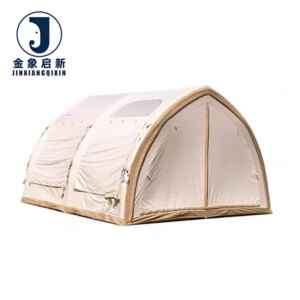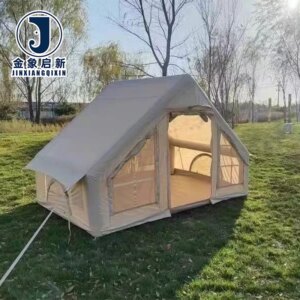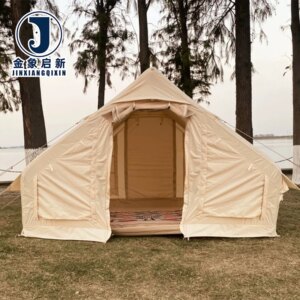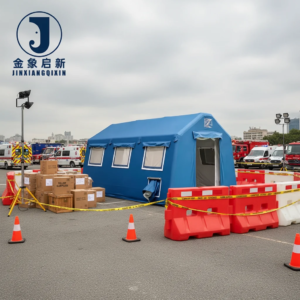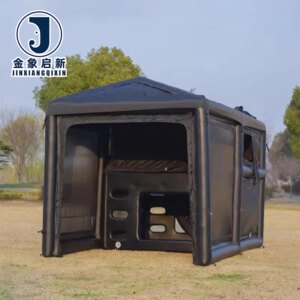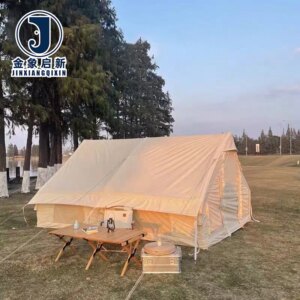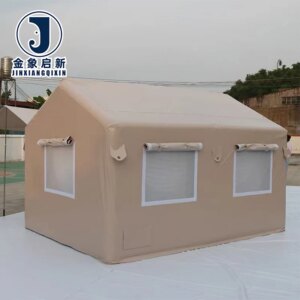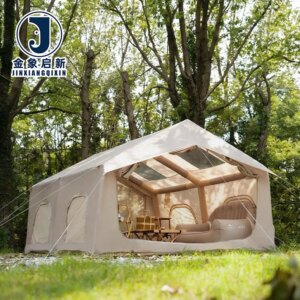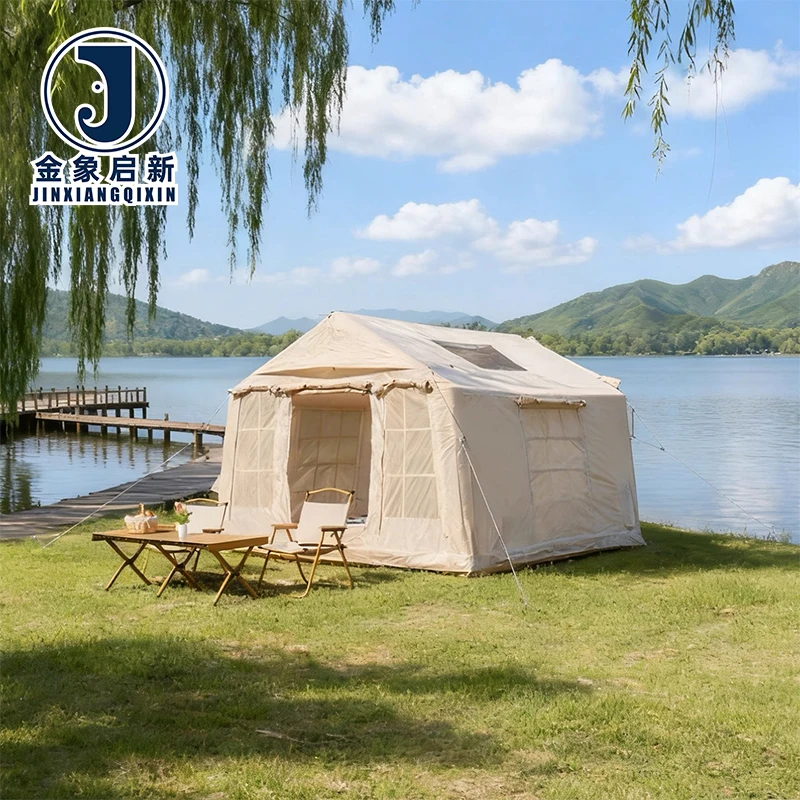
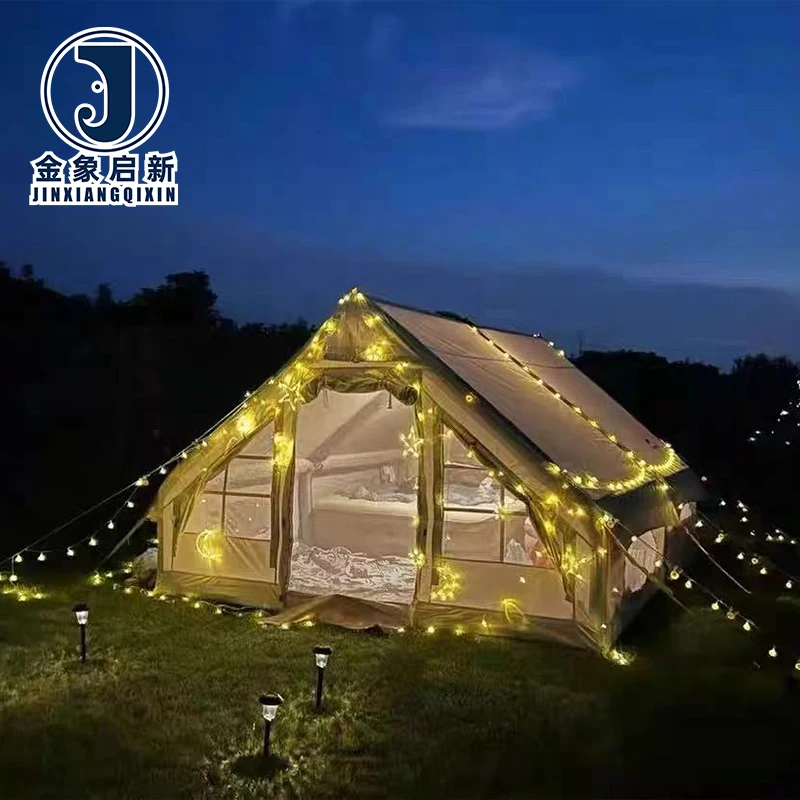
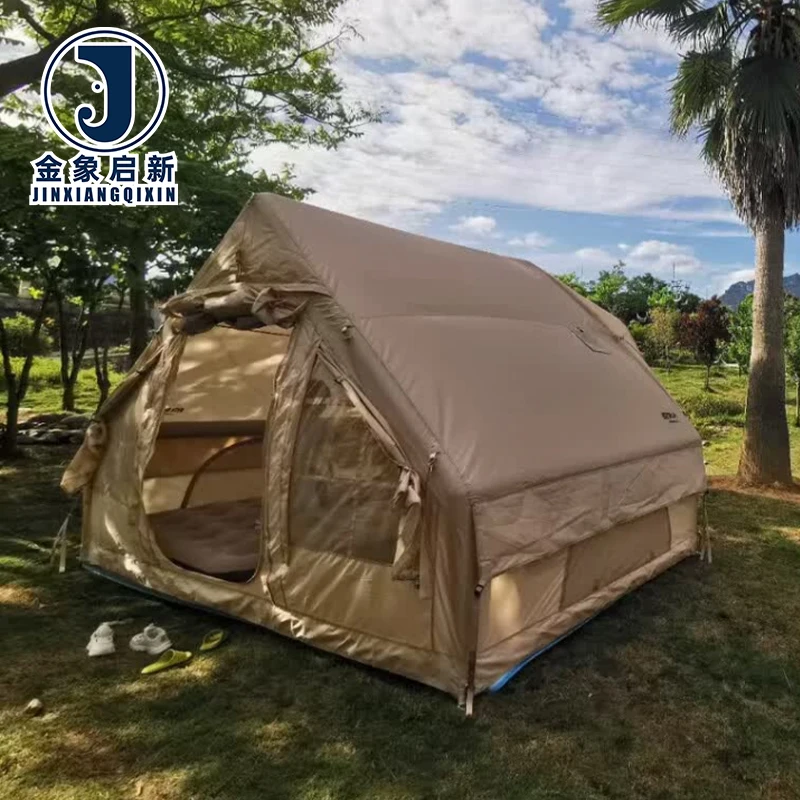
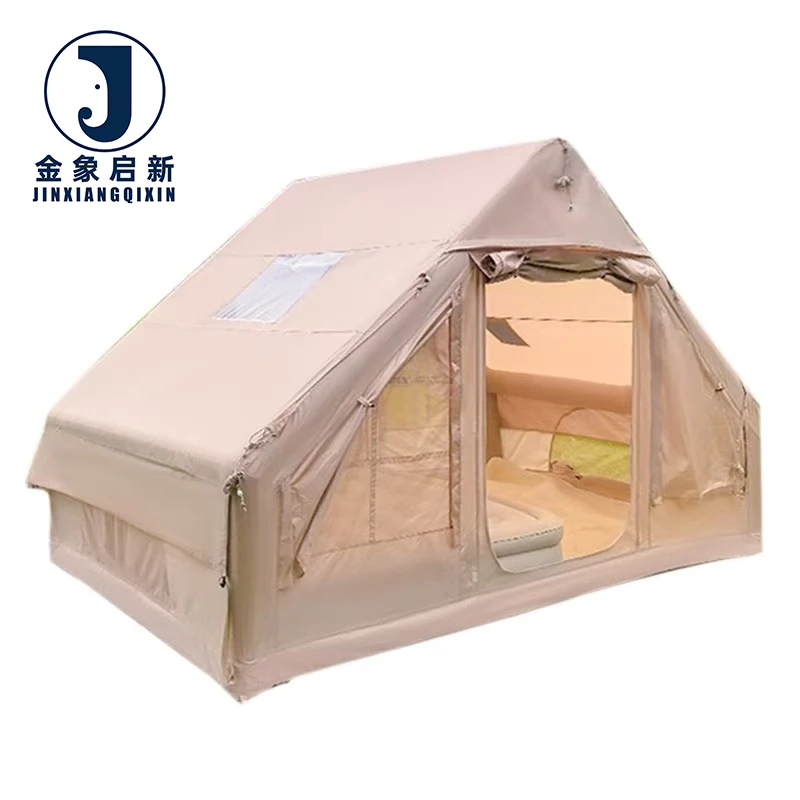
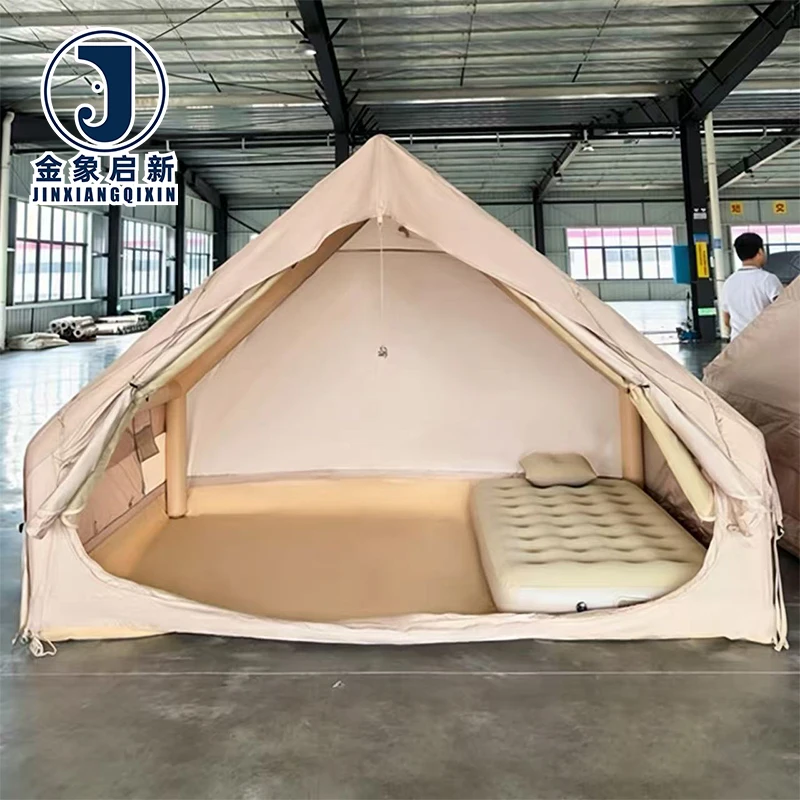
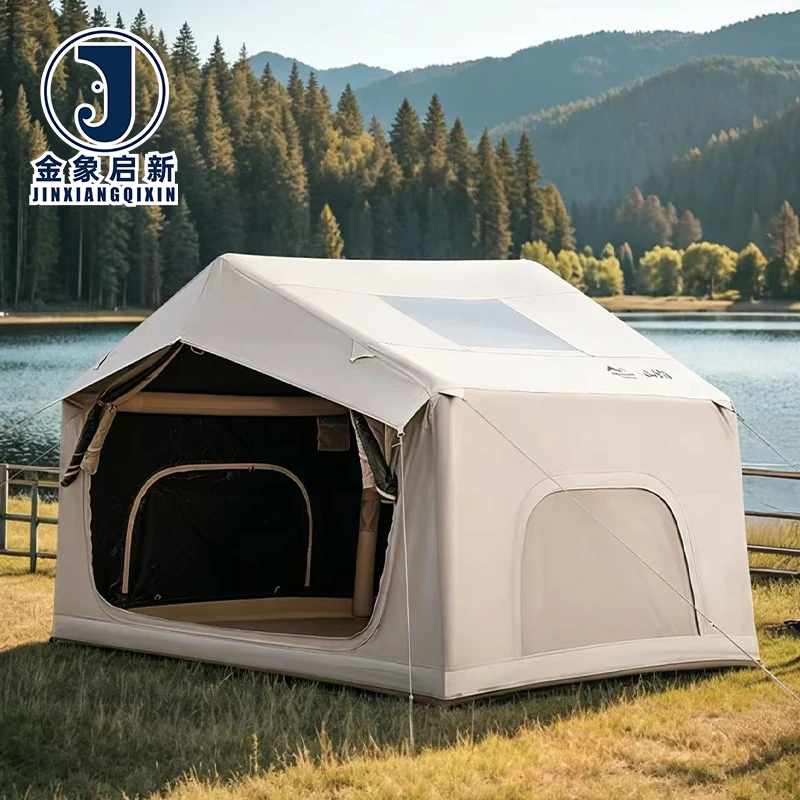
Description
Proven Process Control — nearly 30 years of coated fabric expertise translated into consistent inflatable tent material performance, from PVC tarpaulin coating weight to batch-level color matching across your entire custom order.
Technical Specifications
| Parameter | Value |
|---|---|
| Product Type | Inflatable Tent |
| Core Material | PVC Tarpaulin |
| Capacity | 6-8 Person |
| Season Rating | Four-Season |
| Opening Mechanism | Quick Automatic Opening |
| Construction | Single Layer, Extended Design |
| Waterproof Rating | 10,000 mm hydrostatic head |
| Thickness Tolerance | ±0.1 mm |
| Seam Strength | Minimum 35 N/cm |
| Air Pressure Retention | ≤5 % loss in 24 hours |
| Zipper Durability | 500 cycles |
| Flame Retardant | Available in flame retardant grades — confirm the grade required for your market |
| UV Treatment | Available with UV stabilisation — request test report for your target climate |
| Anti-Static | Available in anti-static grades — verify standard applicable to your deployment |
| Customization | OEM & ODM: sample customization, pattern printing, material selection, product design |
| Certifications | ISO 9001, ISO 14001, ISO 45001, CE |
Application Suitability
| Application | Exposure & Requirement |
|---|---|
| Commercial outdoor gear product lines | High-volume roll consistency, brand-matched color, repeatable seam strength across thousands of units |
| Rental fleet deployment | Repeated inflation-deflation cycles, surface abrasion from ground contact, UV exposure in open campsites |
| Adventure tourism operators | Four-season weather swings, high wind loads, rapid setup in remote locations requiring automatic opening reliability |
| Wholesale distribution to outdoor retailers | Private-label pattern printing, shelf-ready packaging, certified documentation for multiple destination markets |
Why Batch Consistency Matters More Than Stated Specs for Inflatable Tent Fabric
A quoted GSM means nothing if roll 47 measures lighter than roll 12 in the same shipment.
Outdoor gear manufacturers building custom inflatable camping tent product lines have faced the scenario: the material spec sheet reads correctly, but rolls arrive with visible coating variation, and heat-welded seams split during factory pressure testing. When you are producing thousands of units under a brand name, a single inconsistent roll can trigger a line stoppage and a full batch quarantine. [NEED_CITE: tensile and tear test methods for coated fabrics per ISO 1421] Sourcing from an inflatable tent manufacturer that controls every coating stage — not just the final lamination — removes that variable from your supply chain.
Complete Custom Capability from Fabric to Finished Inflatable Tent
Working with an inflatable tent manufacturer that operates its own coating lines means your custom inflatable camping tent project starts at the material formulation stage, not at a cutting table. You can specify PVC tarpaulin weight, select the surface finish for your printing method, and define seam construction before a single panel is cut. This vertical integration shortens the feedback loop between sample approval and production, because material adjustments do not depend on a third-party supplier’s schedule.
OEM and ODM Workflow Built Around Your Product Calendar
The R&D team handles pattern printing proofs, material swatch matching, and structural design validation before tooling is committed. For brands launching a four-season inflatable tent range, this means you can evaluate multiple PVC tarpaulin weights side by side, test quick automatic opening mechanisms on prototype units, and confirm air pressure retention data before authorising bulk production. Sample development typically completes within a short turnaround window, keeping your seasonal launch on track. [NEED_CITE: coated fabric sample development lead time benchmarks]
How Core Parameters Translate to Field Performance in Inflatable Tents
The PVC tarpaulin core determines the structural behaviour of every inflatable tent panel. Thickness tolerance held to ±0.1 mm ensures that when two panels meet at a heat-welded seam, both melt at the same rate under the welding bar — a mismatch as small as a fraction of a millimetre can produce a weak bond that fails under internal air pressure. Seam strength rated at a minimum of 35 N/cm addresses the specific stress pattern in inflatable structures, where internal pressure pushes outward continuously and the seams carry that load without the benefit of rigid framing. Air pressure retention of ≤5 % loss in 24 hours reflects both the coating’s impermeability and the precision of valve-to-fabric bonding, a joint that sees cyclic stress every time the tent is inflated and deflated. The single-layer extended construction reduces overall unit weight while the four-season rating requires the PVC tarpaulin to remain flexible at low temperatures without becoming brittle, and dimensionally stable at high temperatures without softening at the seams.
What Specification Gaps Cost You After the Tent Leaves the Factory
A flame retardant claim without a documented grade can result in a shipment held at customs or rejected by a campsite operator whose local regulations reference a specific standard. Color drift between production runs forces a rental company to mix visibly different units in the same fleet, undermining the brand image your client paid to build. When UV stabilisation is asserted without an accelerated aging test report, a tent that fades unevenly after one season of commercial rental use generates warranty claims that erode your margin on the entire contract. [NEED_CITE: flame retardant classification standards for temporary structures] These are not hypothetical risks — they are the routine failure modes that custom inflatable camping tent buyers encounter when documentation does not match the physical product.
Why Production Infrastructure Matters for Your Inflatable Tent Order
Three full production lines and 36 sets of professional processing equipment mean your custom inflatable camping tent order is scheduled on dedicated capacity, not squeezed between unrelated product runs. A 10-technician R&D team handles your pattern printing file, material selection matrix, and structural design review in-house, eliminating the communication lag of outsourcing sample development. Dedicated QA/QC checkpoints at every production stage — from base fabric inspection through coating weight verification to final seam testing — produce a pre-shipment inspection record you can audit before authorising dispatch. ISO 9001 and CE certification frameworks govern the documentation that accompanies every roll and finished unit, supporting customs clearance in your destination markets without last-minute certificate requests.
Documentation & Verification
- Material specification sheet confirming PVC tarpaulin coating weight and thickness tolerance per roll
- Test reports for UV stabilisation and flame retardant grades matching your target market requirements
- Pre-shipment inspection record with seam strength and air pressure retention measurements archived digitally
- ISO 9001, ISO 14001, ISO 45001, and CE certificates issued per shipment for customs and compliance
- Roll packing list with batch traceability codes linking each unit to its production run
Fabrication, Handling & Storage
- Heat-weld seams at temperatures matched to the specific PVC tarpaulin thickness to maintain the 35 N/cm minimum bond strength
- Store rolls on pallets in a dry, shaded area to prevent surface marking on the PVC tarpaulin coating before fabrication
- Verify air valve bonding points with a secondary pressure test after the quick automatic opening mechanism is installed
- Use solvent-based cleaners compatible with PVC tarpaulin to avoid degrading the surface coating during field maintenance
- Allow single-layer panels to relax flat for several hours after unrolling before cutting to eliminate tension distortion
Requesting a Quotation for Your Inflatable Tent Project
Provide your target capacity range, the climate conditions your end users will encounter, and any flame retardant or anti-static standards your destination market requires. Specify whether you need finished custom inflatable camping tent units or PVC tarpaulin roll stock for your own fabrication line, along with your annual volume estimate and any pattern printing or branding requirements. Confirming these details upfront allows the sample development phase to address your exact specifications.
Frequently Asked Questions
Q: How do you ensure batch-to-batch color consistency across custom-printed inflatable tent orders?
A: Every production run references a master color standard approved during the sample stage. In-process QC checks compare each PVC tarpaulin roll against that standard under controlled lighting before the roll proceeds to cutting or printing. Batch traceability codes on the packing list let you match any finished inflatable tent unit back to its source roll for future reorder consistency.
Q: What flame-retardant and UV test reports are provided with shipment documentation?
A: Test reports are issued for the specific grades selected for your order, covering the standards applicable to your destination market. UV stabilisation and flame retardant performance are documented per batch, and the reports travel with the shipment documentation package. If your market references a standard not listed on the initial specification sheet, request confirmation before production begins.
Q: What customization options are available for sizing, pattern printing, and branding on inflatable tents?
A: The OEM and ODM service covers PVC tarpaulin material selection, panel sizing, pattern printing for brand graphics, and full product design. The R&D team reviews your artwork files and structural requirements, then produces a physical sample incorporating your chosen color, print layout, and construction details before bulk production is authorised.
Q: How long does sample development take for custom inflatable tent designs?
A: Sample turnaround depends on the complexity of your custom inflatable camping tent design, including the number of material variations and print proofs required. The R&D team provides a confirmed schedule after reviewing your specification package, and sample development is prioritised to align with your seasonal launch calendar.
Q: What is the minimum order quantity for custom-width or custom-color inflatable tent production?
A: Minimum quantities depend on the specific PVC tarpaulin weight, custom color formulation, and whether you are ordering finished units or roll stock. The inflatable tent manufacturer provides the applicable minimum after reviewing your specification and annual volume estimate during the quotation stage.