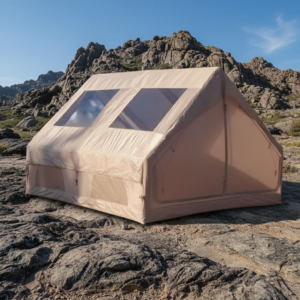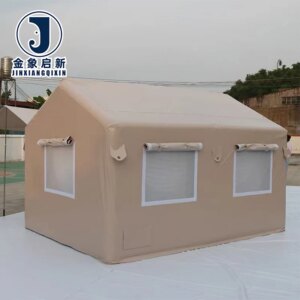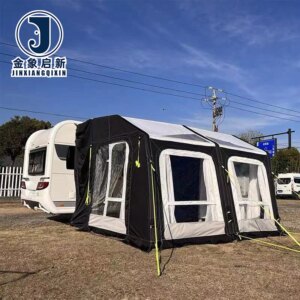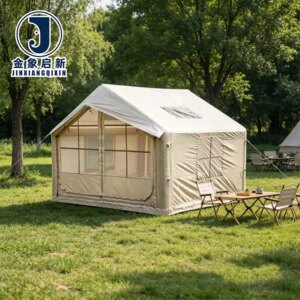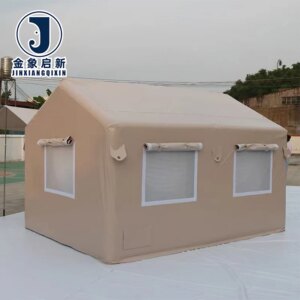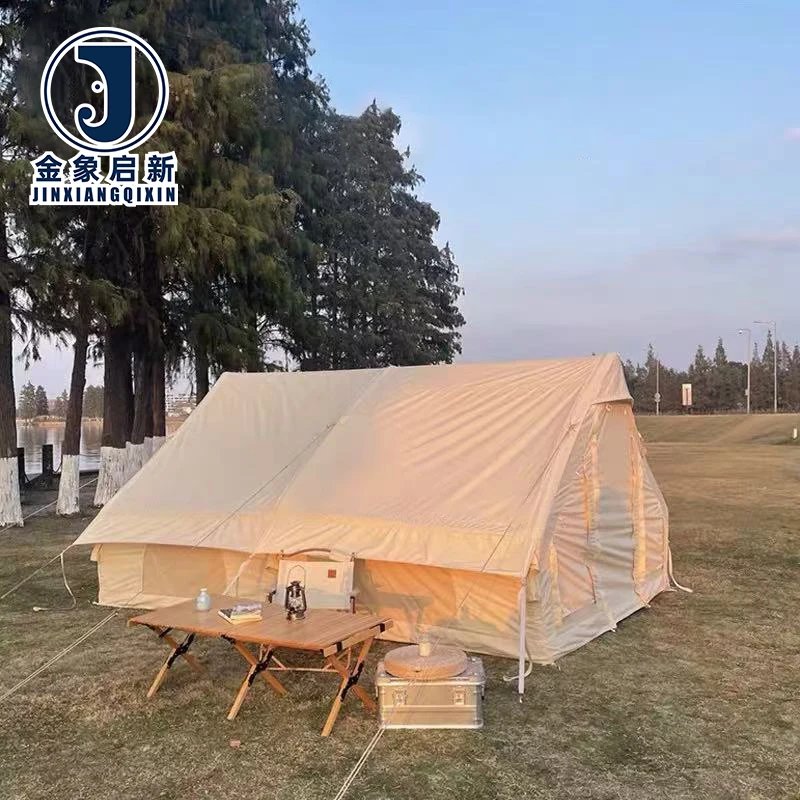
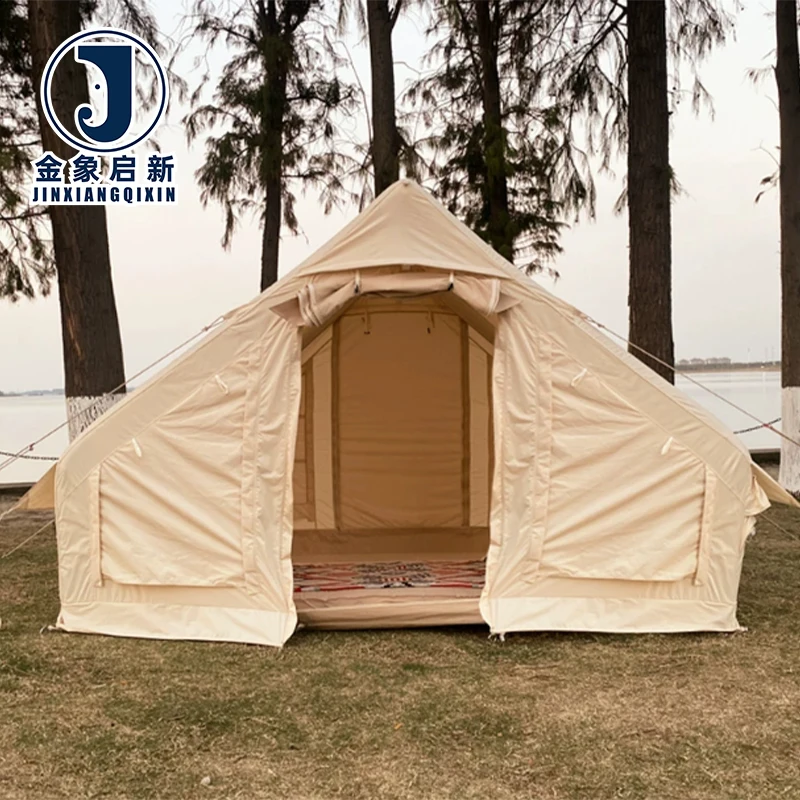
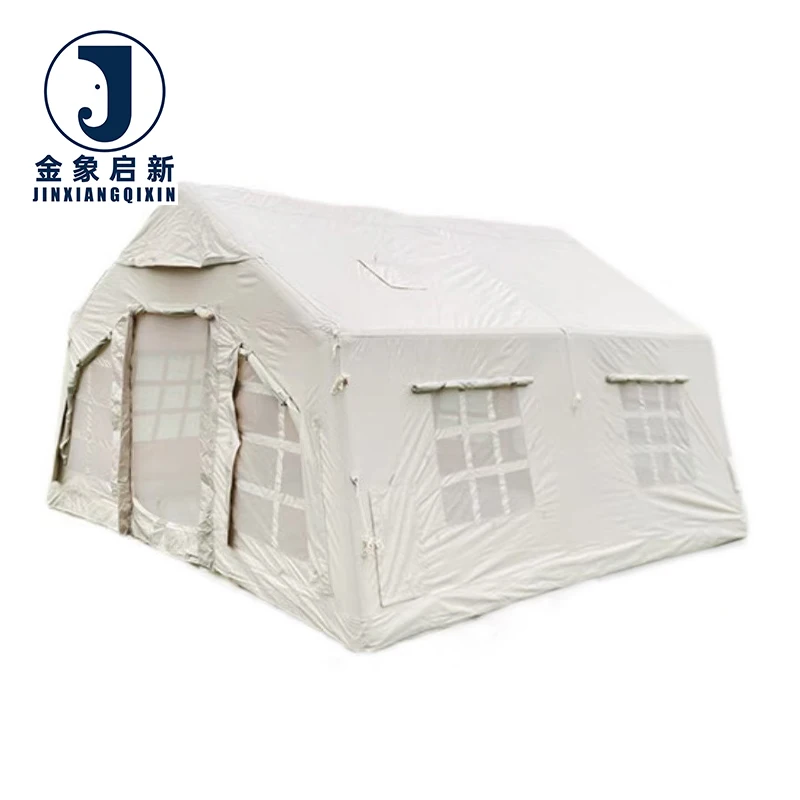
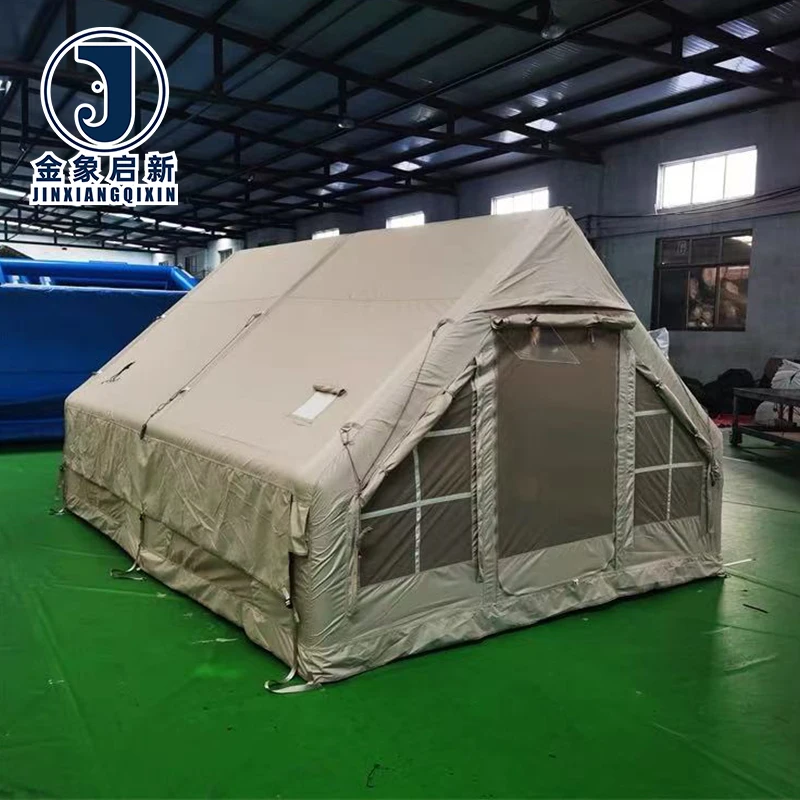
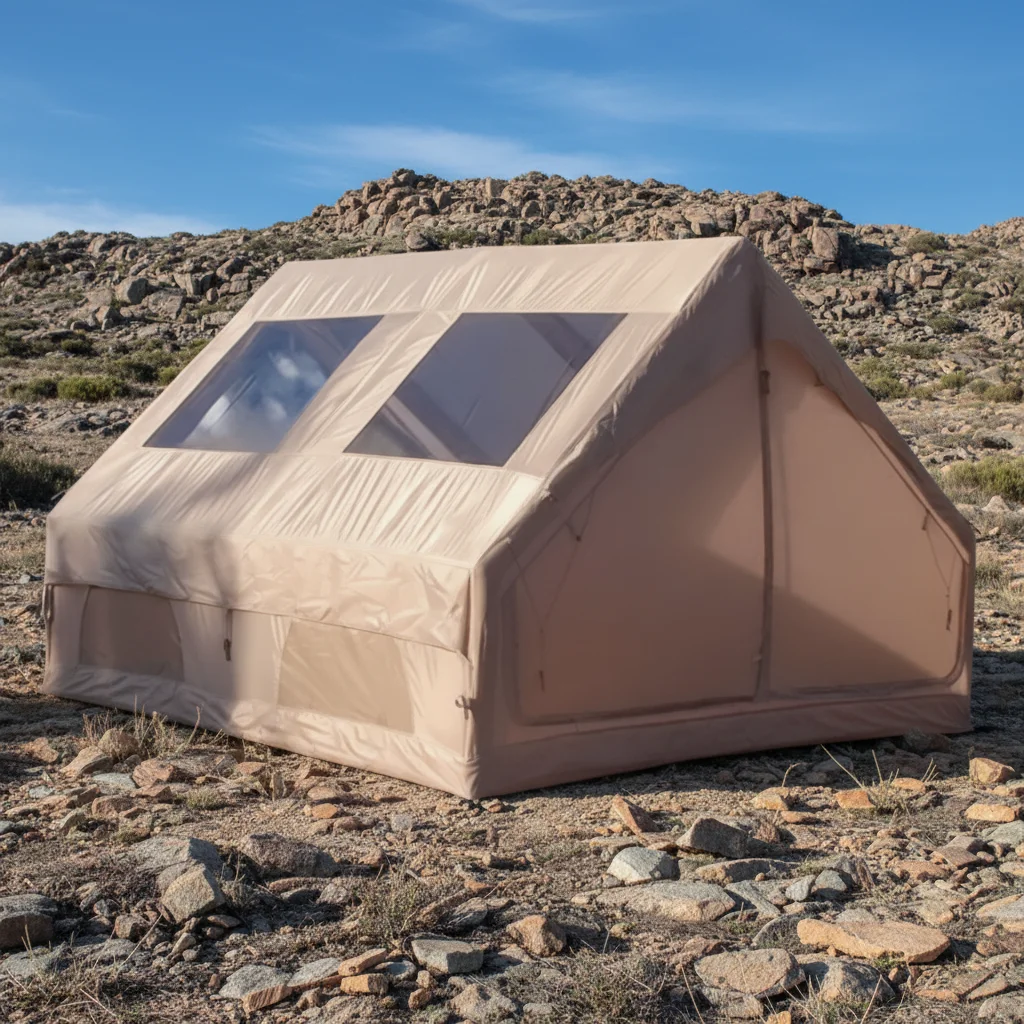
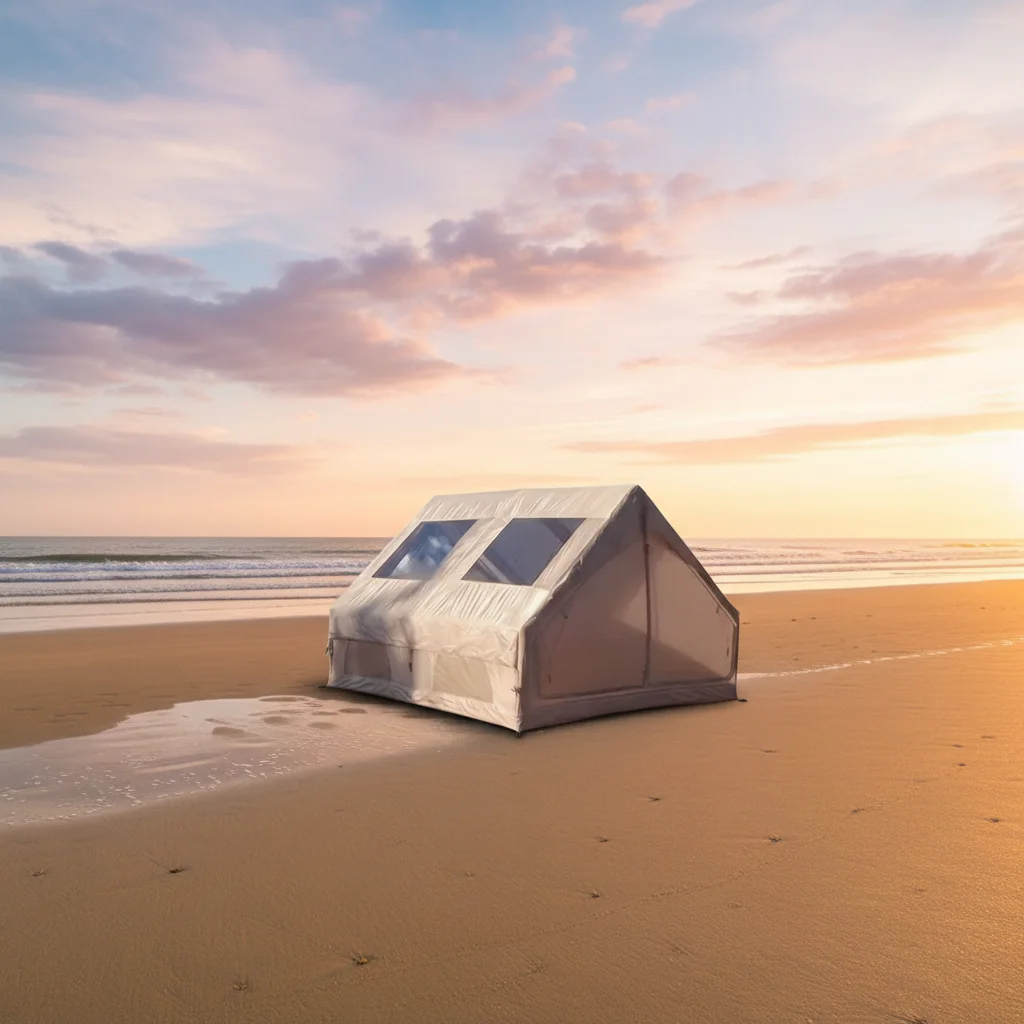
Description
Volume Consistency Across Batches — Every roll produced on our 3 full lines undergoes dedicated QA&QC checks, ensuring the Waterproof PVC Glamping Tent you approve at sample stage matches the container that arrives on site.
Technical Specifications
| Parameter | Value |
|---|---|
| Product Type | Inflatable Tent / PVC Tent |
| Core Material | PVC coated fabric |
| Key Performance | Waterproof, Quick Automatic Opening, Four-Season Design, Single Layer Construction |
| UV Treatment | UV-resistant properties (test basis not stated in source — confirm grade required for your market) |
| Flame Retardant Grade | Grade not stated in source — available in flame retardant grades, confirm the grade required for your market |
| Customization Service | OEM & ODM including sample customization and pattern printing |
| Production Facility | 9,180 m² with 3 full production lines and 36 sets of processing equipment |
| R&D Team | 10 technicians |
| Quality Control | Full-process quality inspection with dedicated QA&QC staff on site |
| Standards | ISO9001, ISO14001, ISO45001, CE |
Application Suitability
| Application | Exposure & Requirement |
|---|---|
| Commercial camping grounds and glamping resorts | Year-round weather exposure, repeated guest turnover, need for rapid deployment between seasons |
| Outdoor festivals and temporary event accommodations | High-frequency assembly and disassembly, variable weather conditions, crowd-safe fire compliance |
| Remote workforce housing projects | Prolonged outdoor installation, UV and rain exposure, transport efficiency for bulk deployment |
| All-weather commercial shelter | Continuous water contact, wind load on membrane surfaces, thermal fluctuation across seasons |
Why a "Four-Season" PVC Glamping Tent Still Fails in the Field
The tent fabric may survive the weather, but inconsistent batch quality and missing test documentation shut down your operation before the first guest arrives.
Commercial camping operators regularly specify a PVC glamping tent manufacturer based on sample quality, only to find the production batch arrives lighter, with colour variation between rolls or without the fire-retardant paperwork the local inspector demands. The material itself was never the problem — the supply chain verification was. [NEED_CITE: common causes of coated fabric batch inconsistency in bulk production]
What Consistency Means at Roll Scale for Tent Fabric
When sourcing waterproof PVC glamping tent material in volume, the coating weight and colour must stay uniform across every roll in the same order. A gloss or shade shift between adjacent panels becomes immediately visible once the tent is erected and lit. Our 3 production lines run under dedicated QA&QC monitoring so that the GSM and colour reference you confirm at sample stage carry through to final dispatch.
Deployment Speed and Single Layer Efficiency
The quick automatic opening mechanism reduces the time your crew spends on each tent installation, which matters when a festival site needs dozens of units erected in a narrow weather window. Single layer construction keeps the packed weight and transport volume manageable, allowing more units per container when you are mobilising a remote workforce housing project or scaling a glamping resort ahead of peak season.
Reading the Specification Sheet Beyond GSM
GSM alone does not define how a PVC tent fabric performs under wind load or repeated folding. The base fabric denier and weave density determine tensile and tear behaviour, while the coating method and weight govern waterproofing and weld strength. A heavier coat does not compensate for a loosely woven base cloth — both must be specified together. UV and flame retardant treatments operate at the surface chemistry level and require documented test results to verify compliance with your local building or fire code. [NEED_CITE: relationship between base fabric weave density and tear propagation in PVC coated textiles]
The Hidden Cost of Undocumented Specifications
Ordering tent fabric with a claimed UV treatment but no test report means your site inspector can reject the entire installation after it is already erected. Flame retardant grades that are stated on the quotation but unsupported by a recognised standard certificate create the same risk. Colour drift between batches forces you to re-sort panels before every build, adding labour cost and delaying guest check-in. These are not material failures — they are documentation and verification gaps that a disciplined production process eliminates. [NEED_CITE: fire classification standards for temporary membrane structures]
Why Source This Tent Fabric Here
Nearly 30 years of coated fabric production means the coating formulation and adhesion parameters for PVC tent material are deeply controlled, not improvised per order. The 10-person R&D team develops your sample — including custom sizing and pattern printing — within days, so you confirm the exact specification before mass production begins. Every roll passes through full-process inspection with 100% pre-shipment checking, and your order ships with the test reports, certificates of origin, and packing documentation your customs broker and site inspector require.
Documentation & Verification
- Material specification sheet stating base fabric, coating weight, and colour reference for each tent order
- UV and flame retardant test reports provided where grades are specified for your market
- Pre-shipment inspection record confirming 100% inspection of all tent fabric rolls before dispatch
- ISO and CE certificates included with every shipment
- Certificate of origin and customs documentation prepared per destination country requirements
Fabrication, Handling & Storage
- Heat-weld seams using parameters matched to the PVC coating weight to prevent bond failure before fabric failure
- Store rolls upright on pallets to avoid compression marks on the PVC coating surface
- Use compatible PVC-based cleaners only to preserve the single layer coating integrity
- Allow fabric to acclimatise before unfolding in cold conditions to avoid low-temperature stiffness cracking
- Lay out pattern printing templates to maximise yield and minimise offcut waste from each roll
Before You Place the Order
To give you an accurate quotation and sample, we need your application scenario and local climate conditions, any fire-retardant or UV compliance grades your site authority requires, your target tent dimensions and annual volume, and whether you need pattern printing or branding applied. If you are evaluating multiple tent fabric sources, request a physical sample so you can verify coating hand, colour, and weld behaviour on your own equipment before committing to a production run.
Frequently Asked Questions
Q: How do I verify the UV treatment and waterproof performance upon delivery?
A: We supply a material specification sheet with every order stating the coating details and colour reference. Where UV or flame retardant grades are specified, test reports accompany the shipment. You can also request a batch quality inspection report so your own QA team can cross-check coating weight and performance parameters against the agreed specification before the tent fabric leaves our facility.
Q: Can I get custom sizing and branding for my glamping project?
A: Yes. Our OEM and ODM service covers custom tent dimensions, pattern printing, and branding applied during production. The 10-person R&D team develops your sample within days for approval before mass production begins. Minimum order quantities depend on the level of customisation and colour specificity you require.
Q: What documentation ships with each tent fabric order?
A: Every dispatch includes a material specification sheet, ISO and CE certificates, a pre-shipment inspection record, a roll packing list, and a certificate of origin. For destinations requiring fire classification paperwork, flame retardant test certificates are included when the applicable grade is specified at the order stage.
Q: How does the sample approval process work?
A: Once you confirm your tent size, colour, and performance requirements, we produce a sample using the same production lines and materials intended for your bulk order. You evaluate coating hand, colour accuracy, and weld response, then approve or request adjustments. Mass production begins only after your written sample approval.