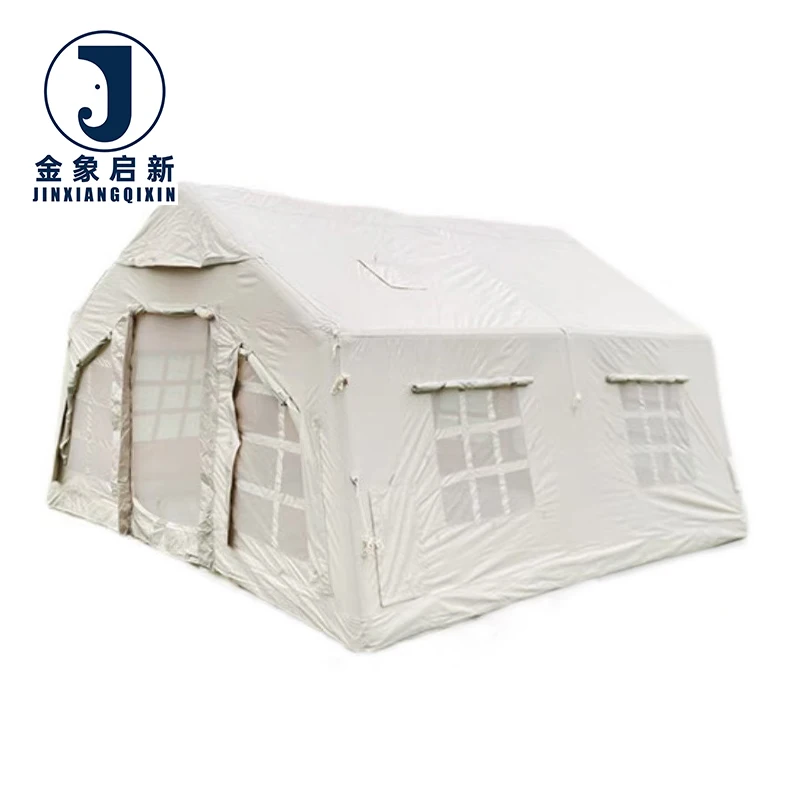
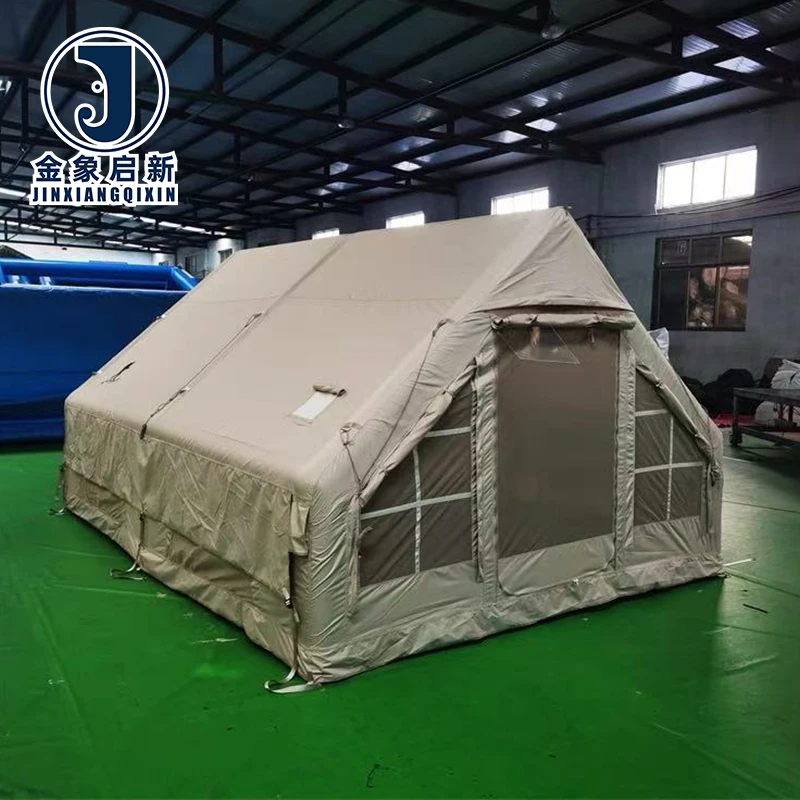
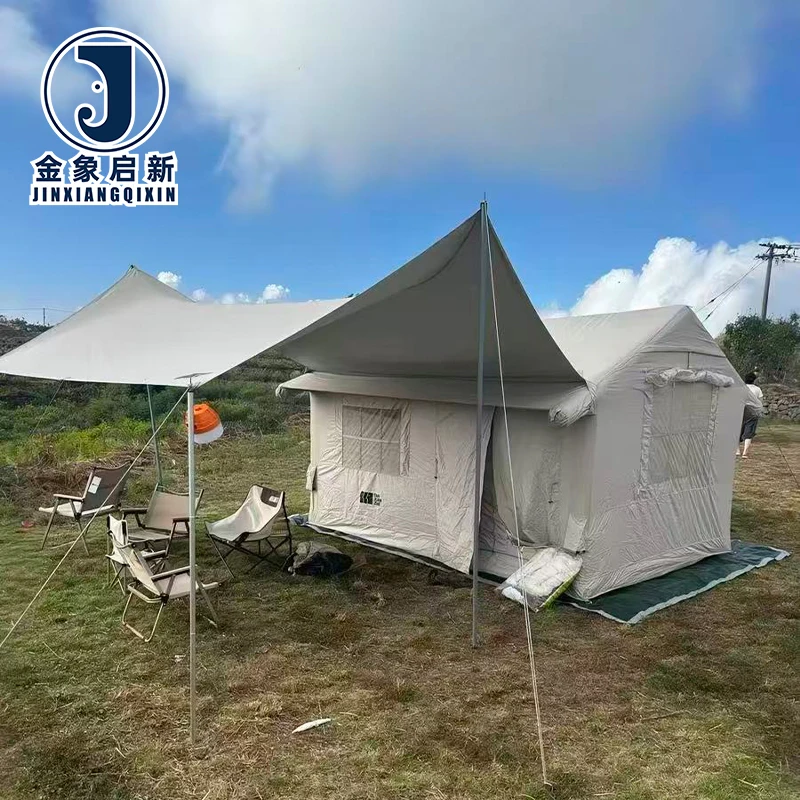
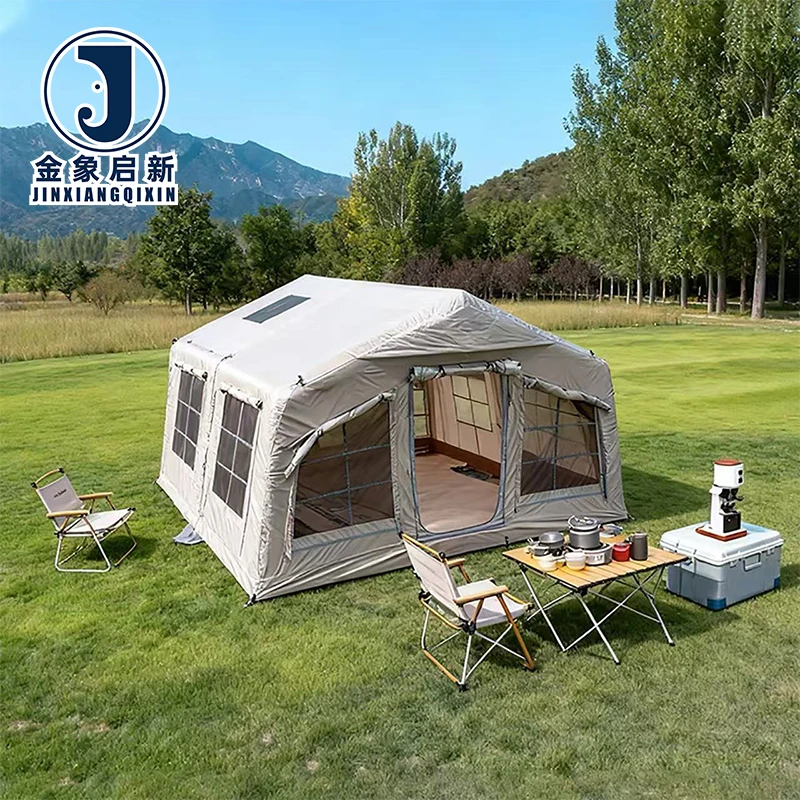
Description
Controlled Roll-to-Roll Output — 3 full production lines and 36 sets of coating equipment maintain batch consistency across bulk inflatable tent fabric orders, with dedicated QA at every stage.
Technical Specifications
| Parameter | Value |
|---|---|
| Product Type | Inflatable Tent Fabric |
| Core Material | PVC tarpaulin |
| Waterproofing | Fully coated PVC construction, waterproof per batch verification |
| UV Resistance | UV-resistant formulation (test basis not stated in source — confirm grade for your market) |
| Fire Retardancy | Fire-retardant treatment available (grade not stated in source — specify required standard) |
| Anti-Static | Anti-static treatment available (surface resistance not stated — request test report) |
| Tear Resistance | Tear-resistant PVC-coated structure |
| Customisation | OEM & ODM: sample development, pattern printing, material selection, product design |
| R&D Capability | 10 technicians handling formulation, print, and sizing requests |
| Production Capacity | 9,180 m² facility, 3 lines, 36 sets of processing equipment |
| Certifications | ISO 9001, ISO 14001, ISO 45001, CE |
Application Suitability
| Application | Exposure & Requirement |
|---|---|
| Inflatable tent manufacturing | Continuous internal air pressure, repeated inflation cycles, weld seam integrity at flex points |
| Commercial event canopy production | Prolonged UV exposure, wind loading, frequent assembly and teardown abrasion |
| Construction site temporary shelters | Dust, debris impact, moisture ingress, compliance with site fire-safety specifications |
| Membrane structure fabrication | Tensile load across large unsupported spans, coating adhesion under sustained stress |
Why Colour Drift Across Rolls Wrecks Tent Production Runs
Batch-to-batch shade consistency is controlled at the coating stage, not left to chance at the dye house.
When inflatable tent fabric arrives with even slight colour variation between rolls, the mismatch becomes visible the moment panels are heat-welded side by side on the factory floor. A production run that should yield uniform finished tents instead requires sorting, re-cutting, or in the worst case rejecting entire rolls. For inflatable tent fabric wholesale buyers ordering container loads, this shade drift translates directly into wasted material and delayed shipment schedules. [NEED_CITE: ISO 105 series methods for assessing colour fastness and batch consistency in coated textiles]
Roll Consistency Starts at the Coating Head
Maintaining uniform colour and coating weight across every roll in a bulk order requires process control at the point where PVC compound meets base fabric. Our coating lines run with calibrated compound mixing and metered application, so the inflatable tent fabric wholesale supply leaving the facility carries the same shade and GSM from the first roll to the last. QA staff pull samples at set intervals during each run to verify against the approved reference before the roll is cleared for packing.
How Weld Seam Behaviour Shapes Tent Panel Design
Inflatable tents place unusual demands on heat-welded seams because the air beams flex constantly during inflation, deflation, and wind gusts. The PVC coating formulation must reach the correct softening point at a temperature that bonds two layers without degrading the base fabric underneath. Our 10-person R&D team works with tent manufacturers to identify the heat-weld temperature window that matches the coating chemistry, reducing the risk that seams peel open after repeated setup cycles. [NEED_CITE: hot-air wedge welding parameters for PVC-coated polyester fabrics per industry practice]
Reading Beyond the GSM Number on the Quotation
GSM alone does not define how inflatable tent fabric performs under load. The base fabric denier, weave density, and coating adhesion together determine whether the material resists tearing when an air beam bends or whether the coating delaminates at a welded junction. A heavier roll with a loosely woven base can tear more easily than a lighter roll built on a tighter weave. That is why our material specification sheet lists base fabric construction and coating weight separately, giving buyers the full picture needed to compare options on engineering merit rather than a single weight figure.
The Hidden Cost of Specifying on Price Per Kilogram Alone
Selecting inflatable tent fabric purely on cost per kilogram often leads to problems downstream in the production cycle. A coating compound loaded with excess filler reduces raw material expense but weakens peel strength at welded seams, causing panels to separate during inflation testing. Coating that is too thin saves weight but compromises waterproof integrity once the tent is deployed in rain. These failures surface after the fabric is already cut, printed, and welded — when rework costs far exceed the savings on the original roll purchase. [NEED_CITE: relationship between PVC coating filler content and peel strength in laminated fabrics]
Why Manufacturers Source Inflatable Tent Fabric From This Line
Coating weight and adhesion are controlled through nearly 30 years of focused process experience on PVC-coated fabric, not adjusted by guesswork. Three full production lines give the capacity to fulfil container-load inflatable tent fabric wholesale orders while keeping lead times predictable. Every roll passes 100 percent inspection before dispatch, so tent makers receive material that matches the approved sample in weight, colour, and surface finish. Custom widths and pattern printing are handled in-house by the R&D team, eliminating the need to coordinate between a fabric supplier and a separate print house. Samples for new colour or GSM requirements are developed within days, allowing buyers to confirm material before committing to a full production run.
Documentation & Verification
- Material specification sheet listing GSM, base fabric denier, weave density, and coating weight per order
- Batch-specific test report covering tensile strength, waterproof rating, and flame resistance results
- Pre-shipment inspection record confirming 100 percent roll-by-roll check against specification
- Roll packing list with container loading plan by roll count and gross weight for shipment booking
- Certificate of origin and customs documentation prepared for destination market requirements
Fabrication, Handling & Storage
- Set hot-air wedge temperature to match PVC coating softening range before welding tent panel seams
- Store rolls upright on pallets to prevent flat-spot creasing that weakens the coating at the bend
- Allow rolled PVC fabric to acclimatise to workshop temperature before unrolling to avoid cold-cracking
- Use PVC-compatible solvent cleaner on printed surfaces to preserve pattern sharpness during maintenance
- Cut panels with allowance for heat-weld overlap width to maintain airtight seal at inflatable beam joints
What We Need to Quote Your Roll Stock Accurately
Provide the target GSM range, required roll width, and annual volume so we can match you to the correct production line schedule. Share the fire-retardant or anti-static standard your destination market demands, along with any colour reference or pattern print file for branding. Confirm whether you need raw roll stock only or sample panels cut to your tent pattern for weld testing before the bulk order runs.
Frequently Asked Questions
Q: How is roll-to-roll colour consistency controlled across a bulk order?
A: Compound mixing is calibrated per batch and coating application is metered across the full run. QA staff pull interval samples to check shade against the approved reference. Any roll falling outside the tolerance window is held before packing, so inflatable tent fabric wholesale orders ship with uniform colour from first to last roll.
Q: What fire-retardant and anti-static certifications are available for this fabric?
A: Fire-retardant and anti-static treatments are applied based on the destination market requirement. We supply the relevant test report and grade documentation with each order. Specify the standard your project needs — such as a regional building material fire classification — so the correct formulation is selected and verified before production.
Q: Can custom colours and pattern prints be matched across multiple production batches?
A: Yes. Colour references are recorded and compound formulas are archived so repeat orders reproduce the same shade. Pattern printing is handled on our own lines, keeping print registration consistent. Request a printed sample roll section before committing to the full batch to confirm colour and graphic alignment.
Q: How is the container loading plan calculated for roll stock shipments?
A: Each order ships with a roll packing list stating individual roll weight, diameter, and total roll count. The loading plan accounts for roll dimensions against container internal measurements to maximise utilisation while preventing compression damage. This data is provided before dispatch so buyers can confirm freight bookings with accurate weight and volume figures.