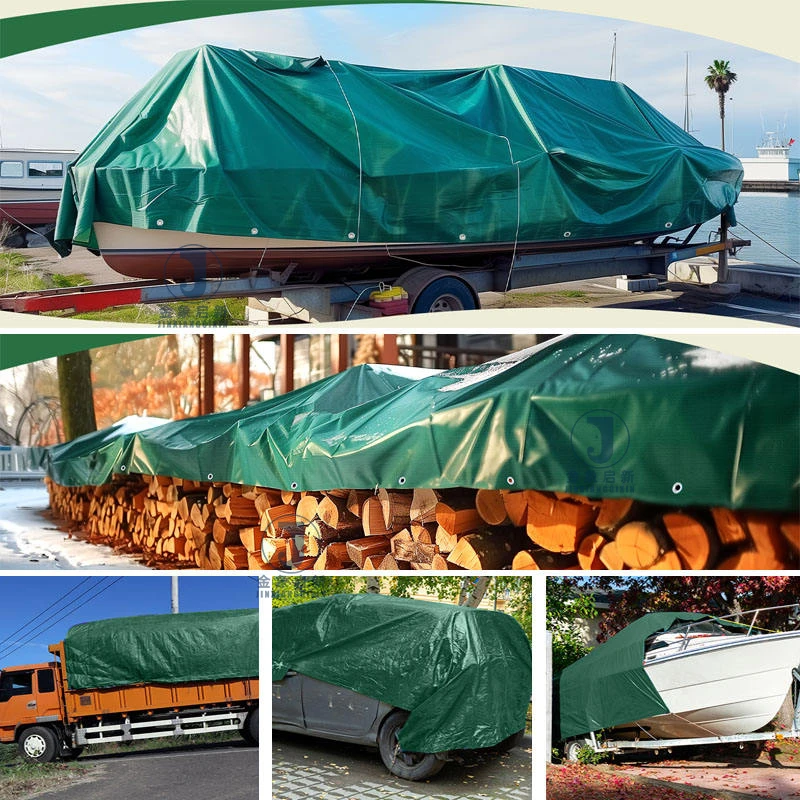
Description
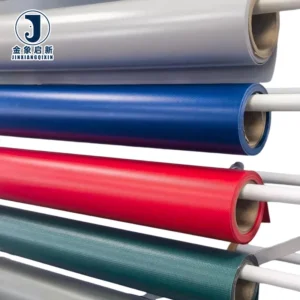
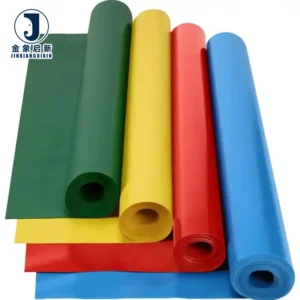
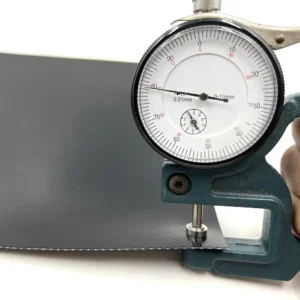
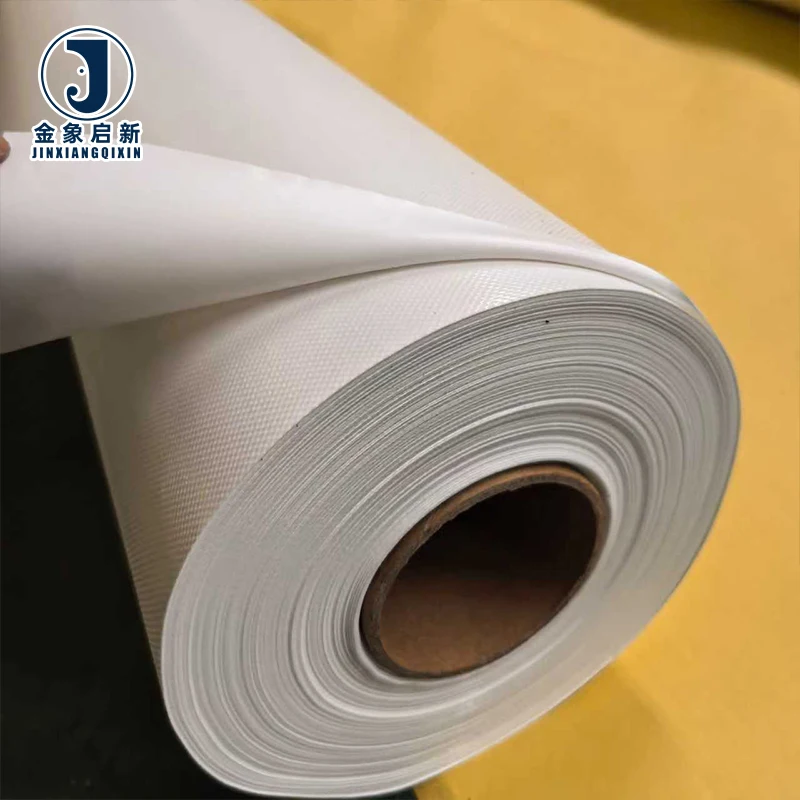
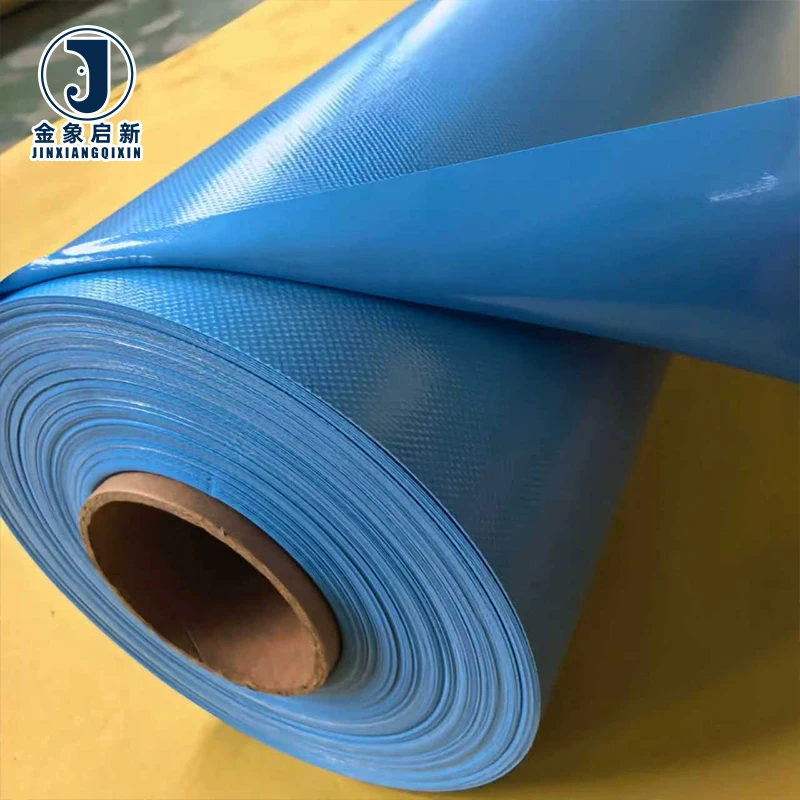
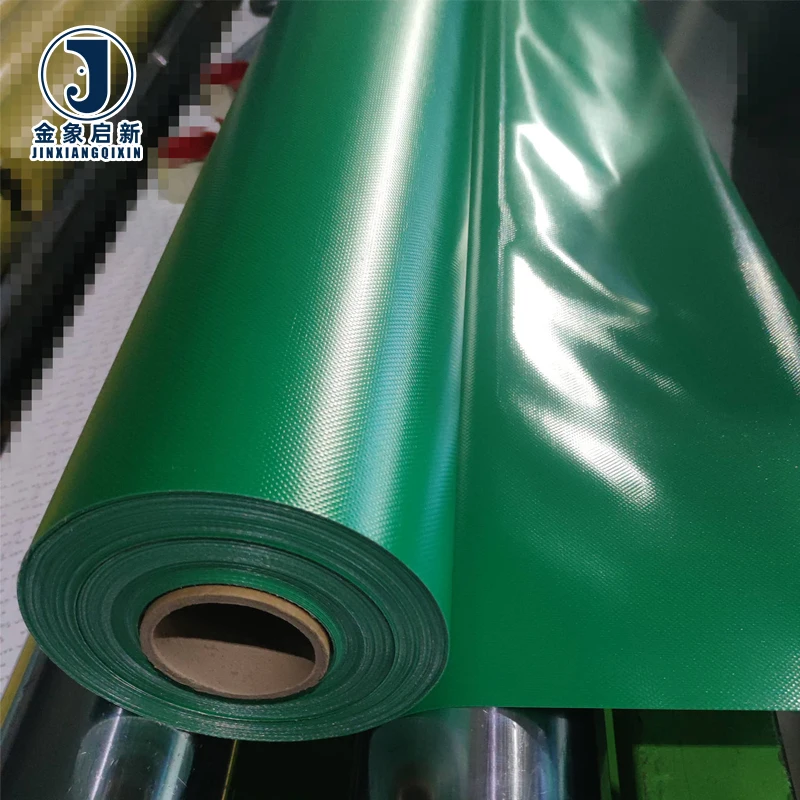
Consistent Roll Output — every roll in your order weighed, measured and colour-checked against the material specification sheet before it leaves the line.
Technical Specifications
| Parameter | Value |
|---|---|
| Product Type | PVC Coated Tarpaulin Roll |
| Base Fabric Denier | 1000D |
| Coating Material | PVC |
| Blackout | Yes |
| UV Treatment | Anti-UV (grade/test standard to be confirmed per market requirement) |
| Flame Retardant | Flame retardant (grade to be confirmed per market requirement) |
| Antibacterial & Mildew Proof | Yes |
| Oil & Stain Resistance | Yes |
| Acid & Alkali Resistance | Yes |
| Temperature Resistance | High temperature and cold resistance |
| Anti-Oxidation & Weather Resistance | Yes |
| Flexibility | Highly flexible, resistant to cracking |
| Self-Cleaning Surface | Yes |
| Welding Compatibility | HF, Hot Air, Sewing |
| Tensile Strength | Excellent (grade/test standard to be confirmed) |
| Tear Strength | Excellent (grade/test standard to be confirmed) |
| Peeling Resistance | Excellent (grade/test standard to be confirmed) |
| Certifications | ISO, CE |
Application Suitability
| Application | Exposure & Requirement |
|---|---|
| Event exhibition shade tents | Full light blocking, UV exposure, frequent assembly and teardown flexing |
| Tensile membrane structures | Constant tension load, wind-driven stress, long-term weather exposure |
| Portable storage structures | Rain, dust ingress, abrasion from stored goods contact |
| Airport hangar enclosures | Wide-span tension, UV and thermal cycling, fire safety compliance |
| Stadium architectural shade | Large-format panels, high wind uplift, public safety flame-retardant codes |
| Shade systems and shadings | Daily solar radiation, colour stability, self-cleaning to maintain appearance |
Why Batch Colour Drift Matters More Than Quoted GSM
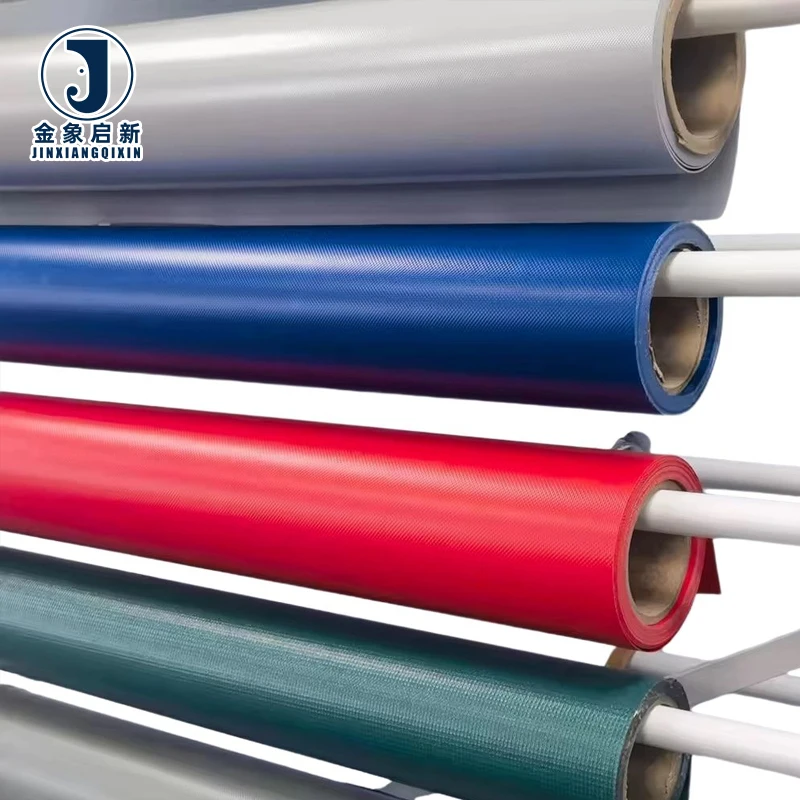
Colour variance between rolls becomes visible the moment panels are seamed side by side on a shade structure.
When a fabricator cuts panels from different rolls for a single tensile canopy or exhibition tent, even slight shade differences show up under direct sunlight. The buyer receives rolls that each meet the GSM on paper, but the finished installation looks patchwork. This is one of the most common complaints we hear from tent manufacturers and membrane structure contractors. [NEED_CITE: colour consistency measurement methods for coated textile batches per ISO 105 series] PVC coated tarpaulin roll wholesale orders are particularly exposed to this risk because container loads often span multiple production runs.
Roll-to-Roll Consistency Across Full Container Orders
Producing PVC coated tarpaulin roll wholesale volumes in a single batch run is the only reliable way to hold colour, weight and coating adhesion within tight tolerances. When an order is split across two or more production dates, the PVC compound mix, pigment dispersion and oven temperature can shift enough to create visible variation. We schedule full container orders as one continuous run wherever capacity allows, so every roll comes off the same coating head on the same day. This matters most for tensile structure fabricators who weld large panels from multiple strips and cannot hide shade differences behind seams.
Blackout Coating for Light-Sensitive Environments
The blackout layer within this 1000D PVC coated tarpaulin roll blocks light transmission through the fabric body, which is essential for event exhibition shade tents, projection environments and portable darkroom structures. Without a true blackout core, sunlight passes through lighter-coloured panels and creates unwanted interior glare. The PVC coating is applied to fully encapsulate the base fabric, so light cannot bleed through at weave intersections. For buyers specifying this roll stock for stadium shade canopies or airport hangar partitions, the blackout property also contributes to thermal reduction on the shaded side. [NEED_CITE: light transmission test methods for coated fabrics per EN 14509]
Understanding the 1000D Base Fabric and PVC Coating Relationship
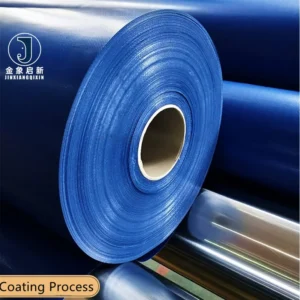
The 1000-denier yarn in the base fabric provides the structural backbone for tensile and tear loads. Denier alone does not determine final strength — the weave density (ends and picks per inch) and the PVC coating weight together govern how the finished roll behaves under tension. A 1000D fabric with a light coating may tear more easily than a lower-denier fabric with a heavier, well-bonded coating, because the coating transfers load between yarns at stress points. PVC applied by knife-over-roll coating penetrates the weave and locks yarns in place, improving peel resistance and allowing reliable hot-air and high-frequency welding. The self-cleaning surface treatment reduces dirt adhesion on installed shade structures, meaning less maintenance washing over the service life. Anti-UV and flame retardant treatments are available in grades suited to different regional codes — confirm the specific grade required for your market before placing your PVC coated tarpaulin roll wholesale order. [NEED_CITE: relationship between denier, weave density and coated fabric tensile performance per ISO 1421]
The Hidden Cost of Specifying Without Verification
A roll that arrives lighter than the quoted GSM means less PVC on the fabric and a thinner protective skin over the base yarns. The material may handle normally during fabrication, but the weld lines become the weakest point because there is insufficient coating thickness to form a proper fused joint. Seams fail before the body fabric does — typically at the point where the installed structure flexes most under wind load. Similarly, a flame retardant claim without a matching test report leaves the fabricator exposed when a building inspector asks for documentation on a stadium canopy or airport hangar partition. The cost is not in the fabric; it is in the failed inspection, the return shipment and the reputational damage with the end client. [NEED_CITE: common failure modes at welded seams in PVC coated architectural fabrics]
Why Fabricators Source This Roll Stock Here
Three full production lines and 36 sets of professional equipment allow us to hold batch consistency across large-volume PVC coated tarpaulin roll wholesale orders without splitting production runs. A 10-person R&D team handles custom width scheduling, colour matching and sample development within days rather than weeks. Dedicated QA/QC runs at every production stage — base fabric inspection, coating weight checks, adhesion tests and final roll-by-roll weighing — so the pre-shipment inspection record reflects actual measured values, not assumed ones. Every roll leaves with documentation that matches the material specification sheet issued at quotation stage. The facility is ISO and CE certified, and export documentation including certificate of origin and customs paperwork is prepared in-house to prevent shipping delays.
Documentation & Verification
- Material specification sheet listing GSM, 1000D base fabric denier and PVC coating type per batch
- Pre-shipment inspection record with roll-by-roll weight and colour verification
- UV and flame retardant test reports matching the grade stated on your quotation — request before ordering
- Roll packing list with container loading plan by roll count and weight for your logistics team
- Certificate of origin and customs documentation prepared for your destination market
Fabrication, Handling & Storage
- HF and hot-air welding both suit this PVC-coated 1000D fabric; adjust dwell time to coating thickness
- Sewn panels should use UV-stable thread compatible with the anti-UV treatment grade supplied
- Store rolls upright on pallets to prevent flat-spot creasing across the full width
- Allow cold-stored rolls to reach ambient temperature before unrolling to avoid coating crack risk
- Use mild detergent only on the self-cleaning surface — solvents can degrade the PVC top coat
- Plan cutting layout to minimise offcuts; wide rolls reduce the number of welded seams per panel
What We Need to Prepare Your Quotation
Tell us the end-use application — whether this 1000D PVC coated tarpaulin roll is going into event tents, tensile shade canopies or portable storage walls — and the environmental conditions it will face. Share the roll widths and lengths your fabrication line is set up to handle, along with your annual volume estimate so we can plan batch runs. If your market requires a specific flame retardant grade or UV performance level, send the relevant standard or test method so we match the correct treatment from the start.
Frequently Asked Questions
Q: How do I verify GSM on arrival against the quoted specification?
A: Every shipment includes a pre-shipment inspection record showing the measured weight per roll. On receipt, you can cut a measured sample from the roll end and weigh it on a calibrated scale. Compare the result to the GSM stated on the material specification sheet we provided with your quotation. Any discrepancy outside normal tolerance should be flagged before cutting begins.
Q: What UV and flame-retardant test documentation is available for this roll stock?
A: We supply test reports for UV and flame-retardant grades where applicable to your order. The specific grade depends on the treatment level selected at quotation stage. Request the test documentation before confirming your order so you can verify it meets the fire safety or UV performance codes required in your destination market.
Q: How is batch colour consistency controlled across multiple rolls in one order?
A: We schedule full orders as a single continuous production run on one coating line wherever possible. Pigment batches are mixed for the entire order volume, and each roll is checked against the colour reference during the pre-shipment inspection. The packing list identifies which rolls belong to which production batch for your traceability.
Q: What roll widths and container loading configurations are available?
A: Stock and custom widths are available depending on your fabrication requirements. The roll packing list details roll count, individual roll weight and the container loading plan so your logistics team can plan handling equipment in advance. Confirm your preferred width and maximum roll diameter when requesting your quotation.
Q: What welding methods work best with this 1000D PVC coated fabric?
A: High-frequency welding, hot-air welding and sewing are all compatible with this PVC-coated 1000D material. HF welding produces the strongest fused seams for tensile and membrane structures. Hot-air welding suits on-site repairs and smaller fabricators. Sewing is used where mechanical fastening is preferred, with welded tape over stitch lines for waterproofing.