Description
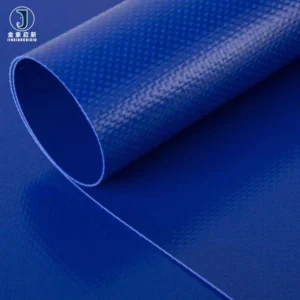
Batch-Matched Roll Consistency — Every PVC Truck Cover Tarpaulin roll is weighed and measured against specification before dispatch, ensuring GSM and colour match across your entire container load.
Technical Specifications
| Parameter | Value |
|---|---|
| Product Type | PVC Truck Cover Tarpaulin |
| Material Base | Vinyl-coated polyester mesh fabric |
| Coating Process | 100% PES dipping coating |
| Weave Construction | Knitting and plain weave available |
| Weight Range | 50gr/m² ~ 220gr/m² (multiple grades available) |
| Thickness Range | 0.2 mm – 0.4 mm (8 mil – 16 mil) |
| Roll Widths | 6 ft, 8 ft, 10 ft, 12 ft, 2 m, 4 m, 6 m |
| Roll Lengths | 100 yards, 100 meters, or custom length |
| Key Features | Waterproof, washable, tear resistant, mildew proof, anti-aging |
| UV Treatment | Available — confirm the grade required for your market |
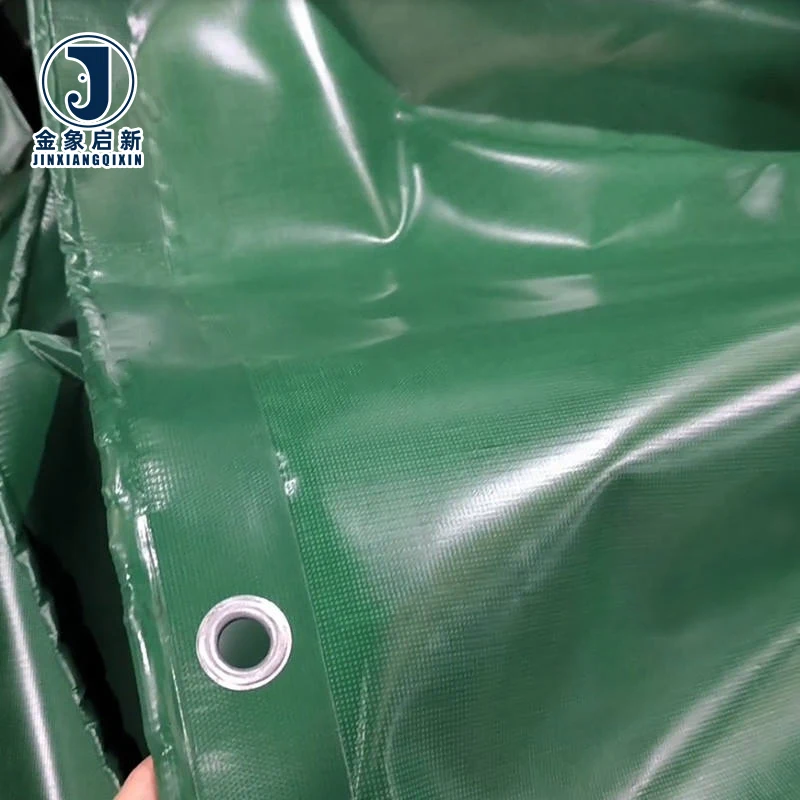
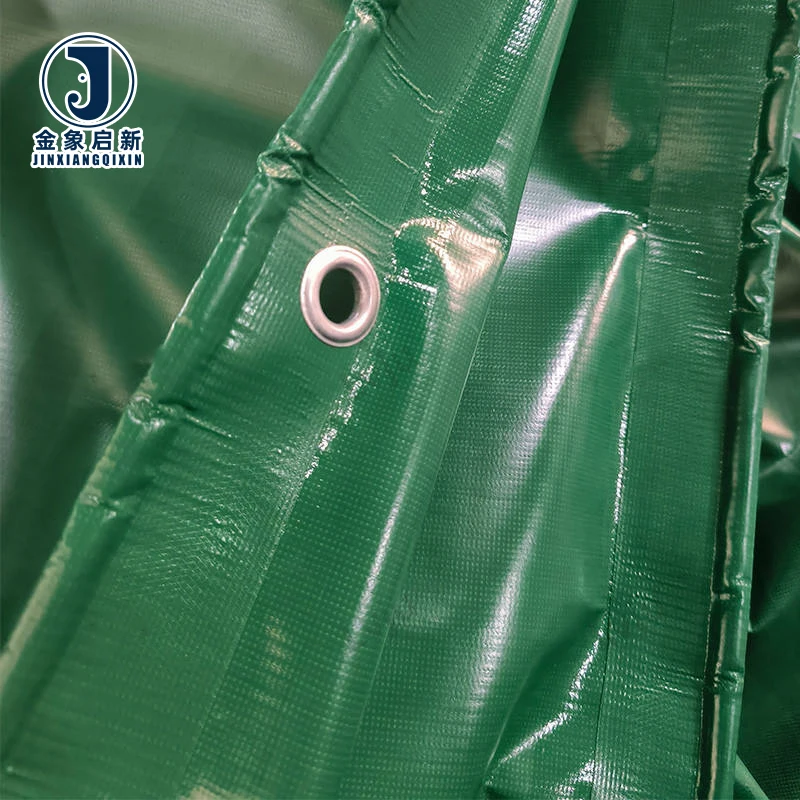
| Finished Edge Detail | PP rope reinforced hem on all four edges |
| Eyelet Specification | Galvanized eyelets every 3 ft or 1 meter interval |
| Corner Reinforcement | Reinforced plastic corners on finished tarps |
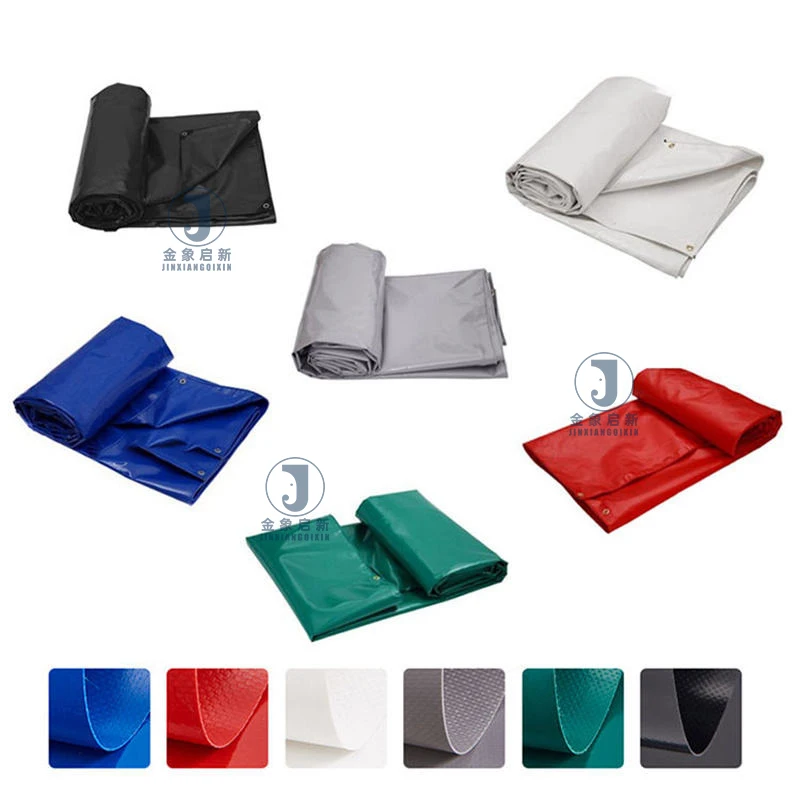
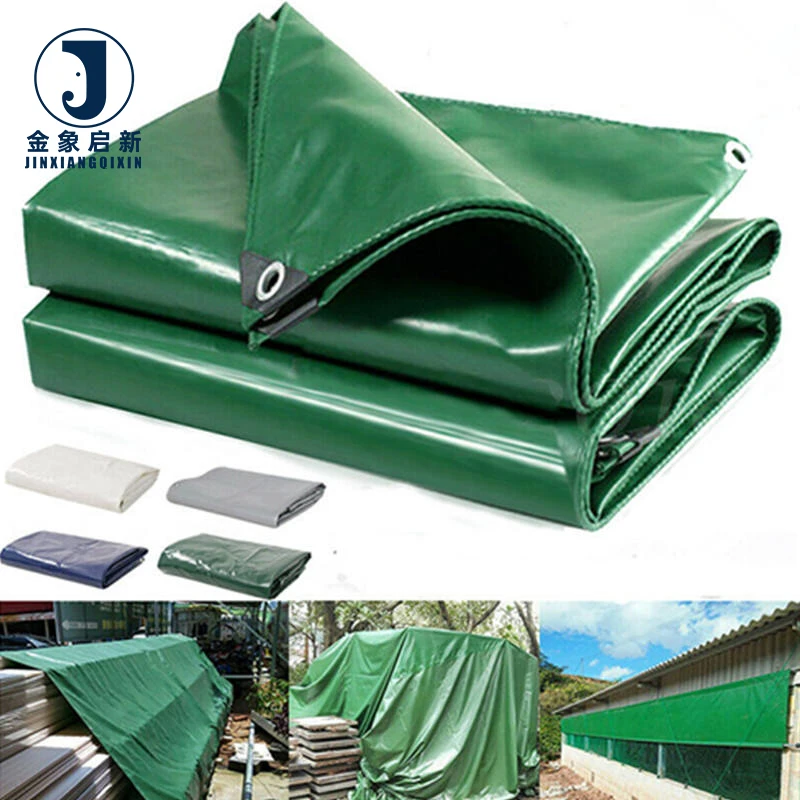
| Colour Options | Blue, Blue/Orange, Green, Grey, Black, Clear, Grey/Green, Orange, or custom |
| Certification | ISO, CE |
Application Suitability
| Application | Exposure & Requirement |
|---|---|
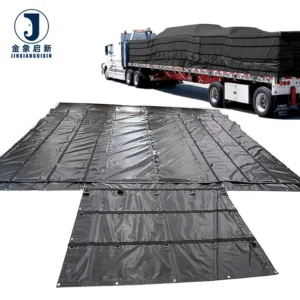
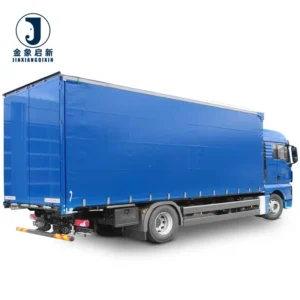
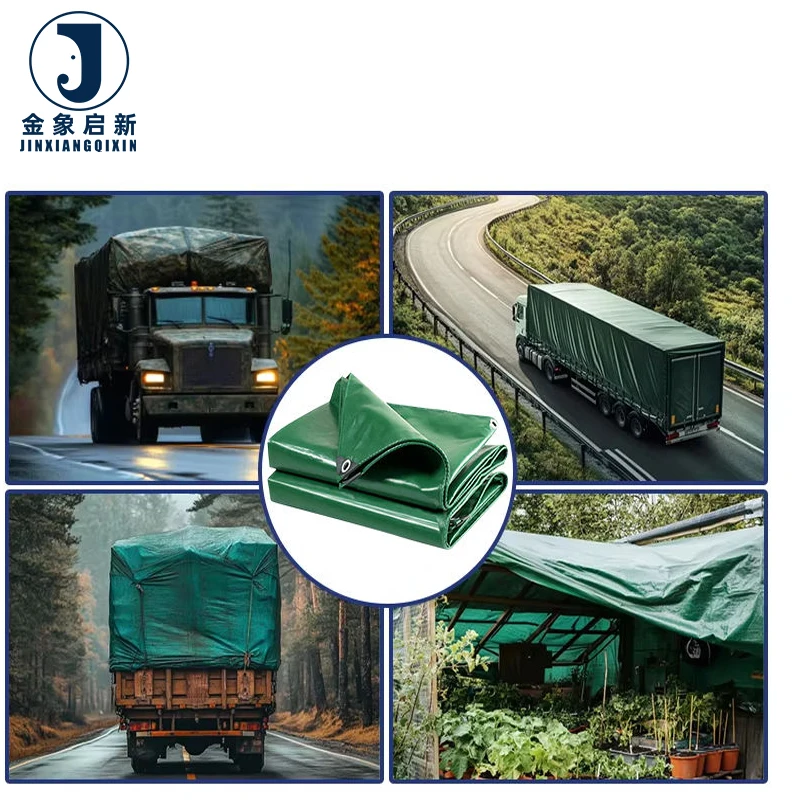
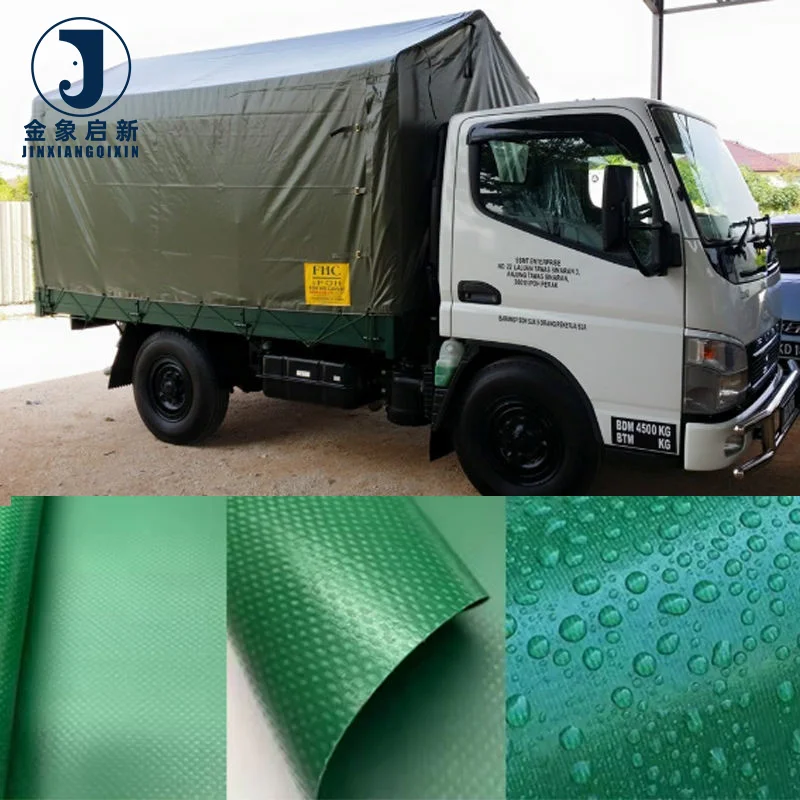
| Long-haul truck and trailer load covering | Continuous highway UV exposure, wind flexing, tie-down abrasion at eyelet points |
| Lumber transport protection | Sap and moisture contact, sharp timber edge puncture risk, repeated loading cycles |
| Steel coil and sheet transport | Heavy concentrated load, metal edge abrasion, condensation during transit |
| Snow and winter equipment transport | Sub-zero embrittlement risk, road salt exposure, high moisture contact |
| General cargo weather protection | Rain ingress prevention, dust exclusion, moderate UV and thermal cycling |
Why GSM Variance Between Rolls Destroys Fleet Consistency
Verified weight per roll is the only meaningful specification when buying truck cover tarpaulin by the roll.
Sourcing PVC Truck Cover Tarpaulin in volume exposes buyers to a common failure: the quotation states one GSM but the delivered rolls test lighter, sometimes by a significant margin. This variance compounds across a container — some rolls meet spec while others fall short, making it impossible to guarantee uniform performance across a fleet. [NEED_CITE: tensile and tear test methods for coated fabrics per ISO 1421]
A roll that weighs less than specified often indicates lower coating mass, a lighter base fabric, or both. On a truck cover, this translates to reduced abrasion resistance at the flex points where the tarp meets the trailer frame. The first rolls to fail are almost always the underweight ones, and they fail at the seams and eyelet zones under tie-down tension.
Roll-to-Roll Colour Matching at Container Scale
When a fleet operator orders PVC Truck Cover Tarpaulin for multiple vehicles, even slight colour drift between rolls becomes immediately visible once the covers are installed side by side on the yard. Consistent pigment loading and coating temperature control across the production run determine whether the batch arrives uniform. Our R&D team manages pigment formulation per order and monitors coating parameters throughout each run to minimise shade variation across rolls destined for the same container.
Width Selection and Container Loading Efficiency
Stock widths from 2 m to 6 m cover most standard truck and trailer dimensions, but custom widths reduce cutting waste for converters producing finished covers in volume. [NEED_CITE: container loading optimisation for coated fabric rolls] Choosing the correct roll width against your cut pattern directly affects yield — a 4 m roll may produce excessive offcut when cutting for a 2.5 m trailer width, while a purpose-width roll eliminates that waste. Container loading plans are built around roll count and weight, with heavier GSM grades reducing the number of rolls per container.
Reading the Specification Beyond Weight
Weight alone does not predict how a truck cover tarpaulin will perform on the road. The base fabric denier and weave density determine how the material resists tear propagation once punctured by a sharp cargo edge or tie-down hook. A 220gr/m² fabric with a loose weave may tear more easily than a lighter fabric with a tighter construction. The vinyl-coated polyester base used in this PVC Truck Cover Tarpaulin range is produced through a 100% PES dipping coating process, which encapsulates individual yarns and builds adhesion between the coating and the base fabric. This affects how well the material holds together at welded seams — a critical failure point on truck covers where the load flexes during transit.
Edge reinforcement matters equally: PP rope in the hem distributes tie-down loads across a wider fabric area, and galvanized eyelets spaced at 3 ft or 1 meter intervals provide regular attachment points that prevent concentrated stress. Reinforced plastic corners address the zone where two edges meet, which is typically the first area to degrade under repeated tension cycles.
What Happens When Roll Specifications Are Not Verified
When a batch of truck cover tarpaulin arrives without pre-shipment GSM verification, converters discover the problem mid-production — the heat-seal temperature calibrated for 220gr/m² burns through a roll that actually weighs 180gr/m². Welded seams on underweight rolls fail prematurely because the coating mass available for bonding is insufficient. For fleet operators, inconsistent thickness across rolls means some covers drape correctly while others are too stiff or too thin, creating a mixed-quality fleet that generates warranty complaints. [NEED_CITE: coated fabric weld strength relative to coating weight]
Colour inconsistency forces converters to sort and match rolls before cutting, adding labour and delaying production. In the worst cases, an entire container load must be re-sorted or partially rejected, disrupting delivery schedules to end customers.
Why Sourcing Here Supports Your Roll Stock Programme
Three full production lines and 36 sets of professional equipment support bulk roll output with maintained coating consistency across long runs. Each PVC Truck Cover Tarpaulin order goes through dedicated QA/QC at every production stage, with 100% inspection before shipment rather than batch sampling. The 10-person R&D team handles custom width development, colour matching, and sample production within days so you can confirm the material before committing to a full container. Roll packing lists detail roll count, individual weight, and container loading configuration for your receiving team.
Documentation & Verification
- Material specification sheet stating GSM, base fabric, and coating type for each roll grade ordered
- Colour reference document matching the agreed Pantone or RAL code per production batch
- Pre-shipment inspection record confirming weight and dimension per roll before container loading
- Roll packing list with individual roll weights and container loading plan for receiving verification
- Certificate of origin and customs documentation for international roll stock import
- UV and mildew treatment test report where applicable to the selected grade
Fabrication, Handling & Storage
- Heat-seal temperatures should be calibrated to the specific GSM grade — test weld on each roll before full production
- Galvanized eyelets at 3 ft intervals distribute tie-down load; verify eyelet setting pressure matches fabric thickness
- Store rolls upright on pallets to prevent flat-spot deformation on the 0.2–0.4 mm coating surface
- PP rope hem reinforcement should be stitched or welded with tension matched to the base fabric denier
- Unroll and allow material to relax at ambient temperature before cutting to prevent dimensional shift
- Reinforced plastic corners on finished tarps require compatible adhesive or weld settings during assembly
Planning Your Roll Stock Order
To specify the correct PVC Truck Cover Tarpaulin for your programme, share your target GSM, required roll widths, annual volume, and whether you need roll stock only or finished tarps with eyelets and hems. If your market requires UV or mildew treatment, confirm the performance standard your end customers expect. Colour requirements should include a reference code and whether the entire order must ship in a single production run for batch consistency. Sample rolls can be dispatched for your own testing and heat-seal calibration before full production begins.
Frequently Asked Questions
Q: What GSM do you recommend for long-haul truck covers?
A: The right GSM depends on your cargo type, tie-down system, and expected service conditions. Heavier grades in the 180–220gr/m² range suit long-haul and heavy cargo applications where abrasion and flex fatigue are constant. Lighter grades work for short-distance or covered transport. Share your specific application and we will recommend the grade that matches your performance requirement.
Q: Can I get consistent colour across a full container order?
A: Yes — pigment formulation is locked per order and coating parameters are monitored throughout the production run. Every roll in your container comes from the same batch with the same colour reference. We confirm shade consistency during pre-shipment inspection and document the result before loading.
Q: What is the minimum order for custom width rolls?
A: Custom widths are available across the range from 2 m to 6 m and beyond. Minimum order quantities depend on the specific width and GSM grade you require. Provide your target width, GSM, and annual volume so we can confirm the minimum and lead time for your roll stock programme.
Q: Do you supply finished tarps or only roll stock?
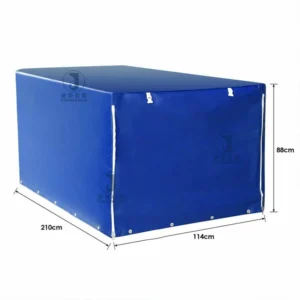
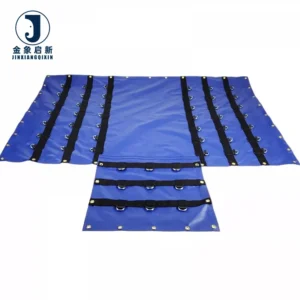
A: Both options are available. Roll stock ships in standard or custom widths for your own converting operation. Finished tarpaulins come with PP rope reinforced hems, galvanized eyelets at 3 ft or 1 meter spacing, and reinforced plastic corners, cut to your specified dimensions. Industrial sewing for lumber, steel, coil, and snow tarps is also supported.
Q: How do you verify GSM before shipment?
A: Every roll is weighed and measured during the pre-shipment inspection stage. The inspection record documents the actual GSM against the agreed specification sheet. This record travels with your shipping documentation so your receiving team can cross-check on arrival. Rolls that fall outside tolerance are identified and replaced before container loading.