Description
Production Line Control — three full coating lines run PVC truck cover tarpaulin in dedicated batches, holding GSM and colour within tolerance from first roll to last.
Technical Specifications
| Parameter | Value |
|---|---|
| Product Type | PVC Tarpaulin for Truck Trailer |
| Coating Material | PVC / Vinyl |
| Base Fabric | Laminated Sheet / Canvas |
| Finish | Double-Faced |
| Color Options | Multiple Colors available |
| Water Resistance | Yes |
| Anti-UV Treatment | Yes (test basis not stated in source — confirm grade required for your market) |
| Flame Retardant | Yes (grade not stated in source — confirm certification needed at inquiry) |
| Standards | ISO, CE (company certification) |
Application Suitability
| Application | Exposure & Requirement |
|---|---|
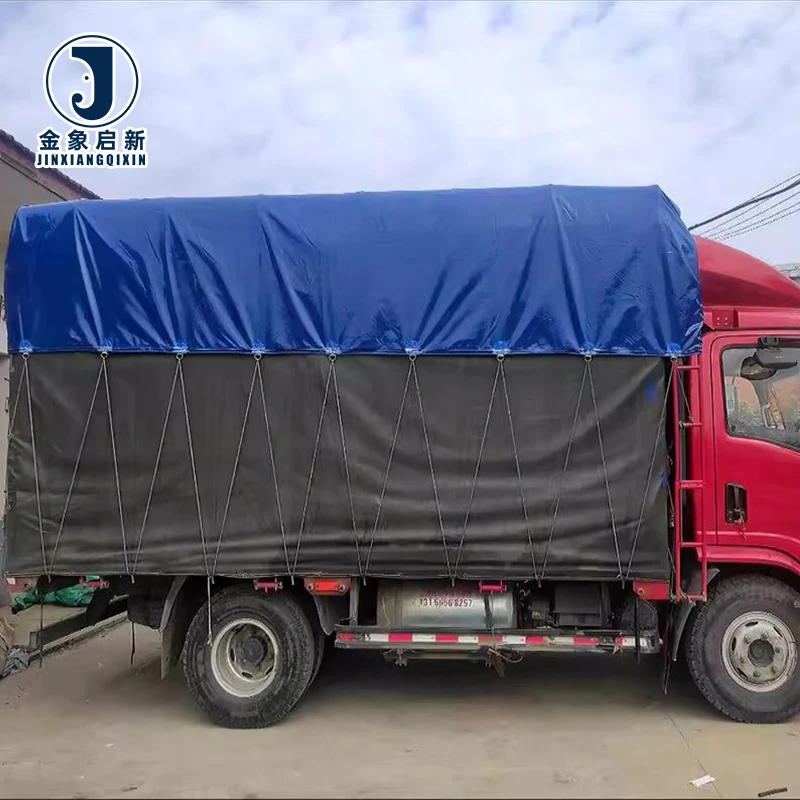
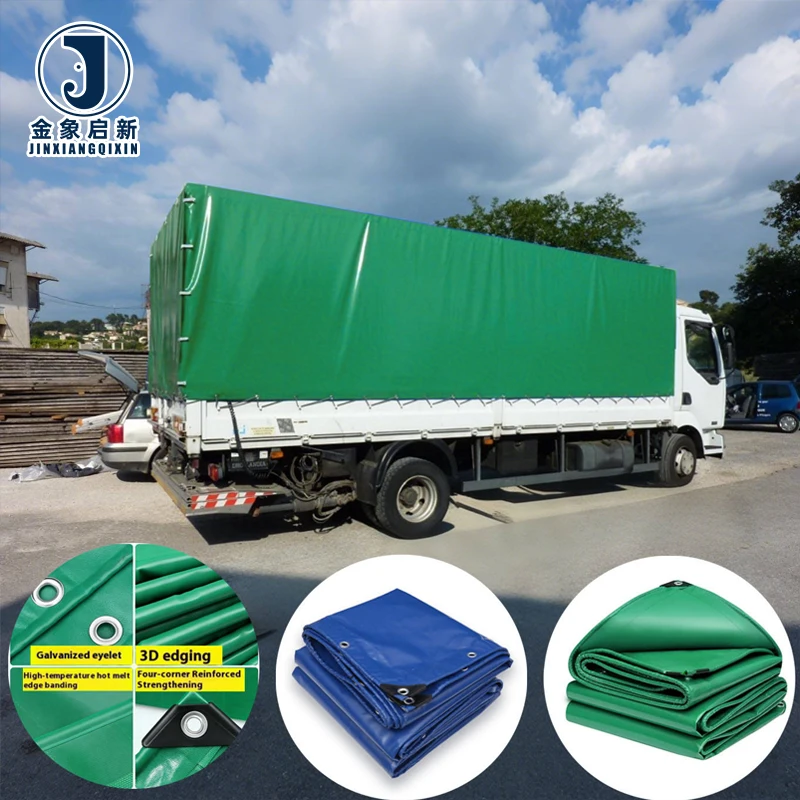
| Truck side curtain | Constant flexing, road abrasion, UV exposure, tension from tie-down systems |
| Top roof cover | Direct weather impact, pooling water, thermal cycling, wind lift stress |
| Trailer refurbishment | Panel replacement requiring batch colour match with existing fleet livery |
| Flatbed load protection | Heavy cargo contact, mechanical abrasion, forklift loading impacts |
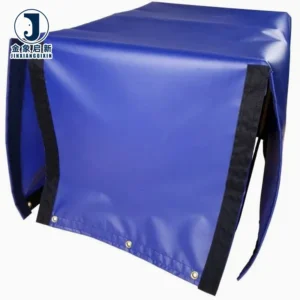
| Pallet and equipment cover | Short-term outdoor storage, UV and rain protection, repeated handling |
Why Colour Drift Between Rolls Destroys Fleet Uniformity
PVC truck cover tarpaulin installed side by side on a fleet must read as one continuous surface — even a slight hue shift between rolls becomes a visible panel mismatch.
Fleet operators who order replacement side curtains and top covers across multiple production runs frequently discover that the second batch looks noticeably different from the first once installed on adjacent trailers [NEED_CITE: colour delta tolerance in coated fabric procurement for fleet applications]. This is rarely a single-roll defect; it accumulates through small pigment dosing variances, substrate whiteness differences, and curing temperature fluctuation across separate production days. The problem compounds when trucks are parked in a row at a depot or photographed for a logistics company’s marketing material, where the inconsistency is immediately obvious to the client’s customer.
Batch Matching Protocols for Volume Buyers
When ordering PVC truck cover tarpaulin in roll stock quantities, the purchasing decision hinges on repeatability as much as on the base specification. We assign a production-day colour reference to each batch and retain a physical swatch so that subsequent orders can be matched against the original rather than against a generic RAL chart [NEED_CITE: spectrophotometric colour control in PVC coated fabric manufacturing]. This matters for transport equipment builders who fabricate side curtains across several weeks and need every panel to read identically once assembled on the trailer frame.
Roll-to-Roll Weight Consistency Across the Order
GSM variation between rolls in the same container is a frequent source of dispute at the receiving warehouse. Our production process monitors coating weight on every roll during the coating pass, and the pre-shipment inspection checks a defined sample of rolls against the quoted specification. The objective is that a buyer opening a container of PVC truck cover tarpaulin finds the same hand-feel, drape, and tensile behaviour from the first roll to the last — not a mix of grades that forces the fabrication shop to sort material before cutting.
Reading the Specification Beyond the Quoted GSM
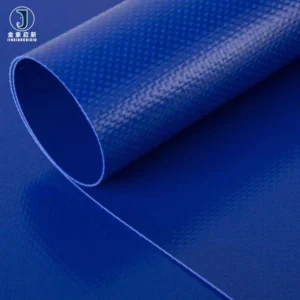
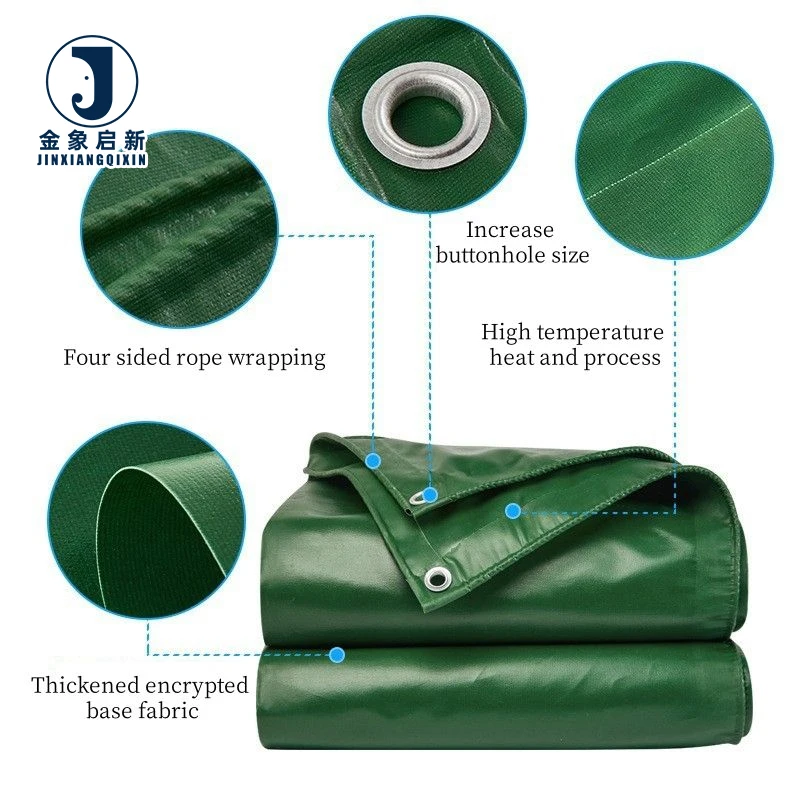
A quoted weight in grams per square metre tells you how much material is present, not how that material is distributed between base fabric and coating. Two PVC truck cover tarpaulin products can carry the same GSM yet behave very differently: one may rely on a heavier base yarn for tensile strength while the other carries a thicker coating layer that adds stiffness without proportional tear resistance. The laminated canvas base in this product provides the structural skeleton, while the double-faced PVC coating seals both sides against moisture ingress and contributes to abrasion resistance at contact points. Surface finish — available in glossy or matte options — affects how dirt adheres and how easily the cover can be washed down at a depot. Flame retardant grades and anti-UV treatments are available, but the specific grade and the test standard behind it must be confirmed at the inquiry stage to ensure compliance with the destination market’s regulations [NEED_CITE: flame retardant classification systems for transport textiles].
What Happens When the Wrong Roll Stock Reaches the Workshop
A fabric that arrives lighter than the quoted GSM may cut and sew without complaint, but it will flex-fatigue faster at the tie-down stress points where a truck side curtain bends every time the load shifts. Equally, a roll stock order where colour matching was not controlled per batch forces the fabrication team to either reject panels or accept a visible seam line between mismatched sheets — both outcomes carry rework cost that shows up weeks after delivery [NEED_CITE: weld seam failure frequency in PVC coated tarpaulin at flex zones]. Flame retardant material supplied without a verifiable test certificate creates a different risk: the fabricated cover passes visual inspection but fails the site safety audit, leaving the transport equipment builder liable for replacement at short notice.
What We Bring to Every Roll Order
Three dedicated production lines mean PVC truck cover tarpaulin runs are scheduled on equipment configured for coated fabric, not adapted from unrelated product categories. A ten-person R&D team reviews each inquiry against the end-use — trailer side curtain, top roof, or load cover — and recommends the base fabric weight and coating ratio accordingly. Dedicated QA/QC checkpoints operate at every production stage, with full inspection before dispatch rather than spot sampling. Samples are developed within days for custom colour or width requirements, giving buyers a physical reference to approve before the production run commits. The documentation package accompanying each shipment includes the material specification sheet, roll packing list, and any applicable test reports tied to the treatments specified on the purchase order.
Documentation & Verification
- Material specification sheet listing base fabric type, coating material, and treatment claims per roll batch
- Pre-shipment inspection record confirming GSM weight against the quotation for sampled rolls
- Roll packing list detailing roll count, individual net weight, and container loading sequence
- Test reports for anti-UV and flame retardant grades where specified on the purchase order
- Certificate of origin and customs documentation for cross-border shipment clearance
Fabrication, Handling & Storage
- Hot-air welding temperature should be calibrated to the double-faced PVC coating thickness before production runs begin
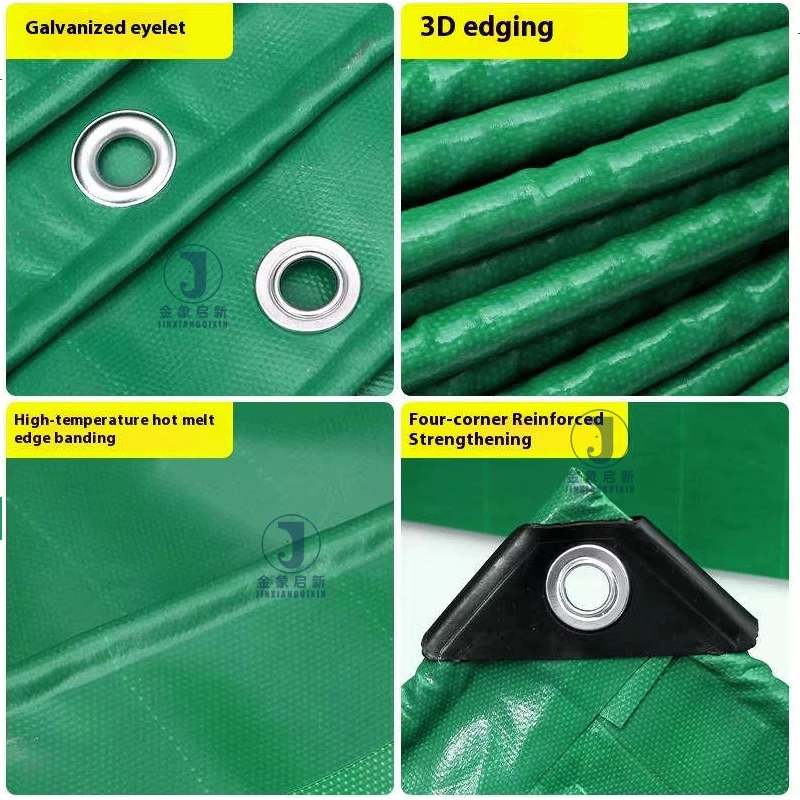
- Reinforced hems at tie-down zones distribute load across the laminated canvas base rather than relying on coating adhesion alone
- Rolls stored upright on end-caps prevent flat-spot deformation that shows as a permanent crease after unrolling
- Cold-weather handling requires allowing rolls to reach ambient temperature before unrolling to avoid coating crack at the core
- Mild detergent cleaning preserves the surface finish; solvent-based cleaners may attack the PVC plasticiser layer
- Cutting layouts should account for the available roll width to minimise off-cut waste on standard trailer panel sizes
What to Include in Your Inquiry
Provide the trailer model or panel dimensions you are cutting for, along with the annual roll volume and the colour reference your fleet standard requires. If your destination market mandates a specific flame retardant or anti-UV certification, state the standard name so we can confirm the treatment grade and supporting documentation available. Specify whether you need standard stock widths or a custom roll width to optimise your cutting pattern, and indicate if a pre-production sample roll is needed for your workshop to validate welding and fabrication parameters before the full order ships.
Frequently Asked Questions
Q: How do you verify GSM weight matches the quotation on every roll?
A: Each roll is weighed and measured during the pre-shipment inspection to confirm the coating weight aligns with the quoted specification. Sampled rolls from each batch are checked against the approved reference, and the inspection record is included in the shipment documentation so you can cross-check on arrival.
Q: Can I order custom widths and colours with consistent batch matching?
A: Yes. Custom widths are produced on dedicated coating runs where the pigment batch is locked for the entire order. We retain a colour swatch from each production run so that repeat orders placed months later can be matched against the original reference rather than a generic chart.
Q: What minimum order applies to custom-colour truck cover rolls?
A: Minimum quantities for custom colours depend on the roll width and the number of colour variants in the order. We quote the minimum after reviewing your cutting pattern and container loading plan, balancing production efficiency with the volume you need for your fabrication schedule.
Q: Do flame retardant and anti-UV grades include test reports?
A: Where a specific grade is requested at the inquiry stage, we supply the corresponding test report covering that treatment. The applicable standard and grade must be confirmed before production so the correct formulation is applied and documented for your compliance file.
Q: How are rolls packed and loaded to survive container transit?
A: Rolls are packed on end-caps or in horizontal cradles depending on the container loading plan, with wrapping to prevent coating-to-coating adhesion during transit. The packing list details roll count and weight per position so you can plan unloading and warehouse placement before the container arrives.