Description
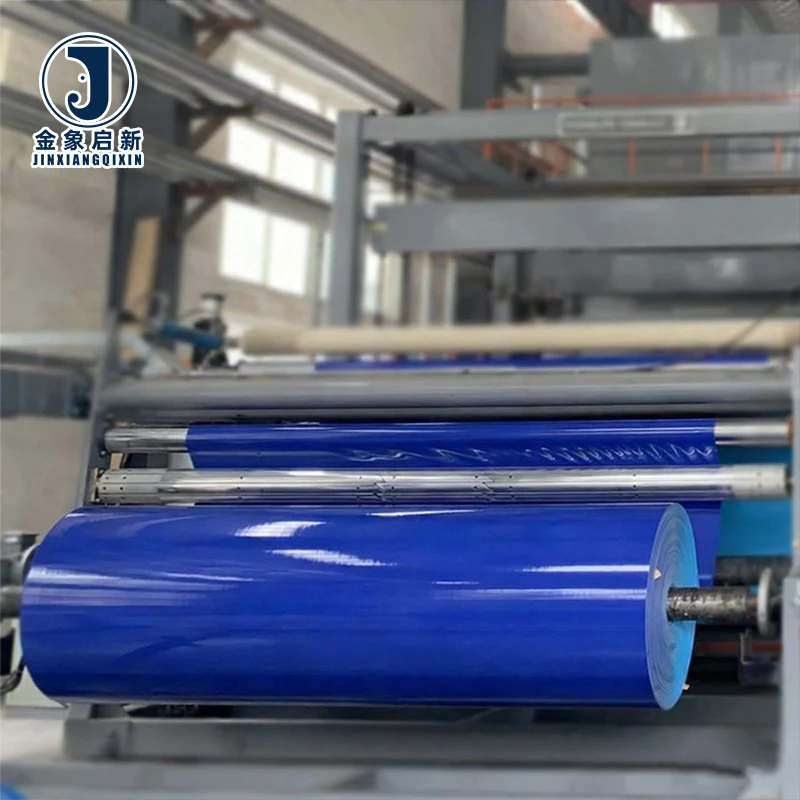
Roll-Level Consistency — every roll checked against its specified GSM and colour reference before dispatch, so your warehouse receives exactly what was quoted.
Technical Specifications
| Parameter | Value |
|---|---|
| Product Type | PVC Tarpaulin Roll |
| Base Fabric | HDPE weaving |
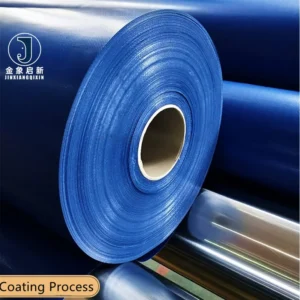
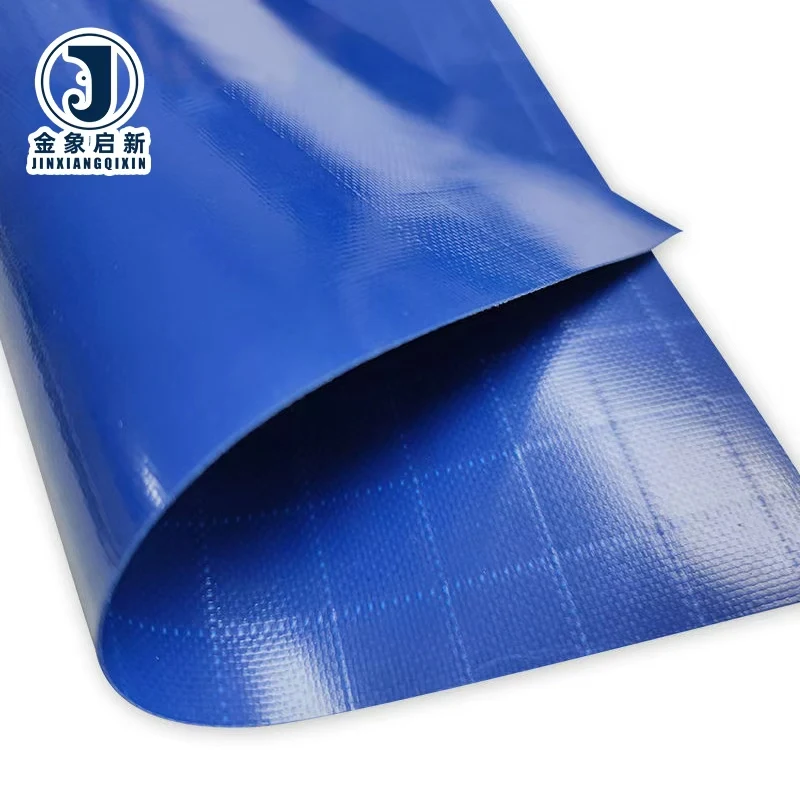
| Coating Material | LDPE lamination on both sides |
| Weight Range | 50 g/m² – 300 g/m² (confirm the grade for your application) |
| Thickness | 0.2–0.4 mm (8–16 mil) |
| Weave Density Options | 6×6, 6×7, 7×7, 7×8, 8×8, 9×9, 8×10, 10×10, 12×12, 14×14, 14×16 |
| Roll Width Options | 6 ft, 8 ft, 10 ft, 12 ft, 2 m, 4 m, 6 m, or custom |
| Roll Length Options | 100 yards, 100 meters, or custom |
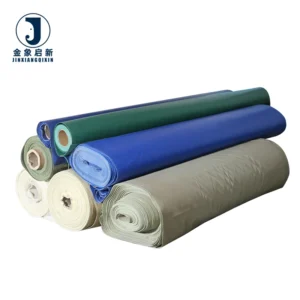
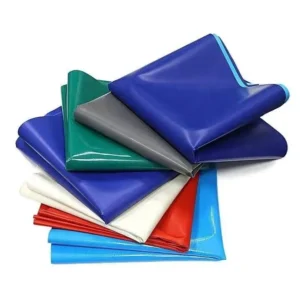
| Colour Options | Blue, Blue/Orange, Green, Grey, Black, Clear, Grey/Green, Orange, or custom |
| UV Treatment | Available (test basis not stated — confirm grade for your market) |
| Anti-Static | Available (surface resistance standard not confirmed — verify requirement) |
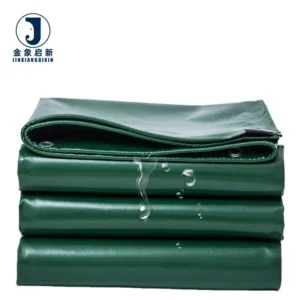
| Waterproof | Fully waterproof laminated construction |
| Anti-Mildew | Mildew-resistant formulation |
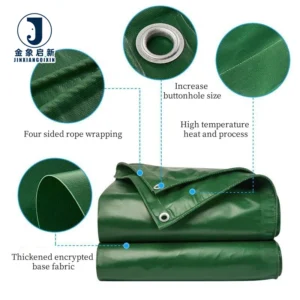
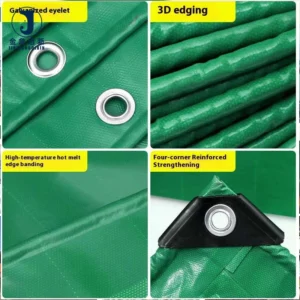
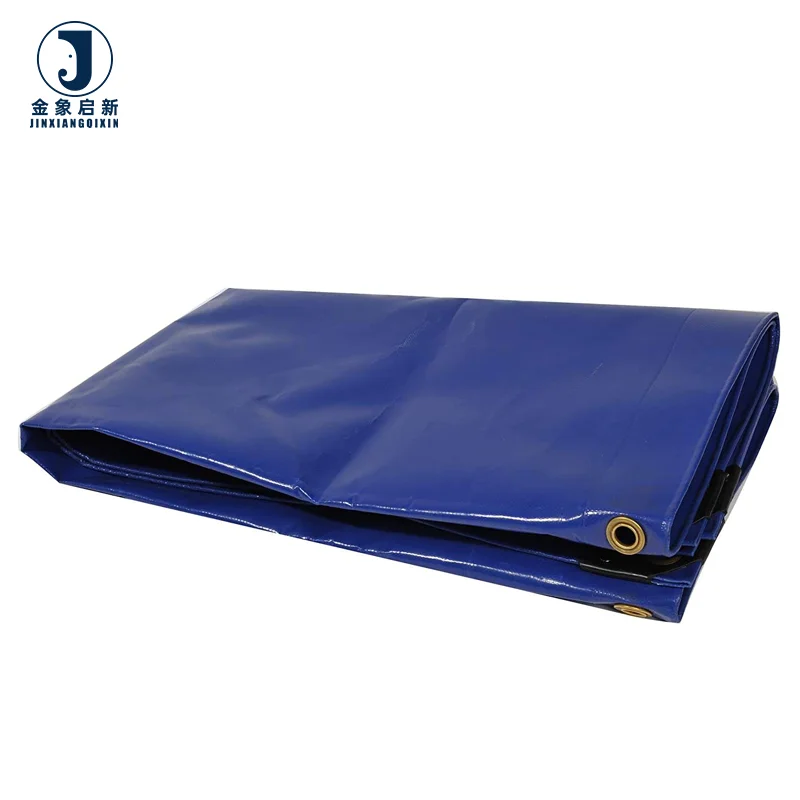
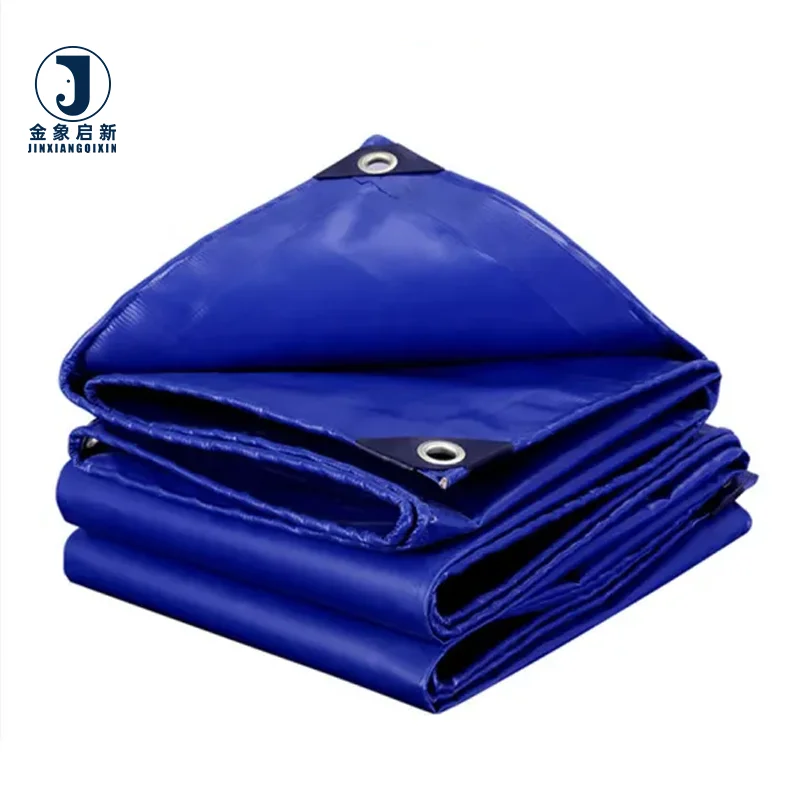
| Edge & Corner Reinforcement | PP rope in hem on all four edges; reinforced plastic corners (finished tarpaulin) |
| Eyelet Interval | Galvanised eyelets every 3 ft or 1 m (finished tarpaulin) |
| Key Features | Washable, tear resistant, weatherproof, sunproof, anti-aging |
Application Suitability
| Application | Exposure & Requirement |
|---|---|
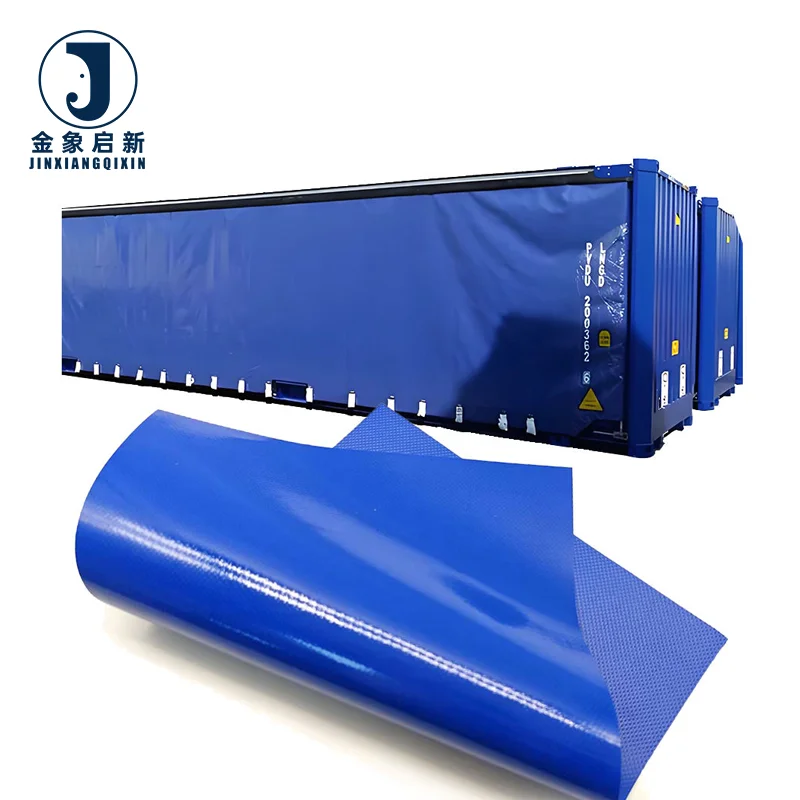
| Truck and trailer side covers | Constant flexing at load points, road debris abrasion, UV and rain exposure |
| Construction scaffolding wraps | Wind loading, prolonged sun exposure, puncture risk from tools and materials |
| Agricultural crop and hay covers | Extended outdoor storage, moisture ingress prevention, UV degradation |
| Timber and lumber stacking covers | Weight bearing on flat surfaces, moisture and fungal resistance |
| Boat and container covers | Salt-laden air, UV exposure, tie-down stress at corners |
| Garden furniture and gazebo covers | Repeated folding and unfolding, mildew in humid storage |
| Swimming pool covers | Permanent water contact, chemical exposure, tension across span |
| Road repair site fencing | Wind shear, dust containment, high-visibility colour requirements |
Why GSM Alone Does Not Tell You How Much Cover Your Roll Actually Provides
Quoted weight must match delivered weight — roll by roll, not just on the certificate.
Buyers who purchase tarpaulin by the roll for redistribution or fabrication often discover on arrival that the actual GSM falls below what the proforma invoice stated. A lightweight roll might look acceptable on the scale but fail under tension at the eyelet line or tear during the first season of outdoor use. When you are consolidating a full container of PE Tarpaulin Roll wholesale bulk stock, even a small per-roll shortfall compounds into significant lost material across the order. [NEED_CITE: tensile and tear test methods for coated fabrics per ISO 1421]
Stock Widths and Weave Grades Built for Container-Load Planning
When sourcing PVC Tarpaulin Roll aftermarket supplier stock, the first question is whether the available widths and GSM bands cover the full spread of grades your market demands. This roll range spans eight weave-density tiers from 6×6 through 14×16, each mapped to a defined GSM band, so you can stock lightweight covers for seasonal retail and heavy-duty grades for contractor supply from a single production source.
Batch-to-Batch Colour Control Across a Multi-Roll Shipment
Colour variation between rolls in the same container is one of the most visible quality failures at the distributor level. When a retail customer installs two adjacent covers and sees a noticeable shade difference, the complaint lands on your brand, not the mill. Coating pigmentation and lamination temperature are controlled at every production stage to keep shade uniform across all rolls within one dispatch. [NEED_CITE: colour consistency standards in coated fabric production]
Reading the Weave Density Table
Weave density and base fabric denier work together to determine how the roll performs under load. A 6×6 weave at 50 g/m² produces a lightweight, flexible sheet suited to short-term covers and garden use, while a 14×16 weave approaching 300 g/m² delivers the density needed for heavy equipment wraps and long-term construction exposure. The lamination coating bonds to both sides of the HDPE woven base, creating a waterproof barrier that does not delaminate under repeated folding. Choosing the correct weave tier matters more than chasing a target GSM number, because a tightly woven lighter fabric can outperform a loosely woven heavier one in tear resistance. Width and roll length directly affect how many linear metres fit in a container, and selecting standard 100 m or 100 yd lengths on 2 m to 6 m widths allows accurate CBM and tonnage planning before the proforma invoice is issued.
The Hidden Cost of Ordering the Wrong Grade
Purchasing a mid-range GSM for a heavy-duty application often shows no problem until the first wind event or the first tie-down tension cycle. Rolls that are too light for the intended exposure develop tears at the eyelet line or at fold creases, and the damage is typically discovered by the end user rather than at your warehouse inspection. Selecting a weave density that matches the mechanical stress — not just the waterproofing requirement — prevents returns and protects your reputation in the contractor or retail channel. [NEED_CITE: common failure modes in coated fabric covers under wind load]
Why Distributors Consolidate Roll Orders Here
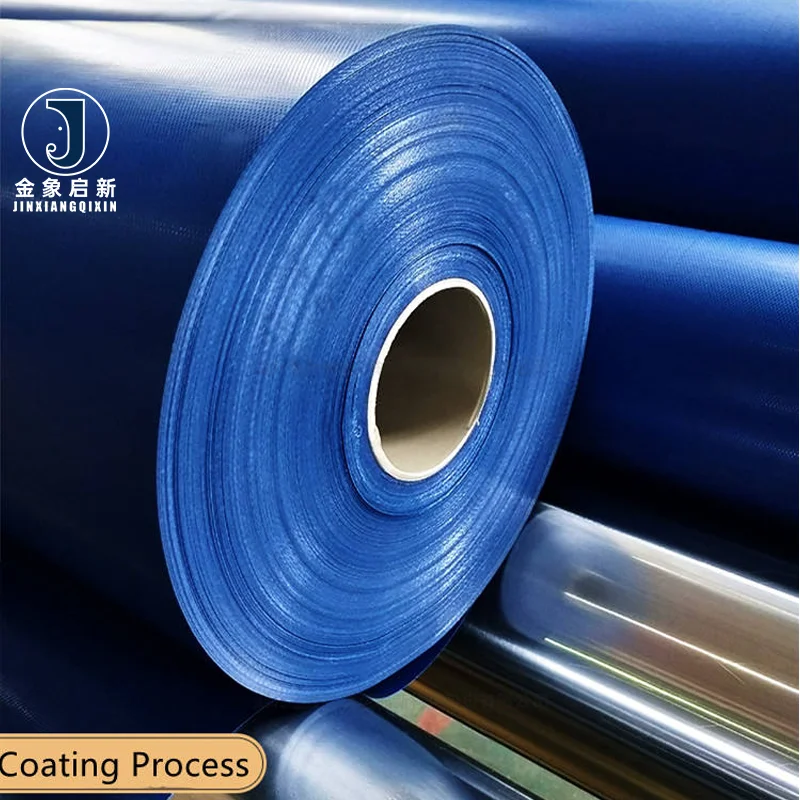
Three full production lines running dedicated PE and PVC coating capacity mean your roll order enters the queue without waiting for a custom-run window. Roll widths from 2 m to 6 m and standard lengths of 100 m or 100 yd are planned against container dimensions, giving you clear tonnage data for 20’GP and 40’HQ loading. Every roll is inspected at dispatch against the purchase order GSM and colour reference, not sampled from a batch average. Custom widths, colours and lengths are produced on the same lines with dedicated QA stages, so a mixed-grade container ships with consistent documentation across every SKU. The 10-person R&D team develops samples for custom print or colour within days, allowing you to confirm shade and hand feel before committing to a full production run.
Documentation & Verification
- Material specification sheet stating GSM, weave density, coating type and colour reference for each roll grade
- Pre-shipment inspection record confirming weight per roll against the purchase order specification
- Roll packing list with tube count, net weight and total CBM for freight booking accuracy
- Certificate of origin and customs documentation included with every container dispatch
- UV treatment and anti-static test reports supplied where applicable to the specified grade
Fabrication, Handling & Storage
- Heat-seal at moderate temperature settings suitable for LDPE lamination to avoid melt-through on lighter GSM grades
- Store rolls upright on hard paper tubes to prevent flat spots and permanent creasing on the coated surface
- Unroll in ambient temperature conditions; cold-stored rolls need acclimatisation before unfolding to avoid coating crack
- Cut with a sharp blade or hot knife to seal edges and prevent fraying on the HDPE woven base fabric
- Galvanised eyelets on finished tarpaulin should be set through reinforced hem areas, not directly through single-layer fabric
- Clean with mild detergent and soft brush; avoid solvent-based cleaners that may degrade the LDPE coating surface
What We Need to Quote Your Roll Order Accurately
Provide the weave density or target GSM grade, the roll widths and lengths your market requires, and the colour or colour combination for each SKU. If your end users need finished tarpaulin with eyelets and reinforced hems, specify the interval and corner reinforcement preference. Let us know the container type you plan to ship so we can build the loading plan around maximum tonnage utilisation.
Frequently Asked Questions
Q: What GSM grades and widths do you keep in regular stock versus run as custom production?
A: Standard weave densities from 6×6 through 14×16 are available across roll widths of 2 m, 4 m and 6 m in lengths of 100 m or 100 yd. Custom widths, colours and roll lengths outside these parameters are produced on the same lines with dedicated scheduling. Request a stock list for the grades that ship on the shortest lead time.
Q: How do you guarantee GSM and colour consistency across all rolls in one order?
A: Each roll is weighed and checked against the purchase order specification before packing. Colour references are controlled through coating pigmentation and lamination temperature at every production stage. A pre-shipment inspection record accompanies the shipment showing roll-level verification data.
Q: What is the minimum order quantity for custom colour or custom roll length?
A: MOQ depends on the weave density grade and the colour specification you require. Custom colours typically require a dedicated coating run, and the minimum is set to cover efficient line setup. Provide your target grade and colour reference for a specific MOQ quotation.
Q: Can you supply test reports for UV treatment and anti-static performance with each shipment?
A: UV treatment and anti-static properties are available in specific grades. Test reports are supplied where the selected grade has been tested to a defined standard. Confirm the standard required by your market so we can match the grade and documentation to your compliance needs.
Q: How is roll stock packed and loaded to maximise container utilisation?
A: Rolls are packed on hard paper tubes and wrapped with the same tarpaulin sheet. Container loading tonnage is provided by roll, bale or carton format for both 20’GP and 40’HQ configurations. A detailed packing list with CBM and weight data supports your freight planning before dispatch.