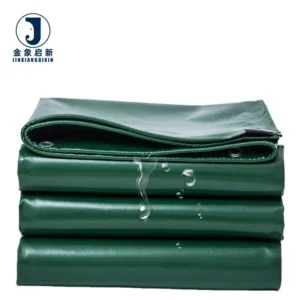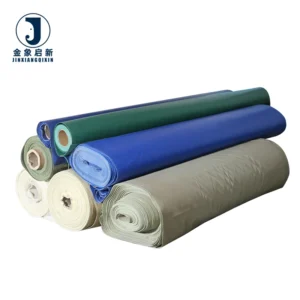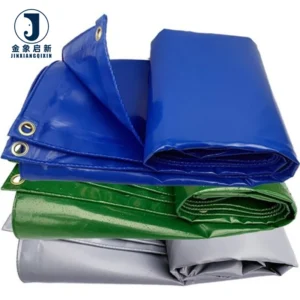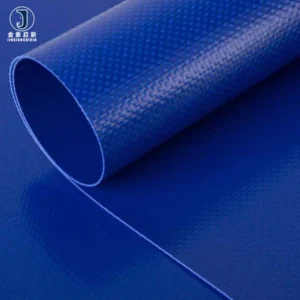
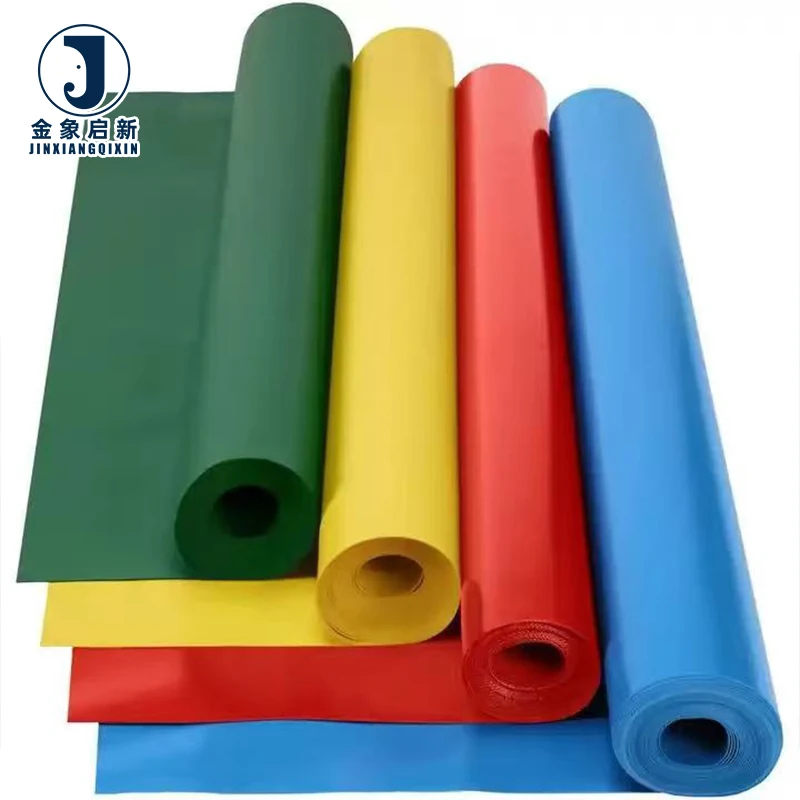
Description
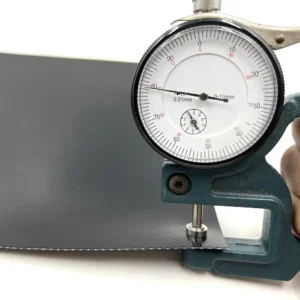
Batch Consistency — Three dedicated production lines verify GSM and colour per roll before it leaves the facility, ensuring wholesale buyers receive uniform material across every container load.
Technical Specifications
| Parameter | Value |
|---|---|
| Product Type | PVC Tarpaulin Roll |
| Material | PVC + High-strength polyester mesh fabric |
| Coating Technology | Laminated Technology & Hot-melt Coating Technology |
| Weight (GSM) | 350gsm, 420gsm, 500gsm, 550gsm, 600gsm, 750gsm |
| Total Thickness | 0.32mm, 0.35mm, 0.4mm, 0.45mm, 0.5mm, 0.65mm |
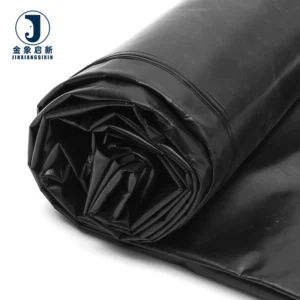
| Standard Roll Size | 2m × 75m, 2.1m × 50m |
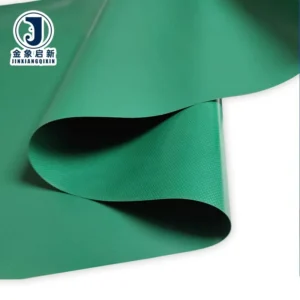
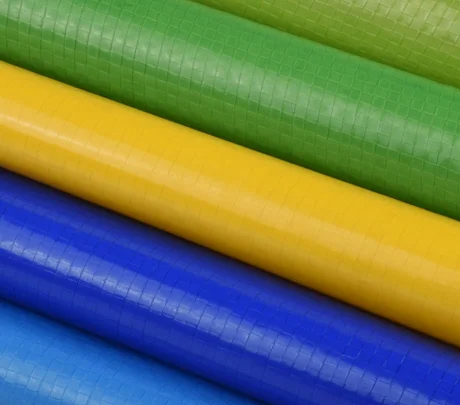
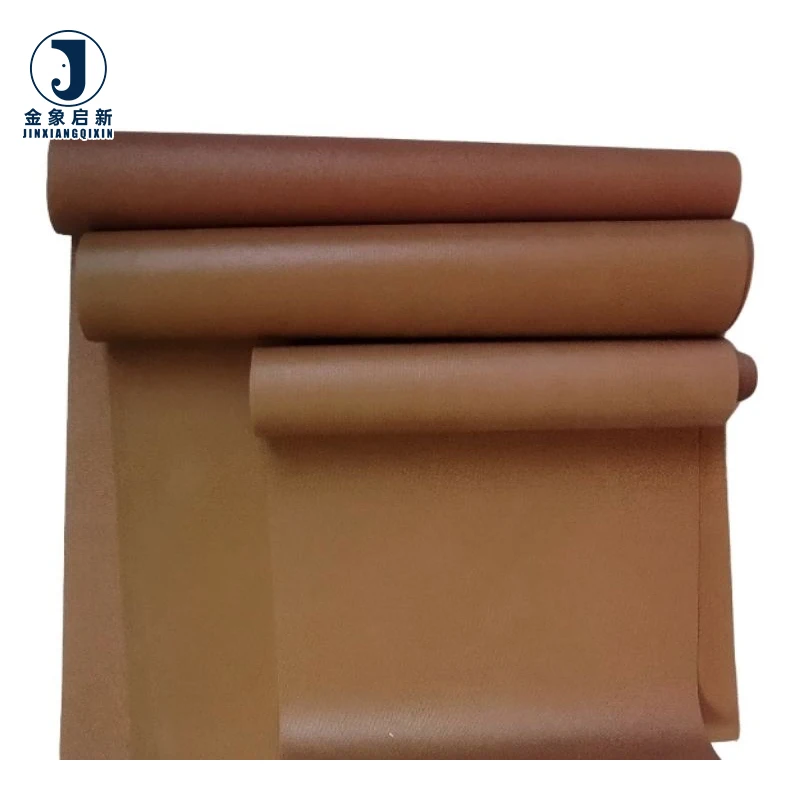
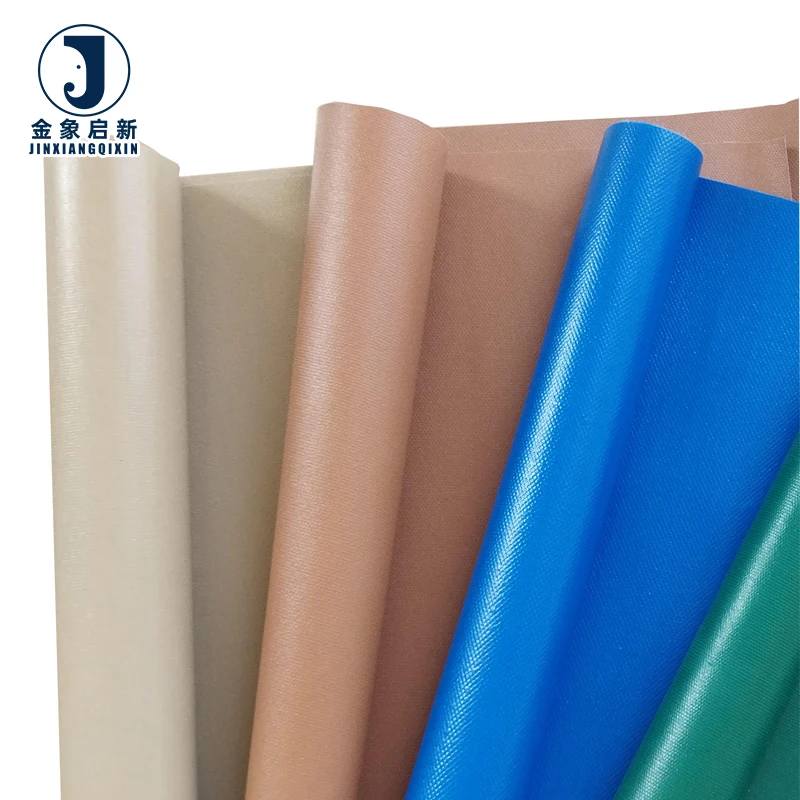
| Color | Blue / Red / Yellow / Light Blue / Grey (Customized) |
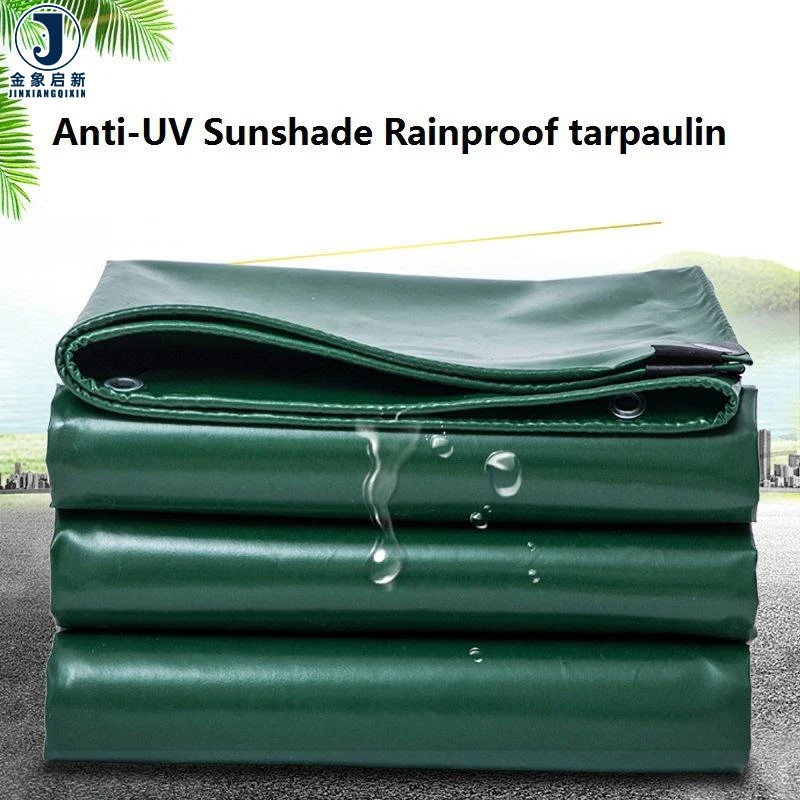
| Key Features | Waterproof, Cold Crack Resistance, Anti-Mildew, Sunproof, Color Fastness |
| Special Treatments | Flame Retardant (grade not stated — confirm requirement), Anti-Static (surface resistance not confirmed) |
| Certifications | ISO, CE |
Application Suitability
| Application | Exposure & Requirement |
|---|---|
| Tarpaulin distribution & resale | Inventory requires consistent GSM and colour across multiple rolls for reliable downstream sales |
| Tent, awning & inflatable fabrication | Roll stock cut and welded into finished structures; demands stable coating adhesion and predictable seam strength |
| Construction site & equipment covers | Outdoor exposure to sun, rain and abrasion; material must remain flexible across temperature swings |
| Agricultural & aquaculture covers | Contact with moisture and organic matter; requires mildew resistance and waterproof integrity |
| Scaffolding & building enclosure | Wind load and UV exposure over project duration; colour consistency matters for visible site hoarding |
| Truck awning & cargo cover | Flexing during transit, road debris impact, repeated folding and unfolding |
Why Roll-to-Roll GSM Variation Matters More Than the Quoted Number
The weight printed on your quotation only matters if it matches the roll on your warehouse floor.
When buying PVC tarpaulin roll wholesale, the gap between stated GSM and actual delivered weight is where margin disappears. A roll that arrives lighter than agreed means thinner coating, reduced tear resistance, and a finished product that fails earlier than the end user expects. Distributors absorb the reputational cost when their customers discover the shortfall mid-installation. [NEED_CITE: tensile and tear test methods for coated fabrics per ISO 1421].
Batch consistency is not a certificate you can download — it is a production discipline. Every roll in a PVC tarpaulin roll wholesale shipment should weigh the same per square metre, carry the same coating thickness, and show no colour shift when unrolled side by side. Without per-roll verification at the coating stage, containers ship with mixed grades and the buyer sorts the problem out at the receiving dock.
Volume Pricing Built on Predictable Roll Output
Stocking PVC tarpaulin roll wholesale inventory means planning container loads around roll count, weight and dimensions. Standard rolls ship at 2m × 75m or 2.1m × 50m, allowing buyers to calculate exact container utilisation before the order is confirmed. Each grade from 350gsm through 750gsm occupies a different weight tier, and pricing follows the material consumed — not an inflated margin on lighter grades. Buyers building stock across multiple GSM levels can consolidate grades into a single container, reducing per-roll freight cost.
Colour Matching Across the Entire Shipment
A distributor selling to tent makers or construction enclosure contractors cannot deliver rolls that shift shade from one to the next. PVC tarpaulin roll wholesale orders require colour reference locking at the coating stage so that every roll in the batch matches the approved sample. When rolls are installed side by side on a scaffold wrap or welded into a large awning, even minor pigment variation becomes visible. [NEED_CITE: colour measurement standards for coated textiles and batch consistency protocols]. Production runs hold the colour reference constant across all rolls in the order, and the colour code is recorded on the packing list for reorder matching.
Coating Weight, Base Fabric and the Real Meaning of GSM
GSM alone does not define performance — it is the combination of coating weight and base fabric denier that determines how a roll behaves under tension and at the weld line. A 550gsm roll with a high-density polyester base will resist tearing differently than a 550gsm roll where most of the weight sits in the PVC coating. Laminated and hot-melt coating technologies produce different adhesion characteristics between the coating and the mesh, directly influencing peel strength during heat welding. Thicker coating at 750gsm suits heavy-duty equipment covers that face abrasion, while 350gsm serves lighter temporary enclosures where flexibility and ease of handling matter more. Roll width selection — 2m or 2.1m — affects cutting yield when fabricators panel large covers, and a 50mm difference in width can reduce offcuts across a long production run.
When the Wrong Roll Grade Costs More Than the Savings
Selecting a lighter grade to save on material cost often transfers the expense downstream. A 350gsm roll used where 600gsm is needed will show premature coating wear at high-flex points, and finished covers return as warranty claims. Colour mismatch between orders forces fabricators to reject rolls or limit them to non-visible applications, wasting inventory. [NEED_CITE: failure analysis of coated fabric seams under cyclic loading]. Rolls stored improperly before shipment can develop flat spots or blocking between layers, creating defects that only appear when the material is unrolled at the customer’s facility. These problems compound when a container carries mixed grades without clear labelling.
Direct Mill Supply With Production Transparency
Three full production lines handle concurrent roll output, meaning a wholesale order for multiple GSM grades can run simultaneously rather than queue behind other contracts. Dedicated QA at each coating and winding stage catches GSM drift and surface defects before rolls are packed — not after the container is sealed. A 10-person R&D team develops custom colour matches and printed samples within days, allowing distributors to confirm specifications before committing to bulk. Pre-shipment inspection covers every roll, and the inspection record travels with the documentation package. The coating formulation and base fabric sourcing remain under direct control, eliminating the variability introduced by trading intermediaries.
Documentation & Verification
- Material specification sheet stating exact GSM, base fabric denier and coating type for each roll grade
- Pre-shipment inspection record confirming weight verification per roll against the stated GSM before dispatch
- Roll packing list detailing roll count, width, length, net weight and gross weight for container loading
- ISO and CE certificates included with customs documentation for destination clearance
- Colour reference code recorded per order to enable exact reorder matching across future shipments
Fabrication, Handling & Storage
- Heat weld temperature and speed must be adjusted per GSM grade — 750gsm requires higher energy input than 350gsm for full coating fusion
- Store rolls upright on core ends in a shaded, ventilated area to prevent flat spots and coating adhesion between layers
- Unroll at ambient temperature; cold-conditioned rolls below recommended thresholds may show surface cracking when flexed
- Cut with sharp blades or automated tables to avoid fraying the polyester mesh base at panel edges
- Clean finished surfaces with mild detergent only; solvent-based cleaners can degrade the PVC coating over repeated exposure
- Plan cutting layout around the 2m or 2.1m roll width to minimise offcut waste on standard panel dimensions
Specifying Your Roll Order
Distributors and fabricators should confirm the target GSM range, the end-use application and any fire or anti-static compliance required in the destination market. Specify whether standard 2m × 75m or 2.1m × 50m rolls suit your cutting layout, or if a custom width improves your yield. Provide a colour reference or request a sample swatch before bulk production begins. Indicate whether you need plain rolls or printed branding, and the expected annual volume to align production scheduling.
Frequently Asked Questions
Q: How is GSM verified per roll and what inspection records ship with the order?
A: Each roll is weighed and measured during production and again at pre-shipment inspection. The inspection record states the verified GSM per roll and ships with your packing list, so you can cross-check on arrival without waiting for a lab test. This applies to every grade from 350gsm to 750gsm.
Q: How do you ensure colour consistency across multiple rolls in the same shipment?
A: Colour is locked to a reference code at the coating stage, and every roll in the batch is produced against that same reference. The code is recorded on the packing list so reorders match previous deliveries. If you need rolls installed side by side, request a sample panel for visual approval before bulk runs.
Q: What standard and custom roll dimensions are available for container optimisation?
A: Standard rolls ship at 2m × 75m or 2.1m × 50m, both sized to maximise container load efficiency. Custom widths and lengths are available on request. Provide your target container type and roll count so the production team can recommend the dimension that minimises dead space.
Q: How are rolls packed and loaded to prevent transit damage?
A: Rolls are wound on cardboard cores and wrapped to protect the coating surface during handling. The packing list details roll count and weight distribution per container. Rolls ship upright on core ends where possible to avoid compression marks and blocking between coating layers during ocean transit.
Q: What are the MOQ and lead time for custom width, colour or printed rolls?
A: Custom runs carry minimums based on the coating line setup for the requested width and colour. Lead times depend on grade availability and whether a printed sample requires approval first. Submit your specification and the team will confirm the minimum and production window before you commit.