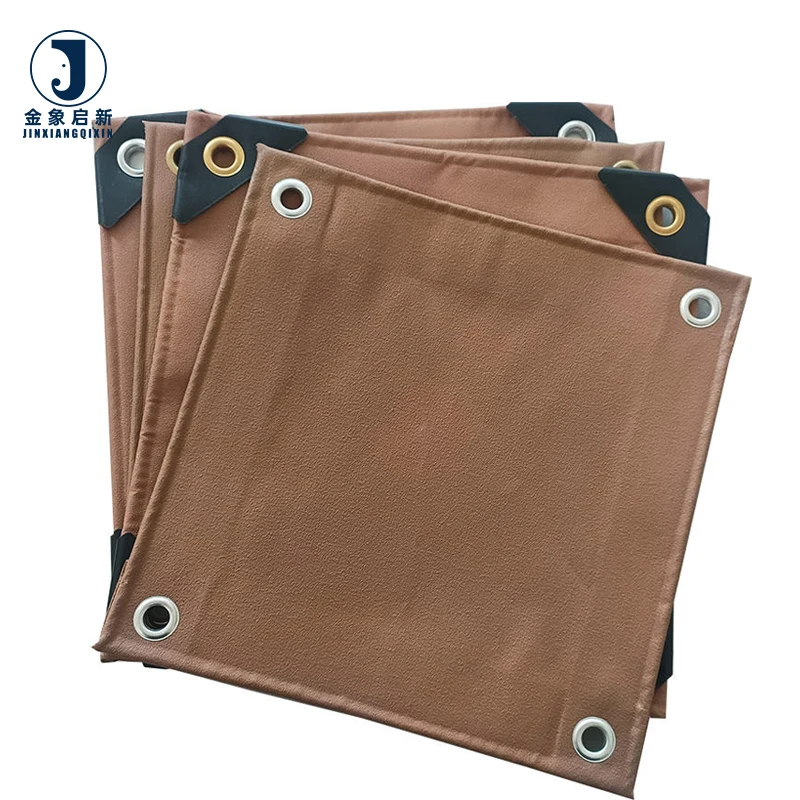
Description
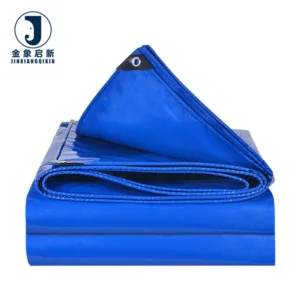
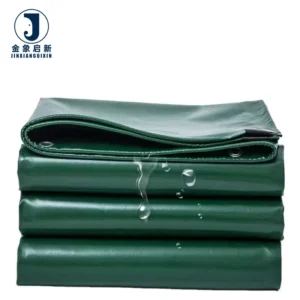
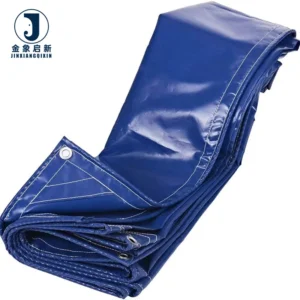
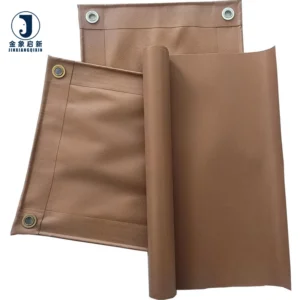
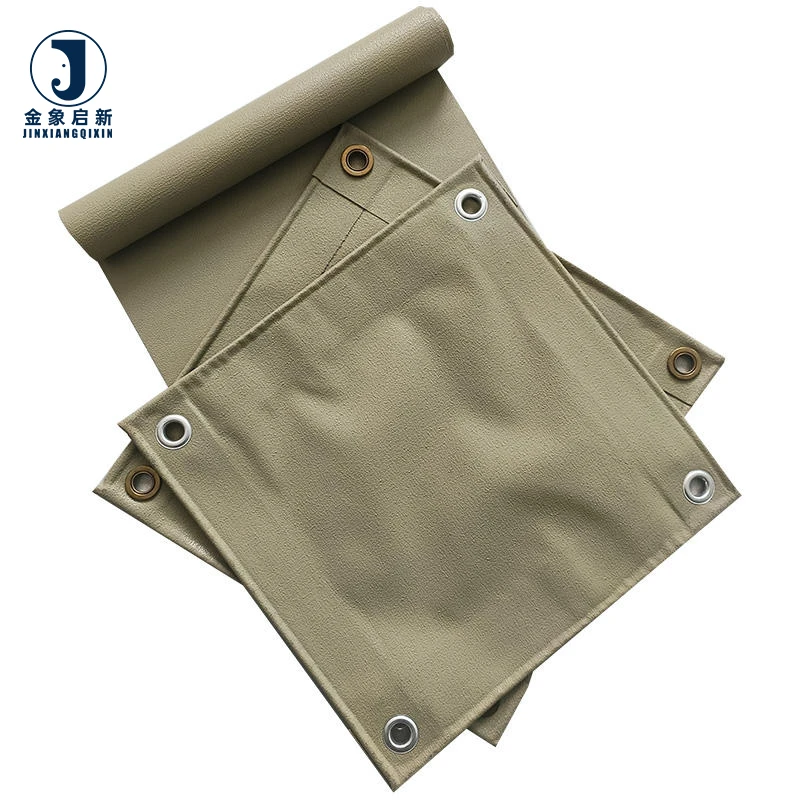
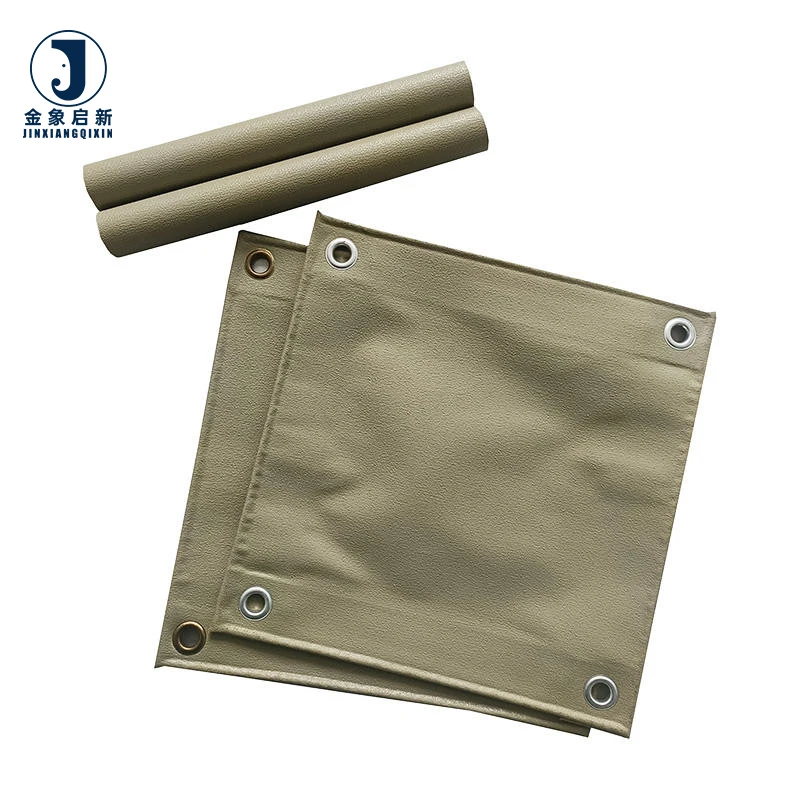
Verified Roll Stock — every roll of PVC coated tarpaulin is weighed and measured against the specification sheet before it leaves the factory, eliminating the GSM discrepancy that causes downstream fabricators to reject entire shipments.
Technical Specifications
| Parameter | Value |
|---|---|
| Product Type | PVC Coated Tarpaulin |
| Available GSM Grades | 700gsm, 850gsm, 900gsm |
| Coating Material | PVC |
| Flame Retardant | Available in flame retardant grades — confirm the grade required for your market |
| Anti-Static | Anti-static treatment available — confirm the standard required for your application |
| Anti-Cold Treatment | Available for low-temperature environments |
| Anti-Mildew Treatment | Available for high-humidity and tropical storage conditions |
| Waterproof | Fully waterproof coated construction |
| Weather Resistance | Suited to extended outdoor exposure |
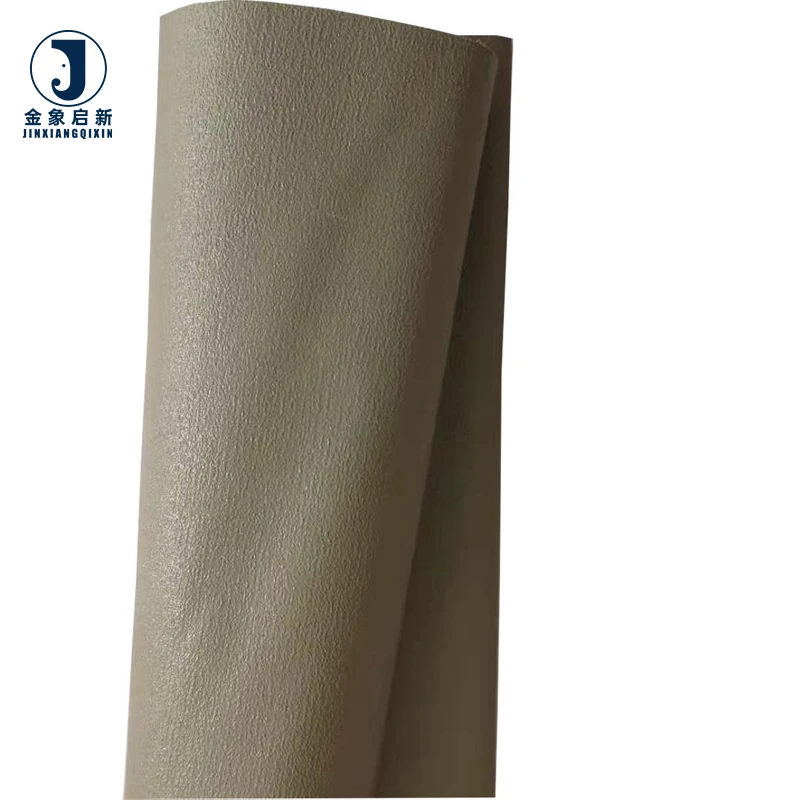
| Finish | Soundproof material finish — verify against current production catalog |
| Certifications | ISO, CE (company level) |
Application Suitability
| Application | Exposure & Requirement |
|---|---|
| Truck and trailer cargo covers | Road abrasion, wind flap fatigue, constant UV and rain exposure, flex at tie-down points |
| Tarpaulin distribution and import | Container-load consistency, verified GSM per roll, predictable cutting yield for resale |
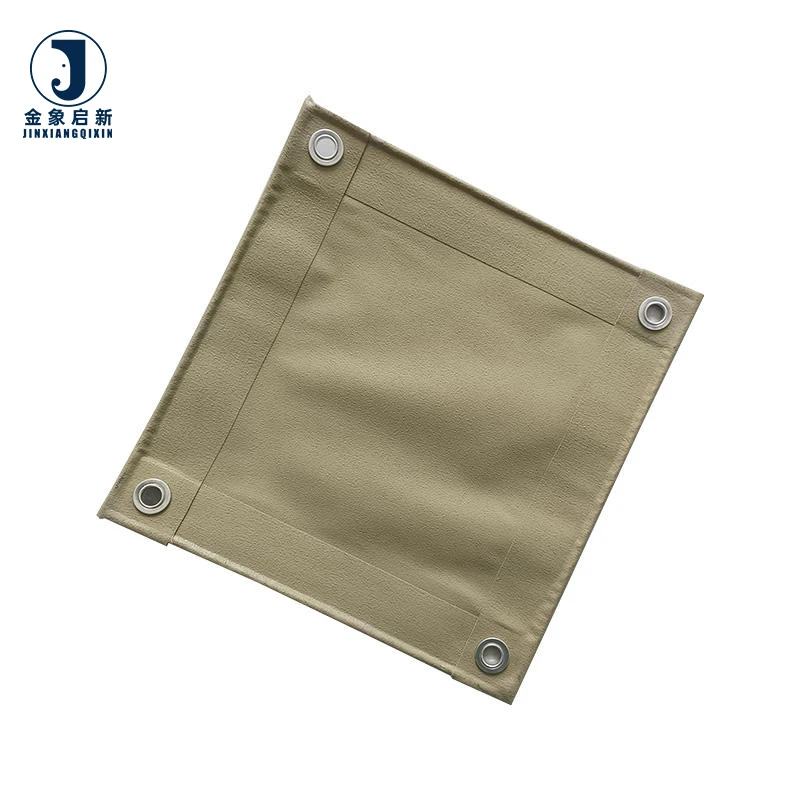
| Fabrication of pallet and equipment covers | Clean weld seams, uniform coating adhesion, dimensional stability during heat joining |
| Tent and awning manufacturing | Roll-to-roll colour match, reliable tensile strength for tensioned frames |
Why Quoted GSM Seldom Matches the Roll You Receive
The gap between the GSM on a quotation and the actual weight of the fabric arriving at your dock is the single most common reason wholesale buyers reject a shipment.
When a PVC coated tarpaulin roll wholesale bulk order lands lighter than agreed, the fabricator either absorbs the loss silently or disputes the invoice. The root cause is rarely malice; it is usually a production line that meters coating weight by speed rather than by gravimetric check, or a quoting system that states a nominal grade while the run averages below it [NEED_CITE: gravimetric verification methods for coated fabric GSM per ISO 3801]. For buyers importing full container loads, even a small deficit per square metre compounds across thousands of metres and erodes the cutting yield that the original cost model was built on.
Consistent Roll Weight Across High-Volume Wholesale Orders
Maintaining a stable GSM from the first roll to the last in a PVC coated tarpaulin roll wholesale bulk consignment requires continuous coating-weight control rather than periodic sampling. The coating head must hold a uniform gap across the full working width, and the line speed must remain constant so that the wet-film thickness does not drift as the substrate tension varies.
Colour Matching from One Roll to the Next
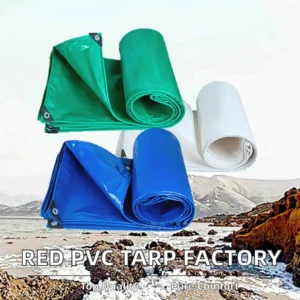
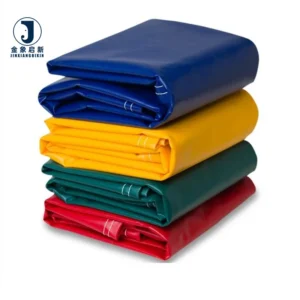
Batch-to-batch colour drift is visible the moment two rolls of PVC coated tarpaulin are unrolled side by side on a fabrication table. Controlling this demands that pigment dispersion is metered by weight, not by volume, and that every batch passes through a spectrophotometer check before winding. Buyers consolidating multiple container loads benefit from a single dye-lot allocation so that shade variation remains within a tight delta-E window throughout the order [NEED_CITE: spectrophotometric colour tolerance standards for coated textiles].
Treatment Verification Before the Roll Ships
Optional treatments — flame retardant, anti-static, anti-cold, anti-mildew — only hold value when a test report accompanies the specific roll batch. A certificate that covers the product family but not the production date leaves the importer exposed at customs or at the end-user’s safety audit. Requesting the test document tied to the batch number closes that gap before the container sails.
Reading the Specification Sheet Beyond the GSM Number
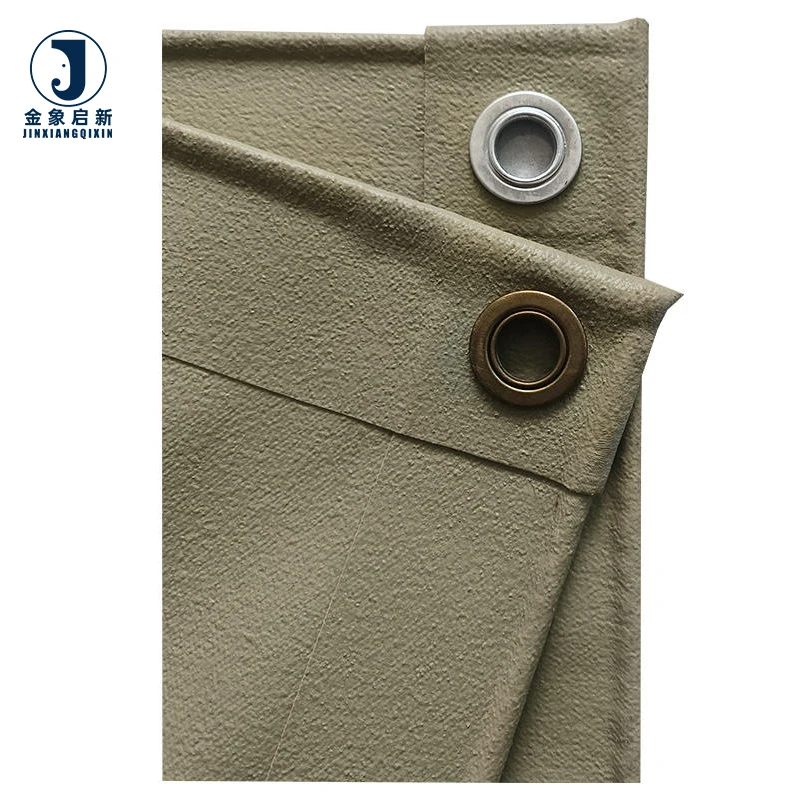
A 700gsm roll and a 900gsm roll do not differ only in coating thickness; the base fabric denier and weave density shift as well. Heavier base yarns carry more of the tensile and tear load, while the PVC coating contributes abrasion resistance and waterproof integrity. Looking at GSM alone therefore tells you how much material is present but not how that material is distributed between yarn and polymer — two rolls at the same GSM can behave differently under a heat weld if one relies on a heavier coating to reach the target weight. The coating method also matters: knife-over-roll coating typically delivers a thicker, more uniform film with stronger adhesion to the substrate, which translates into cleaner weld seams and higher peel strength at the joint. Surface finish influences downstream processing too — a matte or soundproof material surface may accept printed branding differently than a glossy face, and the choice affects how dust and dirt accumulate during outdoor storage.
The Downstream Cost of a Spec Mismatch
When a distributor accepts a roll that is marginally below the quoted GSM, the fabricator cutting truck covers from that roll may find the fabric fails at the weld line before it reaches its expected service life. The heat input that would seal a correctly coated seam instead burns through a thinner film, leaving a brittle edge that cracks under road vibration [NEED_CITE: thermal degradation thresholds for PVC coated polyester during high-frequency welding]. Similarly, a flame retardant grade that satisfies one market’s building code may not meet the mining ventilation standard required on a tunnelling site, forcing the end-user to reject the fabricated duct and reorder. Colour inconsistency discovered after cutting means the fabricator must either re-sort inventory or ship a product with visible panel variation, damaging the distributor’s reputation with fleet customers who expect uniform livery.
Why Volume Buyers Source Rolls Here
Three full production lines with 36 sets of professional equipment allow large wholesale orders to run without displacing smaller custom jobs, protecting your delivery window. A 10-person R&D team develops samples within days when a distributor needs to confirm a new GSM grade or treatment combination before committing to container volume. Dedicated QA/QC at every production stage, culminating in 100% pre-shipment inspection, means every roll is weighed and measured individually rather than sampled by lot. Deep process control over coating weight and adhesion, built over nearly 30 years of focused production, reduces the roll-to-roll variation that causes fabricators to recalibrate their welding parameters mid-order. Full documentation — from material spec sheets to test reports tied to the batch — travels with the shipment so that compliance questions are answered before the container reaches port.
Documentation & Verification
- Material specification sheet stating exact GSM, base fabric denier, and coating weight per roll
- Pre-shipment inspection record with individual roll GSM verification against the quoted grade
- Roll packing list showing roll count, net weight, and container loading plan
- Test reports for UV and flame retardant grades linked to the specific production batch
- Certificate of origin and customs documentation aligned with the destination market
Fabrication, Handling & Storage
- Heat-weld parameters must be adjusted per GSM grade — 900gsm rolls require longer dwell time than 700gsm to achieve full film fusion
- Store rolls upright on pallets to prevent flat-spotting that causes visible creases when unrolled for cutting
- Anti-mildew treatment is effective only when rolls are kept in ventilated storage, not sealed in condensating wrap
- Cold-weather transport may stiffen anti-cold treated rolls; allow acclimatisation before unrolling to avoid coating micro-cracks
- Cutting tables should support the full roll width to avoid drag marks on the soundproof material surface finish
What We Need to Quota a Roll Order Accurately
Provide the target GSM grade, roll width, and the total metres or container-load volume you plan to import each quarter. Specify which optional treatments your end-users require — particularly flame retardant or anti-static — and the test standard they reference. Confirm whether you need stock colour from the current production palette or a custom shade matched to a Pantone or RAL reference, and whether samples should be dispatched before the bulk run begins.
Frequently Asked Questions
Q: How is GSM verified per roll before shipment and what documentation is provided?
A: Each roll is weighed on a calibrated scale and the result is recorded on the pre-shipment inspection report. A material specification sheet accompanies the shipment stating the exact GSM, base fabric denier, and coating weight. The roll packing list cross-references every roll ID to its measured weight so that discrepancies can be traced before the container is sealed.
Q: What flame retardant grades are available and which test standards do they meet?
A: Flame retardant treatment is available across the 700gsm, 850gsm, and 900gsm grades. The specific classification depends on the additive package selected during coating. Buyers should state the test standard required by their destination market — such as DIN 4102, NFPA 701, or M2 — so the correct formulation is applied and the matching test report is included with the shipment.
Q: How do you control colour consistency across multiple rolls in the same order?
A: Pigment is metered by weight and each batch is checked with a spectrophotometer before winding. For large wholesale orders, a single dye-lot is allocated so that all rolls in the container share the same production batch. This keeps shade variation within a narrow tolerance and prevents visible panel differences when the fabricator cuts and assembles adjacent panels.
Q: What are the standard roll widths and container loading configurations?
A: Roll widths are produced to the buyer’s specification within the line’s working capacity. Container loading plans are prepared in advance, showing roll count, net weight, and orientation to maximise space and prevent transit damage. The packing list provided at dispatch matches the physical load so that customs clearance and warehouse receiving proceed without recount delays.