Description
Roll-Stock Consistency — Every PVC tarpaulin roll ships with a pre-shipment weight record matching the quoted GSM, so the material you specify is what arrives at your warehouse.
Technical Specifications
| Parameter | Value |
|---|---|
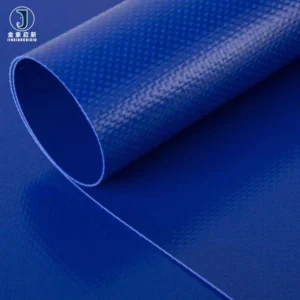
| Product Type | PVC Coated Tarpaulin |
| Coating Material | PVC |
| Coating Method | Lamination and hot melt coating |
| Base Fabric | 100% high toughness polyester yarn |
| Base Fabric Denier | 500D / 1000D / 2000D (grade dependent) |
| Weight Range (PVC) | 400–1500 g/㎡ (confirm grade per order) |
| Total Thickness (PVC) | 0.35–1.5 mm (varies by grade) |
| Tensile Strength (medium) | Warp 1500–2000 / Weft 1200–1800 N/5cm (test standard not stated) |
| Tensile Strength (heavy) | Warp 2000–2500 / Weft 1800–2200 N/5cm (test standard not stated) |
| Tensile Strength (super heavy) | Warp 2500–3000 / Weft 2200–2800 N/5cm (test standard not stated) |
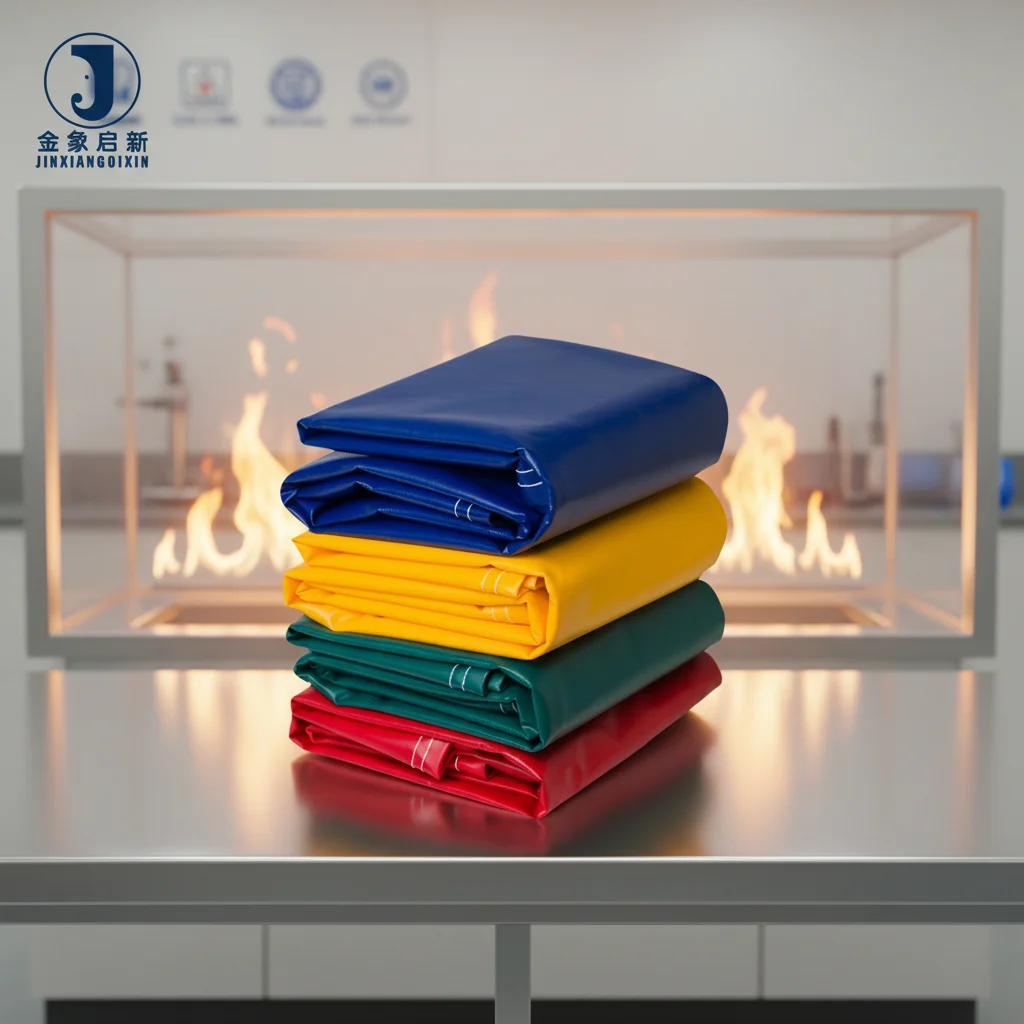
| Flame Retardant | Available — confirm the grade required for your market |
| Anti-Static | Treatment available — surface resistance or standard to be confirmed |
| UV Treatment | Available — test basis to be confirmed per grade |
| Cold Resistance | Claimed (test basis not stated) |
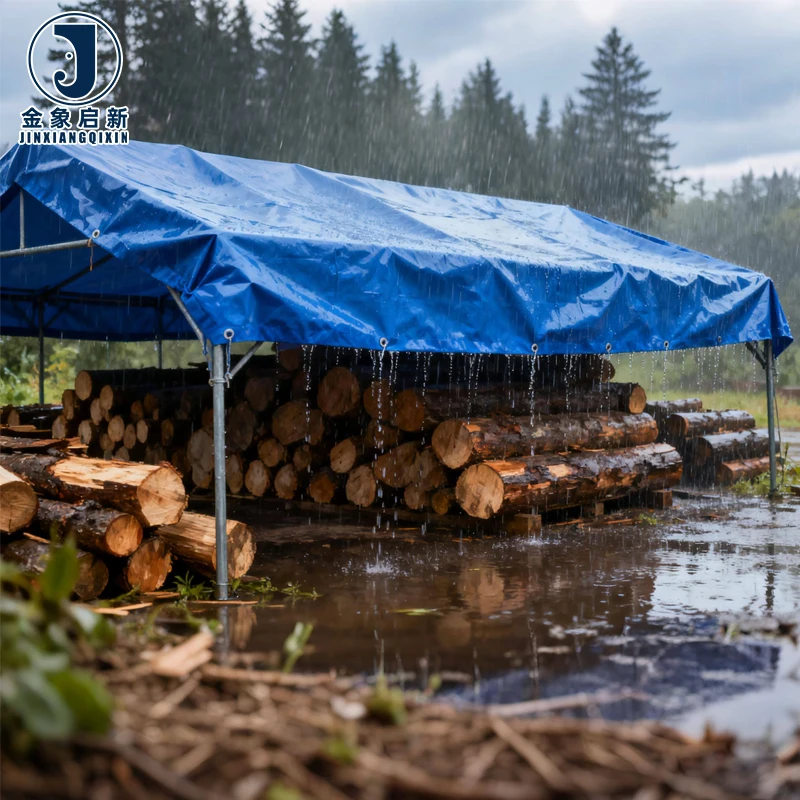
| Waterproof | Fully waterproof PVC coated construction |
| Weld Tear Strength | Excellent (no test standard stated) |
| Color Options | Blue, Blue/Orange, Green, Grey, Black, Clear, Grey/Green, Orange, or custom |
Application Suitability
| Application | Exposure & Requirement |
|---|---|
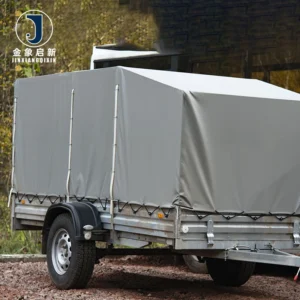
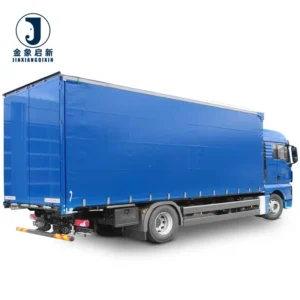
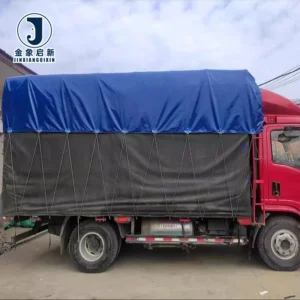
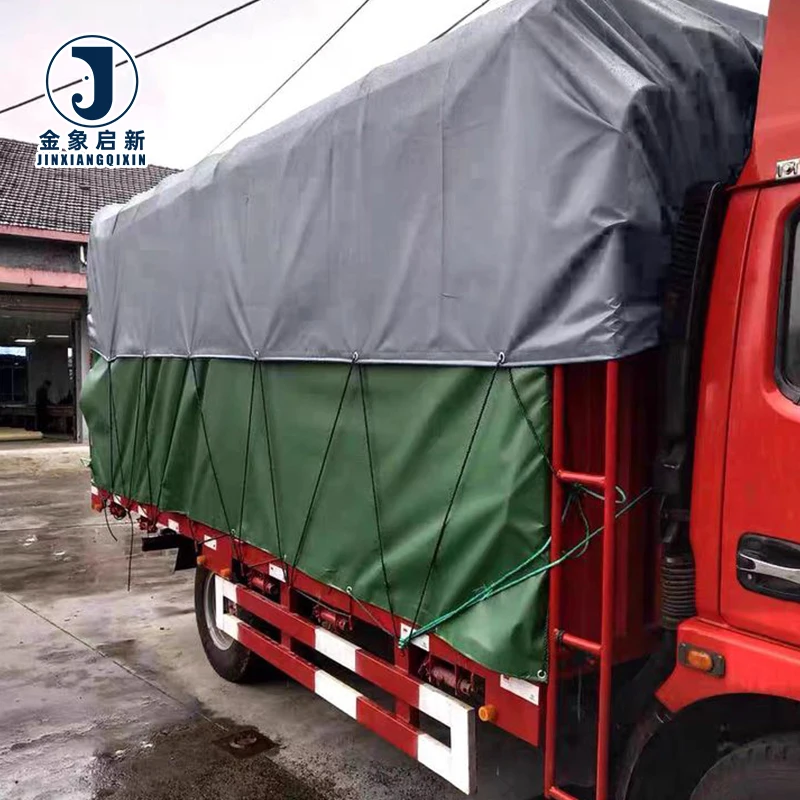
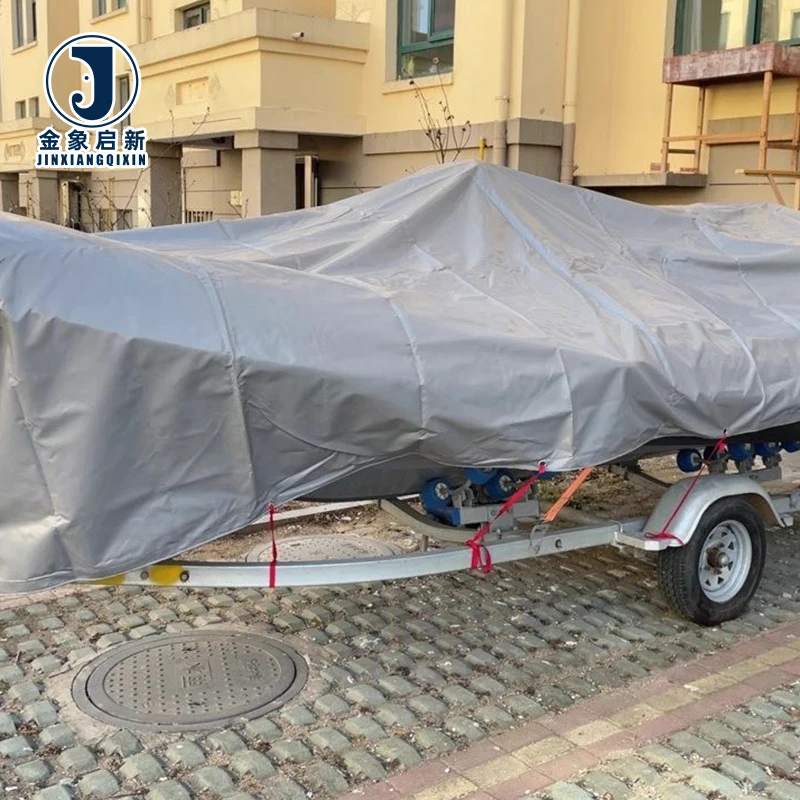
| Truck and trailer side curtains | Constant flexing at load points, road debris abrasion, prolonged UV and rain exposure |
| Flatbed load covers | Tie-down tension stress, wind flap fatigue, weather protection for mixed cargo |
| Construction site enclosures | Scaffold attachment pull, wind loading, puncture from sharp materials |
| Farm machinery covers | Chemical and fertilizer contact, repeated folding, sun degradation |
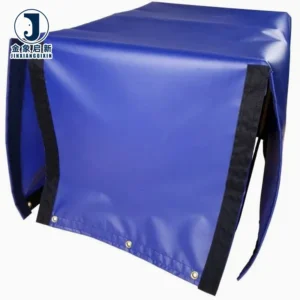
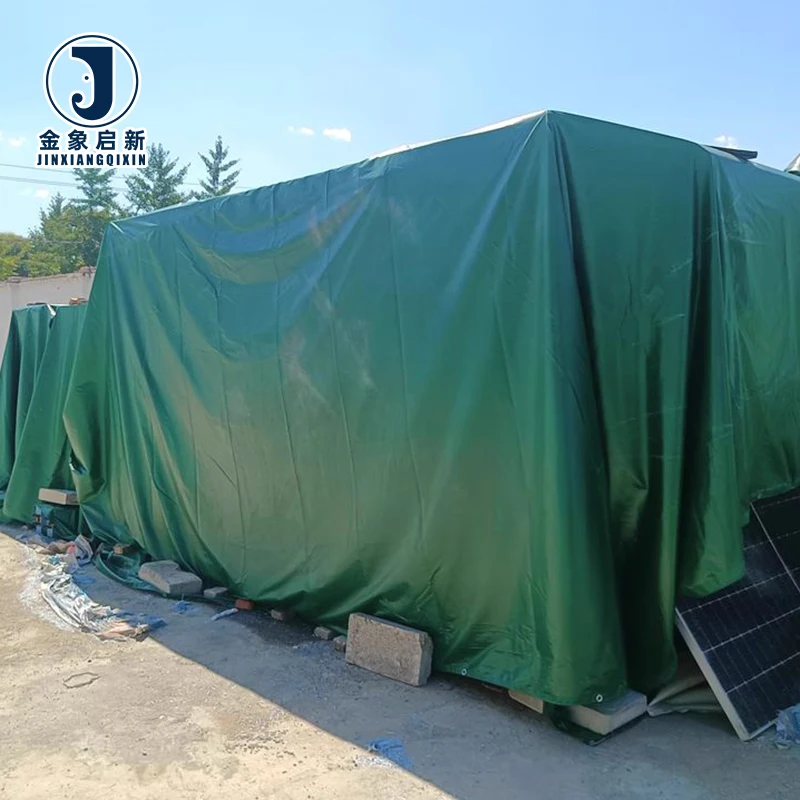
| Equipment and pallet shrouds | Static stacking load, forklift handling abrasion, warehouse dust barrier |
| Industrial pipe canopy | Tensioned span load, sustained weathering, flame retardant compliance on site |
Why Roll Weight Discrepancies Cost More Than the Fabric Itself
The GSM printed on the invoice must match the roll on the dock — anything less shifts the entire cost of failure onto the buyer.
When a PVC tarpaulin roll arrives lighter than the quoted specification, the downstream consequences compound quickly. Truck cover fabricators find the material tears at tie-down points sooner than expected. Distributors face warranty claims from end users who see premature cracking along fold lines. Fleet operators replace covers mid-cycle, adding labour and downtime costs that dwarf the original material saving. Across the wholesale tarpaulin trade, GSM shortfall remains the single most common dispute between supplier and buyer [NEED_CITE: common causes of coated fabric specification disputes in B2B transactions]. A PVC tarpaulin roll that weighs 10% less than stated does not just reduce tensile reserve — it signals inconsistent coating application, which affects weld strength and long-term weather resistance as well.
How Batch Consistency Protects Your Downstream Reputation
When tarpaulin distributors and importers buy PVC tarpaulin roll stock in volume, colour drift between rolls creates visible mismatches once the covers are installed side by side on adjacent trucks or trailer bays. Maintaining colour consistency across a full container load requires controlled pigment dosing at the coating stage and documented batch references that tie each roll back to its production run. Buyers ordering standard widths for retail cutting also depend on uniform thickness roll to roll, because variation forces fabricators to adjust heat-seal temperatures mid-run, increasing scrap and slowing throughput.
What Container-Load Planning Means for Roll Stock Buyers
Wholesale buyers shipping full containers need precise roll count, weight, and dimension data to optimise loading. A 40-foot container holds a fixed weight and volume ceiling; over-specifying the GSM or ordering excessive width can mean leaving saleable stock on the dock. PVC tarpaulin roll dimensions — core diameter, outer diameter, and roll length — directly determine how many linear metres fit per TEU. Providing a detailed packing list with per-roll weight and measurement allows importers to forecast landed cost per square metre accurately and plan warehouse racking before the shipment arrives [NEED_CITE: standard container loading practices for coated fabric rolls].
Reading the Specification Sheet Beyond the GSM Number
The GSM figure alone tells a buyer very little about how a PVC tarpaulin roll will perform in service. Weight is determined by both the base fabric denier and the coating mass applied to each side. A 650 g/㎡ roll built on a 1000D polyester scrim with balanced coating will outperform a roll of the same weight made from 500D yarn with heavy filler-loaded PVC, because the higher denier yarn provides greater tear propagation resistance. The coating method — lamination versus hot melt — affects peel strength between the PVC layer and the base fabric. Hot melt coating typically produces stronger adhesion, which translates directly into weld seam integrity when fabricators join panels using hot air or wedge welding. Thickness, measured in millimetres across the full composite, correlates with puncture resistance but not necessarily with tensile strength; a thicker roll with low-density weave can stretch and deform under tie-down load more than a thinner, tighter-weave alternative.
The Hidden Cost of Specifying on Price Per Kilogram Alone
Choosing a PVC tarpaulin roll based solely on cost per kilogram invites several failure modes. Lighter coating weight reduces waterproofing margin and accelerates plasticiser loss, leading to stiffening and cracking in cold conditions. Rolls produced without controlled batch colour management create visible panel mismatches that force distributors to absorb returns. Weld seams on under-coated fabric tend to fail before the body of the material does, because there is insufficient PVC mass at the joint to fuse properly [NEED_CITE: relationship between coating weight and weld seam strength in PVC tarpaulin fabrication]. These issues surface weeks or months after delivery, by which time the material is already cut, fabricated, and in the field — making recovery impractical and dispute resolution costly.
Why Volume Buyers Source from This Production Facility
Three full production lines and 36 sets of professional equipment support bulk roll output with consistent scheduling, reducing the risk of partial shipments on large orders. A dedicated 10-person R&D team handles custom width, colour matching, and sample development, producing trial rolls within days rather than weeks. Every production stage carries in-process QA checks, and a 100% pre-shipment inspection verifies weight, colour, and coating adhesion before any roll leaves the facility. Nearly 30 years of focused coated-fabric manufacturing has refined process control over coating weight accuracy, which is the foundation of roll-to-roll consistency. ISO and CE certified production provides documented traceability for buyers whose end markets require compliance documentation.
Documentation & Verification
- Material specification sheet stating GSM, base fabric denier, coating type, and colour reference per roll
- Pre-shipment inspection record confirming weight verification against quoted specification before dispatch
- Roll packing list with individual roll weight, dimensions, and batch number for container-load reconciliation
- ISO and CE certificates supplied with each shipment for import compliance
- UV and flame retardant test reports provided where applicable to the specified grade
- Certificate of origin and customs documentation support for cross-border clearance
Fabrication, Handling & Storage
- Hot-air welding temperature must match the PVC coating thickness; heavier grades require higher heat input for full fusion
- Store rolls upright on pallets to prevent flat-spot deformation of the outer coating layers
- Allow cold-stored rolls to reach ambient temperature before unrolling to avoid coating crack at low flex points
- Use sharp rotary blades for cutting; dull tools drag the polyester base yarn and create frayed edges that weaken hems
- Clean finished covers with mild detergent only; solvents can dissolve the PVC plasticiser and cause surface stiffening
- Plan cutting layout to minimise off-cuts; standard widths allow efficient nesting for rectangular truck cover panels
Preparing Your Roll-Stock Enquiry
Provide your target GSM grade, required width, and estimated annual volume so we can confirm roll length and container loading. Specify whether you need standard stock colours or custom Pantone matching, and indicate if flame retardant or anti-static treatment is required for your end market. Let us know if you need sample rolls for fabrication trials before committing to a production order.
Frequently Asked Questions
Q: How do you verify that each roll matches the quoted GSM?
A: Every PVC tarpaulin roll is weighed during the pre-shipment inspection and compared against the specification sheet. The inspection record travels with the shipment, showing actual weight per roll so you can cross-check on arrival. If any roll falls outside the agreed tolerance, it is pulled from the consignment before dispatch.
Q: Can you maintain colour consistency across a full container order?
A: Yes. Pigment dosing is controlled at the coating stage using batch-referenced formulations. Each roll carries a batch number tied to its production run, and colour comparison is performed during the 100% pre-shipment inspection. For critical applications, we recommend approving a reference swatch before production begins.
Q: What roll widths and lengths are available for container loading?
A: Standard widths cover common truck cover and distributor cutting sizes, with custom widths available subject to minimum order quantities. Roll length is set to your specification. We provide a container loading plan showing roll count, total weight, and cubic utilisation so you can confirm the layout before production starts.
Q: Are flame retardant or anti-static rolls available with certification?
A: Flame retardant and anti-static treatments are available in various grades. The specific grade and corresponding test report depend on your market requirements. State the standard you need — such as a national fire classification or anti-static surface resistance level — and we will confirm the applicable grade and documentation with your quotation.