Description
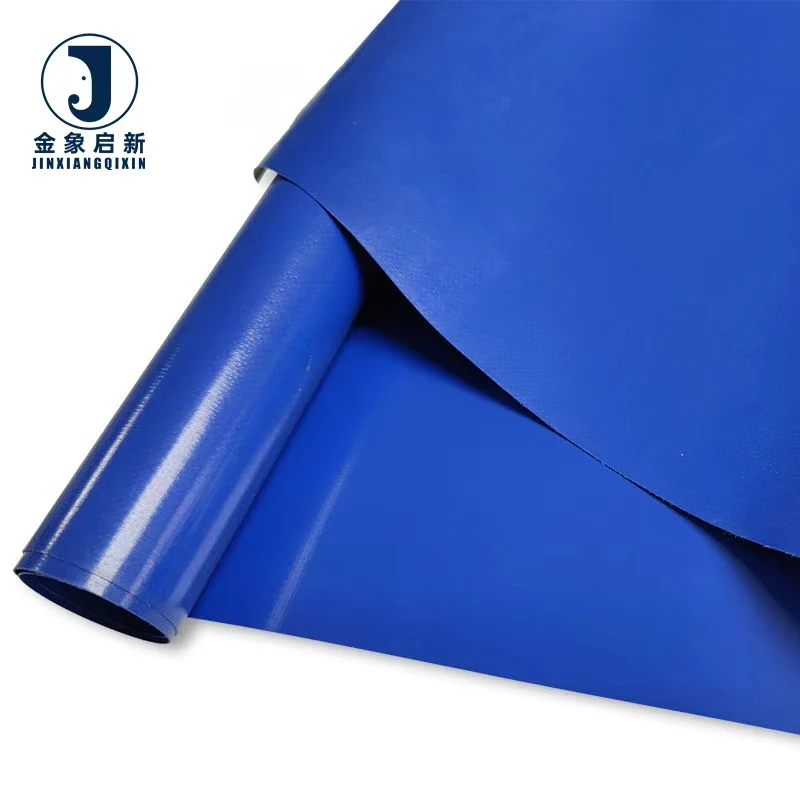
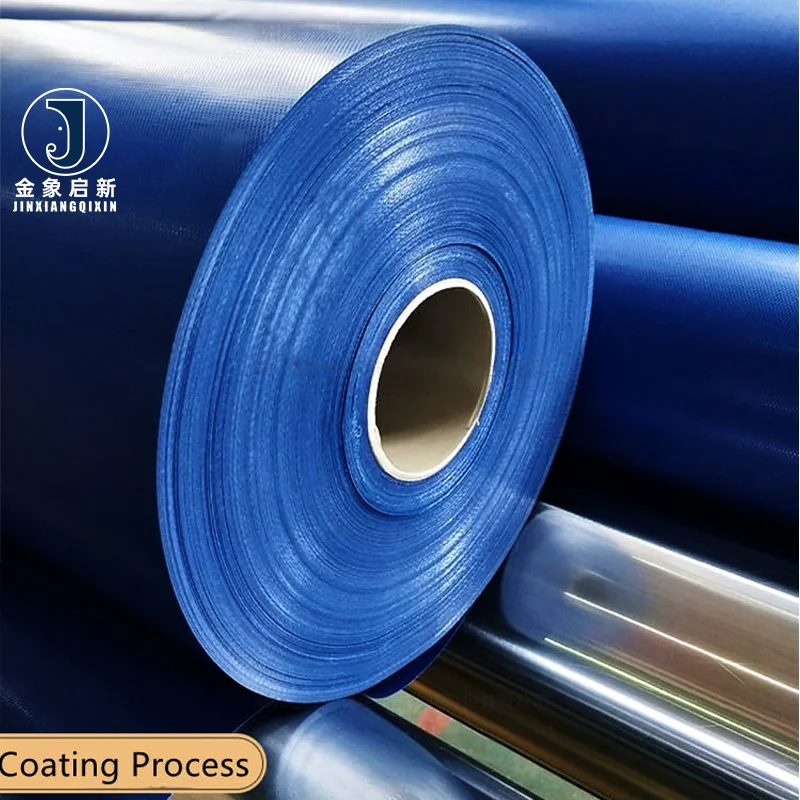
Bulk Container Consistency — three full production lines and 36 sets of equipment enable tight control over coating weight and colour matching from the first roll to the last in a container load.
Technical Specifications
| Parameter | Value |
|---|---|
| Product Type | PVC Tarpaulin Roll |
| Coating Material | PVC (dipping coating) / PE (HDPE weaving with LDPE lamination) |
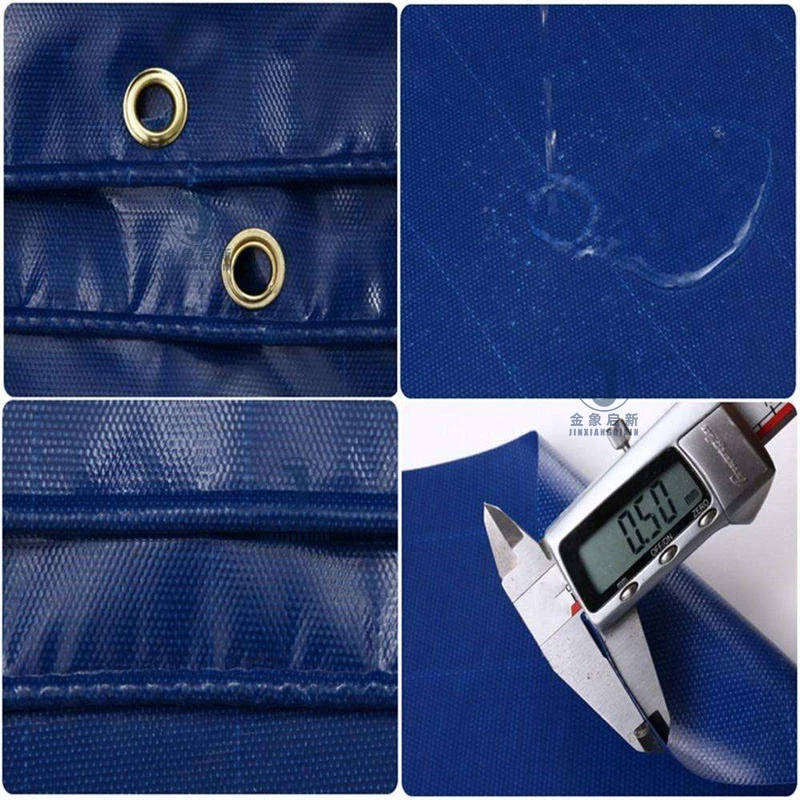
| Total Thickness | 0.35–0.45 mm (medium PVC) / 0.70–1.0 mm (heavy-duty PVC) / 1.2–1.5 mm (super heavy PVC) / 0.2–0.4 mm (PE) |
| Weight Range | 400–500 g/m² (medium PVC) / 700–1000 g/m² (heavy-duty PVC) / 1100–1500 g/m² (super heavy PVC) / 50–220 g/m² (PE) |
| Base Fabric Denier | 500D (medium) / 1000D (heavy-duty) / 500D–2000D (super heavy) |
| Tensile Strength | Longitude 1500–2000 / Latitude 1200–1800 N/5cm (medium); Meridian 2000–2500 / Latitude 1800–2200 N/5cm (heavy-duty); Warp 2500–3000 / Weft 2200–2800 N/5cm (super heavy) |
| Roll Width Options | 2 m, 4 m, 6 m / 6 ft, 8 ft, 10 ft, 12 ft |
| Roll Length | 100 yards, 100 meters, or custom |
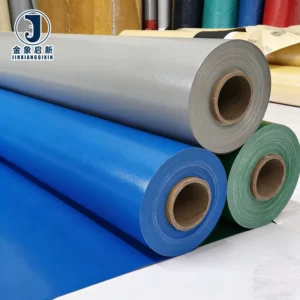
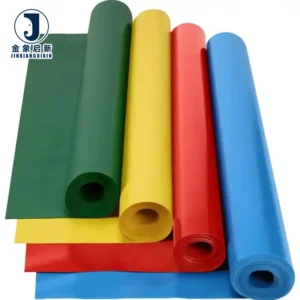
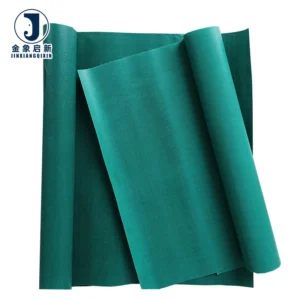
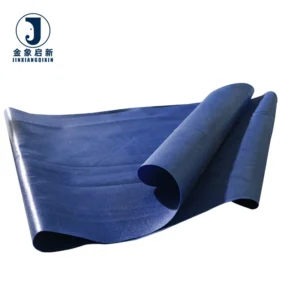
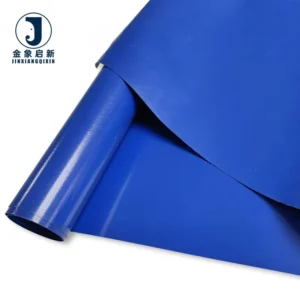
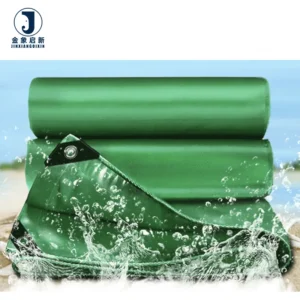
| Colour Options | Blue, Blue/Orange, Green, Grey, Black, Clear, Grey/Green, Orange, or custom |
| UV Treatment | Available — confirm the grade required for your market (test basis not stated in source) |
| Flame Retardant | Available in flame retardant grades — confirm the grade required for your market |
| Anti-Mildew | Mildew proof and anti-aging treatment available |
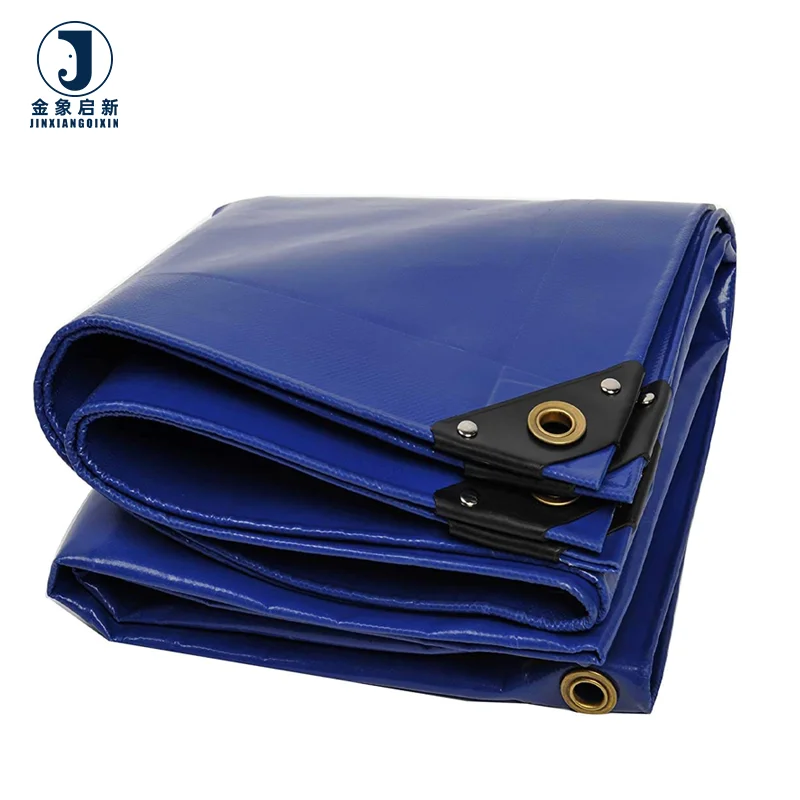
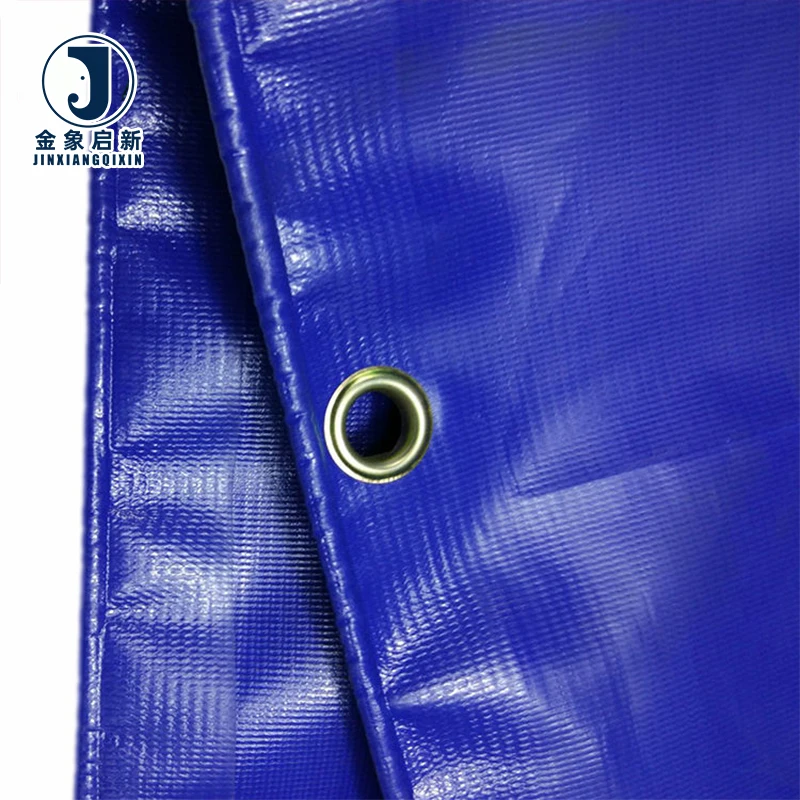
| Edge Reinforcement | PP rope in hem on all four edges (finished cuts) |
| Eyelets | Galvanized, spaced every 3 ft or 1 m (finished cuts) |
| Corners | Reinforced plastic (finished cuts) |
| Certification | ISO, CE |
Application Suitability
| Application | Exposure & Requirement |
|---|---|
| Tarpaulin distributor stock | Multiple GSM grades and colours needed for regional resale; batch-to-batch colour consistency across rolls |
| Truck and trailer cover fabrication | Constant flexing, road abrasion, UV exposure; roll stock cut in-house to specific vehicle dimensions |
| Construction site equipment covers | Weather exposure, puncture risk from sharp edges; bulk roll supply for on-site cutting to fit irregular shapes |
| Tent and awning manufacturing | Tensioned fabric under continuous load; roll width and tensile strength determine panel layout and seam count |
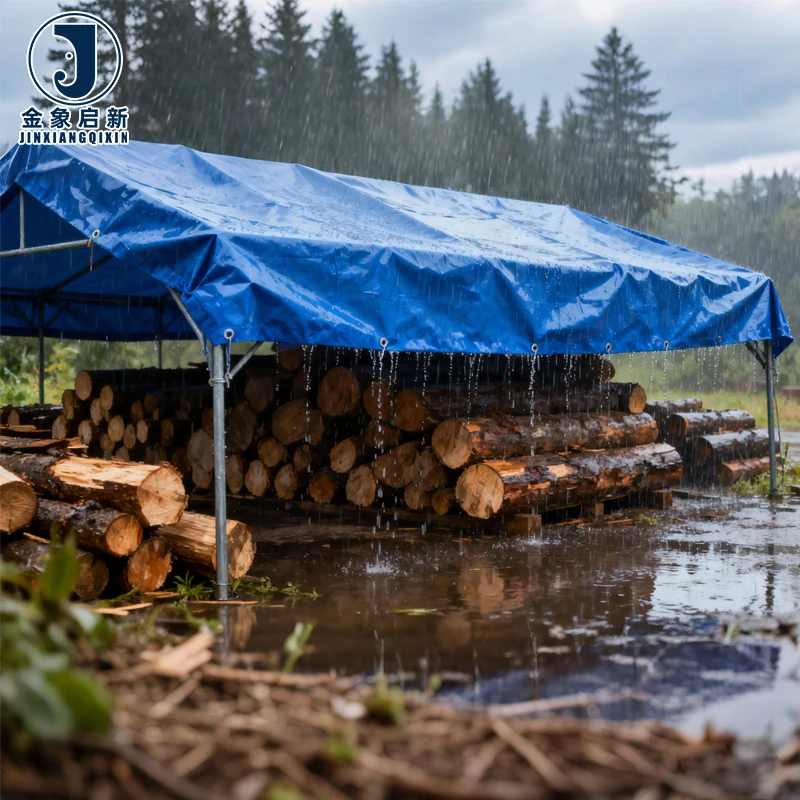
| Lumber and steel tarps | Heavy, abrasive cargo; super heavy PVC grades withstand contact with rough-sawn timber and steel coil edges |
Why Roll-to-Roll Consistency Matters More Than Quoted GSM
The weight printed on the invoice means nothing if the scale tells a different story when the container is opened.
Every distributor who has stocked PVC tarpaulin roll for resale knows the frustration: the specification sheet states one GSM, but the material that arrives feels lighter, drapes differently, and underperforms against the claims made to end-users [NEED_CITE: roll weight variance in imported coated fabric shipments]. When a buyer cuts into a roll expecting 900 g/m² and finds material closer to 750 g/m², the entire container load becomes suspect. This is not a minor variance — it changes the tensile strength, the tear resistance, and the service life the end-user experiences. For wholesale buyers ordering full container loads, one inconsistent roll damages credibility with every downstream customer who receives it. The PVC tarpaulin roll stock supplied here is produced under stage-by-stage quality control with coating weight verified at each production stage and 100% pre-shipment inspection before any roll leaves the facility.
Stock Widths Engineered for Container Loading Efficiency
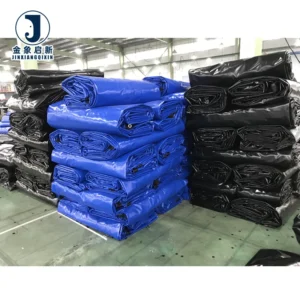
Roll widths from 2 m to 6 m are available to match the cutting patterns used by fabricators and distributors. A 4 m roll width, for example, allows a fabricator to cut two standard 1.8 m panels with minimal offcut waste, while the 6 m width suits large-format covers for construction and agricultural applications. Roll lengths of 100 yards or 100 metres are standard, with custom lengths available for buyers who need specific yield per roll. The PVC tarpaulin roll stock is wound on reinforced cores to prevent crushing during ocean freight, and the container loading plan is provided before dispatch so freight forwarders can calculate roll count and gross weight per TEU.
Colour Matching Across Every Roll in a Shipment
When a distributor orders twenty rolls of blue PVC tarpaulin roll for regional resale, the end-users expect every piece they buy to look identical. Colour drift between rolls in the same order is a recurring complaint in the coated fabric trade, and it becomes visible the moment two panels are installed side by side or hung adjacent on a retail rack [NEED_CITE: colour consistency standards in batch dyeing for coated textiles]. The coating stage is where colour is set, and controlling pigment dosing across multiple production runs is where most inconsistency originates. Here, reference samples are held for each production batch so that reorder colour can be matched against the original shipment, and the pre-shipment inspection includes a visual comparison of rolls from the same order before packing.
How GSM, Denier, and Coating Weight Interact to Determine Real Strength
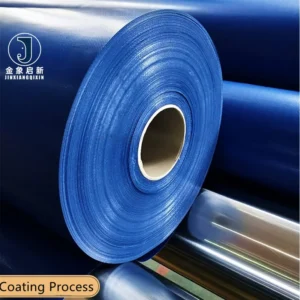
A common misunderstanding in PVC tarpaulin roll procurement is treating GSM as a standalone indicator of strength. In reality, the total weight of a coated fabric is the sum of the base fabric weight and the coating weight — and it is the base fabric that carries the tensile and tear load, while the coating provides waterproofing, abrasion resistance, and UV protection. A 900 g/m² fabric built on a 1000D base with a lighter coating will have substantially higher tear resistance than a 900 g/m² fabric built on a 500D base with a heavier coating. The dipping coating method used for the PVC grades here produces a mechanical bond between the coating and the polyester mesh, which affects both peel strength and heat-welding behaviour. For buyers comparing grades, the base fabric denier — 500D, 1000D, or up to 2000D in the super heavy range — is the parameter that most directly predicts how the fabric will resist tear propagation once a puncture occurs [NEED_CITE: relationship between base fabric denier and tear strength per ISO 1421]. The width of the roll also influences fabrication efficiency: wider rolls reduce the number of welded seams in a finished cover, and each seam is a potential failure point under load.
The Hidden Cost of Specifying on Price Instead of Verified Weight
When a wholesale buyer selects a PVC tarpaulin roll supplier based on the lowest quoted price per square metre, the savings often disappear once the material is inspected on arrival. Rolls that are lighter than specified deliver lower tensile strength and reduced abrasion resistance, leading to premature failures that the end-user blames on the distributor, not the original manufacturer. Colour inconsistency between rolls forces fabricators to sort and match panels manually, adding labour cost and delaying shipment of finished covers. Welded seams on underweight material tend to fail before the fabric itself does, because the coating layer is too thin to form a reliable heat-weld bond — a failure mode that appears only after the cover has been in service and flexed under load [NEED_CITE: heat weld failure modes in PVC coated polyester fabrics]. These are not theoretical risks; they are the most common reasons distributors switch suppliers after a single bad container.
Why Buyers Source Roll Stock From This Facility
Three full production lines and 36 sets of professional equipment provide the capacity to fill container-load orders within stated lead times, without splitting production across different machines where consistency is harder to maintain. The 10-person R&D team develops samples within days for custom width, colour, or print requirements, allowing buyers to verify the material before committing to a production run. Dedicated quality control is applied at every production stage — coating weight is checked during coating, colour is verified after curing, and each roll is weighed and measured during the 100% pre-shipment inspection. Nearly 30 years of focus on coated fabric means the process control parameters for each GSM grade are well established, reducing the variability that newer producers struggle with. The facility holds ISO and CE certification, and every shipment is accompanied by the documentation international buyers need for customs clearance and end-user compliance.
Documentation & Verification
- Material specification sheet stating exact GSM, base fabric denier, and coating type for each roll grade in the order
- Pre-shipment inspection record confirming roll count, weight verification, and colour consistency check across the batch
- Roll packing list with container loading plan detailing roll count and gross weight per TEU for freight planning
- Test reports for UV and flame retardant treatments supplied with shipment where applicable to the grade ordered
- Certificate of origin and full customs documentation support prepared for the destination country
Fabrication, Handling & Storage
- Heat-weld temperature and dwell time must be adjusted to the specific PVC coating thickness — the 0.35 mm medium grade and the 1.5 mm super heavy grade require different settings
- Galvanized eyelets at 1 m intervals distribute tie-down load across the hem; the PP rope reinforcement prevents the eyelet from pulling through under tension
- Store rolls horizontally on a flat surface to prevent permanent creasing; vertical storage of heavy-grade rolls can cause edge compression and coating distortion
- When unrolling at low temperatures, allow the PVC tarpaulin roll to acclimatise before flexing — cold material is stiffer and more prone to surface cracking at fold lines
- Clean with mild detergent and water; avoid solvent-based cleaners that can degrade the PVC coating surface over repeated use
- For on-site repair of punctures, use compatible PVC repair tape applied to a clean, dry surface — the dipping-coated surface bonds well with standard PVC adhesives
What to Include With Your Enquiry
To provide an accurate quotation and lead time, share the target GSM range, the roll widths and lengths your operation requires, and the annual volume you plan to order. If your market requires flame retardant or UV treatment at a specific grade, state the standard your end-users demand so the correct treatment can be confirmed before production. For custom colours or printed branding, a Pantone reference or physical sample allows colour matching to begin at the sample stage.
Frequently Asked Questions
Q: How is GSM verified on each roll before shipment, and what documentation is provided?
A: Every roll is weighed and measured during the 100% pre-shipment inspection. The inspection record confirms the actual weight against the stated GSM, and this document accompanies the shipment along with the material specification sheet, roll packing list, and certificate of origin. Buyers can request the inspection record before dispatch for independent review.
Q: What stock widths and roll lengths are available, and how do they affect container loading?
A: Roll widths are available in 2 m, 4 m, and 6 m, with imperial options at 6 ft, 8 ft, 10 ft, and 12 ft. Standard roll lengths are 100 yards or 100 metres, with custom lengths on request. A container loading plan showing roll count and gross weight per TEU is provided before dispatch so buyers can optimise freight costs.
Q: How is colour consistency maintained across multiple rolls in one bulk order?
A: Pigment dosing is controlled at the coating stage, and reference samples from the production batch are retained for future reorders. The pre-shipment inspection includes a visual comparison of rolls from the same order to identify any drift before packing. Buyers ordering custom colours receive a sample for approval before full production begins.
Q: What is the minimum order for custom width, colour, or printed branding on roll stock?
A: Minimum order quantities vary depending on the specific customisation requested and the GSM grade selected. Custom widths, colours, and printed branding are all handled by the in-house R&D team, which develops samples within days. Share your requirements with the specification details to receive the applicable minimum and lead time.
Q: What packaging and labelling options are available for distributor rebranding?
A: Rolls can be packed with custom labelling, including the distributor’s branding, product specifications, and barcode. The roll packing list can be formatted to match the distributor’s inventory system. Specific labelling requirements should be confirmed at the sample approval stage so that packaging is ready when production is completed.