Description
Roll-to-Roll Consistency — Every PVC coated tarpaulin roll ships with a verified GSM and colour reference so your container load arrives uniform across the entire order.
Technical Specifications
| Parameter | Value |
|---|---|
| Product Type | PVC Coated Tarpaulin Fabric |
| Base Fabric Denier | 500D to 2000D |
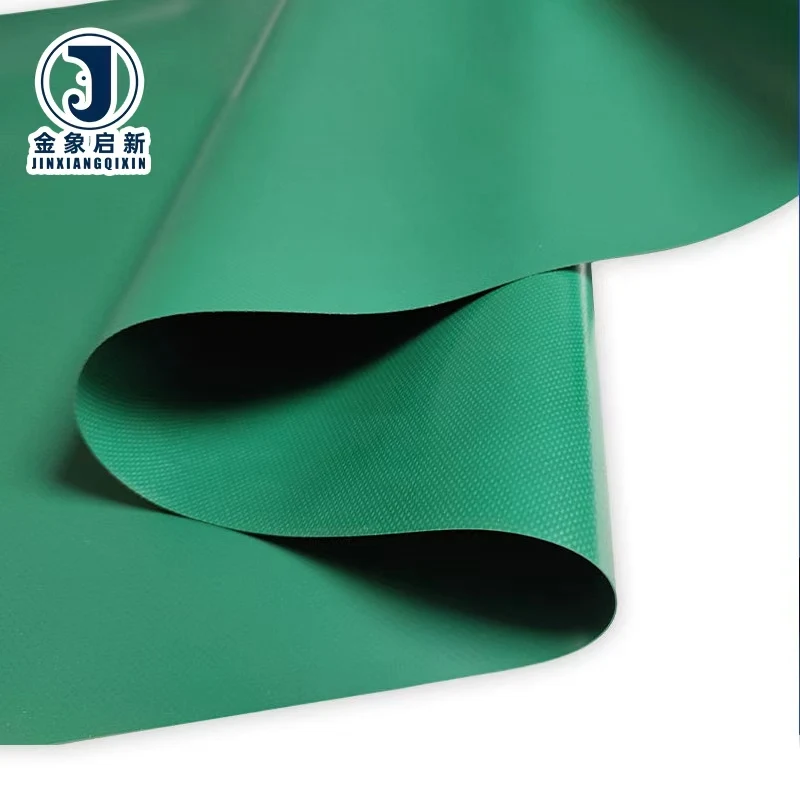
| Coating Material | PVC knife-coated |
| Thickness | 0.35 mm to 1.5 mm |
| Weight Range | 400 g/m² to 1500 g/m² |
| Tensile Strength (Warp) | 1500 N/5cm to 3000 N/5cm |
| Tensile Strength (Weft) | 1200 N/5cm to 2800 N/5cm |
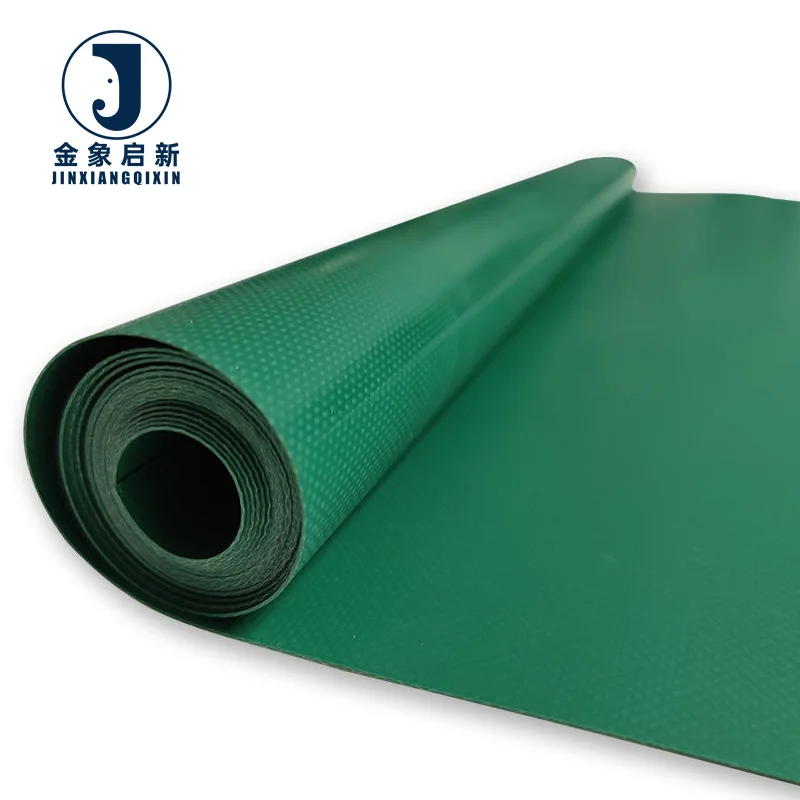
| Roll Width Options | 2 m, 4 m, 6 m, or custom |
| Roll Length Options | 100 yards, 100 meters, or custom |
| Surface Finish | Glossy or matte (available — confirm requirement) |
| Treatment Options | Anti-UV, flame retardant, anti-static (available — confirm the grade required for your market) |
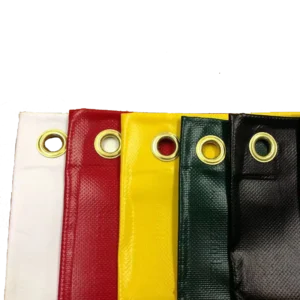
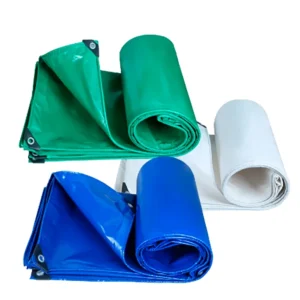
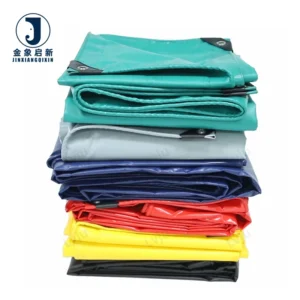
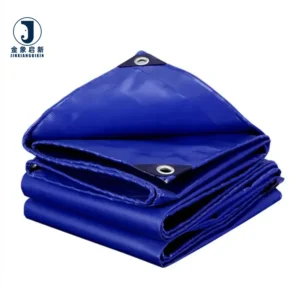
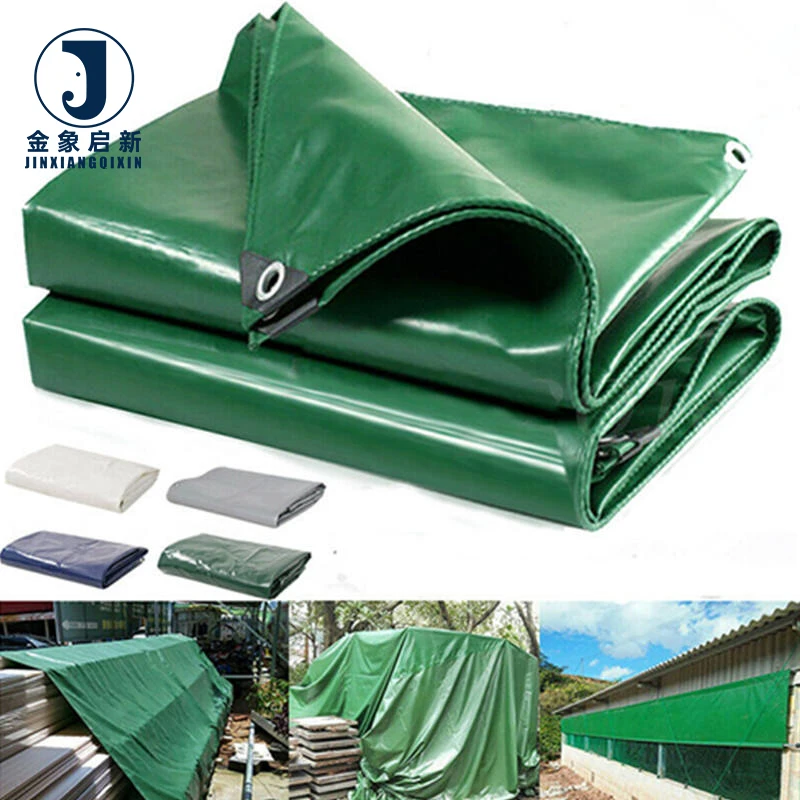
| Colour Options | Blue, Green, Grey, Black, White, Orange, or custom |
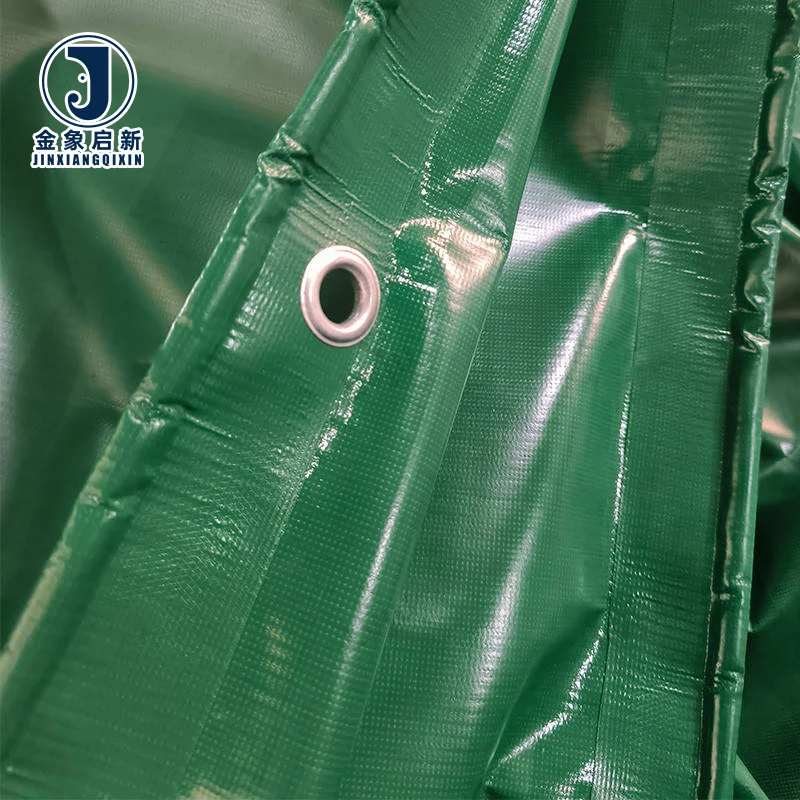
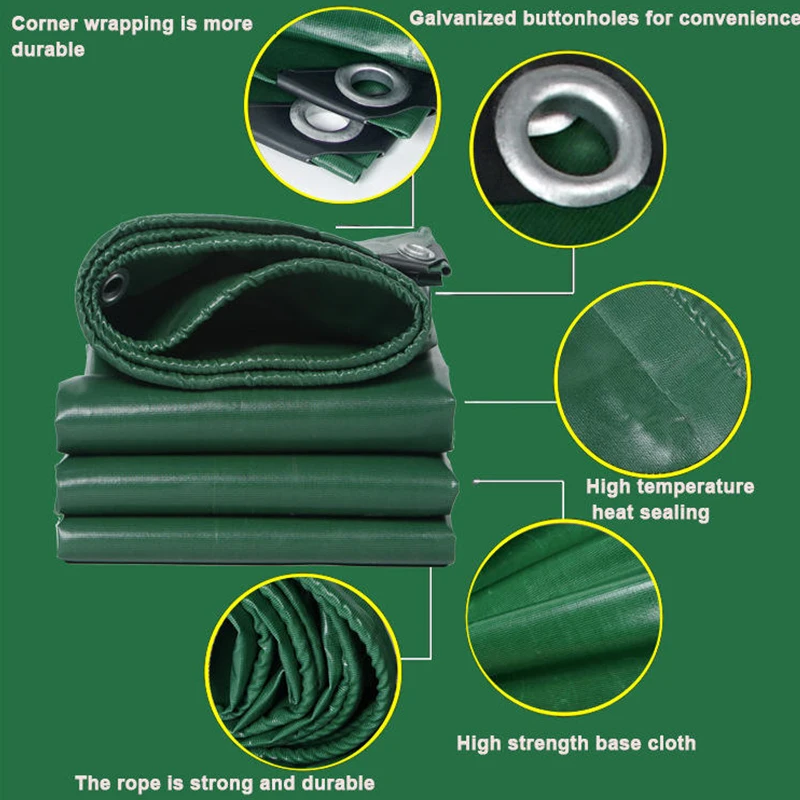
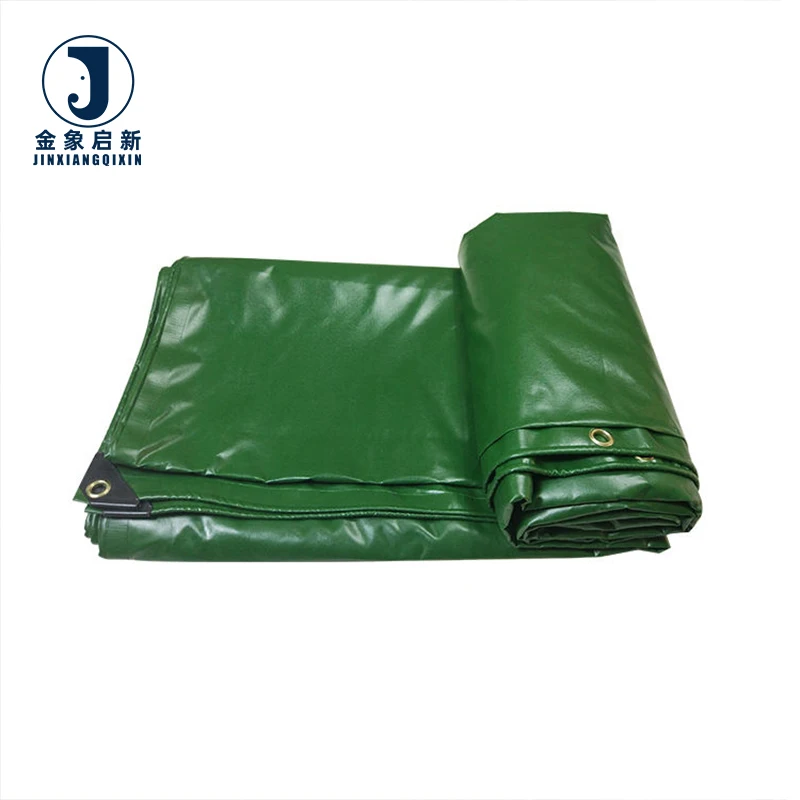
| Edge Reinforcement | PP rope in hem (finished tarpaulin variant) |
| Eyelet Spacing | Every 3 ft or 1 m interval (finished tarpaulin variant) |
| Waterproof | Yes |
| Standards | ISO, CE (per company certification) |
Application Suitability
| Application | Exposure & Requirement |
|---|---|
| Truck and trailer tarpaulin covers | Constant flexing at load points, road debris abrasion, UV and rain exposure, wind lift on highway speeds |
| Construction site and equipment covers | Prolonged outdoor weathering, dust and chemical splash, mechanical contact with scaffolding and steel edges |
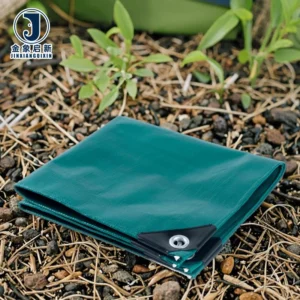
| Pond and reservoir liners | Permanent water immersion, soil chemistry contact, puncture risk from substrate irregularities |
| Tensioned membrane structures | Sustained tensile load, wind uplift cycling, UV degradation over architectural lifespan |
| Tent and awning fabric | Repeated folding and unfolding, UV exposure, water shedding, colour presentation on public-facing installations |
| Industrial ventilation ducts | Airflow abrasion, fire-retardant and anti-static compliance on mining and tunnelling sites |
Why Roll-to-Roll GSM Variation Costs More Than You Think
The quoted weight and the delivered weight are not always the same number — and the gap shows up on the cutting table.
When you buy PVC coated tarpaulin roll stock by the container, a GSM shortfall of even a small margin across dozens of rolls compounds into thinner material than your fabrication process was set up for. Weld temperatures that worked on the sample may burn through a lighter roll. Tensile values drop, seams fail at flex points, and your customer sees a truck cover tearing within months. I have seen buyers accept delivery without checking roll weight against the spec sheet, only to discover the inconsistency when two rolls are laid side by side and the difference is visible to the naked eye. [NEED_CITE: tensile and tear test methods for coated fabrics per ISO 1421]
Production Control Behind Every Roll
Three full production lines and 36 sets of professional equipment run dedicated to coated fabric output. This is not a trading house consolidating from multiple mills — the PVC knife-coated fabric rolls leaving this facility are produced on-site under continuous process monitoring. Coating weight and adhesion are controlled at every stage, meaning the GSM stated on your quotation is the GSM you receive on the dock.
Matching Colour Across a Container Load
Colour variation between rolls in a single order is a recurring complaint among tarpaulin importers. When two rolls of the same specified colour are installed side by side on a fleet of trailers or a row of site hoardings, even a slight batch shift becomes obvious. Each production batch is tracked against a colour reference so that every roll in your PVC coated tarpaulin roll wholesale order matches the agreed shade. This matters most when your customer expects visual uniformity across a large installation. [NEED_CITE: colour fastness testing standards for coated textiles]
What the Numbers Actually Mean for Your Cutting Table
The relationship between base fabric denier and coating weight determines how the material behaves during fabrication. A 500D base at lighter GSM produces a flexible roll suited to tent and awning applications where folding and draping are routine. Moving to 1000D and heavier coating weights shifts the material into truck side curtain and construction cover territory, where tensile load at tie-down points and abrasion at contact edges dominate. The 2000D super-heavy tier addresses membrane structures and industrial ducting where sustained tension and compliance-grade fire performance are non-negotiable.
Roll width directly affects your cutting yield and seam count. A 6 m roll lets a fabricator cut large truck covers or pond liners with fewer welded joints, reducing both labour and the number of potential failure lines. Standard 100-meter and 100-yard roll lengths suit container loading calculations, while custom lengths reduce off-cut waste for high-volume production runs.
Coating method matters equally. Knife-coated PVC builds adhesion between the coating and the polyester base through direct application under pressure, producing peel strength that supports heat welding without delamination. This contrasts with laminated constructions where the coating layer can separate under repeated flexing.
The Hidden Cost of Skipping Pre-Shipment Verification
Accepting a container load without reviewing the inspection record means you inherit every production variance. Rolls that fall below the specified GSM window produce welds that fail before the fabric body does, because the heat setting calibrated for the correct thickness burns through lighter material. Batch-to-batch colour drift forces you to segregate rolls and absorb the waste of partial cuts. Flame-retardant grades shipped without a supporting test report leave you exposed at the job site inspection, where the contractor’s compliance officer asks for documentation you do not have. [NEED_CITE: fire classification testing requirements for coated fabric in construction applications]
Why Buyers Source Roll Stock From This Facility
Dedicated QA and QC runs at every production stage, not just a final spot-check — each roll in a PVC coated tarpaulin roll bulk order passes weight, thickness, and visual inspection before packing.
A 10-person R&D team develops custom width, colour, and printed branding samples within days, so you can confirm the specification before committing to container volume.
Nearly 30 years focused exclusively on coated fabric means the process parameters for each GSM tier are established and repeatable, not experimental.
Full documentation accompanies every dispatch: material specification sheet, roll packing list, and pre-shipment inspection record — the paperwork your import process and customer audits require.
ISO and CE certified production underpins the quality system, giving you a compliance foundation for markets that demand certified supply chains.
Documentation & Verification
- Material specification sheet stating base fabric denier, coating weight, and GSM per roll
- Pre-shipment inspection record with weight verification against the quoted specification
- Roll packing list detailing roll count, individual weight, and container loading plan
- Colour reference card matched to each production batch for side-by-side consistency checks
- Test reports for UV and flame-retardant grades where applicable — confirm the grade required for your market
Fabrication, Handling & Storage
- Heat weld temperatures must be calibrated to the specific GSM tier — lighter 400 g/m² rolls require lower settings than 1500 g/m² grades
- PP rope hem reinforcement on finished tarp variants distributes tie-down load across the edge rather than concentrating stress at eyelet points
- Store rolls upright on pallets to prevent flat-spot deformation that causes tracking issues during unrolling
- Allow cold-stored rolls to reach ambient temperature before unrolling to avoid coating crack on heavier 1.5 mm grades
- Glossy surface variants accept solvent-based printing inks more readily; matte surfaces may require pre-treatment for adhesion
- Plan cutting layout around the 2 m, 4 m, or 6 m roll width to minimize welded seam count on large covers
What to Include in Your Inquiry
Provide the application and the exposure conditions your end users face — highway wind load, permanent water immersion, or mining ventilation compliance each point to a different GSM tier and treatment package. Specify the roll width and annual volume so the quotation reflects container-load pricing tiers. If your market requires a particular flame-retardant or anti-static grade, name the standard so the correct test report ships with your order.
Frequently Asked Questions
Q: How is GSM verified on each roll before shipment?
A: Every roll is weighed and measured during the pre-shipment inspection process. The inspection record documents the actual GSM against the specification stated on your quotation. This record ships with the packing list so you can verify consistency across the entire container load upon arrival at your warehouse.
Q: What roll widths and lengths are stocked versus made to order?
A: Standard widths of 2 m, 4 m, and 6 m are produced regularly across multiple GSM tiers. Roll lengths of 100 yards and 100 meters are standard. Custom widths and lengths are developed through the R&D team with samples available for approval before full production runs begin.
Q: How is colour consistency maintained across rolls in a single order?
A: Each production batch is tracked against a colour reference. All rolls within your order are pulled from the same batch where possible. The colour reference card is included in the documentation package so you can verify uniformity when rolls are unrolled side by side at your facility.
Q: What is the minimum order for custom width, colour or printed branding?
A: Minimums depend on the specific width and colour requested. The R&D team produces samples within days for your approval. Once confirmed, the production plan is scheduled alongside standard roll output to meet your container loading requirements and target dispatch date.
Q: Are UV and flame-retardant test reports provided with each batch?
A: Test reports are provided for UV and flame-retardant grades where those treatments have been specified in your order. Confirm the grade required for your market at the inquiry stage so the correct treatment is applied and the matching documentation is prepared before dispatch.