Description
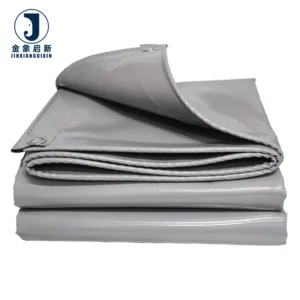
Consistent Roll Stock Supply — Every PVC Knife-Coated Tarpaulin Roll is checked for weight and coating integrity before dispatch, backed by a 10-person R&D team and dedicated QA/QC at every production stage.
Technical Specifications
| Parameter | Value |
|---|---|
| Product Type | PVC Knife-Coated Tarpaulin Roll |
| Material | PVC + High-strength polyester mesh fabric |
| Coating Method | Laminated technology & Hot-melt Coating technology |
| Weight (GSM) | 350gsm / 420gsm / 500gsm / 550gsm / 600gsm / 750gsm |
| Total Thickness | 0.32mm / 0.35mm / 0.4mm / 0.45mm / 0.5mm / 0.65mm |
| Roll Size | 2m width × 75m length / 2.1m width × 50m length |
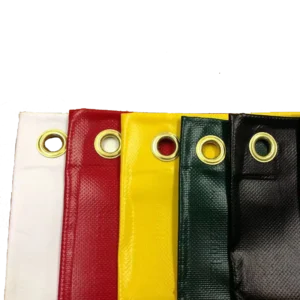
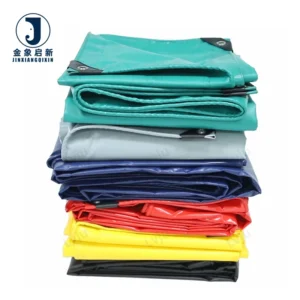
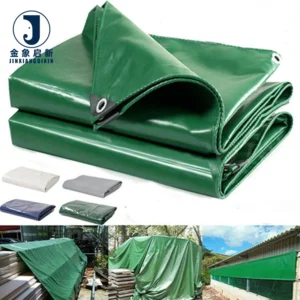
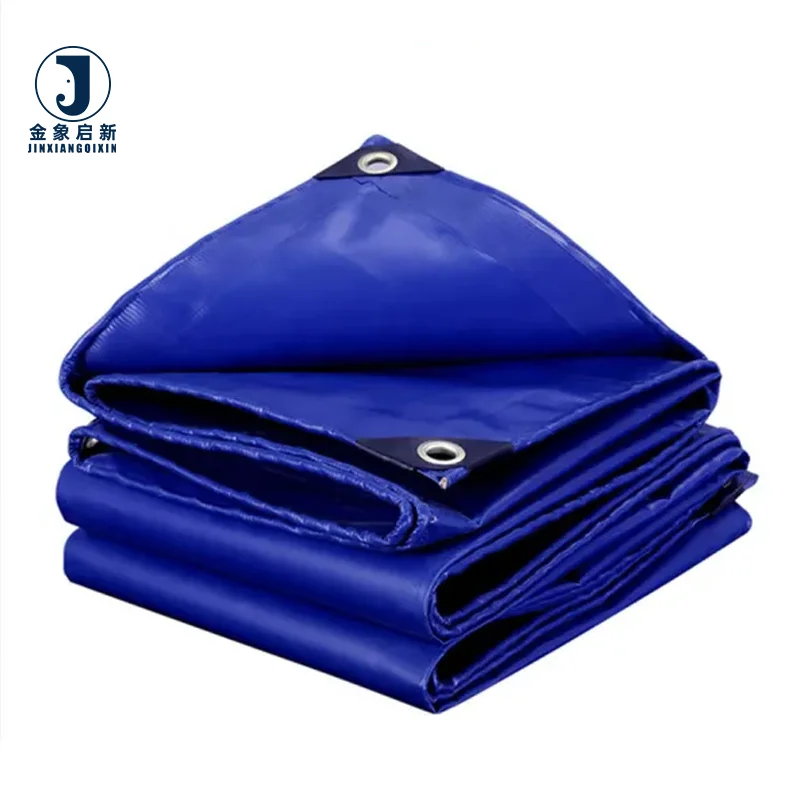
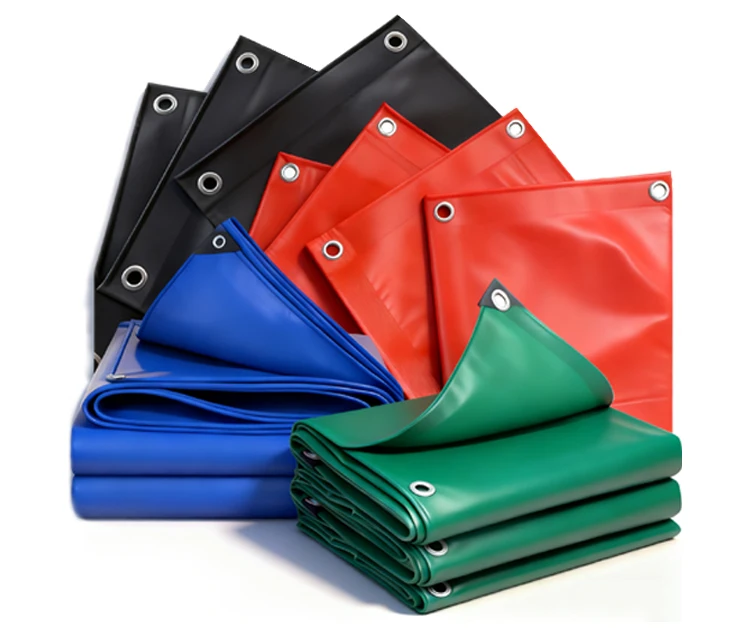
| Color Options | Blue / Red / Yellow / Light blue / Grey (Customizable) |
| Key Features | Waterproof, Anti-Mildew, Cold Crack Resistance, Sunproof, Anti-Static treatment (surface resistance or standard not stated in source) |
| Service Life | 3–7 years under normal circumstances (source value — verify against specific application conditions) |
| Certification | ISO, CE (company-level) |
Application Suitability
| Application | Exposure & Requirement |
|---|---|
| Tarpaulin distribution & wholesale | Multiple GSM grades required from a single source; roll-to-roll colour consistency for regional resale; container loading efficiency |
| Tent & awning manufacturing | Fabric bought by the roll for cut-and-sew production; reliable welding at seam lines; batch consistency across production runs |
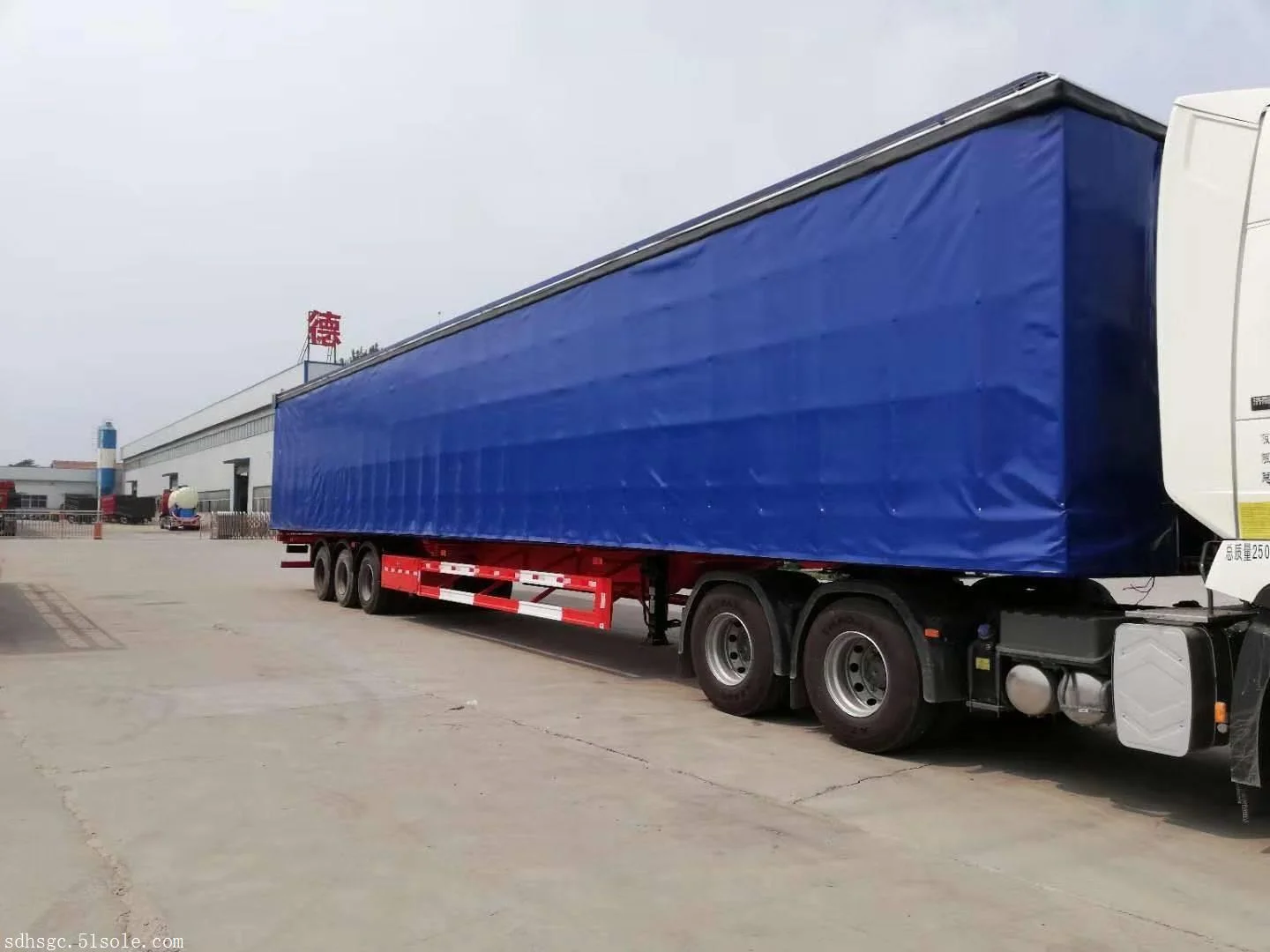
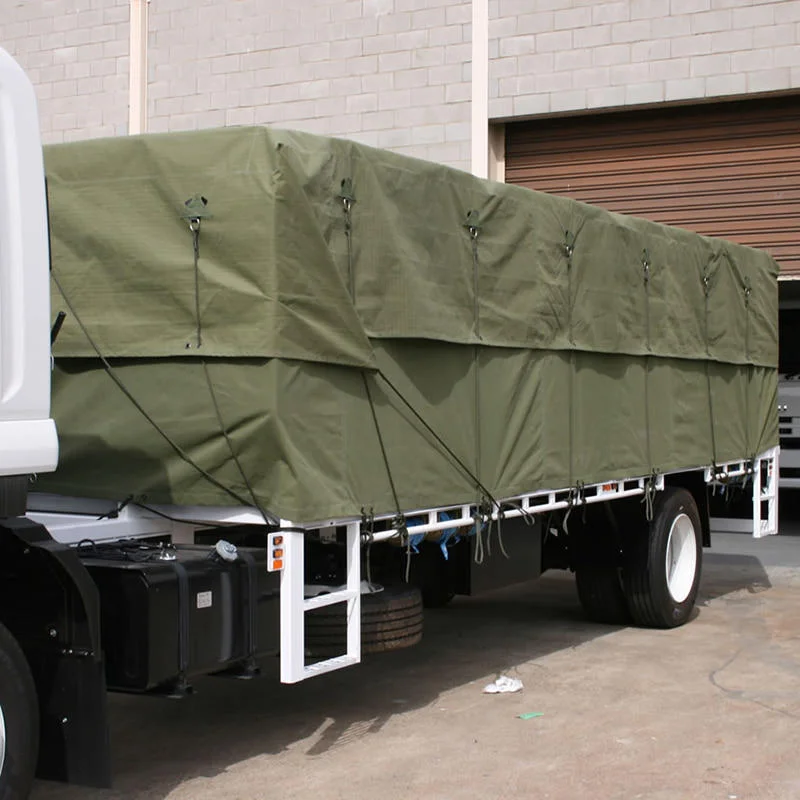
| Truck cover & side curtain fabrication | Constant flexing at load points, road spray and abrasion exposure; hot-melt coated adhesion for durable welds |
| Fish tank & pool lining | Permanent water contact; anti-mildew surface required; puncture resistance from substrate movement |
| Cargo ship & deck covering | Salt air exposure, UV conditions, heavy equipment traffic; cold crack resistance in transit climates |
Why GSM Stated on Paper Does Not Match What Arrives at the Dock
A quoted GSM means nothing unless every roll in the container is individually verified before it leaves the factory floor.
Buyers who purchase PVC Knife-Coated Tarpaulin roll stock in volume frequently report the same problem: the material specification sheet promises one weight, but cutting into the first roll reveals a lighter, thinner fabric than what was agreed. This discrepancy compounds across a full container — dozens of rolls arrive underweight, and by the time the issue surfaces, the goods are already in production or worse, already installed on a truck fleet. The cost of rework and replacement far exceeds the original savings on a lighter grade. [NEED_CITE: buyer disputes over GSM variance in coated fabric imports]
Roll-to-Roll Consistency as a Sourcing Criterion
When buying PVC knife-coated tarpaulin by the roll, the single most important quality metric is not the peak specification on the data sheet — it is the variance between the best roll and the worst roll in a single shipment. Hot-melt coating technology delivers stronger PVC-to-polyester adhesion compared to basic lamination, which directly translates to predictable behaviour during welding and fabrication. A fabricator cutting tent panels or truck side curtains from consecutive rolls needs every roll to behave identically under the same heat-weld settings.
Container Loading and Roll Dimension Planning
Standard roll widths of 2m × 75m and 2.1m × 50m are designed around container loading geometry. A buyer planning a full container needs to know how many rolls fit per layer, how many layers stack safely without crushing the inner cores, and whether the total weight sits within shipping limits. The 2.1m width option suits fabrication shops whose cutting tables are sized for wider material, reducing the number of longitudinal welds required on large-format covers. [NEED_CITE: container loading calculations for roll goods in coated textiles]
Understanding Weight, Thickness and Coating Adhesion Together
GSM alone does not determine how a PVC coated tarpaulin roll performs in the field. The base fabric denier and mesh weave density carry the tensile and tear load, while the PVC coating weight protects against moisture ingress and provides the weldable surface. Hot-melt coating technology forces the PVC into the mesh interstices under heat and pressure, creating a mechanical bond that resists delamination at the weld line — the exact point where flexing concentrates on a truck curtain. Thickness correlates with GSM but is not interchangeable; two rolls at 550gsm can have different thickness readings depending on whether the base fabric is heavier or the coating is thicker. Anti-mildew treatment protects stored rolls and installed fabric in humid climates, while cold crack resistance ensures the material remains pliable during winter transport without developing micro-fractures along fold lines.
The Hidden Cost of Skipping Pre-Shipment GSM Verification
When a buyer accepts a container of tarpaulin rolls without documented per-roll weight checks, the risk is not theoretical. Underweight rolls enter production and produce finished covers that fail prematurely under load. Colour variation between rolls becomes visible only after panels are welded side by side on a truck or tent frame, forcing the fabricator to either accept a patchwork appearance or absorb the cost of re-cutting from replacement stock. Weld seam failure before the fabric itself degrades is a direct consequence of inconsistent coating adhesion — a problem that traces back to coating process control rather than field misuse. [NEED_CITE: weld seam failure analysis in PVC coated fabric applications]
Why Sourcing Roll Stock Through This Production Line Works
Three full production lines with 36 sets of professional equipment provide the throughput capacity to fill container orders within typical multi-week lead times. The 10-person R&D team handles custom colour matching and sample development within days, not weeks, so buyers can verify shade and weight before committing to a full production run. A dedicated QA/QC checkpoint operates at every production stage, not just final inspection, which catches coating weight drift and colour shift before rolls are wound and packed. Every roll ships with a packing list that references batch numbers for traceability, so a quality question on one roll can be traced to its production window without affecting the entire order. Nearly 30 years of focused coated fabric production means the process parameters for each GSM grade are established and repeatable, not experimental.
Documentation & Verification
- Material specification sheet stating GSM, base fabric construction and colour reference per roll batch
- Pre-shipment inspection record with individual roll weight verification against the quoted GSM
- Roll packing list with batch reference numbers for lot traceability after arrival
- ISO and CE certificates available at company level for compliance documentation
- Certificate of origin and customs support documents prepared per destination market
Fabrication, Handling & Storage
- Hot-melt coated rolls weld reliably at standard PVC heat-weld temperatures; adjust dwell time for the 750gsm grade versus lighter weights
- Store rolls upright on cores in a dry warehouse to prevent flat-spotting and edge damage on the 2m and 2.1m widths
- Anti-mildew treated surfaces tolerate standard PVC cleaners; avoid solvent-based products that soften the coating layer
- Allow cold-stored rolls to acclimatise before unrolling to prevent crease marks on cold crack resistant fabric
- Plan cutting layouts around 75m or 50m roll lengths to minimise off-cuts and transverse welds on large covers
What to Include in Your Next Roll Stock Enquiry
Specify the GSM grades you need across your product range, the roll width preference between 2m and 2.1m, and your target colour references so samples can be developed for approval before bulk production. If you require custom widths or non-standard roll lengths for your cutting tables, state the dimensions and annual volume so minimums and lead times can be confirmed. Confirm whether you need raw roll stock only or if pre-cut panels with specific edge treatments are part of the order.
Frequently Asked Questions
Q: How is GSM verified per roll before dispatch?
A: Each roll is weighed and measured during the pre-shipment inspection stage. The recorded GSM is compared against the specification stated on the material data sheet. Rolls that fall outside the acceptable tolerance are flagged and replaced before packing. A verification record accompanies every shipment, so buyers can cross-check weights against their purchase order line items upon receipt.
Q: What roll widths and lengths are available, and how do they affect container loading?
A: Standard options are 2m × 75m and 2.1m × 50m. The wider 2.1m roll reduces longitudinal seams for large-format fabrication but slightly changes the roll count per container layer. Buyers planning full-container orders should request a loading plan that shows roll count, stacking layers and total weight to optimise freight cost per square metre of fabric.
Q: How is colour consistency maintained across rolls within the same order?
A: All rolls in a single production run are matched to the approved colour reference sample developed during the sampling stage. In-process QA checks compare each roll against the reference under controlled lighting. Rolls showing visible deviation are held back before packing, ensuring that panels welded side by side from consecutive rolls show no shade difference once installed.
Q: What is the minimum order for custom colour or custom width rolls?
A: Custom colours and non-standard widths require a production run minimum that varies by specification. Buyers should submit the target colour reference, desired width and estimated annual volume so the R&D team can develop a sample and confirm the minimum order alongside the lead time. Sample development typically completes within days for evaluation before bulk commitment.
Q: What documentation accompanies each roll shipment?
A: Every shipment includes a material specification sheet, pre-shipment inspection record with per-roll GSM verification, a roll packing list with batch references, ISO and CE certificates, and a certificate of origin. Additional customs documentation is prepared based on the destination country. Buyers can request specific document formats during the order confirmation stage.