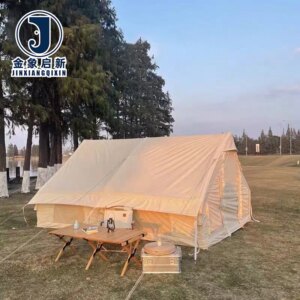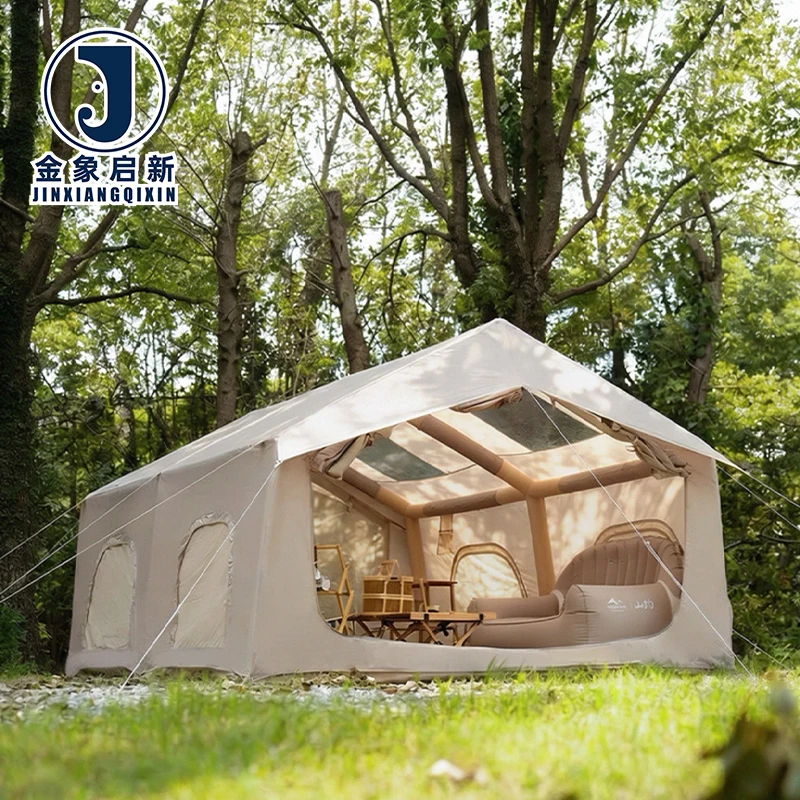
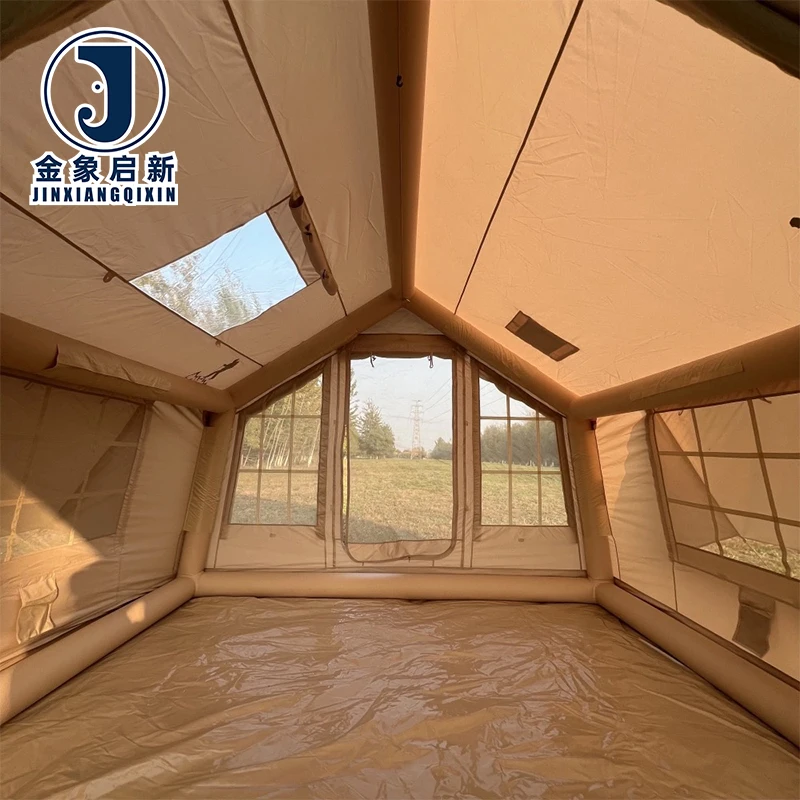
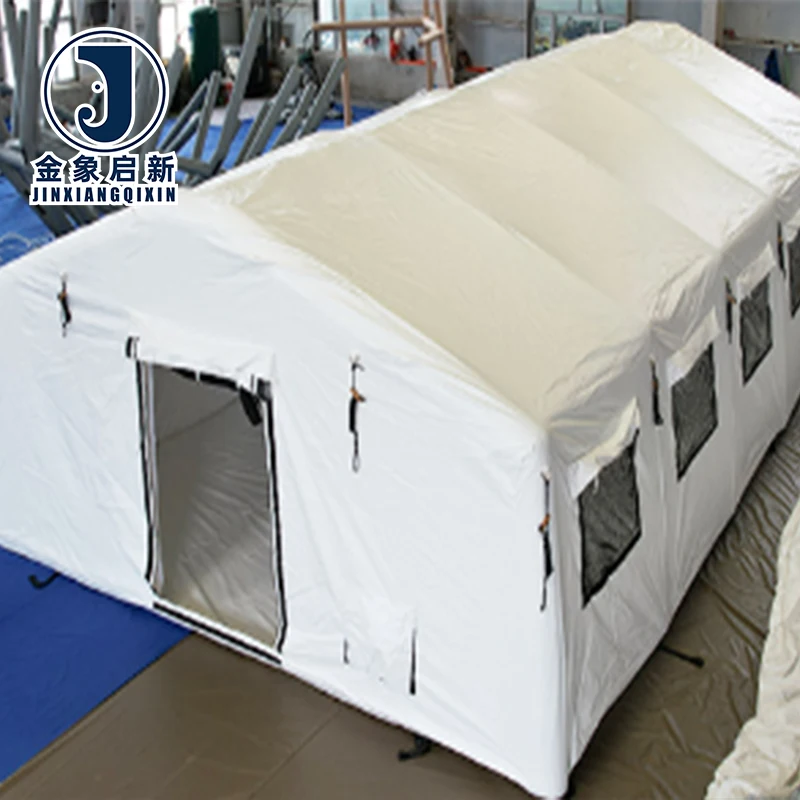
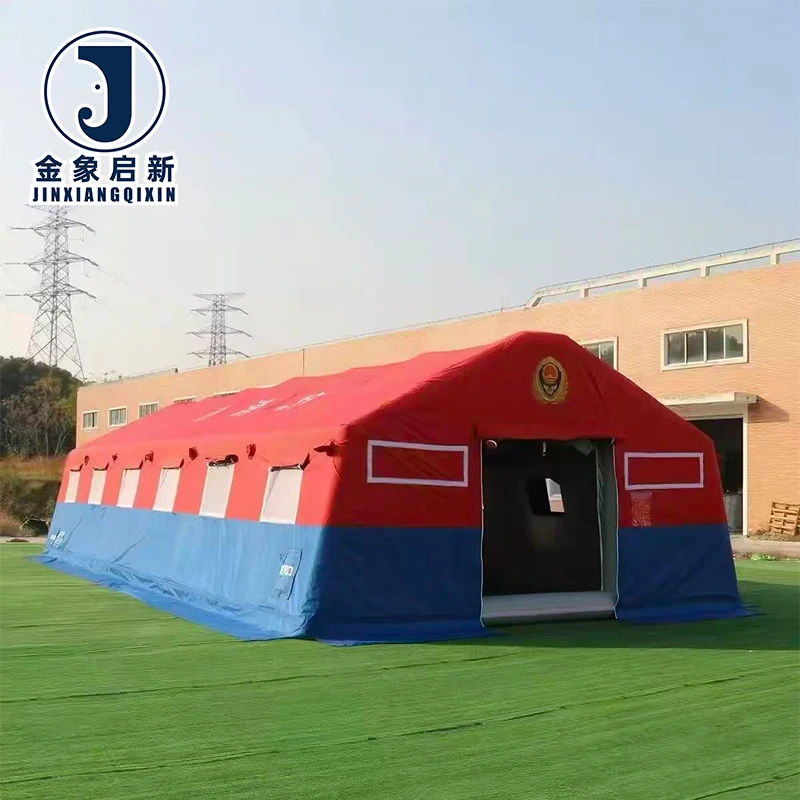
Description
Coated Fabric Expertise — Three dedicated production lines and 36 sets of processing equipment underpin batch-to-batch consistency in PVC inflatable tent fabric, from raw coating through finished roll dispatch.
Technical Specifications
| Parameter | Value |
|---|---|
| Product Type | Inflatable tent |
| Core Material | PVC tarpaulin |
| Waterproof Construction | Fully coated, heat-sealed seams |
| UV-Resistant Treatment | Available in UV-resistant grades — confirm the grade required for your market |
| Tear Resistance | Tear-resistant construction (standard not stated in source) |
| Flame Retardant Options | Available in flame retardant grades — confirm the grade required for your market |
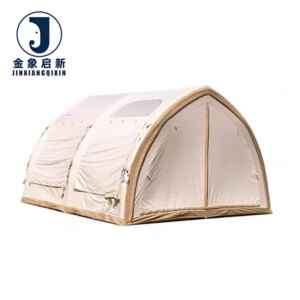
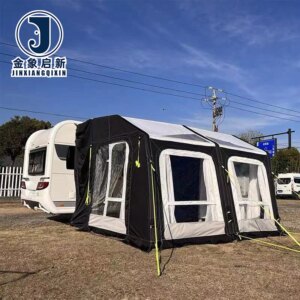
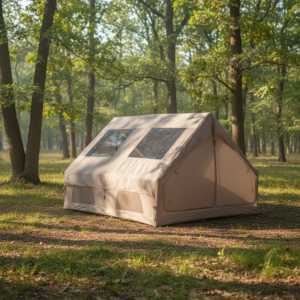
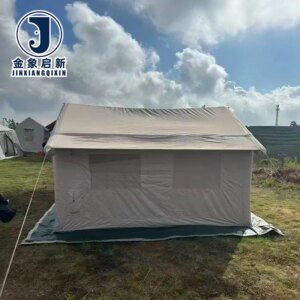
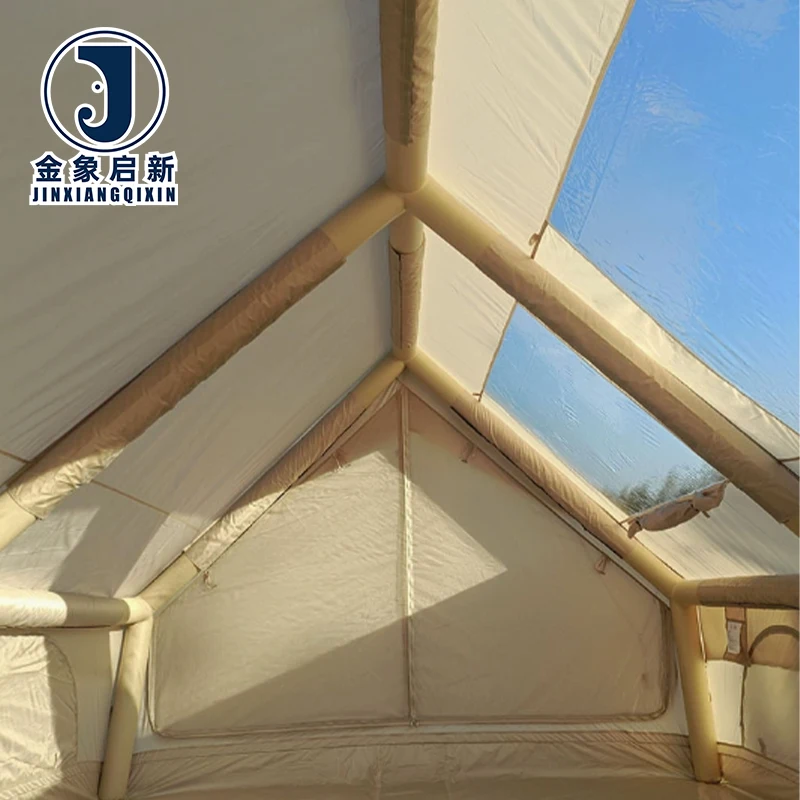
| Product Form | Inflatable structure with quick automatic opening |
| Customization Scope | OEM & ODM including sample customization and pattern printing |
| Standards Held | ISO9001, ISO14001, ISO45001, CE |
Application Suitability
| Application | Exposure & Requirement |
|---|---|
| Remote construction site operations | Four-season weather, prolonged sun exposure, rapid deployment of temporary workspace |
| Emergency response command centers | Immediate shelter infrastructure, diverse climatic conditions, repeated inflation cycles |
| Industrial equipment storage | Weather-tight protection, wind load resistance, dust and moisture exclusion |
| Outdoor event infrastructure | Prolonged UV exposure, public safety compliance, frequent assembly and dismantling |
| Disaster relief deployments | Unpredictable terrain, rapid inflation under time pressure, transport abrasion |
Why Batch Consistency Matters More Than Quoted GSM for Inflatable Tent Fabric
A quoted GSM figure means little if roll-to-roll weight varies across your production run.
Buyers sourcing PVC inflatable tent aftermarket supplier stock frequently discover that the gsm stated on the invoice does not match the material arriving at the factory floor. Lighter-than-agreed fabric compromises inflation pressure retention and accelerates seam fatigue during repeated deployment cycles. Worse, UV or flame-retardant claims lacking test documentation surface only when the installed tent degrades ahead of schedule or fails a site compliance audit [NEED_CITE: tensile and tear test methods for coated fabrics per ISO 1421].
Roll-to-Roll Colour Matching Across Inflatable Tent Production Runs
Manufacturers assembling multiple inflatable tents for a single project cannot tolerate visible colour variation between units installed side by side. Our PVC inflatable tent aftermarket supplier process controls pigment dosing and coating temperature across the entire batch, ensuring that rolls pulled from different production days yield consistent hue when fabricated into adjacent tent panels. This discipline eliminates the costly scenario where a completed event infrastructure deployment shows mismatched sections under daylight inspection.
Heat-Sealed Seam Integrity Under Inflation Pressure
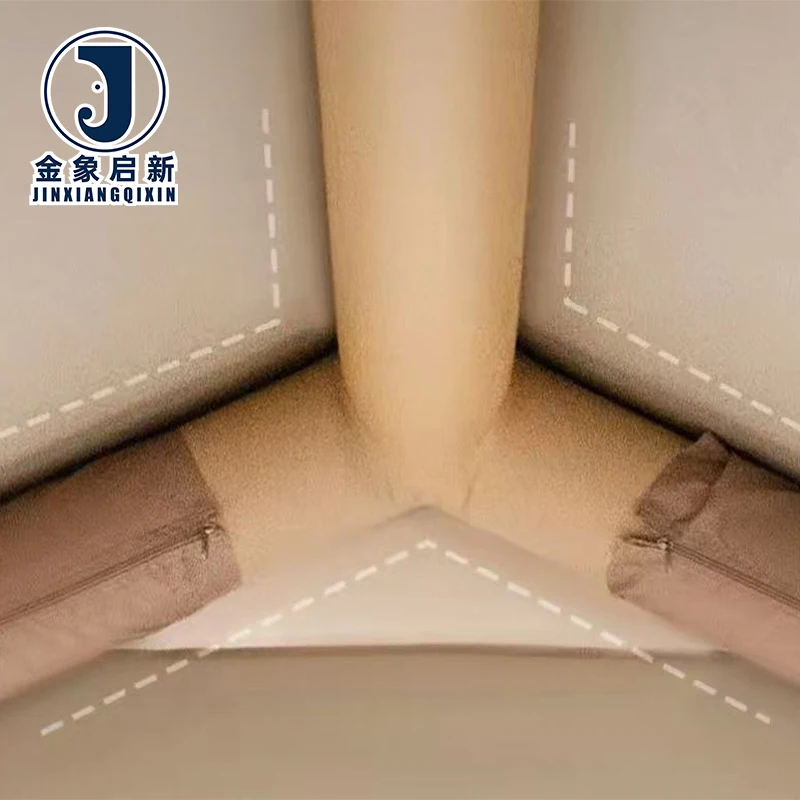
Inflatable structures place continuous stress on every welded joint each time the tent is pressurised. The seam must outlast the base fabric through hundreds of inflation and deflation cycles without delamination. Our 36 sets of professional processing equipment include dedicated high-frequency welding stations calibrated to the specific PVC coating chemistry used on our inflatable tent fabric, ensuring the weld penetrates the coating layer fully and bonds to the base fabric [NEED_CITE: DIN 4102 fire classification for building materials]. Every finished tent undergoes 24-hour pre-shipment inflation testing to verify that no seam leaks under sustained pressure.
Reading the Specification Sheet Beyond the Headline Weight
GSM alone does not determine how well an inflatable tent fabric resists tearing during deployment on rough ground. The base fabric denier and weave density work together with the coating weight to produce the final tensile and tear performance. A lighter base fabric with a heavy coating may show acceptable GSM on a scale but will tear more easily than a denser weave with moderate coating. Similarly, the coating method — whether knife-over-roll, calender, or fusion — directly affects peel strength between the PVC layer and the polyester substrate, which in turn governs how the fabric behaves at heat-sealed seams during repeated inflation cycles. UV-resistant formulation must be verified through test reports matched to the expected outdoor exposure duration of your target market, rather than assumed from a product description.
The Hidden Cost of Underspecified Inflatable Tent Fabric
Choosing fabric without verifying actual coating weight against the quotation leads to tents that lose inflation pressure faster, requiring continuous blower operation and increasing fuel or electricity costs on remote sites. Fabric that claims flame retardancy without a supporting test report creates liability exposure when the tent is inspected by site safety officers or event compliance auditors [NEED_CITE: flame retardant testing standards for temporary structures]. Welded seams that fail before the fabric itself tears indicate a mismatch between the welding parameters and the coating formulation — a defect that reveals itself only after the tent is deployed in the field and under load.
Why Fabricators Source Inflatable Tent Material Here
Our 10-person R&D team handles material selection, pattern printing specification, and sample development for custom inflatable tent configurations, producing samples within days rather than weeks. The 9,180 square metre facility houses three full production lines running in parallel, giving buyers confidence that volume orders ship on schedule without queueing behind unrelated product runs. Dedicated QA and QC staff monitor every stage from raw PVC batch tensile testing through final heat sealing, generating batch-specific inspection records that travel with the shipment. Our 100% pre-shipment inspection protocol catches coating weight deviations and colour inconsistencies before rolls leave the factory, eliminating the scenario where defective material arrives overseas and disrupts your fabrication timeline.
Documentation & Verification
- Material specification sheet confirming PVC coating weight, base fabric construction, and colour reference for each roll
- UV and flame retardant test reports provided where applicable, matched to the grade ordered
- ISO9001, ISO14001, ISO45001, and CE certificates included for customs clearance and compliance audits
- Batch-specific quality inspection report detailing performance test results shipped with every order
- Pre-shipment inspection record confirming 100% check of coating adhesion and visual consistency
- Certificate of origin and customs documentation supporting international dispatch
Fabrication, Handling & Storage
- Calibrate high-frequency welding temperature to the specific PVC coating formulation used on this inflatable tent fabric to prevent seam delamination
- Store rolls vertically on padded racks to avoid permanent creasing that weakens the coating layer at fold lines
- Allow cold-stored rolls to acclimatise to workshop temperature before unrolling to prevent coating micro-cracking
- Use PVC-compatible cleaners only; solvent-based agents will degrade the coating surface and compromise waterproof integrity
- Plan cutting layouts to minimise transverse seams, as each additional weld is a potential inflation leak path
- Repair minor field punctures with matching PVC patches heat-welded at the same temperature as original seams
Requesting a Quotation for Inflatable Tent Fabric
Provide your target tent dimensions, expected deployment climate, and any fire safety classification required by your end market so we can recommend the correct PVC grade and coating weight. Specify whether you need rolls in standard stock widths or custom widths, and indicate annual volume to receive accurate lead time and batch scheduling information. If pattern printing or OEM branding is part of your design, share artwork files early so we can confirm print adhesion compatibility with the chosen coating surface and prepare a sample roll for your approval before full production.
Frequently Asked Questions
Q: What is the minimum order quantity and can we purchase PVC inflatable tent fabric by the roll?
A: Minimum order quantities depend on whether you select a stock grade or request a custom colour, width, or printed pattern. Standard stock rolls ship in smaller batches suitable for initial prototyping, while custom configurations require a higher minimum to justify line setup. Contact us with your roll count and specification to receive a confirmed minimum and production lead time.
Q: How do we verify the UV-resistant and flame retardant claims for our market?
A: We supply test reports corresponding to the specific UV-resistant or flame retardant grade you select during the specification phase. Confirm the standard required by your end market — such as a local fire safety classification — and we will match the fabric grade and provide the supporting documentation with your shipment for compliance verification.
Q: What customisation options are available and how long does sample production take?
A: OEM and ODM customisation covers size adjustment, PVC coating weight selection, pattern printing, and colour matching. Our 10-person R&D team typically produces a sample within days of design confirmation, allowing you to validate inflation behaviour, seam integrity, and surface finish before authorising full-scale roll production.
Q: How do you ensure seam integrity on finished inflatable tents?
A: Every finished inflatable tent undergoes 24-hour pre-shipment inflation testing to verify that all heat-sealed seams hold pressure without leakage. Our welding equipment is calibrated to the specific PVC coating chemistry in use, ensuring full penetration and bond strength at every joint before the tent is packed for dispatch.
Q: What documentation accompanies each shipment for customs and compliance?
A: Each dispatch includes a material specification sheet, batch-specific quality inspection report, ISO and CE certificates, pre-shipment inspection record, roll packing list, and certificate of origin. Where UV or flame retardant grades are specified, the corresponding test reports are included to support customs clearance and end-market compliance audits.