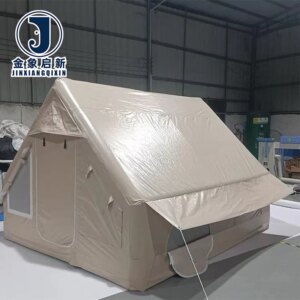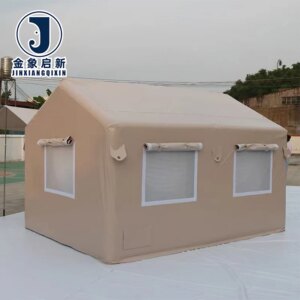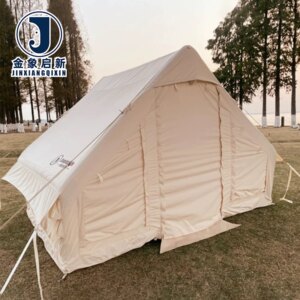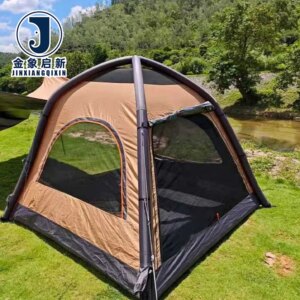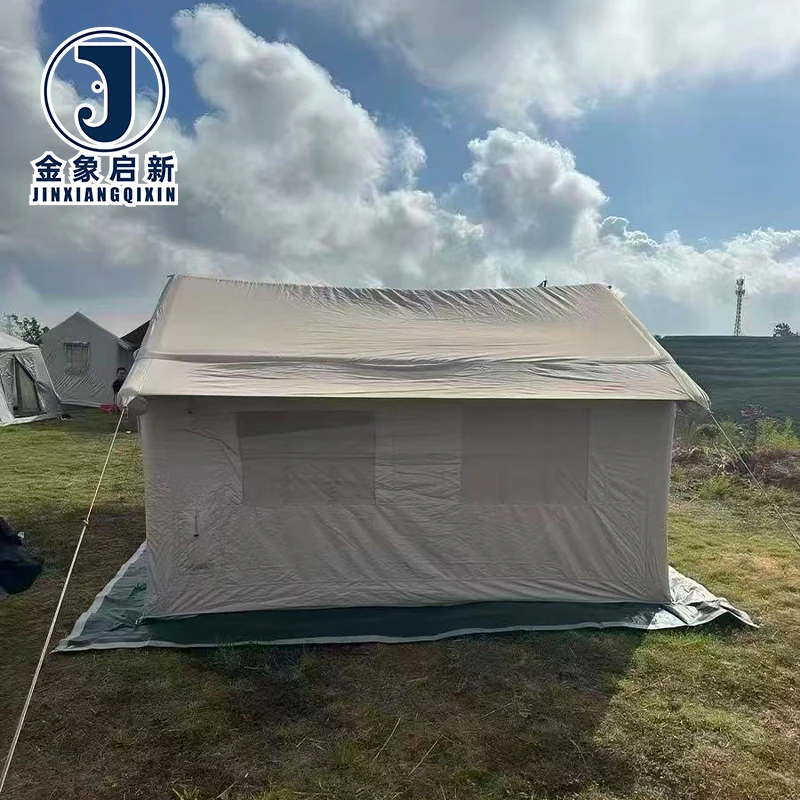
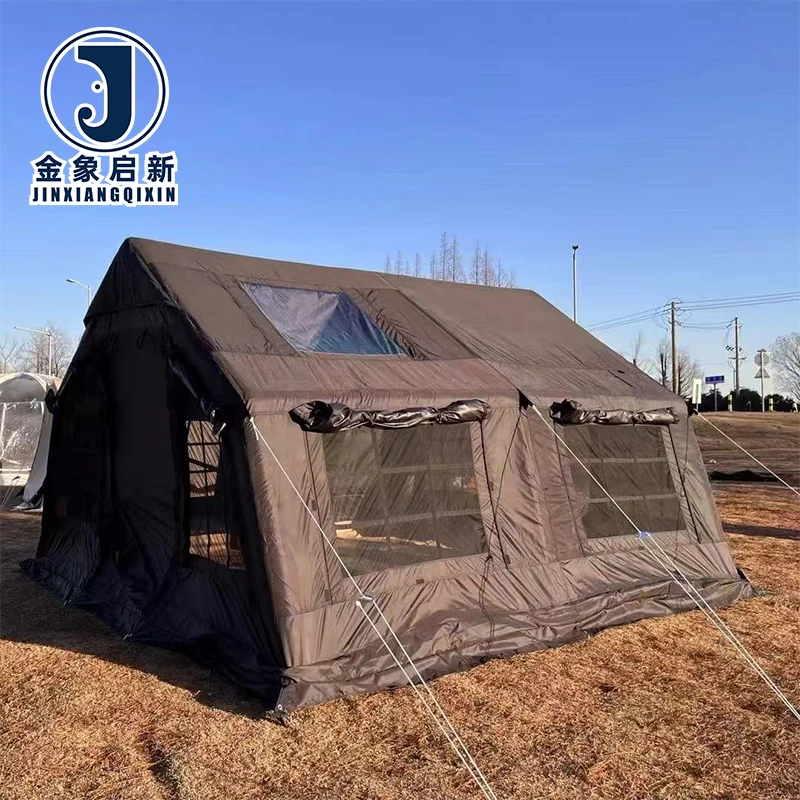
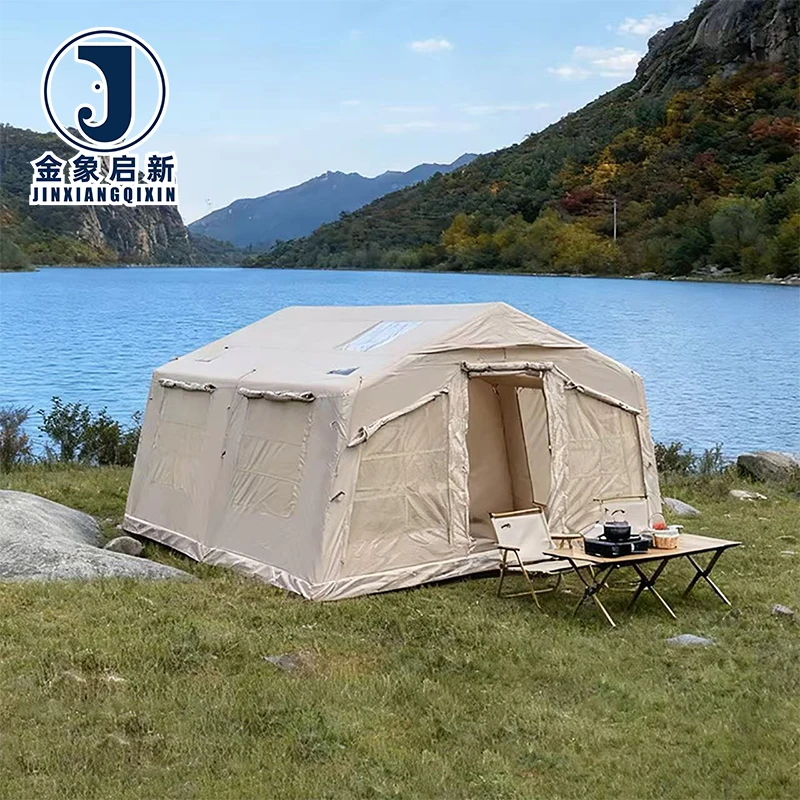
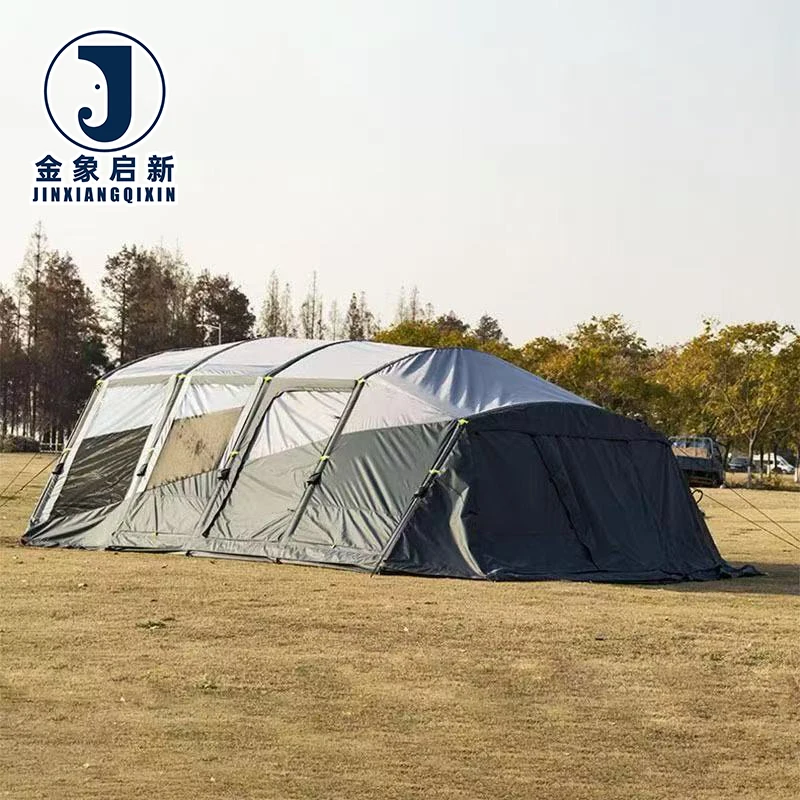
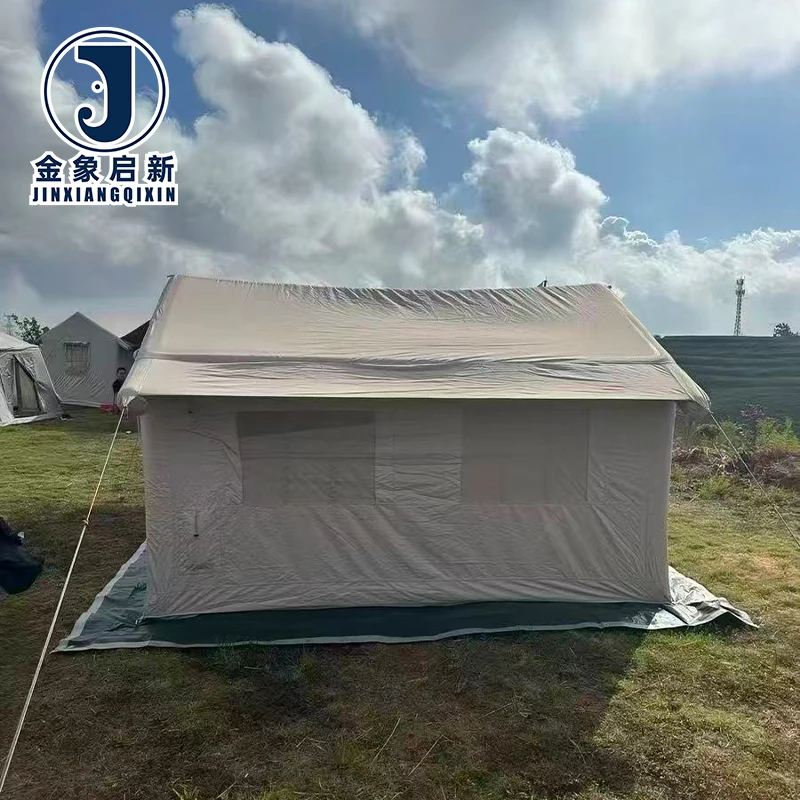
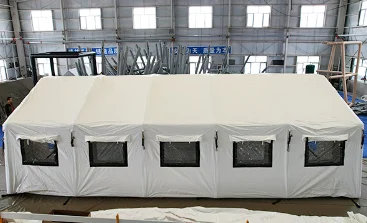
Description
One-stop custom capability — our inflatable tent fabric is developed as a complete solution from material selection to bulk delivery, backed by a 10-technician R&D team handling every custom sizing, thickness, and pattern printing requirement before production begins.
Technical Specifications
| Parameter | Value |
|---|---|
| Product Type | Inflatable Tent |
| Core Material | Oxford Fabric with PVC Coating |
| Waterproof Rating | Waterproof (grade not stated in source) |
| UV Treatment | UV-resistant (test basis not stated in source) |
| Tear Resistance | Tear-resistant (grade not stated in source) |
| Construction | Single Layer |
| Season Rating | Four-Season |
| Deployment Type | Automatic Opening / Rapid Deployment |
| Customization | OEM & ODM — sample customization, pattern printing |
| Certifications | ISO 9001, ISO 14001, ISO 45001, CE |
Application Suitability
| Application | Exposure & Requirement |
|---|---|
| Construction site temporary storage | Continuous outdoor exposure, dust ingress, UV radiation, repeated inflation cycles |
| Logistics hub emergency facilities | Rapid deployment demands, variable weather, ground abrasion during setup |
| Outdoor event infrastructure | Public visibility, custom branding requirements, frequent assembly and disassembly |
| Disaster response staging areas | Time-critical setup, unpredictable climates, transport over rough terrain |
| Equipment protection in field environments | Moisture ingress prevention, UV degradation resistance, wind loading on inflated structure |
Why Coated Oxford Without Verified Treatment Grades Fails in the Field
Specifying inflatable tent fabric without confirmed waterproof and UV test documentation creates operational risk at the deployment site.
Purchasing managers sourcing inflatable shelter materials often receive quotations stating waterproof and UV-resistant performance, yet the rolls arrive with no batch-specific test data to support those claims [NEED_CITE: test methods for waterproof and UV performance of coated fabrics]. When an inflatable tent deployed at a disaster response site begins leaking or shows premature surface degradation, the root cause traces back to unverified treatment specifications. Our Inflatable Tent Fabric manufacturer process addresses this by providing test reports matched to each production batch, so you confirm performance before the fabric leaves our facility rather than discovering the gap on site.
Coated Oxford as the Foundation for Inflatable Shelter Structures
The PVC-coated Oxford base fabric used in this inflatable tent material combines the dimensional stability of woven Oxford with a continuous PVC coating that seals the weave against moisture penetration. This construction supports the repeated inflation and deflation cycles that inflatable shelters demand, where the fabric must flex without delaminating at the coating-to-yarn interface. Available in flame retardant grades — confirm the grade required for your market — the material accommodates diverse deployment environments from construction staging to outdoor event infrastructure.
From Roll Stock to Finished Inflatable Shelters — the Custom Pathway
Our OEM and ODM capability covers custom sizing, material thickness variations, and pattern printing directly onto the coated Oxford surface. Manufacturers producing inflatable camping tents or industrial emergency shelters under their own brand can specify dimensions, colour references, and printed branding that align with their product line [NEED_CITE: pattern printing adhesion standards on PVC coated textiles]. Sample development within days allows you to validate seam weldability, print fastness, and inflation behaviour before committing to full production volume.
Reading the Specification Sheet Beyond Surface Claims
The Oxford base fabric provides tensile structure through its woven construction, while the PVC coating adds waterproof barrier performance and surface abrasion resistance. Single-layer construction reduces packed weight and transport volume — critical for emergency staging scenarios where shelters must be airfreighted or carried over rough ground. Four-season suitability indicates the material maintains flexibility across a broad temperature range, though the specific low-temperature flex point and high-temperature softening threshold should be confirmed against your deployment climate. Waterproof and UV-resistant treatments are applied during coating, and their effectiveness depends on coating weight uniformity across the full roll width.
What Happens When Fabric Specifications Do Not Match the Application
Colour variation between rolls in a single bulk order becomes immediately visible when multiple inflatable tents are deployed side by side at an event or staging area. Rolls produced without batch-level colour control force the buyer into sorting and selective cutting, generating waste and delaying project timelines [NEED_CITE: batch colour consistency challenges in coated fabric production]. Similarly, when waterproof or UV treatments are applied at insufficient concentration, the inflatable shelter passes initial inspection but degrades within the first season of deployment — a failure that damages the brand selling the finished tent, not the fabric supplier.
Why Sourcing Inflatable Tent Fabric Here Reduces Procurement Risk
Nearly 30 years of focused coated fabric production means our coating weight control and adhesion processes are refined through continuous production runs, not laboratory trials. Three full production lines and 36 sets of professional equipment support bulk capacity for large inflatable tent fabric orders with consistent delivery scheduling. A dedicated 10-technician R&D team develops samples, validates material selections, and resolves welding parameter questions before your production run starts. Quality inspection runs through every production stage, with 100% pre-shipment verification against your specification sheet.
Documentation & Verification
- Material specification sheet confirming Oxford base fabric type and PVC coating details for each order
- Test reports for waterproof and UV performance provided with batch reference numbers
- Pre-shipment inspection record with roll-by-roll QA/QC verification before dispatch
- ISO 9001, ISO 14001, ISO 45001, and CE certificates included in shipment documentation package
- Sample approval documentation linking approved sample to production batch specification
Fabrication, Handling & Storage
- Hot-air welding parameters must match PVC coating thickness to prevent seam failure at inflation stress points
- Store rolls upright on pallets to avoid compression creases that weaken the Oxford weave at fold lines
- Cut patterns to minimise transverse seams across inflation chambers where flex concentration is highest
- Use PVC-compatible cleaners only — solvent-based products degrade the coating-to-Oxford bond
- Transport in dry, covered conditions to prevent moisture trapping between wound coating layers
What to Include in Your Inflatable Tent Fabric Inquiry
Provide your target deployment environments and the climatic conditions the finished inflatable shelters will face, including any regional fire safety or compliance requirements your end market demands. Specify whether you require roll stock for your own fabrication line or finished cut-and-welded panels, along with annual volume estimates and colour or pattern printing requirements. Requesting a sample at inquiry stage allows your production team to confirm welding parameters and print quality before the bulk order is scheduled.
Frequently Asked Questions
Q: What custom sizing, thickness, and printing options are available for inflatable tent fabric?
A: We develop inflatable tent fabric to your specified dimensions, material thickness, and printed branding requirements. Our 10-technician R&D team handles pattern printing, custom roll widths, and thickness adjustments during sample development. Samples are produced within days, allowing your team to test weldability and print adhesion before full production commitment.
Q: How is waterproof and UV-resistant performance verified, and what test documentation is supplied?
A: Each production batch is accompanied by test reports documenting waterproof and UV-resistant performance with batch reference numbers. These reports are included in the shipment documentation package alongside your material specification sheet. We recommend confirming the specific grade required for your target market at the inquiry stage so the correct treatment level is applied.
Q: What is the sample development process and typical lead time for custom inflatable fabric orders?
A: Submit your sizing, thickness, colour, and printing requirements and our R&D team develops samples for your evaluation. Sample turnaround is rapid, allowing you to confirm coating adhesion, weld seam integrity, and visual appearance before authorising bulk production. Production lead times for custom orders are confirmed at quotation stage based on specification complexity and volume.
Q: How do you ensure colour consistency across multiple rolls in the same bulk order?
A: Colour consistency is controlled through batch-level production management, with each roll inspected against the approved colour reference before dispatch. Rolls within a single order are produced from the same coating batch to minimise variation. Pre-shipment inspection records document the verification result for each roll included in your shipment.
Q: What certifications and compliance documents are included with each shipment?
A: Every shipment includes ISO 9001, ISO 14001, ISO 45001, and CE certificates along with a pre-shipment inspection record, material specification sheet, roll packing list, and batch-specific test reports. Additional compliance documentation can be arranged based on your destination market requirements — specify these needs during the inquiry stage so they are prepared before dispatch.