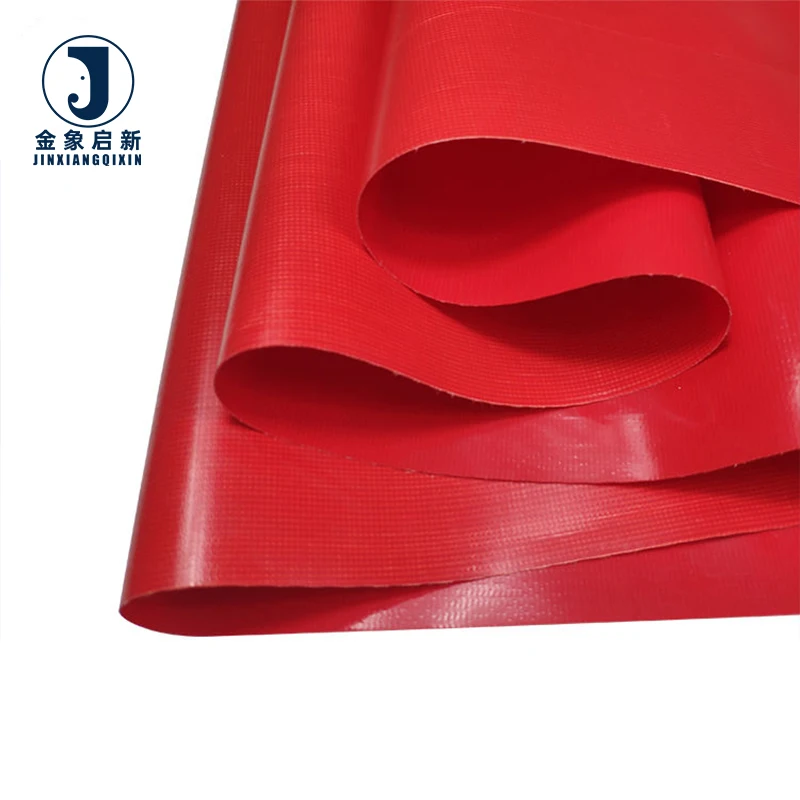
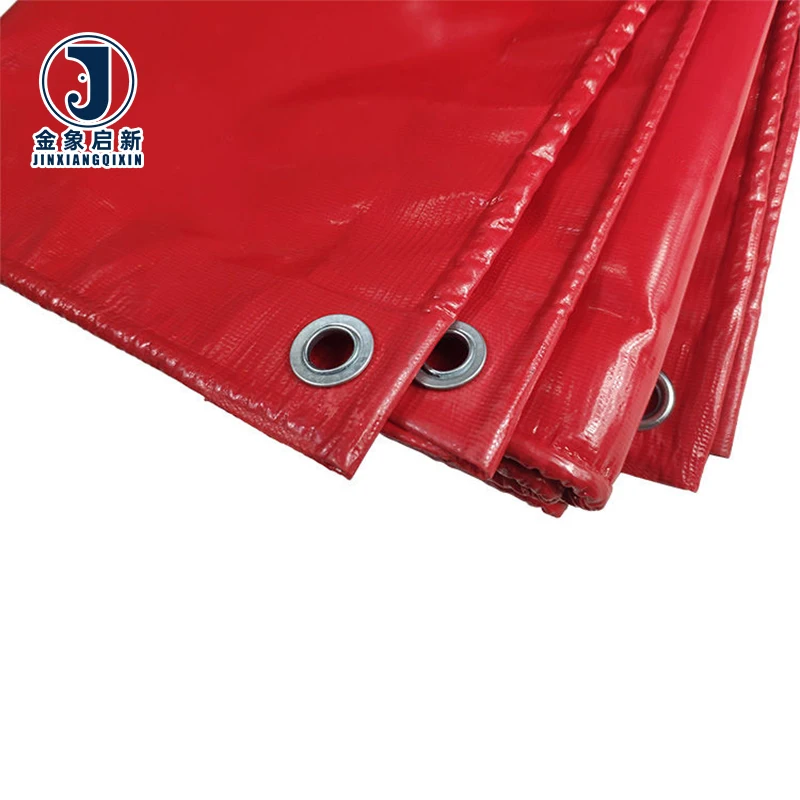
Description
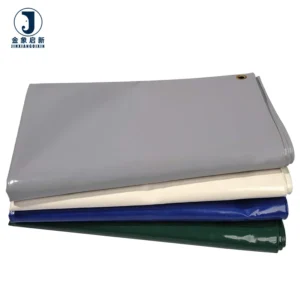
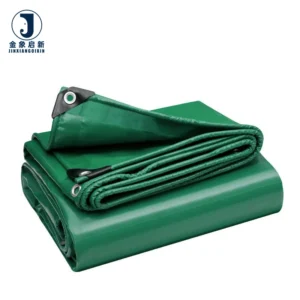
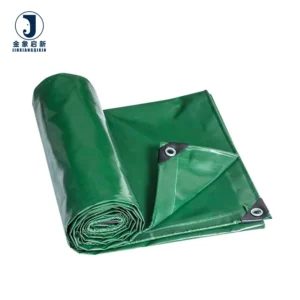
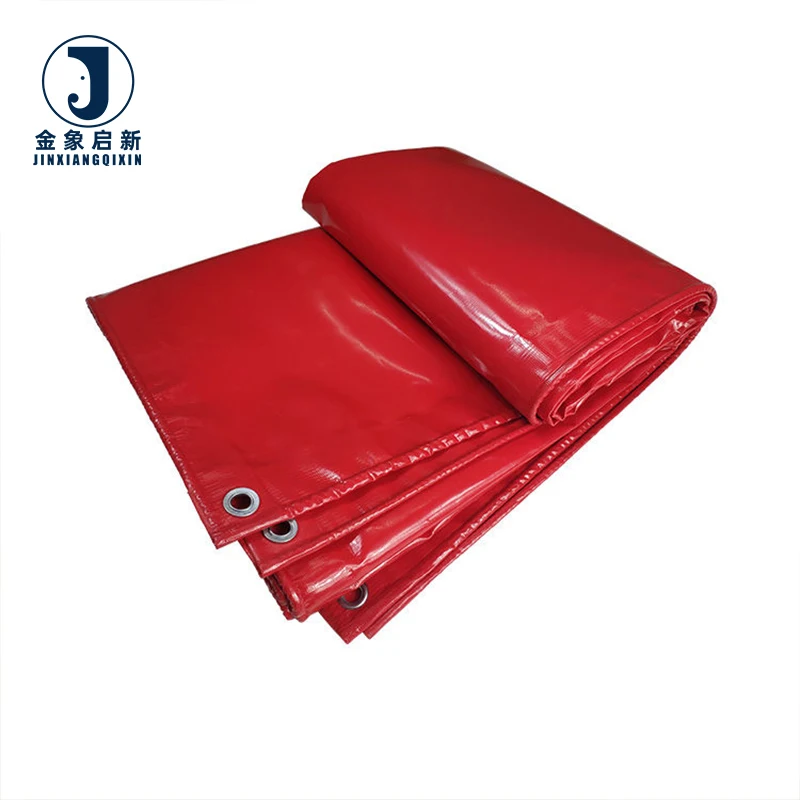
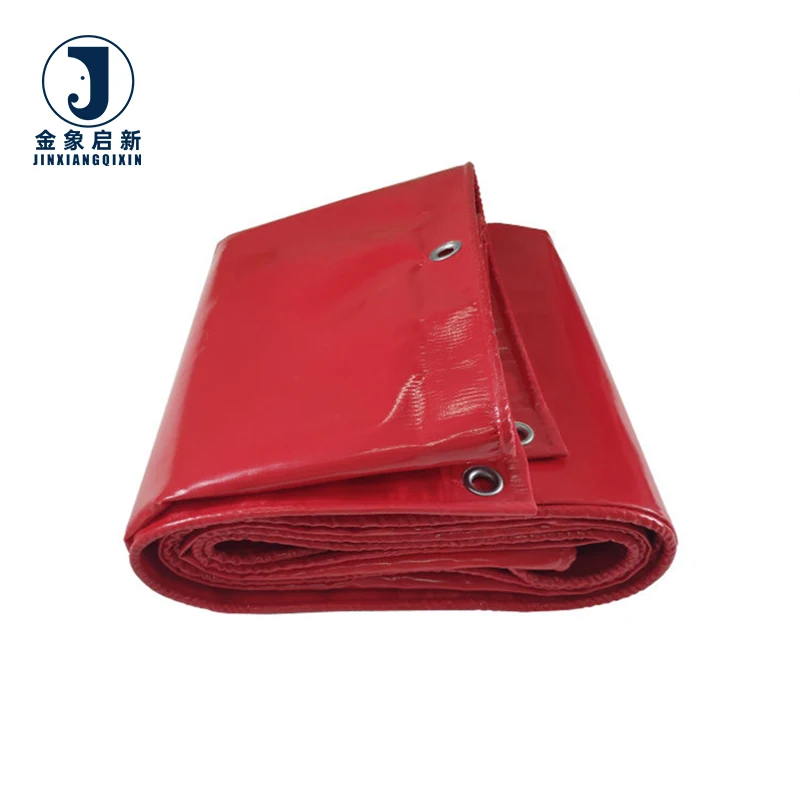
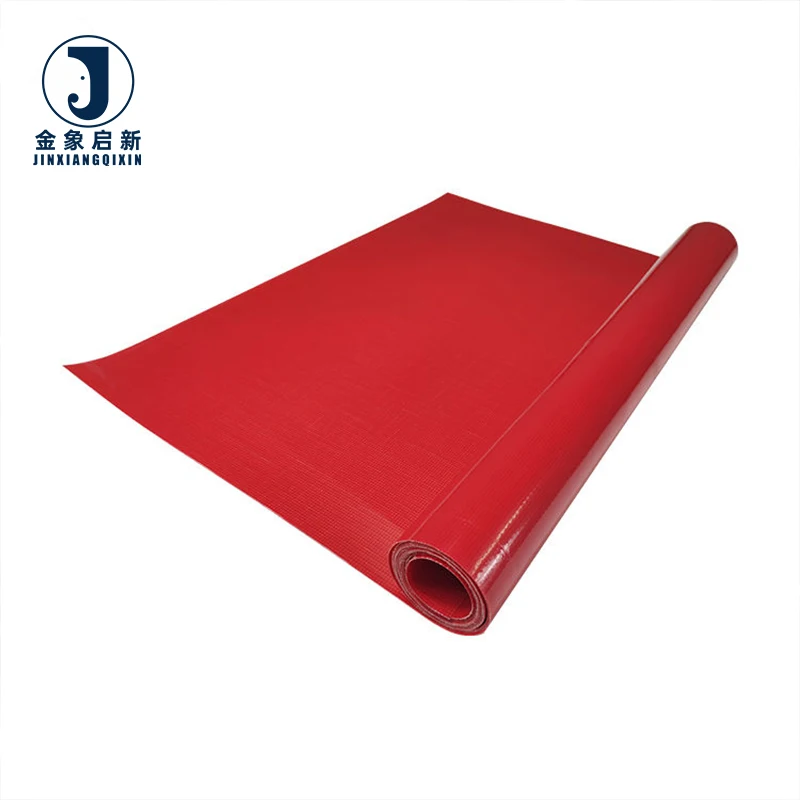
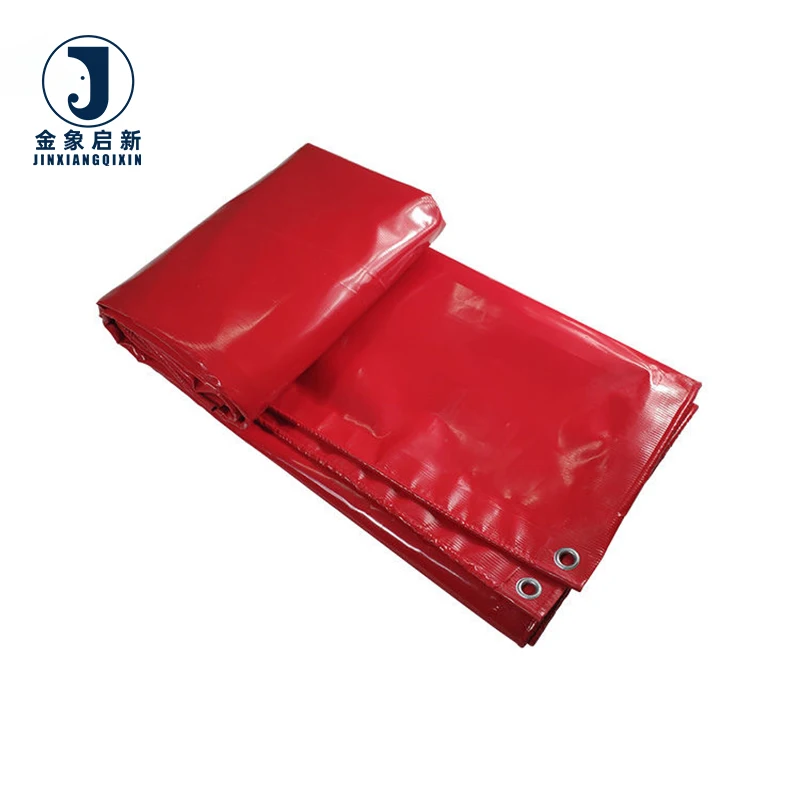
Consistent Roll Weights — Every PVC coated tarpaulin roll is weighed and verified against the quoted GSM before container loading, addressing the most common discrepancy wholesale buyers face at the receiving dock.
Technical Specifications
| Parameter | Value |
|---|---|
| Product Type | PVC Coated Tarpaulin |
| Base Material | Polyester Base Fabric with Double-Sided PVC Coating |
| Available GSM Grades | 350, 400, 420, 500, 600, 650, 750, 900 |
| Yarn Count Options | 500D×840D to 1000D×2000D (varies by GSM grade) |
| Weave Density | 30×19 or 20×20 (varies by GSM grade) |
| Thickness Range | 0.29 mm to 0.65 mm (varies by GSM grade) |
| Tensile Strength (Warp) | 1650 N to 3900 N (varies by GSM grade) |
| Tensile Strength (Pick) | 1600 N to 3500 N (varies by GSM grade) |
| Treatment Options | High frequency hot melt, Hot air welding, Sewing |
| Surface Finish | Printable, Customized |
| Key Features | Waterproof, fire retardant grades available — confirm the grade required for your market, anti-UV treatment available — confirm the test basis for your region, heavy metal free, anti-mildew, self-clean surface |
| Brittle Temperature | ≤ -50 to -60 °C |
| Softening Temperature | ≥ 80 °C |
| Melting Point | 212 °C |
| Density | 1.15–2.00 g/cm³ |
| Certifications | ISO, CE |
Application Suitability
| Application | Exposure & Requirement |
|---|---|
| Truck and trailer side curtains | Constant flexing at tie-down points, road spray abrasion, continuous UV exposure during transit |
| Construction site enclosure and shelter | Wind loading on large spans, debris impact, repeated repositioning and folding |
| Agricultural stockpile and equipment covers | Prolonged sunlight, moisture ingress risk, contact with fertiliser and organic acids |
| Tent and awning roll-stock fabrication | Panel welding integrity, colour matching across multiple rolls for a single structure |
| Inflatable structure membrane | Internal air pressure stress, repeated inflation cycles, seam peel resistance |
Why Batch Colour Drift Across Rolls Destroys Margins for Distributors
Ordering six rolls of the same colour code should yield six identical rolls — and when it does not, the loss falls entirely on the warehouse, not the mill.
When PVC coated tarpaulin roll stock arrives with visible shade variation between consecutive rolls, fabricators cannot cut panels from different rolls for the same awning or tent without the mismatch showing once installed. Distributors end up sorting, re-lotting, or absorbing write-downs on rolls that technically meet the GSM and tensile spec but fail the visual standard their customers expect. This problem compounds with order size; a three-roll order may pass, while a fifteen-roll shipment exposes the inconsistency. Sourcing PVC coated tarpaulin roll stock from a supplier running dedicated QA at each coating stage — rather than only at final inspection — is what prevents this [NEED_CITE: batch colour consistency testing methods for coated polyester fabrics].
Stock Grade Availability and Container Loading for Wholesale Buyers
Distributors stocking multiple grades of PVC coated tarpaulin roll need to fill containers efficiently without carrying slow-moving weights. The grade range from 350 GSM through 900 GSM covers the most common resale categories: lightweight agricultural covers at the lower end, mid-range truck curtain material, and heavy-duty construction enclosure fabric at the upper end. Each grade ships in standard roll widths optimised for container loading by roll count and total weight.
Roll-to-Roll Weight Verification Before Dispatch
The gap between the GSM printed on a quotation and the actual coated weight measured at the receiving dock is a recurring complaint among tarpaulin importers. Our production lines run continuous coating weight monitoring, and every roll is logged against the target specification before packing. This means the PVC coated tarpaulin roll you receive carries a documented weight record, not just a label. When your customer weighs a sample to verify the grade, the number matches [NEED_CITE: GSM verification protocols for imported coated fabrics].
How Base Fabric Denier and Coating Weight Interact to Determine Real Strength
A 500 GSM roll built on 500D×1000D yarn with 30×19 density delivers different tear behaviour than a 500 GSM roll built on a lighter base fabric with heavier coating fill. The polyester yarn denier and weave density determine the structural skeleton; the PVC coating adds weight, waterproofing, and surface protection, but it does not replace the base fabric’s contribution to tensile and tear resistance. This is why two rolls at the same stated GSM can perform very differently under load. The specification variants listed above pair specific yarn counts with their corresponding tensile values — for instance, the 750 GSM grade on 1300D×1300D yarn shows warp strength of 2750 N and pick strength of 2850 N, while the 900 GSM grade on 1000D×2000D reaches 3900 N warp and 3500 N pick. Buyers specifying for high wind-load applications should evaluate both the GSM and the underlying yarn construction rather than weight alone. The brittle temperature rating of -50 to -60 °C and softening point at 80 °C further define the service envelope, particularly for buyers distributing into markets with seasonal extremes [NEED_CITE: ISO 1421 tensile and tear test methods for coated fabrics].
The Cost of Specifying on GSM Without Checking the Yarn Count
A distributor who selected a 600 GSM roll purely on weight — without reviewing the base fabric construction — may find the material adequate for static pallet covers but insufficient for truck side curtains that flex continuously at highway speed. The coating weight meets the spec, but the yarn structure does not resist the cyclic fatigue at fold points. Conversely, overspecifying yarn denier for a lightweight garden furniture cover drives up roll cost without adding service value. Matching the PVC coated tarpaulin roll grade to the actual mechanical demand, rather than defaulting to the heaviest option, prevents both premature failures and unnecessary inventory expense.
What Supports Repeat Orders from Distributors and Fabricators
Three full production lines and 36 sets of professional equipment provide the volume capacity to fill container-load orders across multiple GSM grades within a single shipment, so buyers consolidating stock do not need to split orders across suppliers. The 10-person R&D team handles custom colour matching and sample development before bulk commitment, reducing the risk of approving a shade that drifts in production. Dedicated QA and QC checkpoints at every coating and winding stage — not just final inspection — catch weight deviation and surface defects before rolls enter the packing area. Samples for custom width or colour requirements are developed within days, allowing distributors to confirm specifications with their own customers before authorising the full production run. Pre-shipment inspection records are compiled roll by roll, giving buyers a verifiable quality trail from the factory floor to the container door.
Documentation & Verification
- Material specification sheet stating GSM, base fabric denier, weave density, and coating type for each roll grade shipped
- Pre-shipment inspection record with individual roll weight verification against the quoted specification
- Roll packing list detailing container loading by roll count, individual roll weight, and total shipment weight
- Test reports for anti-UV and fire retardant grades where applicable — confirm the grade required for your destination market
- Certificate of origin and customs documentation prepared for the importing country’s requirements
Fabrication, Handling & Storage
- High frequency hot melt welding suits the PVC double-sided coating; adjust dwell time to the specific GSM grade to avoid burn-through on lighter rolls or incomplete fusion on heavier grades
- Store rolls upright on their cores to prevent flat-spot creases that become visible once the PVC coated tarpaulin is unrolled and tensioned
- Anti-mildew treatment within the coating formulation reduces storage degradation risk, but rolls should still be kept in dry, ventilated warehouses away from direct sunlight
- When unrolling at low ambient temperatures approaching the brittle point, allow the material to acclimatise before folding or cutting to avoid micro-cracking at the crease line
- Self-clean surface finish tolerates mild detergent cleaning; avoid solvent-based cleaners that can soften the PVC coating layer
Requesting a Quotation for Roll Stock
Provide the GSM grades you currently stock or intend to introduce, the roll widths your market requires, and your typical annual volume so we can align production scheduling and container loading. If your destination market mandates specific fire classification or UV test standards, state the required grade and test basis so the correct treatment is applied and documented from the first roll. Colour requirements — including Pantone or RAL references and whether multiple rolls must match within a single order — should be confirmed at inquiry stage to allow sample development before production.
Frequently Asked Questions
Q: How is roll GSM verified before shipment and what can I check on arrival?
A: Each roll is weighed individually during pre-shipment inspection and logged against the target GSM on the packing list. On arrival, you can cut a measured sample from any roll and weigh it on a calibrated scale. The documented pre-shipment record gives you a baseline to compare against, and any deviation outside normal tolerance can be addressed through the inspection report that ships with your order.
Q: How do you control colour consistency when I order multiple rolls of the same shade?
A: Colour is matched at the coating preparation stage using controlled pigment batching, and each production run is checked against the approved reference before winding. Rolls destined for the same order are grouped and compared side by side during final inspection. If your application requires panels cut from different rolls to appear uniform — such as tent or awning fabrication — state this at inquiry so tighter batch grouping is applied.
Q: What roll widths are available and how does that affect my container loading?
A: Rolls are produced in standard widths suited to the most common cutting patterns for truck covers, tents, and general-purpose tarps. Custom widths are available subject to minimum quantities and lead time. Container loading plans are prepared during quotation showing roll count, weight per roll, and total payload so you can evaluate freight efficiency before confirming the order.
Q: What documentation comes with the shipment for customs clearance?
A: Each order ships with a commercial invoice, detailed roll packing list, certificate of origin, and the material specification sheet for each grade included. If your importing country requires specific customs or compliance documentation beyond these standard papers, advise us at order placement so the correct certificates are prepared before dispatch.
Q: What is the minimum quantity for a custom colour or width?
A: Custom colours and widths require a production run minimum that depends on the specific GSM grade and coating setup. Requesting a sample first — developed within days of your inquiry — lets you confirm the shade and handling characteristics before committing to the full bulk quantity. The minimum is stated on your quotation along with the production lead time.