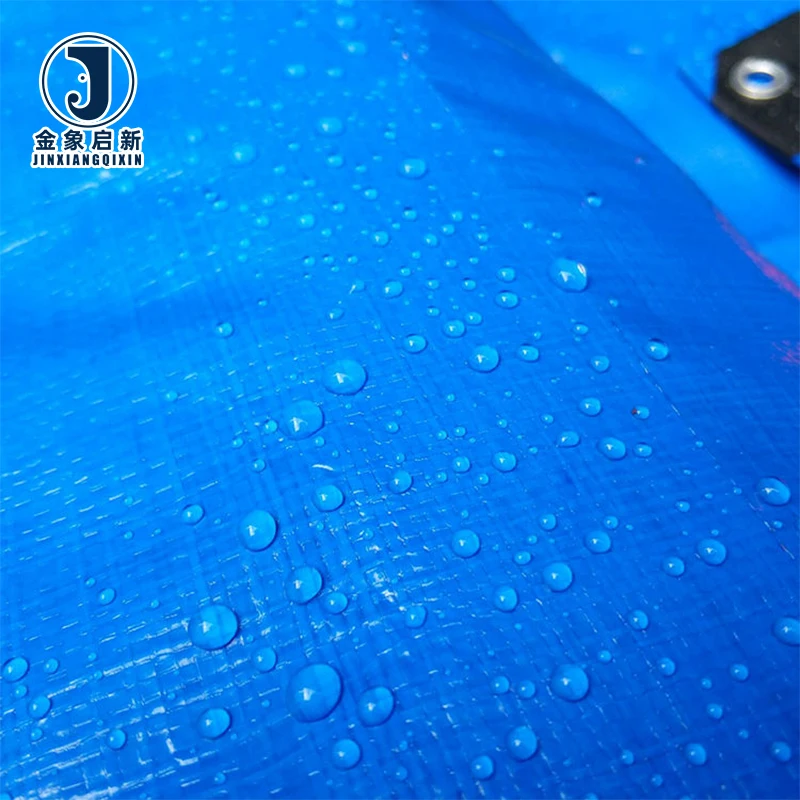
Description
Consistent GSM Verification — Every roll is weighed and checked against the quoted specification before dispatch, supported by a pre-shipment inspection record that travels with your container.
Technical Specifications
| Parameter | Value |
|---|---|
| Product Type | PE Tarpaulin Roll |
| Base Fabric | HDPE woven fabric |
| Coating Material | LDPE lamination on both sides |
| Weight Range | 45gsm ~ 400gsm (confirm grade per order) |
| Mesh Count Options | 6×6, 8×8, 10×10, 12×12, 14×14 |
| Total Thickness | 0.2–0.4mm (8–16 mil) |
| Roll Width Options | 6ft, 8ft, 10ft, 12ft, 2m, 4m, 6m |
| Roll Length Options | 100 yards, 100 meters, or custom |
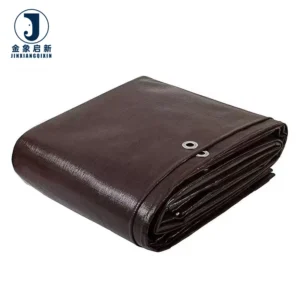
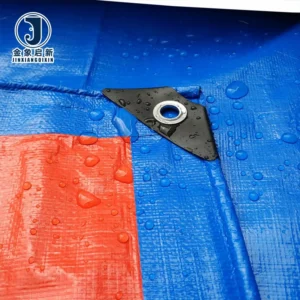
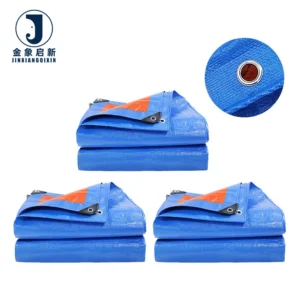
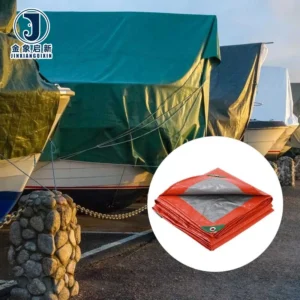
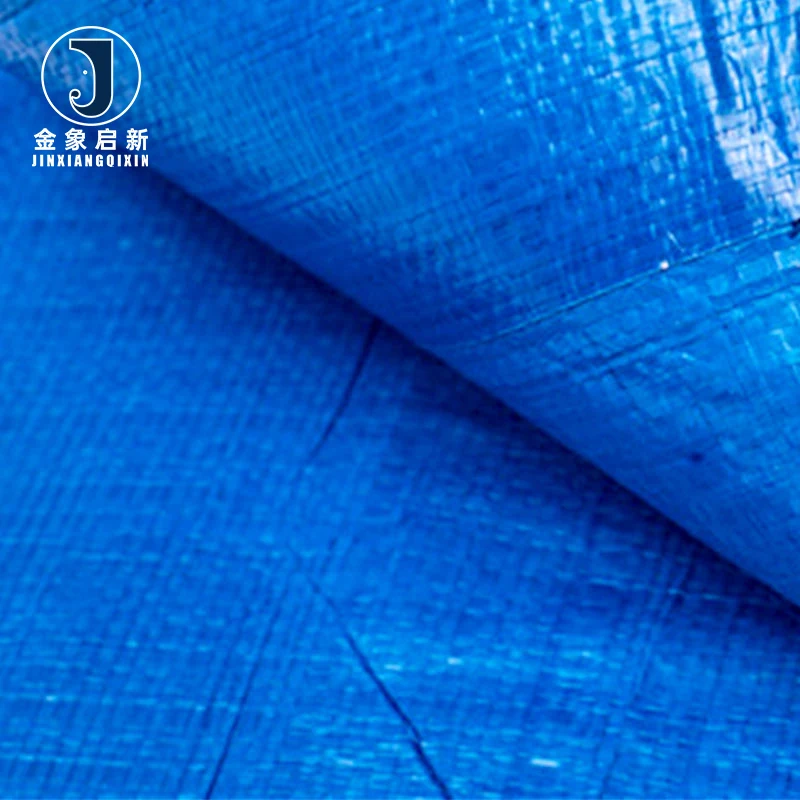
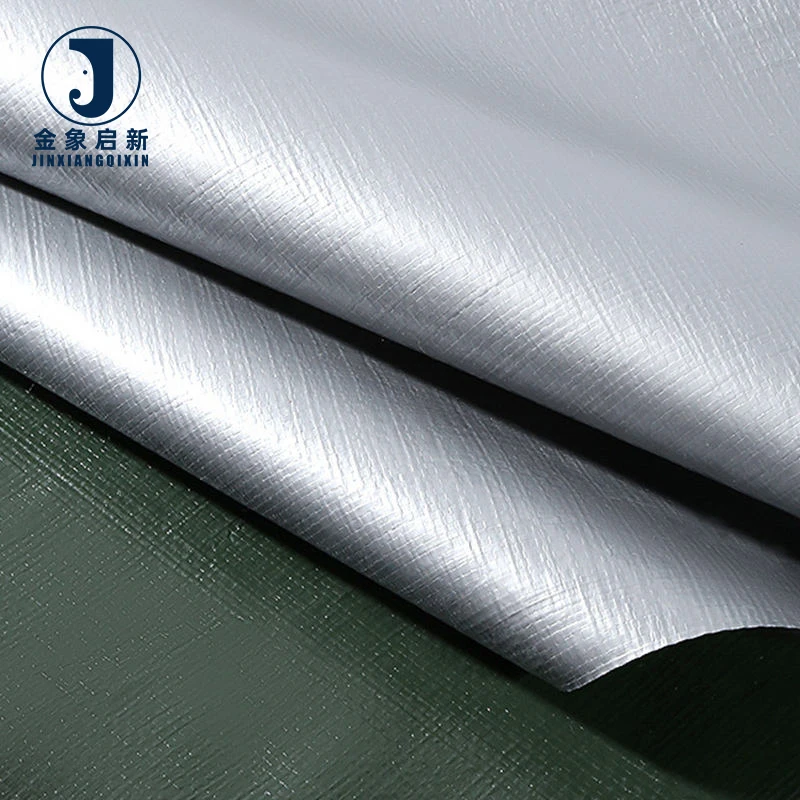
| Colour Options | Blue, Blue/Orange, Green, Grey, Black, Clear, Grey/Green, Orange, any Pantone colour |
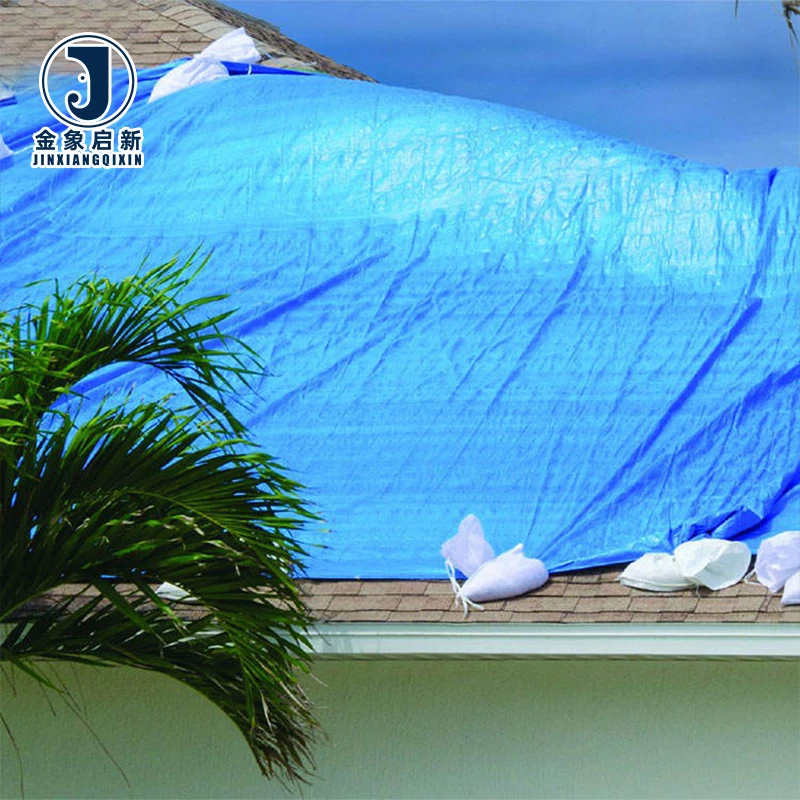
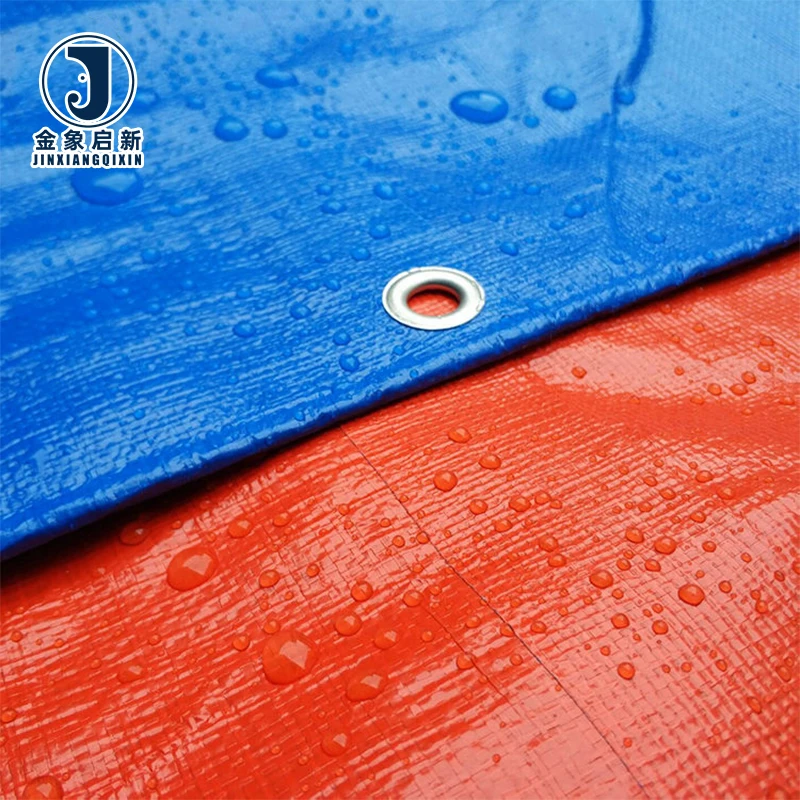
| Waterproof | Yes — LDPE lamination on both sides |
| UV Treatment | Available — confirm test basis for your market |
| Flame Retardant Grade | NFPA 701 available as a treatment option |
| Anti-Mildew | Mildew proof treatment applied |
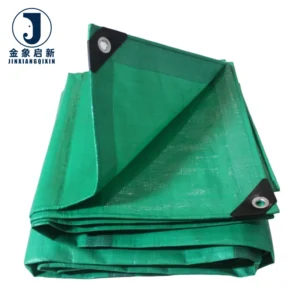
| Eyelet Options | Galvanised eyelets at 3ft or 1m intervals (finished covers) |
| Hemming | PP rope hemming on all four edges (finished covers) |
| Corner Guards | PP or PE reinforced corners (finished covers) |
| Roping | All four sides (finished covers) |
| Gussets | Available for heavy duty tarps |
| Packaging Formats | Bale packing, carton box, poly bag, product labels, T-labels, palletising |
| Printing | Custom branding and colour available |
| Certification | ISO, CE |
Application Suitability
| Application | Exposure & Requirement |
|---|---|
| Tarpaulin distributor inventory | Broad GSM range stocking for regional resale across light to heavy duty grades |
| Truck and trailer covering | Wind load, road spray, UV exposure, flex abrasion at tie-down points |
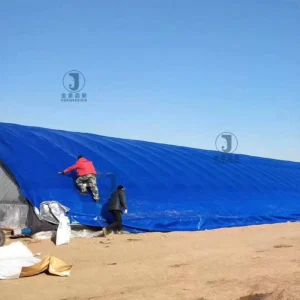
| Construction site enclosure | Dust and debris containment, weather protection, site safety compliance |
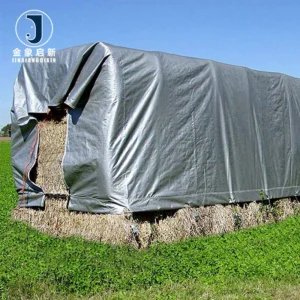
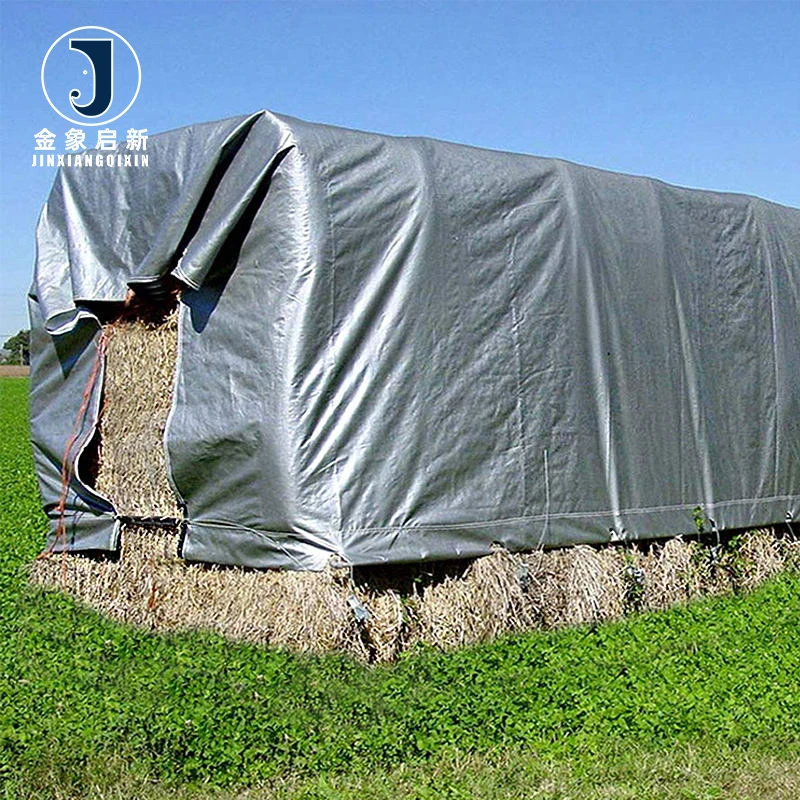
| Agricultural and aquaculture covers | Moisture resistance, pond lining, stockpile protection from rain and sun |
| Tent and awning fabrication | Roll cutting and heat welding for custom tent panels and canopy structures |
| Equipment and pallet wrapping | Abrasion during handling, waterproof barrier for outdoor storage |
Why GSM on the Quote Does Not Guarantee GSM on Arrival
Weight verification per roll before dispatch is the only check that matters — not the number printed on the quotation.
Tarpaulin importers have received containers where the actual fabric weight fell below the quoted grade, sometimes by a noticeable margin across an entire batch [NEED_CITE: GSM variance in imported PE tarpaulin rolls]. When PE tarpaulin roll stock arrives underweight, distributors face customer complaints that are difficult to trace back to the source. The gap between stated and actual GSM erodes margin when buyers must replace failed covers under warranty. This problem compounds when multiple rolls are ordered together and the shortfall is consistent across the batch rather than an isolated incident. Wholesale buyers need documentation that confirms each roll was measured, not just a specification sheet repeating the quoted figure.
Roll-to-Roll Consistency Across Container Loads
When sourcing PE tarpaulin roll stock for wholesale distribution, colour and weight uniformity across every roll in a single shipment determines whether the batch can be sold without sorting or re-grading. A distributor receiving ten rolls of blue PE tarpaulin expects them to match when displayed side by side on the warehouse floor. Any visible colour shift between rolls forces the buyer to separate inventory by shade, creating additional handling cost and delaying fulfilment to end users who expect uniform appearance.
Container Loading Strategy for Volume Buyers
Loading a full container of PE tarpaulin rolls requires matching roll dimensions and packaging format to the container internal volume. Standard widths from 2m to 6m and lengths of 100 yards or 100 metres allow importers to calculate roll count per container with reasonable accuracy. Choosing between bale packing, carton boxes or palletised loads affects both the number of rolls per container and the condition in which they arrive [NEED_CITE: container loading density for rolled tarpaulin products]. Palletised loads simplify warehouse handling but reduce total roll count compared to bale packing, so the choice depends on the buyer’s downstream distribution method.
How Weave Count and Coating Weight Interact
The mesh count of the HDPE base fabric — ranging from 6×6 through 14×14 — determines the structural grid that the LDPE lamination bonds to. A higher mesh count provides more yarn intersection points per square inch, distributing tensile load more evenly across the fabric plane. However, the GSM figure alone does not reveal whether weight comes from the base yarn or from thicker lamination layers. Two rolls at the same GSM with different weave counts will behave differently under load: the one with a denser weave generally resists tear propagation better, while the one with heavier coating may offer more surface durability but less structural strength. Specifying both mesh count and GSM together gives a more complete picture of how the PE tarpaulin will perform in service [NEED_CITE: relationship between weave count and tear resistance in woven PE fabrics].
The Cost of Specifying on GSM Alone
Ordering PE tarpaulin wholesale by quoting only a GSM figure leaves too many variables open. A buyer specifying a single weight without defining mesh count, lamination thickness or treatment requirements may receive material that technically meets the weight target but fails in the field. Flame retardant grades, for instance, add weight through chemical treatment — if not specifically requested, the delivered rolls may lack the fire performance the end application demands. Similarly, UV treatment availability must be confirmed with a test basis before the order ships, not assumed from a general product description [NEED_CITE: UV degradation patterns in untreated PE tarpaulin fabrics]. Distributors who have received mismatched batches know that correcting a specification after production is far more expensive than defining it precisely at the inquiry stage.
What This Supply Chain Delivers for Wholesale Buyers
Three full production lines and 36 sets of professional equipment support bulk roll output with maintained scheduling reliability, so container shipments depart within the agreed window. The 10-person R&D team handles custom width, colour matching and sample development, producing samples within days rather than weeks for buyers who need to confirm appearance before committing to a full container. Dedicated QA and QC inspection runs at every production stage, with 100 percent inspection completed before any roll is packed for dispatch. Nearly three decades of coated fabric production provides process control over lamination weight and adhesion consistency, which directly affects the roll-to-roll uniformity that wholesale buyers depend on. Documentation packages travel with every shipment, giving importers the paperwork needed for customs clearance and downstream customer assurance.
Documentation & Verification
- Material specification sheet stating GSM, mesh count, lamination type and Pantone colour reference per order
- Pre-shipment inspection record with roll-by-roll weight verification against the quoted specification
- UV and NFPA 701 test reports supplied where treatment grades are specified on the purchase order
- Roll packing list detailing dimensions, core size and roll count per container for customs and warehouse planning
- Certificate of origin and ISO and CE certificates included with each export shipment
Fabrication, Handling & Storage
- Heat welding temperature must match the LDPE lamination thickness to avoid delamination at seams on 0.2–0.4mm material
- Store rolls upright on pallets to prevent flat spots that create permanent creases in the HDPE woven base
- Galvanised eyelets at 3ft intervals distribute tie-down load across the PP rope hem on finished covers
- Unroll cold-stored material gradually to allow LDPE lamination to reach ambient flexibility before cutting or welding
- Cut panels with a minimum 4cm hemming margin to allow for PP rope insertion and reinforced corner guard attachment
- Clean with mild detergent only — solvent-based cleaners can degrade the LDPE lamination surface layer
Preparing Your Inquiry for Volume Supply
Provide the target GSM grade, preferred mesh count and roll dimensions so that a precise specification can be matched to your market requirements. Confirm whether flame retardant treatment to NFPA 701 or UV stabilisation is needed for your end application, and specify any Pantone colour references for batch matching. State your preferred packaging format and estimated annual volume so that container loading plans and pricing tiers can be structured around your distribution schedule.
Frequently Asked Questions
Q: How is actual GSM verified against the quoted value before shipment?
A: Each roll is individually weighed during the pre-shipment inspection stage. The measured weight is recorded against the roll number and compared to the GSM stated on your purchase order. A full inspection report accompanies the shipment, listing every roll and its verified weight so you can cross-check on arrival.
Q: Can you guarantee colour consistency across all rolls in one order?
A: Batch colour matching is controlled during lamination by referencing your specified Pantone code. All rolls within a single production run are compared side by side before packing. Any roll showing visible deviation from the batch standard is removed and replaced before the container is sealed.
Q: What widths and roll lengths are available for container planning?
A: Standard widths include 6ft, 8ft, 10ft, 12ft, 2m, 4m and 6m. Roll lengths of 100 yards or 100 metres are common, with custom lengths available to optimise container loading. Provide your preferred dimensions and we will supply a roll count and weight plan for your container type.
Q: What packaging options suit wholesale redistribution?
A: Bale packing maximises roll count per container for cost-efficient shipping. Carton boxes and poly bags offer better surface protection during transit. Palletised loads simplify warehouse handling at destination. Product labels and T-labels can be applied to match your branding requirements.
Q: What is the minimum order for custom width or Pantone colour?
A: Custom widths and colours require a production run minimum that varies with the specification. Provide your required width, colour code and target GSM so we can confirm the minimum roll quantity and lead time for your custom order.