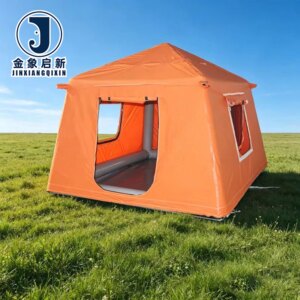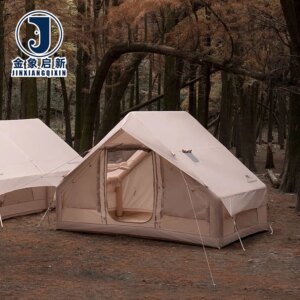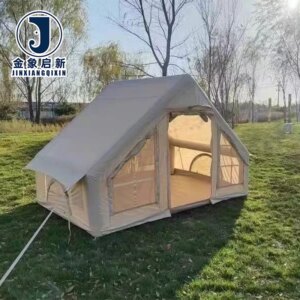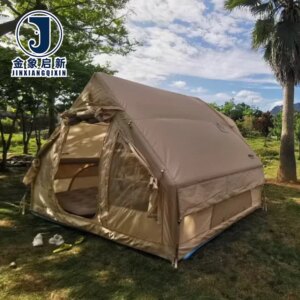
Description
Batch-to-Batch Consistency — Our 3 full production lines maintain strict in-process QA controls, ensuring uniform colour and coating weight across every roll of inflatable tent fabric shipped.
Technical Specifications
| Parameter | Value |
|---|---|
| Product Type | Inflatable Tent |
| Core Material | Waterproof UV-Resistant PVC |
| Key Performance | Waterproof, UV-resistant (test basis not stated), tear-resistant |
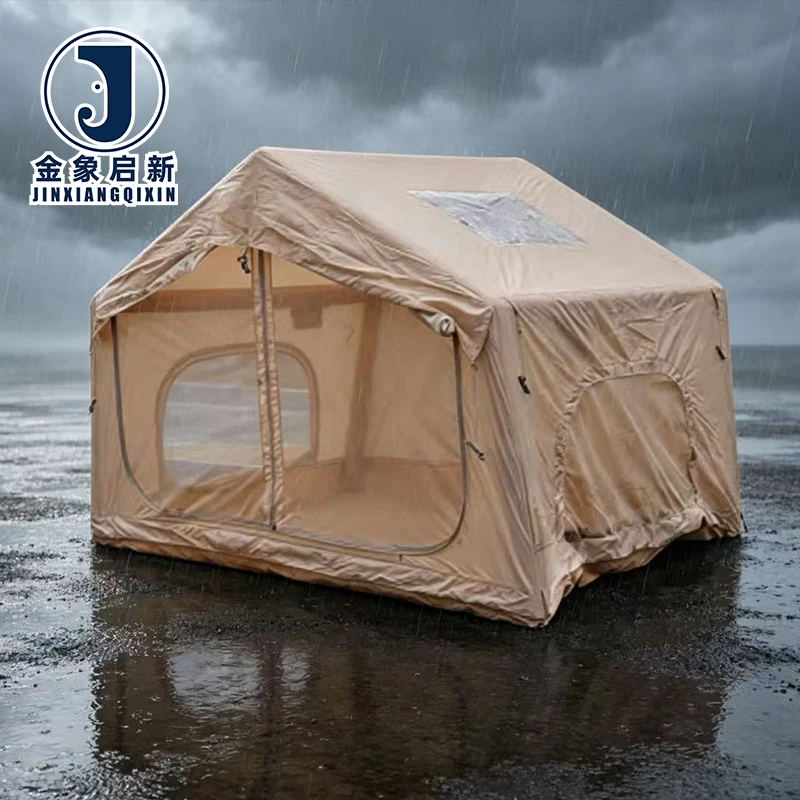
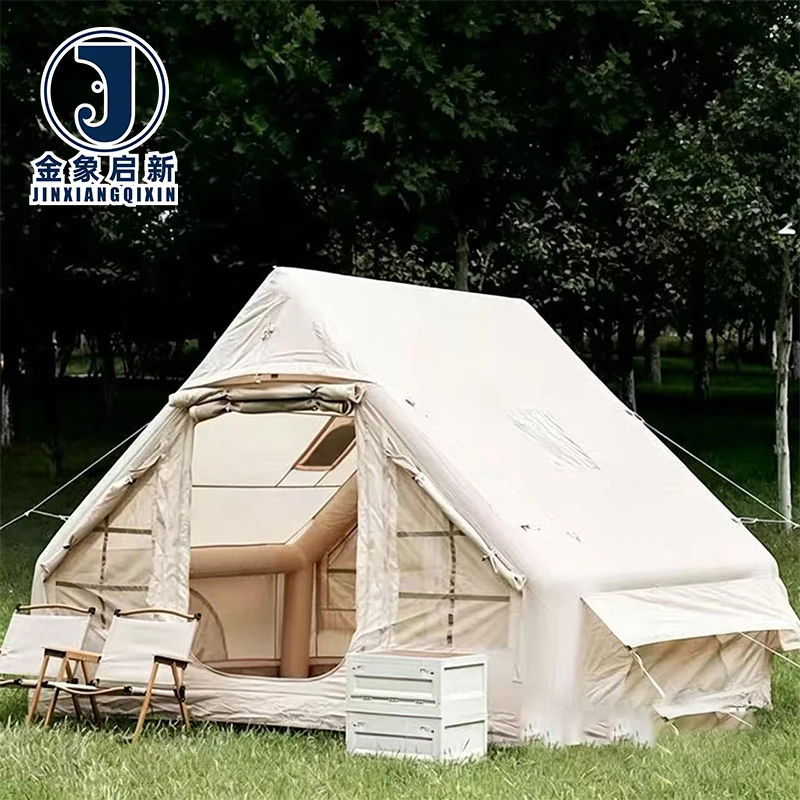
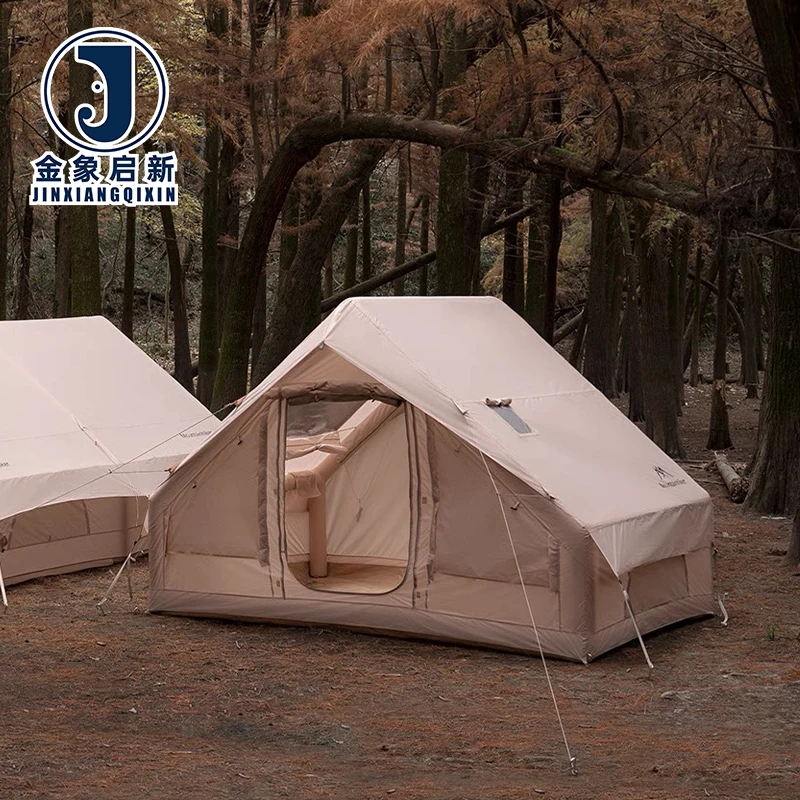
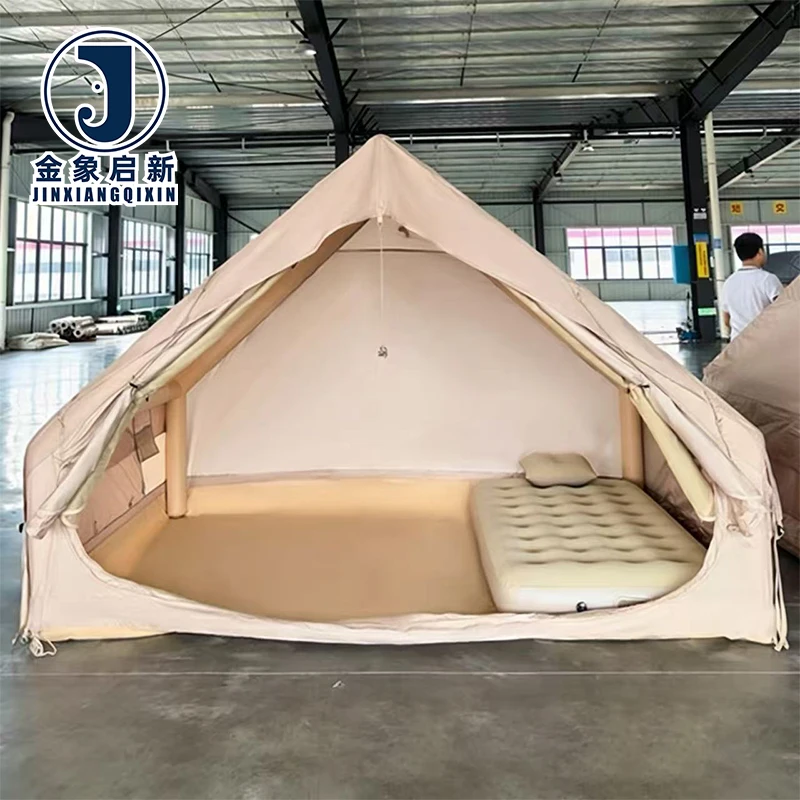
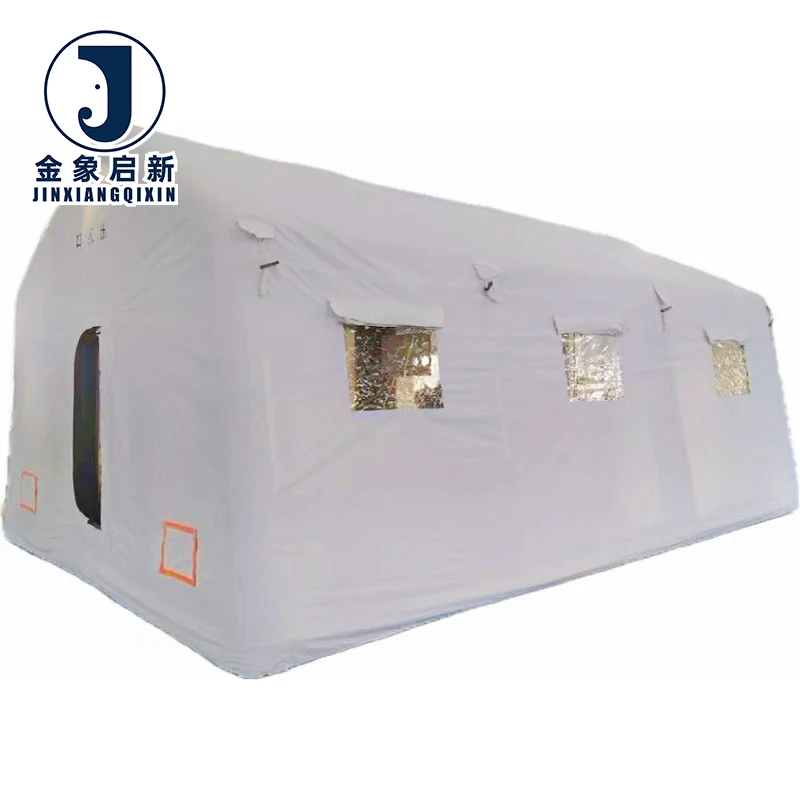
| Product Form | Inflatable Camping Tent with Quick Auto Opening |
| Construction | Single layer |
| Design | Four-Season Camping Shelter |
| Customization | OEM & ODM available, including sample customization and pattern printing |
| Quality Control | Strict full-process quality inspection with dedicated QA & QC staff |
| Certifications | ISO9001, ISO14001, ISO45001, CE |
Application Suitability
| Application | Exposure & Requirement |
|---|---|
| Commercial camping equipment manufacturing | Consistent roll quality for high-volume tent fabrication, batch colour matching across production runs |
| Outdoor event logistics shelters | Rapid deployment cycles, repeated inflation and deflation stress on seams and membrane |
| Construction site temporary housing | Continuous weather exposure, wind loading on inflatable frames, abrasion from site conditions |
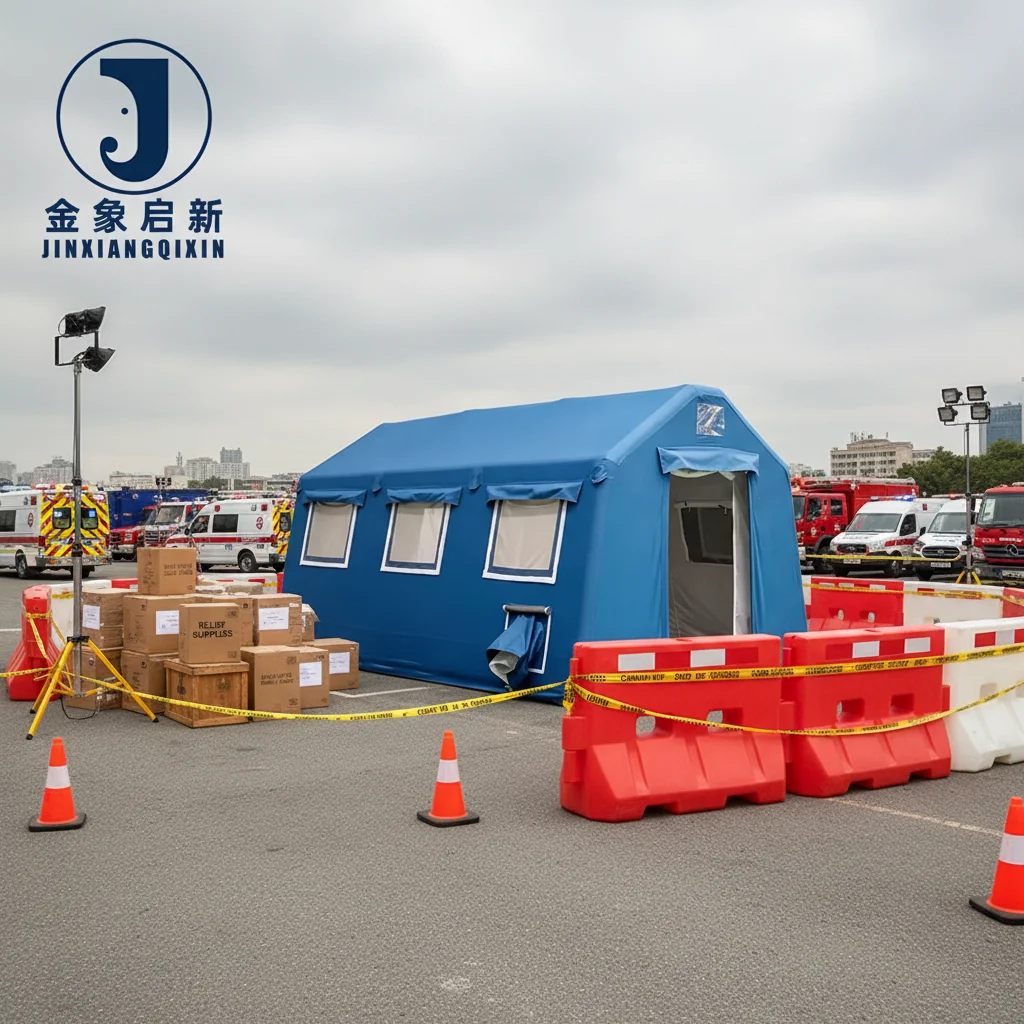
| Disaster relief operations | Fast setup under pressure, reliable waterproofing in unpredictable climates, transport durability |
Why Batch Consistency Matters More Than the Spec Sheet for Inflatable PVC Tent Wholesale
A fabric can meet every stated parameter and still cause production delays if roll-to-roll colour or coating weight varies across a single shipment.
When sourcing inflatable tent fabric by the roll, buyers often focus on the quoted GSM and assume uniformity across the container. In practice, coating weight drift between production runs can show up as visible shade differences once panels are welded side by side on the tent floor. For commercial camping manufacturers running continuous production, this means rejected panels, re-cutting waste, and missed assembly deadlines. [NEED_CITE: tensile and tear test methods for coated fabrics per ISO 1421] The problem is rarely the material itself — it is the lack of process control between the first roll and the last roll in a bulk inflatable PVC tent wholesale order.
Coating Uniformity Across High-Volume Inflatable Tent Fabric Roll Orders
Maintaining consistent PVC coating weight across an inflatable tent fabric roll order requires real-time monitoring at every stage of the coating line. Variations in knife gap, oven temperature, or line speed can shift the final GSM by a margin that is invisible on a small sample but obvious when two panels are joined. Our production process includes in-line checks at the coating head and post-oven inspection, keeping each roll within the agreed specification window.
Colour Matching and the Risk of Side-by-Side Shade Drift
Colour consistency is one of the most common disputes in bulk coated fabric purchasing. A slight pigment dispersion difference between batches can produce panels that look acceptable individually but show a clear tone shift when installed together. [NEED_CITE: colour fastness and batch matching standards for coated textiles] For inflatable tent manufacturers producing branded or colour-coded shelter lines, this drift is unacceptable. We address this by locking pigment formulations per order and running comparison checks against approved reference swatches before dispatch.
How Single-Layer PVC Construction Affects Inflation Cycle Durability
The single-layer construction of this inflatable tent fabric balances membrane weight against structural integrity. Each inflation cycle puts tension on the welded seams and the base fabric at the air beam anchor points. A tear-resistant base fabric is essential here because the stress concentrates at the junction where the inflated tube meets the ground sheet or panel. The waterproof PVC coating provides weather protection while the base fabric handles the mechanical load from repeated setup and teardown cycles.
Understanding GSM, Base Fabric, and Coating Weight as a System
GSM alone tells only part of the story. The total weight of a coated fabric is the sum of the base fabric weight and the PVC coating applied to it. A higher GSM achieved through heavier coating but lighter base fabric may offer good waterproofing while sacrificing tear strength at inflation stress points. Conversely, a denser base fabric with moderate coating weight delivers better mechanical performance for structures that flex under wind load. For inflatable tent applications, the balance between base denier, weave density, and coating thickness determines how well the membrane survives repeated inflation cycles without developing micro-tears at seam junctions. [NEED_CITE: relationship between base fabric denier and tear propagation in PVC coated textiles]
The Hidden Cost of Specifying Without Verification
Ordering inflatable tent fabric based on a quotation sheet without pre-shipment verification creates downstream risk. A roll that arrives lighter than the stated GSM reduces the material available for welding, producing weaker seams that fail before the fabric body does. Colour variance between rolls forces manufacturers to sort and match panels manually, adding labour cost and production delay. When UV-resistant treatment is claimed without a test report to reference, the tent may degrade faster than expected under continuous sun exposure, leading to warranty claims. [NEED_CITE: common failure modes in inflatable shelter membranes under UV exposure] These issues trace back to the gap between what is quoted and what is actually delivered.
Why Production Control Matters for This Fabric
Three full production lines with 36 sets of professional equipment provide the capacity to fulfil bulk inflatable tent fabric roll orders without splitting production across different machines, which is a common source of batch inconsistency. A 10-person R&D team handles material selection, pattern printing, and sample development, giving buyers a direct technical contact before committing to mass production. Dedicated QA and QC staff inspect every production stage, with 100% inspection before shipment rather than spot sampling. ISO9001, ISO14001, ISO45001, and CE certifications are maintained as active management systems, not display certificates. Custom samples are developed within days for buyers who need to validate material behaviour before placing a full container order.
Documentation & Verification
- Material specification sheet stating GSM, base fabric type, and PVC coating weight per roll
- UV-resistance and waterproof performance test reports available where applicable to your market
- Pre-shipment inspection record confirming roll count, colour match, and weight verification
- Roll packing list with net and gross weight for container loading planning
- Certificate of origin and customs documentation for international inflatable PVC tent wholesale shipments
Fabrication, Handling & Storage
- Heat welding parameters should be calibrated to the specific PVC coating thickness before full production runs begin
- Store rolls horizontally on pallets to prevent permanent creasing in the single-layer membrane
- Allow cold-transported rolls to acclimatise before unrolling to avoid coating surface cracking
- Use compatible PVC adhesive for field repairs on tear-resistant base fabric at inflation anchor points
- Plan panel cutting layout to maximise yield from each roll width and minimise welded seam count
Before You Request a Quote
To provide an accurate specification and lead time, we need your target application, expected annual volume, and required roll width. If your market mandates specific fire safety or UV performance grades, share the relevant standard so we can confirm availability. Let us know whether you need finished cut panels or fabric by the roll, and if pattern printing or custom colour matching is part of your project requirement.
Frequently Asked Questions
Q: How is roll-to-roll colour consistency controlled across bulk inflatable tent fabric orders?
A: Pigment formulations are locked per order, and each production batch is checked against an approved reference swatch before packing. In-line coating weight monitoring ensures GSM stays within the agreed window, reducing shade variation caused by coating thickness drift. This process applies to every roll in a container load.
Q: What is the test basis for the UV-resistance claim and how can it be verified per batch?
A: UV resistance is achieved through additives integrated into the PVC coating during production. The specific test basis depends on your market requirements. Request a test report for the applicable standard during the inquiry stage, and we will confirm the available grades and corresponding documentation for your compliance needs.
Q: What OEM and ODM customization options are available, including pattern printing and sizing?
A: We offer custom widths, pattern printing, and sample development through our 10-person R&D team. Buyers can request pre-production samples to validate material performance, colour, and print quality before mass production begins. OEM and ODM services cover both fabric roll supply and finished inflatable tent components.
Q: What are the container loading options and roll packing specifications for bulk shipment?
A: Rolls are packed horizontally on pallets with protective wrapping to prevent transit damage. Container loading plans are provided based on roll count, width, and weight, allowing buyers to optimise shipping volume. A detailed roll packing list accompanies each shipment for receiving verification.
Q: How does the sample approval process work before mass production begins?
A: Once you share your application, size, and treatment requirements, we develop a customised sample within days. You review and approve the sample for material feel, colour, coating weight, and any printed pattern. Only after written approval does mass production start, ensuring the final bulk order matches the confirmed specification.