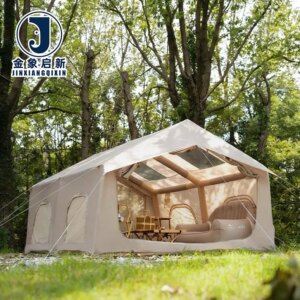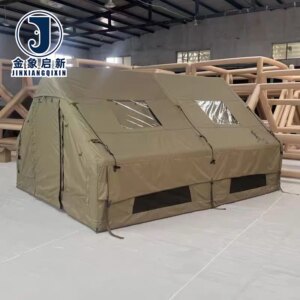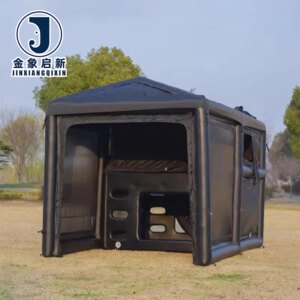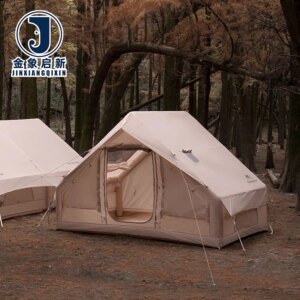
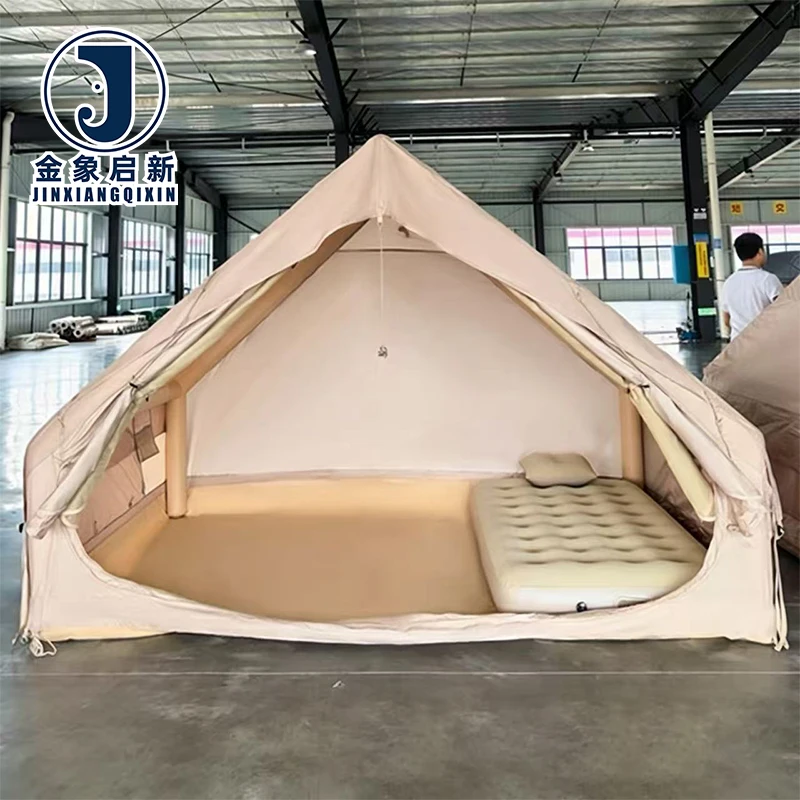
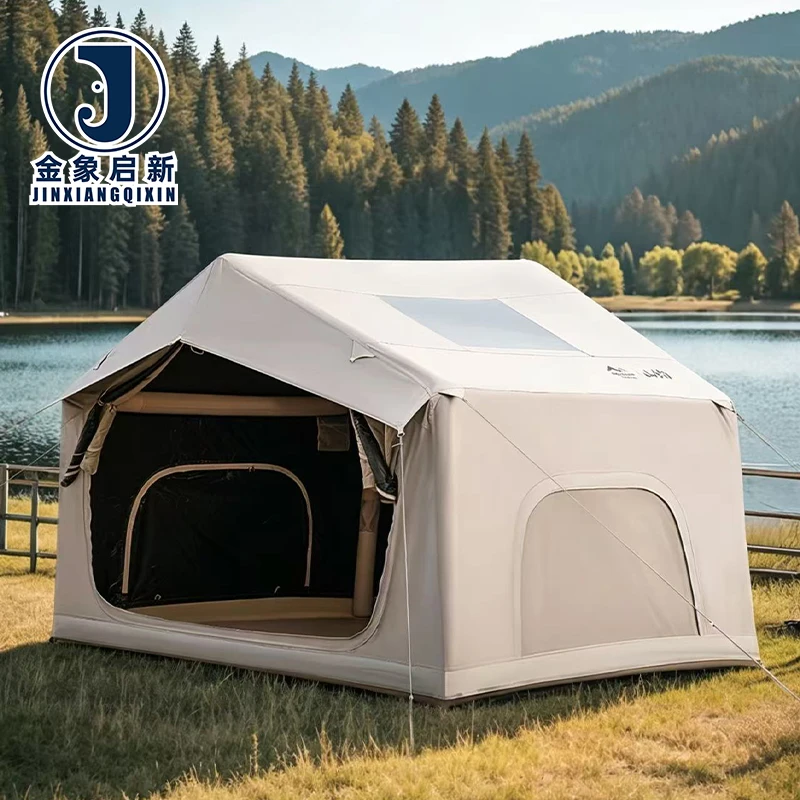
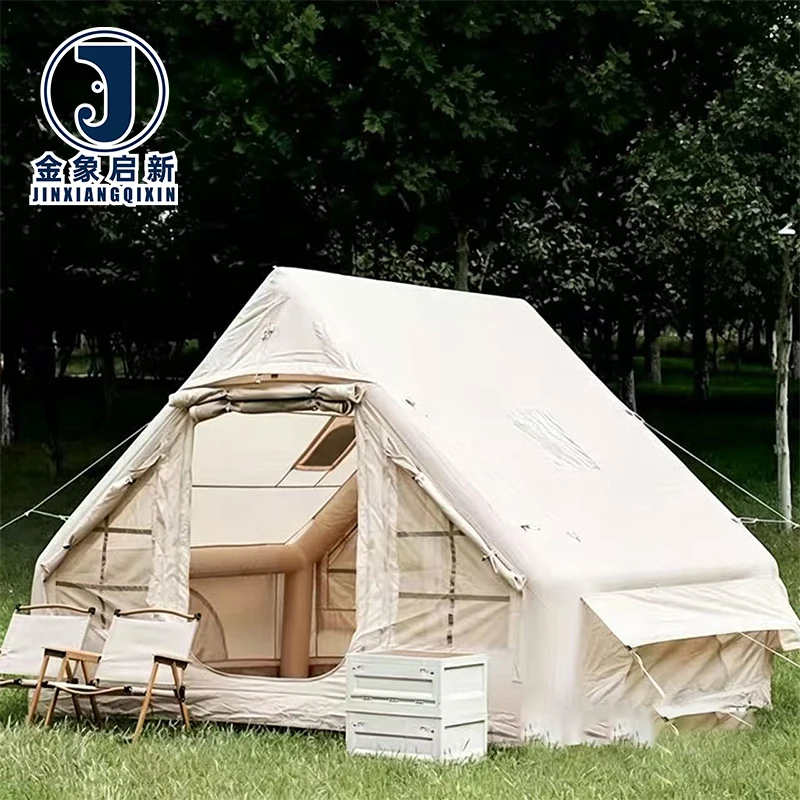
Description
Batch-Consistent PVC Coating — Dedicated QA/QC at every production stage and 100% pre-shipment inspection ensures roll-to-roll colour and weight consistency across your inflatable tent order.
Technical Specifications
| Parameter | Value |
|---|---|
| Product Type | Inflatable Tent |
| Core Material | PVC tarpaulin |
| Key Performance | Waterproof, tear-resistant |
| UV Resistance | UV-resistant treatment available (test basis not stated) |
| Flame Retardancy | Available in flame retardant grades — confirm the grade required for your market |
| Customization | OEM & ODM, sample customization, pattern printing |
| Production Lines | 3 full production lines |
| Processing Equipment | 36 sets of professional processing equipment |
| R&D Team | 10 technicians |
| Standards | ISO9001, ISO14001, ISO45001, CE |
Application Suitability
| Application | Exposure & Requirement |
|---|---|
| Commercial event hosting | Repeated inflation and deflation cycles, crowd contact, short-term UV exposure, rapid deployment demand |
| Outdoor exhibitions and trade shows | Wind loading on inflated structure, branding visibility, frequent assembly and teardown |
| Temporary industrial site accommodation | Extended weather exposure, dust and debris abrasion, occupancy safety compliance |
| Temporary storage structures | Water ingress prevention, UV degradation over seasonal use, structural inflation pressure retention |
| Inflatable structure manufacturing | Fabric sourced by the roll, consistent GSM and colour across production batches, weld seam integrity |
What Buyers Overlook When Sourcing PVC Inflatable Tent Fabric
Colour drift between rolls is the most frequent cause of rejected inflatable tent shipments.
Procurement teams often specify GSM and confirm a sample, only to receive a bulk order where adjacent rolls show visible shade variation once welded into the same structure. This is not a cosmetic issue — it signals inconsistent coating weight, which affects weld strength, UV stability, and air retention across the finished unit. [NEED_CITE: coating weight variation and its effect on heat weld integrity in PVC tarpaulin]
For commercial event operators and inflatable structure manufacturers, a single off-shade panel on a branded inflatable tent means the entire unit is rejected by the client. The PVC inflatable tent aftermarket supplier you choose must control pigment dispersion and coating thickness at the line level, not just at the lab sample stage.
Matching PVC Tarpaulin Weight to Inflatable Structure Demands
Selecting the right PVC inflatable tent fabric starts with understanding how inflation pressure interacts with material weight. Lighter-grade PVC tarpaulin may suffice for small promotional inflatables deployed for a single weekend, but commercial-grade event structures require heavier fabric that holds internal pressure without stretching at the seams.
A PVC inflatable tent aftermarket supplier should recommend GSM ranges based on your structure’s internal volume, expected wind loading, and inflation cycle frequency. Our 10-person R&D team reviews each project’s engineering drawings before confirming the material specification, ensuring the PVC tarpaulin selected delivers the dimensional stability the structure demands.
Controlling Weld Seam Performance at Inflation Stress Points
The seams on an inflatable tent carry continuous stress from internal air pressure, flexing every time wind loads shift against the structure. Heat-welded joints on PVC tarpaulin must achieve adhesion that matches or exceeds the base fabric strength, particularly at corners and air-valve attachment zones.
Coating adhesion and weld compatibility are directly tied to the PVC formulation and surface finish. [NEED_CITE: PVC tarpaulin heat weld peel strength testing per ISO standards] Our production process controls coating weight and plasticiser content so that weld parameters remain consistent across the full PVC inflatable tent fabric order, reducing the risk of seam failure in the field.
How GSM, Coating, and Base Fabric Interact in Inflatable Tent Material
GSM alone does not determine how well an inflatable tent fabric performs under inflation stress. The base fabric denier and weave density govern tear propagation resistance, while the PVC coating weight determines waterproof integrity and weld-ability. A heavy coating on a low-denier base may show high GSM but tear easily at puncture points.
Surface finish affects both fabrication and end use. A glossy PVC surface sheds dirt more effectively during outdoor events, while a matte finish reduces glare for exhibition environments. Pattern printing adhesion also varies with surface treatment, which matters when branded panels are specified for commercial inflatable tent deployments.
The Hidden Cost of Inconsistent PVC Tarpaulin Batches
When roll-to-roll GSM varies within a single shipment, fabricators discover the problem only after welding panels together — some seams bond correctly while others delaminate under the same heat settings. This forces rework on completed inflatable tent units and delays project delivery.
Colour inconsistency between rolls compounds the problem for branded structures, where panels must match exactly. [NEED_CITE: batch colour consistency standards for PVC coated fabrics in commercial applications] Rejecting a partial shipment disrupts the entire production schedule, making supplier batch verification a critical procurement checkpoint.
Why Procurement Teams Source Their PVC Inflatable Tent Fabric Here
Deep process control over PVC coating weight and adhesion, developed through nearly 30 years focused on coated fabric production, means the material specification you approve at sampling is the material you receive in bulk.
Three full production lines and 36 sets of professional processing equipment support the volume requirements of inflatable tent manufacturers running continuous production schedules without extended lead time penalties.
Sample development within days allows you to validate colour, GSM, and weld compatibility before committing to a full order, reducing procurement risk on custom inflatable tent projects.
Dedicated QA/QC at every production stage with 100% inspection before shipment catches coating weight deviations and colour drift before rolls leave the facility.
A 10-person R&D team handles material selection, pattern printing specifications, and custom sizing, providing technical support through the entire sourcing cycle rather than just quoting a catalogue grade.
Documentation & Verification
- Material specification sheet stating GSM, base fabric denier, and PVC coating weight per roll
- UV-resistant test report provided where applicable for the grade specified
- Pre-shipment inspection record confirming colour and weight consistency across all rolls
- ISO and CE certificates included in the dispatch documentation package
- Roll packing list with individual roll identification for traceability
Fabrication, Handling & Storage
- Heat-weld PVC tarpaulin panels at temperatures matched to the specific coating weight for seam integrity
- Store rolls upright on pallets to prevent flat-spot deformation of the PVC coating surface
- Use compatible PVC adhesive for field repairs on inflatable tent seam failures
- Clean glossy PVC surfaces with non-solvent cleaners to preserve coating plasticiser balance
- Allow cold-stored rolls to reach ambient temperature before unrolling to avoid coating crack damage
What to Include in Your PVC Inflatable Tent Fabric Inquiry
Provide your structure’s dimensions, internal inflation pressure requirements, and expected deployment environment so we can recommend the appropriate PVC tarpaulin specification. Confirm whether you need finished panels cut to pattern or full rolls for in-house fabrication.
Specify your target market’s fire safety compliance requirements and any colour or pattern printing needs, including Pantone references for branded inflatable tent projects. Request a sample roll section to validate weld parameters and colour approval before bulk production.
Frequently Asked Questions
Q: What PVC tarpaulin specifications are available for inflatable tent fabric?
A: We supply PVC tarpaulin for inflatable tent applications across a range of GSM grades and base fabric densities. Each order is matched to your structure’s inflation pressure, deployment frequency, and environmental exposure. Contact us with your engineering requirements to receive a material specification recommendation with a sample for validation.
Q: What customization options exist for inflatable tent fabric orders?
A: OEM and ODM customization covers custom sizing, colour matching, and pattern printing for branded inflatable tent applications. Our 10-person R&D team develops samples within days so you can confirm colour, surface finish, and weld compatibility before committing to bulk production across our three full production lines.
Q: How is batch colour consistency controlled across large inflatable tent fabric orders?
A: Dedicated QA/QC staff inspect coating weight and colour at every production stage. A 100% pre-shipment inspection compares every roll against the approved sample under controlled lighting, and a pre-shipment inspection record is included with your dispatch documentation to verify batch consistency.
Q: What UV-resistant treatment levels are offered for inflatable tent PVC tarpaulin?
A: UV-resistant treatment is available for PVC inflatable tent fabric, with test documentation provided where applicable for the specific grade ordered. We recommend confirming the UV stability requirements for your target market and deployment duration so we can match the appropriate treatment level to your specification.
Q: What documentation accompanies each inflatable tent fabric shipment?
A: Every shipment includes a material specification sheet confirming GSM and coating details, a roll packing list, pre-shipment inspection records, and ISO and CE certificates. UV or flame retardant test reports are provided where applicable to the grade specified, supporting customs clearance and compliance review.