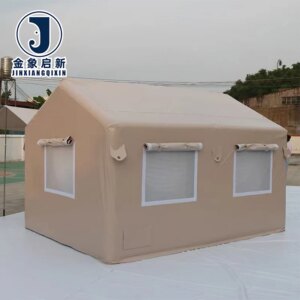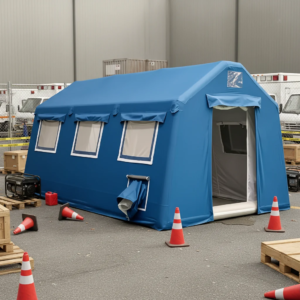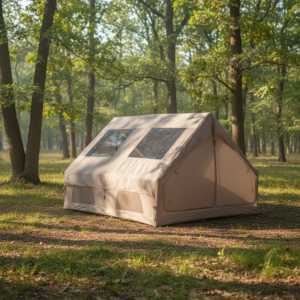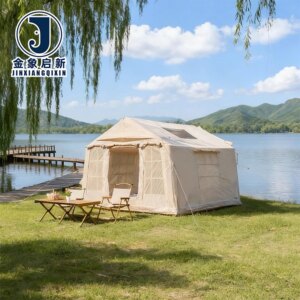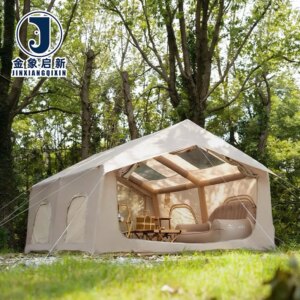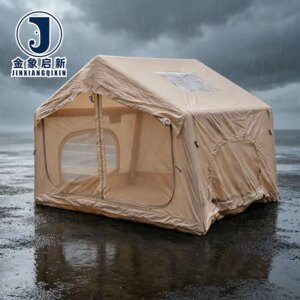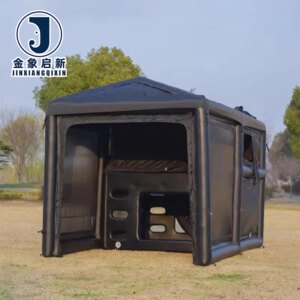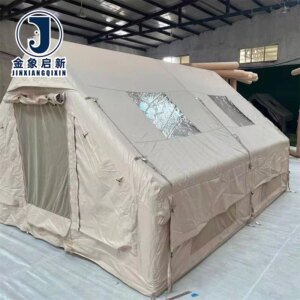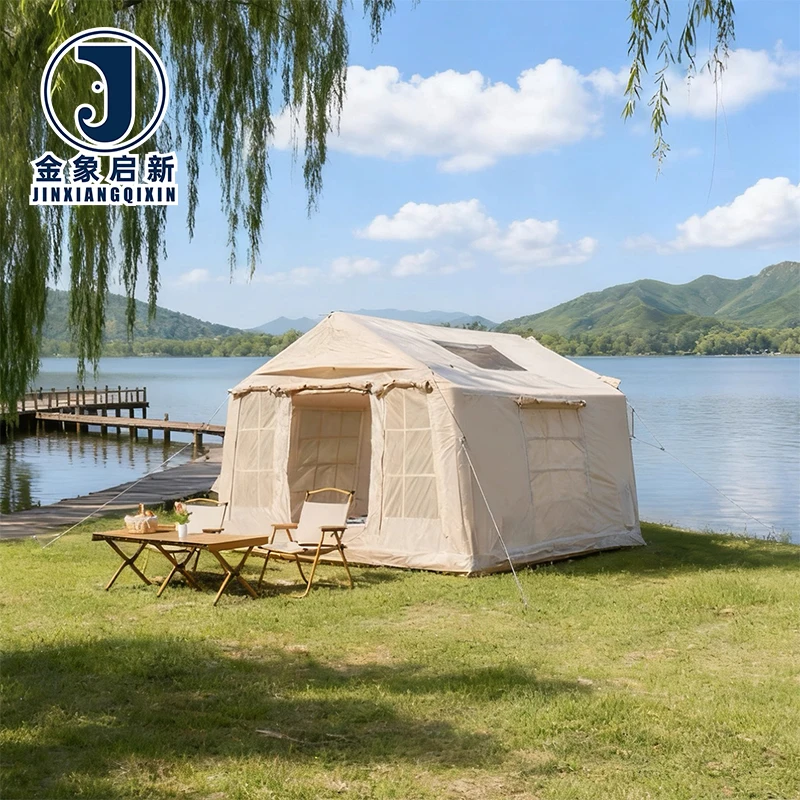
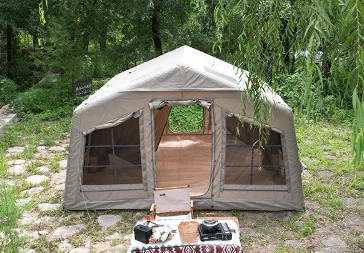
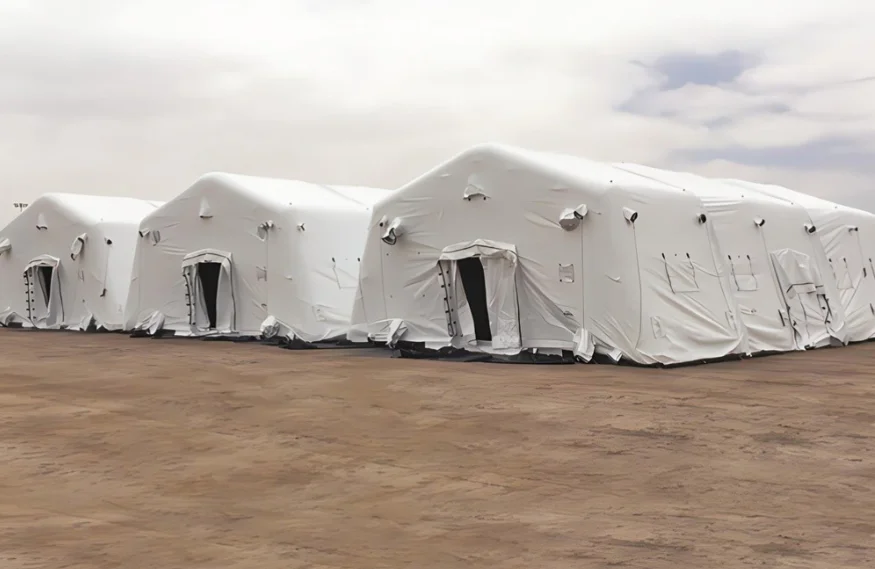
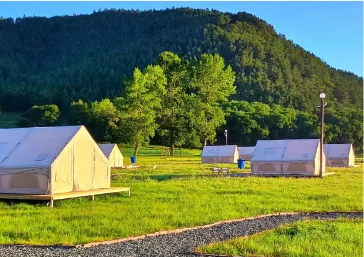
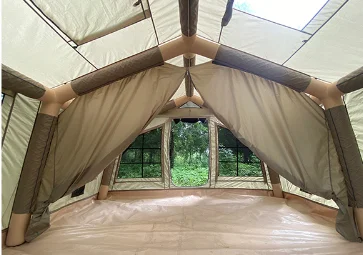
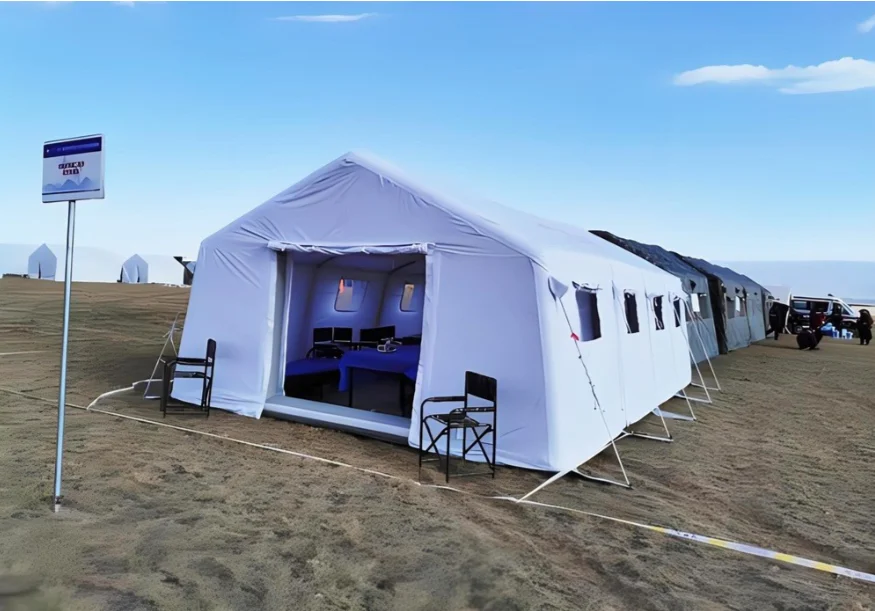
Description
Process-Controlled Fabric — 36 sets of processing equipment supporting consistent PVC knife-coated weight across every inflatable tent batch, verified by dedicated QA/QC staff at each production stage.
Technical Specifications
| Parameter | Value |
|---|---|
| Product Type | Inflatable Tent |
| Core Material | PVC knife-coated fabric |
| Waterproofing | Fully waterproof coated construction |
| UV Resistance | Available in UV-resistant grades — confirm test standard required for your market |
| Fire Retardancy | Available in fire-retardant grades — confirm the grade required for your site compliance |
| Anti-static Treatment | Available upon request — specify applicable standard |
| Tear & Tensile Performance | Engineered for high structural loads; grades available with supporting test documentation |
| Customization | OEM & ODM: size, fabric thickness, pattern printing, valve system modifications, branding |
| Quality Inspection | 12-point in-process inspection plus 48-hour inflation test per unit before shipment |
| Certifications | ISO 9001, ISO 14001, ISO 45001, CE |
Application Suitability
| Application | Exposure & Requirement |
|---|---|
| Seasonal glamping resort fleet | Four-season weather cycling, guest-facing aesthetics requiring batch colour consistency, fire compliance for commercial lodging |
| Outdoor exhibition and event structures | Rapid deployment under time pressure, wind-load stress on inflatable beams, UV and rain exposure over multi-day installations |
| Construction and industrial temporary shelter | Site safety demanding certified fire-retardant and anti-static performance, heavy equipment proximity, dust and abrasion |
| Remote field accommodation | Extreme temperature variation, limited on-site repair capability requiring factory-verified airtightness before dispatch |
Why Material Certification Matters More Than Marketing Claims for Inflatable Glamping Tents
A stated performance means nothing on-site if the test report does not match the shipment documentation.
Commercial buyers sourcing an Inflatable Glamping Tent manufacturer encounter a recurring problem: the quotation claims fire retardancy, UV stability, or anti-static treatment, but the delivered units arrive without a test certificate matching the batch. When site inspectors or event safety officers request documentation, the procurement team is left scrambling for paperwork that does not exist. This gap between claim and evidence is not a minor paperwork issue — it can shut down a glamping resort opening, force an event cancellation, or create liability exposure on a construction site. [NEED_CITE: fire safety compliance requirements for temporary commercial structures]
Coated Fabric Selection for Commercial Inflatable Structures
Choosing the right PVC knife-coated fabric for an inflatable tent requires balancing structural demands with environmental exposure. The base fabric denier and weave pattern determine how the material resists tearing when inflatable beams flex under wind load. Coating weight and adhesion method affect weld integrity at seam junctions, which is where most field failures originate. Buyers specifying a Custom PVC Inflatable Tent for resort or event use must confirm that the fabric grade matches the inflation system pressure and expected thermal expansion range.
Weld Integrity and Structural Reliability
The seams on an inflatable tent carry concentrated stress every time the structure flexes. PVC knife-coated fabric welded with correct temperature and pressure settings produces a bond that outlasts the base material itself. When weld parameters drift, the seam fails before the fabric does — typically at the junction where the inflatable beam meets the floor or roof panel. Our 12-point inspection process checks weld integrity at every critical junction, and the 48-hour inflation test catches slow leaks that a brief pressure check would miss. [NEED_CITE: tensile and tear test methods for coated fabrics per ISO 1421]
Reading the Specification Sheet Beyond GSM
GSM alone does not predict how an inflatable tent fabric will perform in the field. A lighter fabric with a tight base weave and high-quality knife coating can outperform a heavier material with a loose weave and poor coating adhesion. The denier of the yarn and the thread count per centimetre determine tear propagation resistance — critical when a puncture must not spread across a structural beam. Surface finish, whether glossy or matte, influences both cleanability in hospitality settings and print adhesion for branded event structures. Coating formulation also governs low-temperature flexibility; a tent deployed in cold climates needs confirmed cold-crack resistance rather than a generic temperature claim.
The Hidden Cost of Inconsistent Batch Colour Across a Tent Fleet
When a glamping resort orders multiple inflatable tents for a single site, colour variation between production batches becomes immediately visible once units are installed side by side. Guests notice, marketing photography suffers, and the operator may face pressure to replace units at their own cost. This issue traces back to raw material lot variation and insufficient in-process colour control during coating. The consequence extends beyond aesthetics — it signals inconsistent production control that may also affect fabric weight, coating thickness, and flame-retardant treatment uniformity. [NEED_CITE: coated fabric batch consistency standards for commercial procurement]
Why Procurement Teams Source Their Inflatable Glamping Tent Manufacturer Here
Our 10-person R&D team handles material selection, pattern printing, sizing, and valve system design within a single project workflow, eliminating coordination gaps between separate suppliers. Three full production lines and 36 sets of professional equipment support volume capacity while maintaining process control over coating weight and adhesion. Every inflatable tent undergoes a 48-hour inflation test before shipment — not a spot check, but unit-by-unit verification of airtightness and structural stability. Samples for custom requirements are developed within days, allowing buyers to confirm material, colour, and construction before committing to bulk production. Dedicated QA and QC staff conduct a 12-point inspection at every production stage, generating a pre-shipment record that accompanies each dispatch. [NEED_CITE: ISO 9001 quality management for coated fabric manufacturing]
Documentation & Verification
- Material specification sheet stating base fabric, PVC coating method, and colour reference per batch
- Test reports for UV-resistant and fire-retardant grades matching target market compliance requirements
- Pre-shipment inspection record including 48-hour inflation test result for each inflatable tent unit
- ISO 9001, ISO 14001, ISO 45001, and CE certificates included with shipment documentation
- Certificate of origin and customs support documentation for cross-border delivery
Fabrication, Handling & Storage
- Hot-air weld temperature must match the PVC knife-coated fabric thickness to prevent seam delamination under inflation pressure
- Valve mounting points require reinforced weld patches to distribute stress across the PVC knife-coated fabric surface
- Rolled tent fabric should be stored upright on pallets to avoid creasing that weakens the PVC coating layer
- Inflate slowly in sub-zero conditions to allow the PVC knife-coated fabric to reach flexibility without cold-crack risk
- Use only PVC-compatible cleaning agents to preserve the coating surface and any printed branding finish
What to Include in Your Enquiry for an Inflatable Glamping Tent
Specify the deployment climate, expected wind and snow loads, and whether your site requires certified fire-retardant or anti-static performance. Provide target dimensions, preferred fabric thickness, and any branding or pattern printing requirements so we can develop a sample for your approval. Confirm the valve system type compatible with your inflation equipment and the volume of units needed per batch to plan production scheduling.
Frequently Asked Questions
Q: What fire-retardant grade can you supply, and which test standard does it meet?
A: We offer inflatable tent fabric in fire-retardant grades selected to match your target market’s regulatory framework. Specify the standard required — such as regional building material classifications or event safety codes — and we will provide the corresponding test report with shipment documentation. Our team will confirm the applicable grade during the specification stage before production begins.
Q: How is batch-to-batch colour consistency controlled across a large inflatable tent order?
A: Colour consistency is managed through controlled raw material lot sourcing and in-process coating checks at each production stage. For multi-unit orders, we schedule production from matched coating batches to minimize variation. A pre-production sample is provided for colour approval, and the pre-shipment inspection record documents the colour reference verified against the approved standard.
Q: What customization options are available for size, fabric thickness, and valve systems?
A: Our R&D team supports full OEM and ODM development including custom dimensions, PVC fabric thickness selection, pattern printing, and valve system modifications matched to your inflation equipment. Sample units are produced within days for design and material confirmation before bulk commitment. Structural features such as beam layout and door configurations are engineered to your deployment requirements.
Q: How is airtightness verified before shipment, and what documentation accompanies each batch?
A: Every inflatable tent undergoes a 48-hour inflation test to verify airtightness and structural stability before dispatch. The test result is recorded per unit in the pre-shipment inspection report, which ships with your order alongside material specification sheets, applicable test reports, and certification documentation required for site compliance and customs clearance.