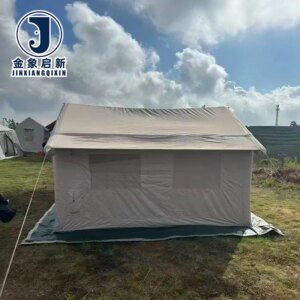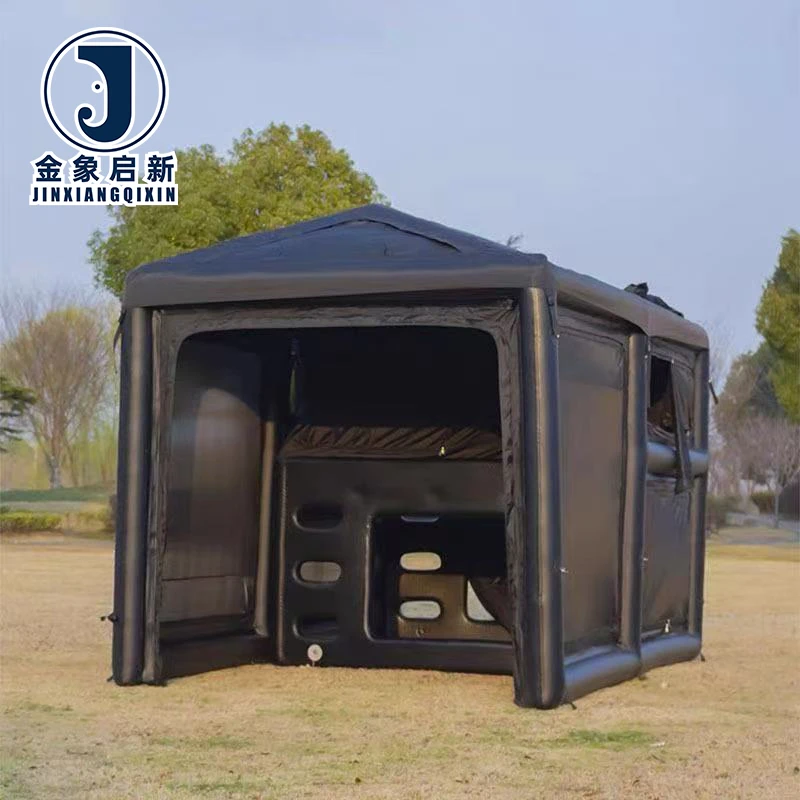
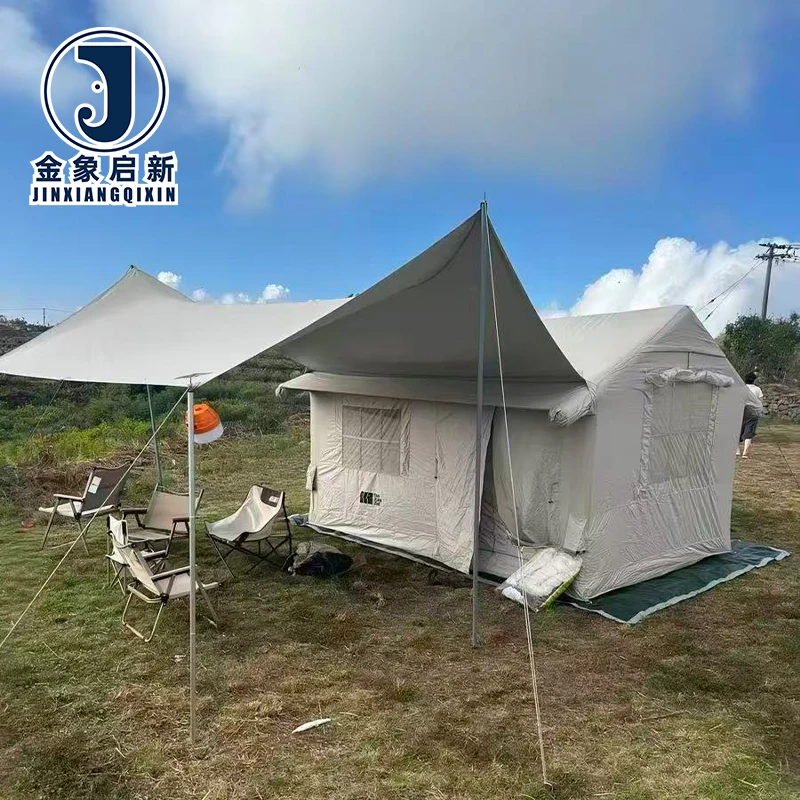
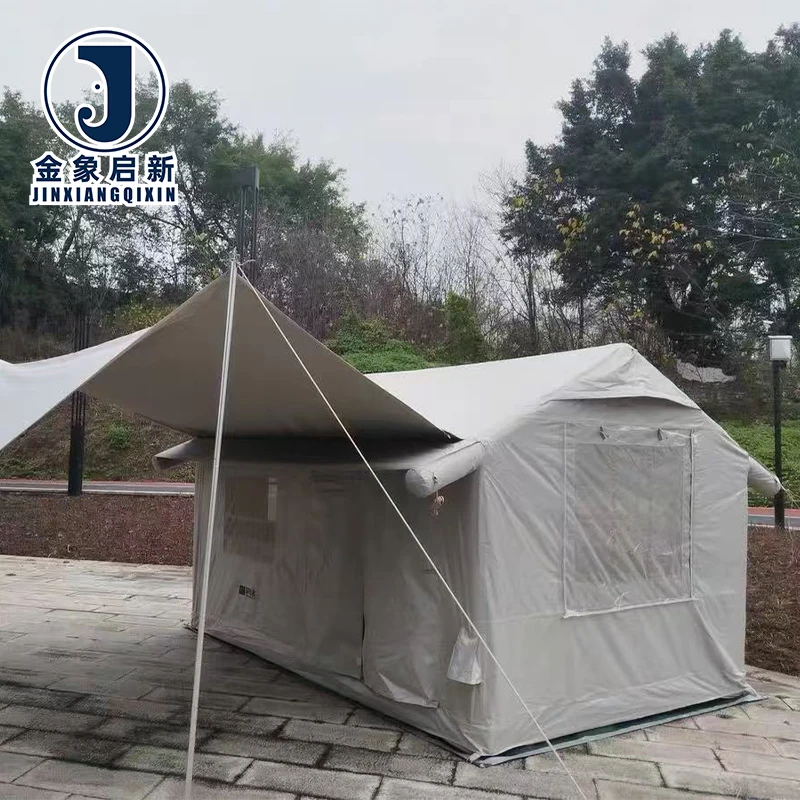
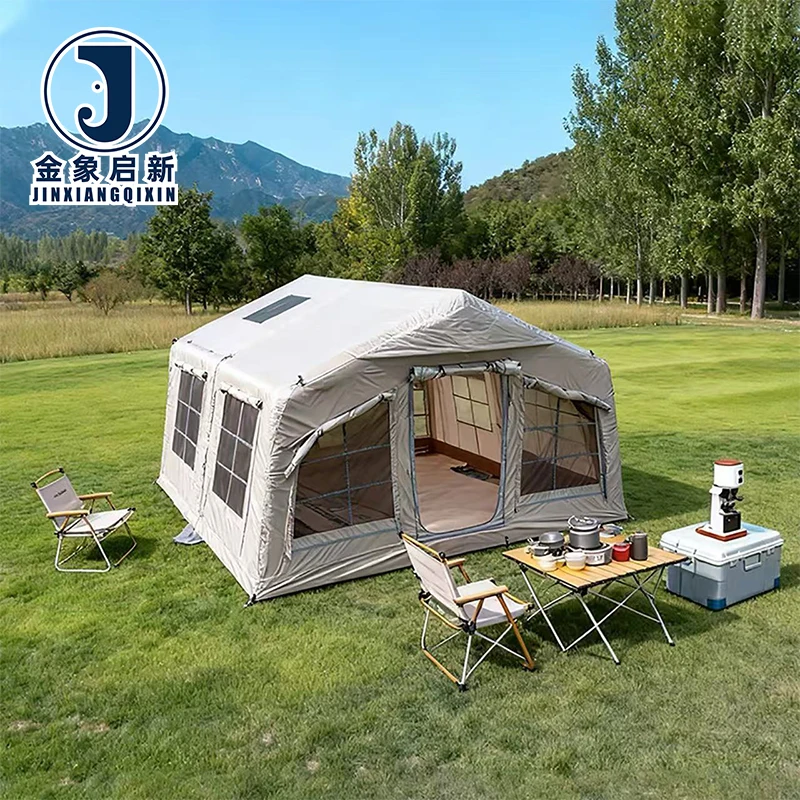
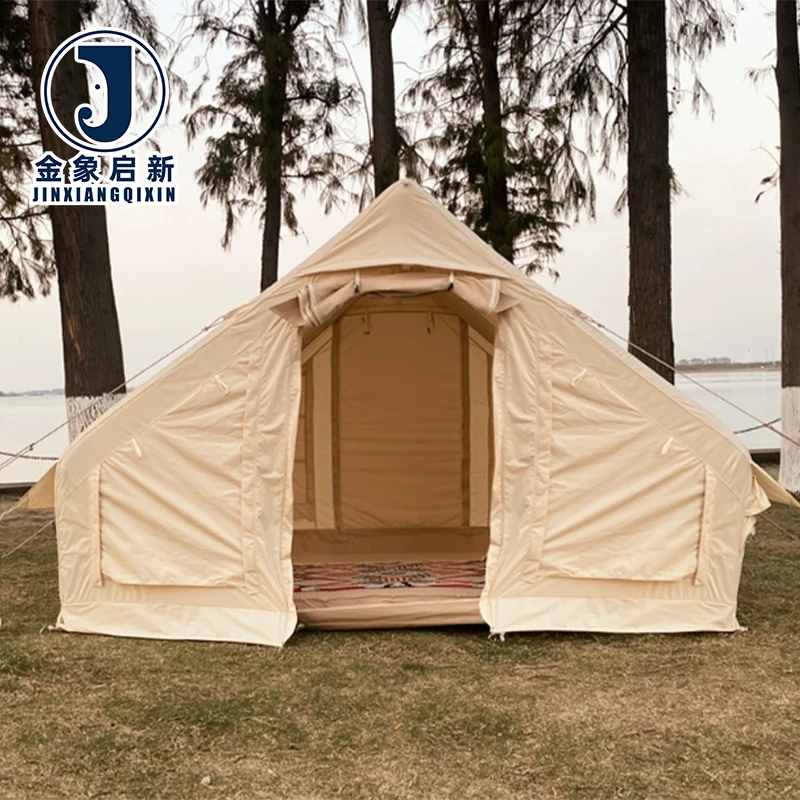
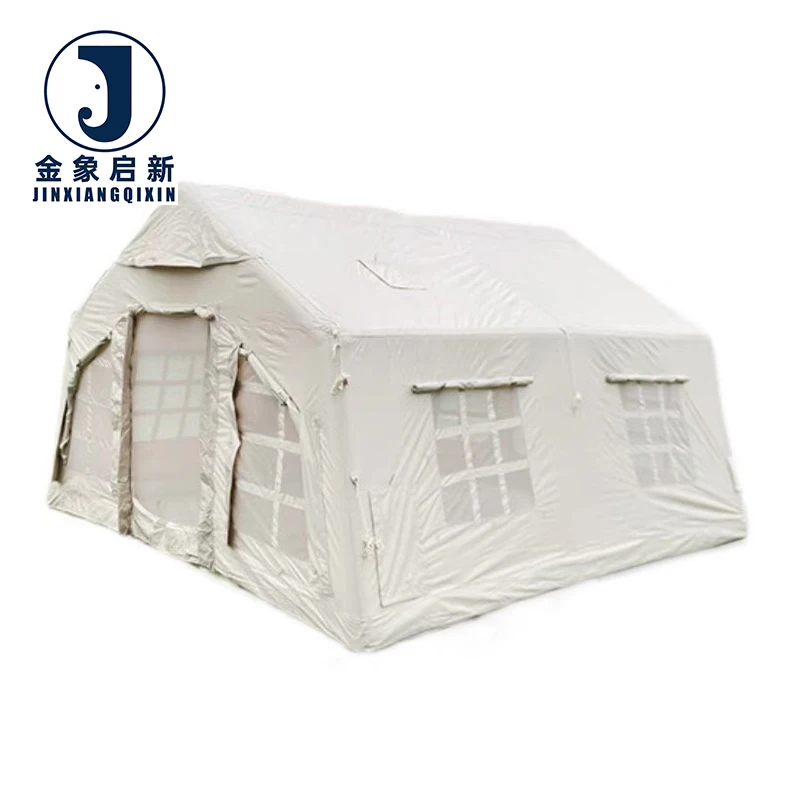
Description
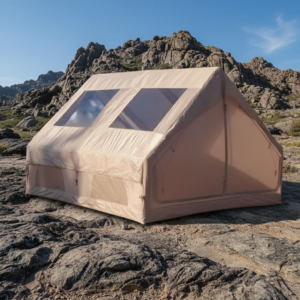
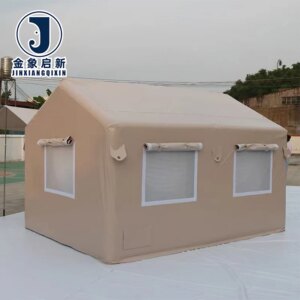
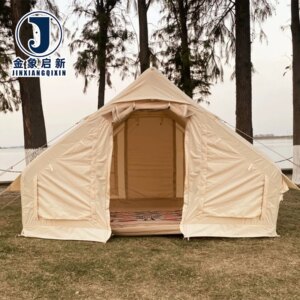
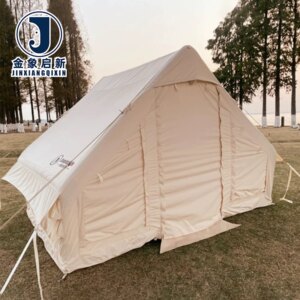
Batch-consistent roll stock supply — PVC inflatable tent fabric produced on three dedicated lines with full pre-shipment GSM and colour verification, built for manufacturers buying by the roll.
Technical Specifications
| Parameter | Value |
|---|---|
| Product Type | Inflatable Tent Fabric |
| Core Material | PVC tarpaulin |
| Key Performance | Waterproof, UV-resistant (test basis not stated), tear-resistant |
| Construction | Single layer |
| Season Rating | Four seasons |
| Deployment Method | Quick automatic opening, inflatable structure |
| Customization | OEM & ODM, sample customization, pattern printing |
| Quality Control | Full-process inspection with dedicated QA & QC staff on site |
| Certifications | ISO9001, ISO14001, ISO45001, CE |
Application Suitability
| Application | Exposure & Requirement |
|---|---|
| Commercial inflatable event shelters | Constant inflation pressure, wind stress, public safety compliance, frequent setup and teardown cycles |
| Mobile field stations for engineering projects | Remote site deployment, dust and moisture ingress, long-term UV exposure, rapid assembly requirement |
| Construction site storage covers | Heavy equipment proximity, abrasion from windblown debris, seasonal weather variation, puncture risk |
| Year-round outdoor industrial shelters | Four-season temperature fluctuation, sustained inflation load, membrane flex fatigue at seams |
Why Colour Drift Across Rolls Destroys Inflatable Tent Fabrication
Every roll must match the next in hue and saturation before it leaves the factory floor.
Tent manufacturers cutting panels from multiple rolls of inflatable tent fabric face a costly problem: colour variation only becomes visible once panels are heat-welded side by side on the structure. A batch that looks acceptable in the warehouse turns into a patchwork shell after fabrication. This is not a cosmetic complaint from end-users — it triggers rejection clauses in commercial shelter contracts and forces full-panel replacement. Sourcing inflatable camping tent bulk orders without a verified roll-to-roll colour control protocol means accepting that risk into your production schedule [NEED_CITE: colour tolerance standards for coated fabric batches per ISO 105 series].
How Roll-Stock Consistency Protects Your Production Line
Inflatable tent fabric ordered by the roll demands that every roll in a shipment carries the same GSM, coating weight, and colour reference. A variation in coating thickness between rolls changes how the material responds to heat-welding parameters — a setting that seals one roll cleanly may leave another under-welded or scorched. For manufacturers running inflatable camping tent bulk production runs, this inconsistency forces line stops and recalibration. Batch-consistent supply eliminates that variable from the shop floor.
Matching GSM to Inflation Load and Structural Demand
The gsm of PVC tarpaulin determines how the membrane handles sustained internal pressure and external wind load. A lightweight grade may suffice for a weekend event canopy but will show early stress whitening at welded seams under continuous inflation. Heavier grades carry the tensile reserve needed for large-span structures exposed to seasonal storms. Specifying the correct weight starts with understanding the peak inflation pressure and panel span of the end product, then selecting a grade with the tensile margin to absorb cyclic loading [NEED_CITE: tensile and tear test methods for coated fabrics per ISO 1421].
Coating Adhesion and Heat-Weld Integrity
PVC tarpaulin used for inflatable structures relies on heat-welded seams rather than stitched construction, making coating adhesion the single most critical property at the joint. When the coating separates from the base fabric under welding heat, the seam fails before the membrane itself. The coating method and weight directly influence how the material absorbs thermal energy during fabrication. Manufacturers should request weld-peel data for the specific roll batch before committing to a full production run.
The Hidden Cost of Specifying on Price Per Roll Alone
A roll that arrives lighter than the quoted GSM saves money on paper but delivers less material per square metre. For inflatable tent applications, that shortfall appears as premature seam fatigue and membrane deflection under load. Flame-retardant treatment claimed without a supporting test report exposes the fabricator to liability when the structure is inspected by a venue or municipal authority. Colour drift across rolls in the same order forces the manufacturer to segregate panels by shade, increasing waste and labour cost — a problem that does not appear until fabrication is underway [NEED_CITE: pre-shipment inspection protocols for coated fabric roll stock].
Why Fabricators Source This Fabric Here
Three full production lines and 36 sets of processing equipment give the capacity to fulfil multi-roll inflatable tent fabric orders without splitting production across separate batches. A 10-person R&D team develops custom colour matches and prints with sample turnaround before bulk commitment. Full-process QA and QC inspection at every stage catches GSM drift and coating inconsistency before the roll reaches the packing area. ISO9001, ISO14001, ISO45001, and CE certifications are maintained on file and available for audit, providing the documentation trail that commercial contracts require.
Documentation & Verification
- Material specification sheet stating gsm, base fabric type, and coating method for each roll
- UV and flame-retardant test reports supplied where the grade has been specified in the order
- Pre-shipment inspection record confirming colour and weight consistency across the batch
- Roll packing list with individual roll numbers traceable to production batch data
- Certificate of origin and customs documentation prepared for export shipment
Fabrication, Handling & Storage
- Calibrate heat-weld temperature to the specific PVC coating weight before running production panels
- Store rolls upright on end-caps to prevent flat-spot deformation of the membrane surface
- Allow cold-stored rolls to acclimatise before unrolling to avoid coating micro-cracking in winter
- Use compatible PVC solvent cleaners that do not attack the coating surface or printed pattern
- Plan cutting layout to minimise welded seams at high-stress inflation zones
What to Share With Your Quotation Request
Provide the target market, intended structure size, and typical inflation pressure so the correct gsm and treatment package can be recommended. State the required roll width, colour reference or print design, and estimated annual volume to receive an accurate lead-time and batch schedule. Confirm whether flame-retardant certification is required for your local building or event code, and note any sample approval milestone before full production begins.
Frequently Asked Questions
Q: How is colour consistency maintained across multiple rolls in a single order?
A: Each production batch is run from a single coating mix, and rolls are compared against the approved colour reference under controlled lighting before packing. Pre-shipment inspection records document roll-to-roll colour matching, and buyers can request a set of roll-end swatches from the actual batch before dispatch.
Q: What gsm and base fabric options are available for inflatable tent applications?
A: PVC tarpaulin is supplied across a range of gsm grades suited to different inflation pressures and span sizes. The R&D team can recommend a specific grade once you provide the structure dimensions and expected wind load, and a sample roll section is available for your own weld and tensile testing before commitment.
Q: What is the lead time and minimum for custom width or colour?
A: Custom widths and colour matches carry minimums that vary by grade and order complexity. Typical multi-week lead times apply once the sample has been approved. Providing your target colour reference, required roll width, and annual volume at inquiry stage allows an accurate schedule to be quoted.
Q: Can flame-retardant treatment be supplied with a valid test certificate?
A: Flame-retardant grades are available for markets that require certified inflatable shelter membranes. Confirm the specific fire classification standard applicable in your market — such as DIN 4102, NFPA 701, or M2 — so that the correct grade is selected and a matching test report accompanies the shipment.
Q: How do you support sample approval before bulk production?
A: Sample sections are developed from the proposed production formulation, including the specified gsm, colour, and any treatment. Buyers test the sample for weld behaviour, colour match, and handle before signing off. Bulk production only begins once the sample is formally approved and documented.