
Description
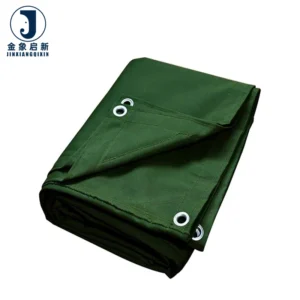
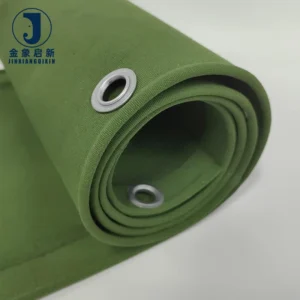
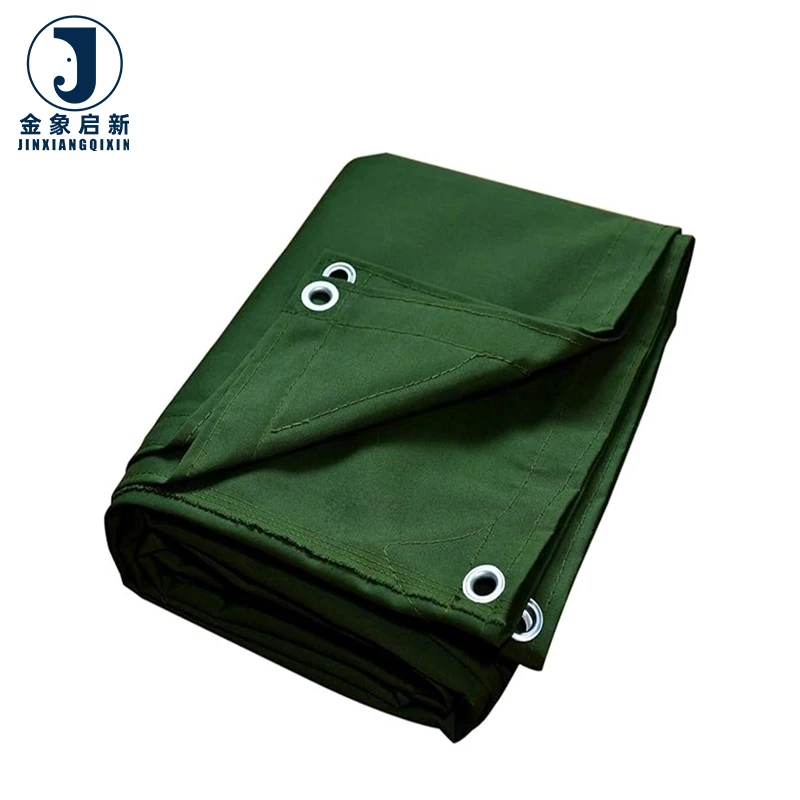
Roll-to-Roll Consistency — verified GSM and colour on every roll before dispatch, keeping bulk orders uniform for fabricators cutting truck and construction covers.
Technical Specifications
| Parameter | Value |
|---|---|
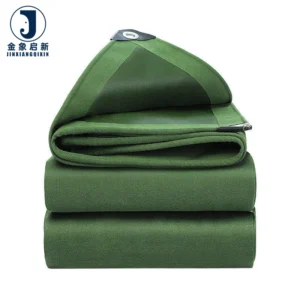
| Product Type | PVC Laminated Canvas Tarpaulin |
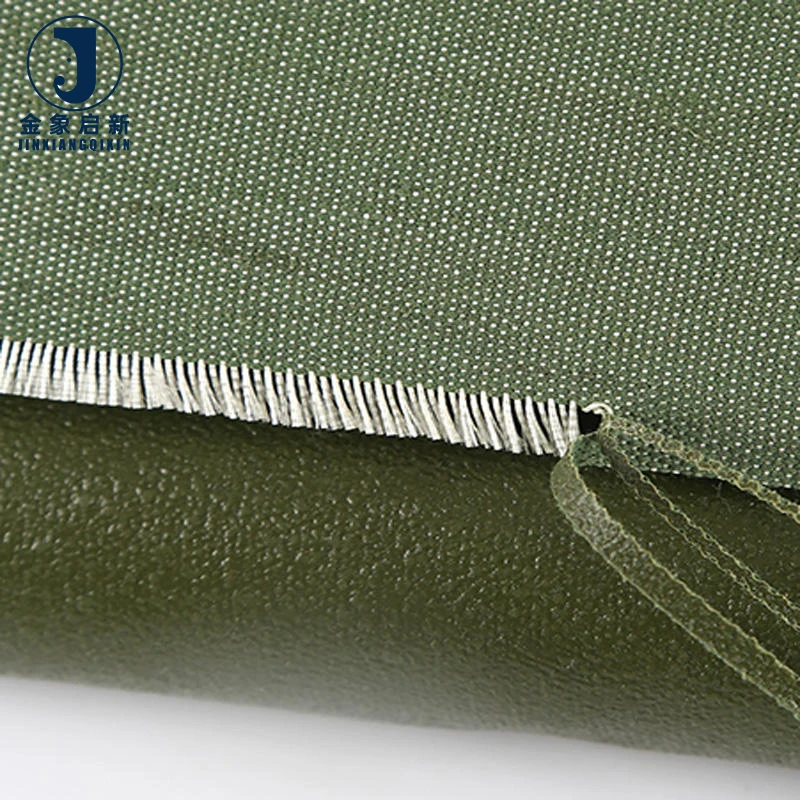
| Base Fabric | Polyester cotton industrial textile with 8–12 strands fine cotton yarn |
| Weight | 600 gsm |
| Thickness Options | 0.5 mm / 0.6 mm / 0.7 mm |
| Roll Width | 2 m |
| Roll Length | 100 m |
| Colour | Army Green Camouflage / Custom |
| Coating | Weather-resistant low-density reinforced laminated backing |
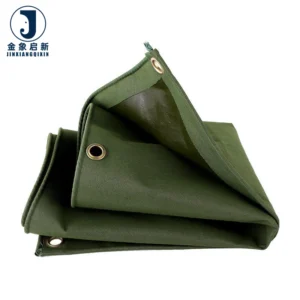
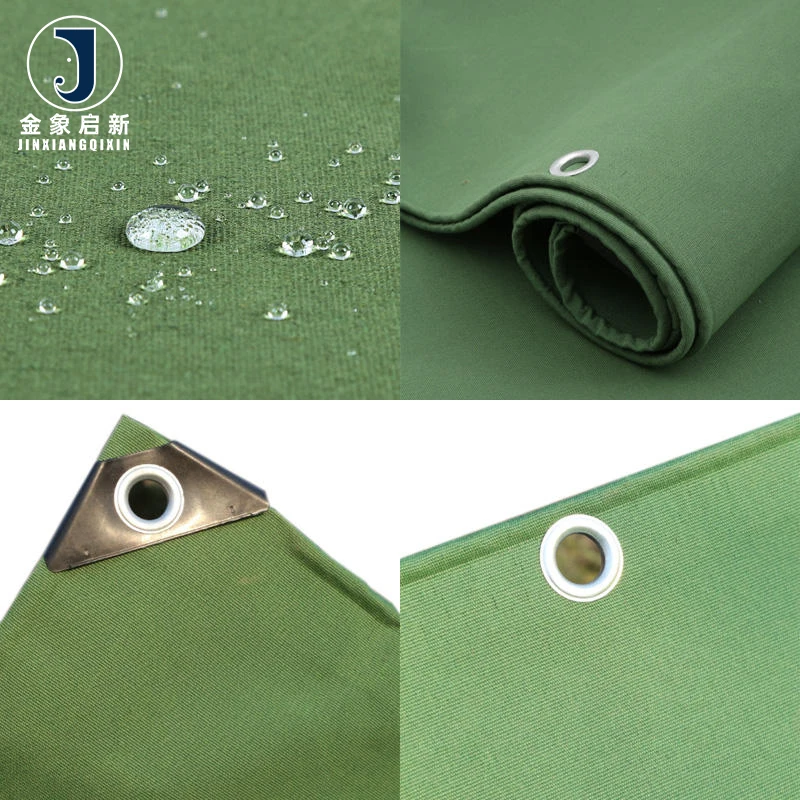
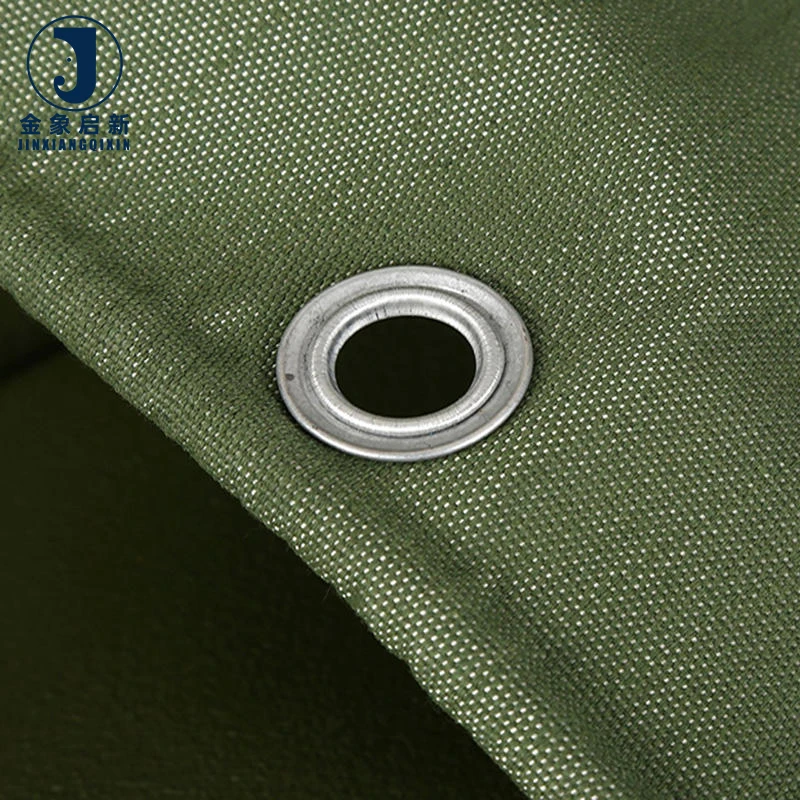
| Eyelet Spacing | Rust-proof aluminium eyelets every 1 m at corners and hem |
| Hem Construction | Folded and sewn seams with poly ropes |
| Waterproof | Yes (rating not specified) |
| UV Resistance | UV resistant (test basis not stated) |
| Flame Retardant | Available in flame retardant grades — confirm the grade required for your market |
| Anti-Static | Not stated |
| Standards | CE, ISO |
Application Suitability
| Application | Exposure & Requirement |
|---|---|
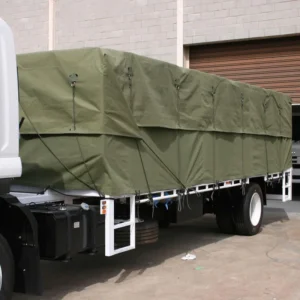
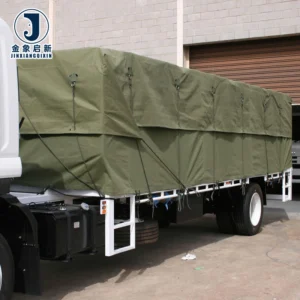
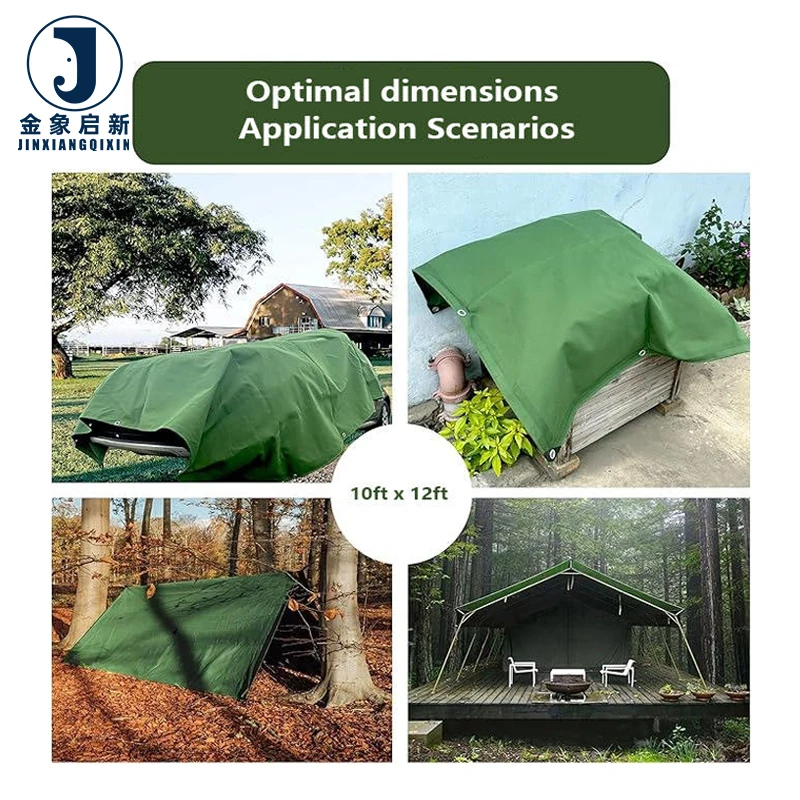
| Truck and trailer side curtains | Constant flexing at load points, road debris abrasion, prolonged sun and rain exposure |
| Construction site equipment covers | UV exposure, wind-driven rain, contact with alkaline dust and mortar splatter |
| Open-air asphalt and aggregate covers | High ground temperatures, abrasive granular contact, repeated deployment and folding |
| Outdoor tent and shelter fabric | Multi-season weather cycles, tension at guy-rope anchor points, mould risk in humid storage |
| Engine hood and machinery wraps | Oil and grease contact, heat cycling, tight folding in confined spaces |
Why the Quoted GSM Rarely Matches What Arrives on the Dock
Batch weight verification at every production stage eliminates the gap between quotation and delivery.
When a container of canvas tarpaulin rolls arrives and the fabric feels lighter than the 600 gsm stated on the invoice, the buyer absorbs the cost — covers tear earlier, seams open under load, and end customers file warranty claims. The shortfall often originates in coating weight drift during long production runs, where the laminated backing applied to polyester-cotton canvas thins out without in-line measurement. Wholesale buyers purchasing by the roll count are especially exposed, because one under-weight roll hidden among forty looks acceptable until it is unrolled and tensioned on a truck frame [NEED_CITE: ISO 1421 tensile and tear test methods for coated fabrics].
How Roll Stock Purchasing Differs from Cut-to-Size Ordering
Distributors and fabricators buying canvas tarpaulin rolls in bulk face decisions that do not appear on a cut-size quote: how many linear metres per colour to hold in stock, whether a 2 m width minimises off-cuts when nesting truck cover panels, and whether the laminated backing tolerates high-frequency welding on shop-floor equipment. This PVC laminated canvas tarpaulin is wound on cores at 100 m length, giving fabricators enough continuous run to cut full trailer side curtains without mid-panel joins that weaken under road vibration.
Colour matching across rolls in the same shipment is a separate concern. A fleet operator installing ten side curtains along one truck will see any shade variation immediately. Our QA process references a single batch colour standard per order, so rolls pulled for the same container share the same dye lot and coating batch [NEED_CITE: spectrophotometer colour tolerance standards for coated textiles].
Lamination Versus Coating: What the Backing Layer Actually Does
The weather-resistant low-density reinforced laminated backing on this canvas differs fundamentally from a knife-coated PVC layer. Lamination bonds a pre-formed film to the woven polyester-cotton base under heat and pressure, producing a uniform coating weight across the full 2 m width. This consistency matters most at the selvedge, where knife-coated fabrics often show edge build-up that causes uneven weld seams. The laminated structure also preserves the natural hand and drape of the cotton-blend face, which is relevant when fabricators fold and sew hems rather than relying solely on heat-welded joins.
Reading the 600 gsm Figure in Context
A 600 gsm weight for a polyester-cotton laminated canvas tells you the combined mass of base fabric and backing per square metre, but it does not isolate how that mass is distributed. The 8–12 strand fine cotton yarn in the weave creates a denser base cloth that resists tear propagation even before the laminated backing contributes its share. A lighter base fabric with a heavier coating could reach the same 600 gsm total yet perform differently under flex fatigue — the coating cracks first, then the sparse base yarns unravel at stress points. This is why thickness options at 0.5 mm, 0.6 mm, and 0.7 mm are offered separately: each pairs a specific base fabric density with a calibrated lamination weight to suit different flex and abrasion demands.
The Hidden Cost of Ignoring Batch Consistency
Colour variation between rolls in a single order is not a cosmetic complaint — it triggers rejection on site when covers are installed side by side on a construction compound or along a fleet of trailers. Re-sorting and re-rolling containers at the destination port adds handling charges that erase the margin saved on bulk purchasing. Weld seam failure is the other latent defect: when coating thickness drifts from roll to roll, the heat-weld temperature that worked on roll twelve burns through roll thirteen, and the fabricator discovers the problem only when a loaded trailer flexes on the highway [NEED_CITE: peel strength testing methods for laminated fabric seams].
Why Fabricators Source This Canvas from Jinxiang
Three full production lines and 36 sets of professional equipment mean roll stock orders move through coating, lamination, and winding without waiting for shared machine time, keeping lead times predictable for bulk buyers.
A 10-person R&D team handles custom colour matching and sample rolls, so distributors can approve a shade standard before committing to a full container load.
Dedicated QA/QC at every stage includes roll-by-roll weight checks against the stated 600 gsm, with records available before dispatch.
The 2 m × 100 m roll format is engineered for standard container loading by roll count and weight, minimising freight cost per square metre for importers.
Samples for custom width or colour are developed within days, letting buyers confirm drape, weld behaviour, and eyelet holding strength before production starts.
Documentation & Verification
- Material specification sheet confirming 600 gsm, polyester-cotton base, and laminated backing type
- Pre-shipment inspection record with roll-by-roll weight verification before container loading
- Roll packing list showing roll count, net weight, and cubic volume per container
- Batch colour reference card matching the dye lot shipped
- Test reports for UV and flame retardant grades where applicable to the order
- Certificate of origin and customs documentation for destination-country clearance
Fabrication, Handling & Storage
- Weld the laminated backing at moderate heat settings; excessive temperature delaminates the film from the 600 gsm base cloth
- Space rust-proof aluminium eyelets at the existing 1 m intervals and add intermediate grommets on panels wider than 2 m
- Store rolls upright on cores to prevent flat-spot creases that weaken the polyester-cotton weave at fold lines
- Allow cold-stored rolls to reach ambient temperature before unrolling to avoid cracking the laminated backing
- Cut panels with a hot-knife or rotary blade to seal raw edges and prevent cotton yarn fraying at the selvedge
- Use poly-rope reinforced hems for load-bearing tie-down points; the sewn and folded construction distributes tension across the 600 gsm fabric
What to Include with Your Enquiry
Provide the end-use application and the environmental conditions the covers will face — UV exposure duration, temperature range, and chemical contact help determine which thickness option fits. State whether you need full 2 m × 100 m rolls or custom cut-to-size panels, and specify the annual volume so production can be scheduled in single-batch runs for colour consistency.
Frequently Asked Questions
Q: How is the 600 gsm weight verified, and how can I re-check on arrival?
A: Each roll is weighed during the pre-shipment inspection and recorded against the stated 600 gsm target. On arrival, you can cut a measured square from the roll end and weigh it on a calibrated scale. The inspection record shipped with your order provides the baseline for comparison.
Q: What roll widths and lengths are available for bulk orders?
A: Standard rolls are 2 m wide and 100 m long, optimised for container loading by roll count. Custom widths and shorter or longer roll lengths can be produced; provide your required dimensions and annual volume so we can confirm minimums and lead times.
Q: How do you control colour consistency between rolls in the same order?
A: All rolls in one order are produced from a single dye lot and coating batch. A colour reference card is included in the shipment documentation so you can verify shade uniformity when rolls are unrolled side by side at your facility.
Q: What is the MOQ for custom width or cut-to-size orders?
A: Minimum quantities depend on the width and colour requested, because each custom run requires dedicated machine setup and coating batch preparation. Share your target dimensions and quantity, and we will confirm the minimum and production schedule.
Q: How is roll stock packed for container loading and transport protection?
A: Rolls are wound on rigid cores, wrapped in protective film, and loaded horizontally or vertically depending on container configuration. A detailed packing list accompanies each shipment, listing roll count, gross and net weight, and cubic volume for your freight forwarder.