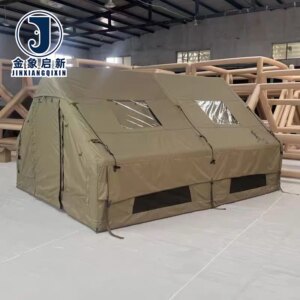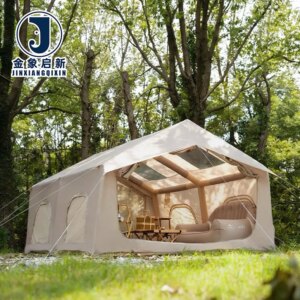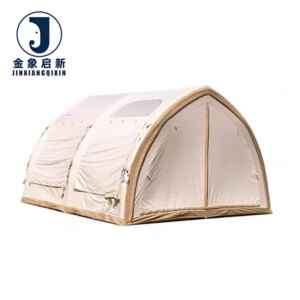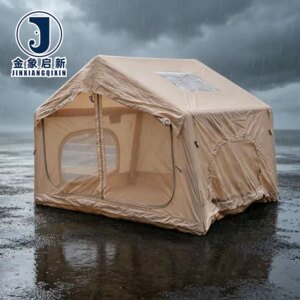
Description
Coated Fabric Mastery — Nearly three decades of PVC coating process control applied to inflatable structures, ensuring consistent fabric weight, adhesion, and weld integrity from roll to finished shelter.
Technical Specifications
| Parameter | Value |
|---|---|
| Product Type | Inflatable Tent |
| Core Material | PVC Tarpaulin (knife-coated fabric) |
| Waterproof Rating | ≥8000mm H₂O |
| Tear Strength | ≥300N (test standard not stated) |
| Flame Retardancy | Classified (grade not stated — confirm required grade for your market) |
| UV Treatment | UV-resistant (test basis not stated) |
| Anti-Static | Anti-static (surface resistance not stated) |
| Key Features | Waterproof, UV-resistant, tear-resistant, fire-retardant, anti-static |
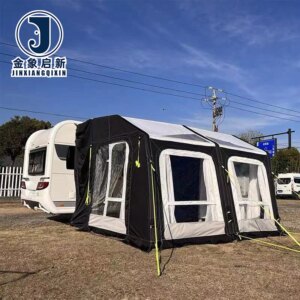
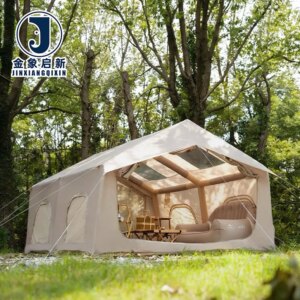
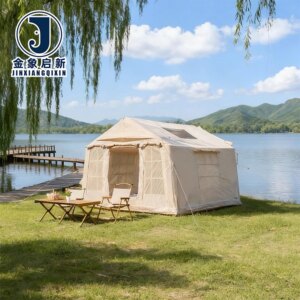
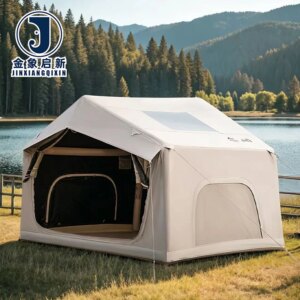
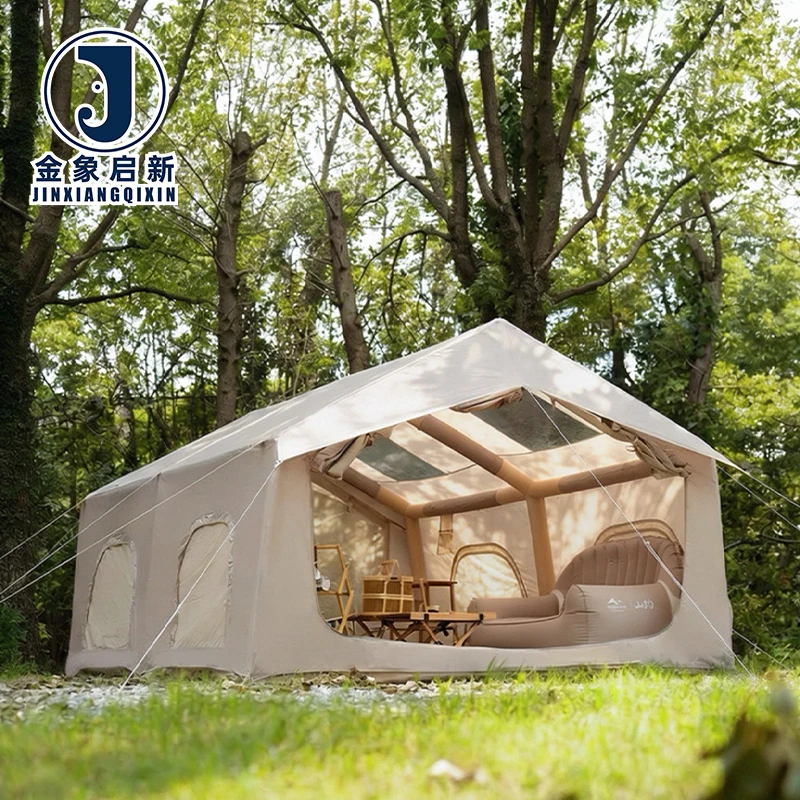
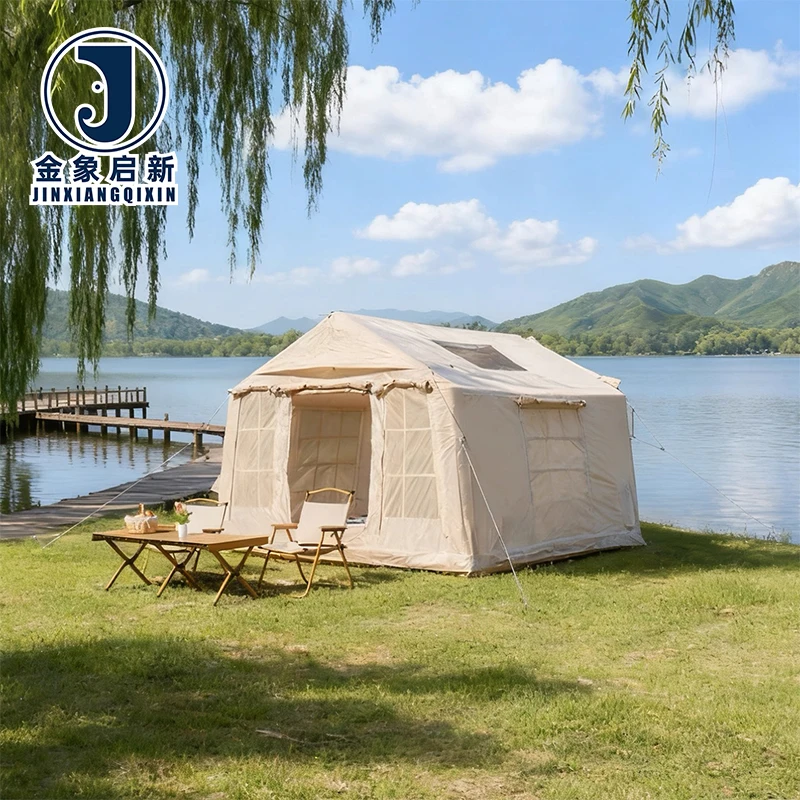
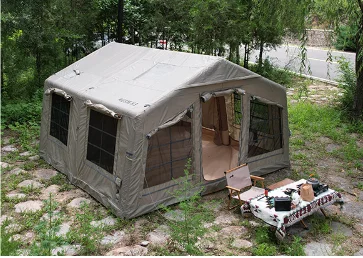
| Product Form | Inflatable structure with quick automatic opening |
| Construction | Single-layer PVC, extended type, four-season design |
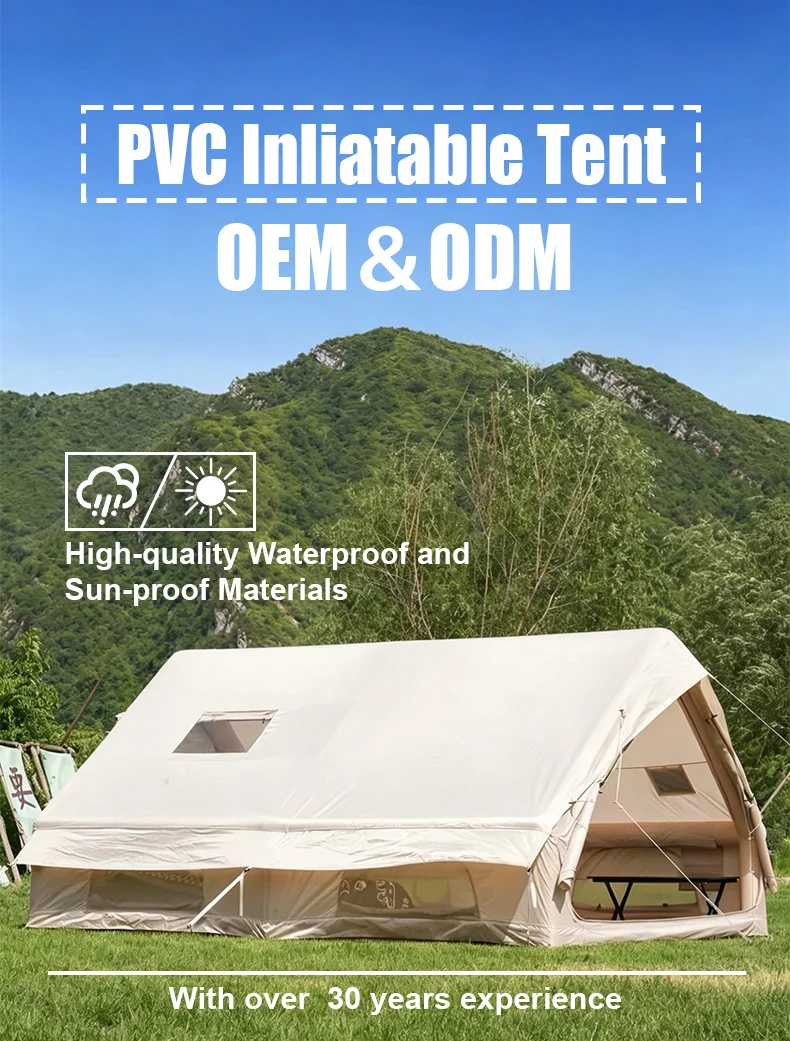
| Customization | OEM & ODM — size, color, pattern printing, access points, ventilation systems |
| Dimensional Tolerance | ±2% |
| Pressure Retention Test | 24-hour pre-shipment validation |
| Sample Lead Time | 7–10 business days from design confirmation |
| Standards | ISO 9001, ISO 14001, ISO 45001, CE |
Application Suitability
| Application | Exposure & Requirement |
|---|---|
| Disaster response temporary shelter | Rapid deployment under time pressure, repeated inflation cycles, varied weather exposure, urgent occupancy compliance |
| Construction site crew housing | Prolonged outdoor UV exposure, wind loading on inflated structure, abrasion from ground contact and equipment staging |
| Emergency equipment storage | Moisture protection for sensitive tools, fire-retardant compliance on active sites, frequent access and relocation |
| Mobile industrial command post | Anti-static requirements near electronic equipment, thermal stability across seasonal temperature swings, custom access point integration |
Why Claimed Performance Without Test Data Costs More Than the Fabric Itself
A specification sheet that names the standard is the only specification sheet that protects your project.
When an inflatable tent arrives on site with a flame retardancy claim but no grade, the compliance officer shuts down the installation until documentation surfaces. The same pattern repeats with UV resistance — without a test basis, you cannot calculate replacement intervals or justify the procurement to a safety auditor. [NEED_CITE: flame retardant classification standards for temporary structures in different jurisdictions]. Buyers who accept unverified claims on PVC inflatable tent fabric routinely face re-inspection costs that dwarf the original material savings.
What Full Custom Capability Means for Inflatable Shelter Buyers
Sourcing a custom PVC inflatable tent goes well beyond choosing a color. The R&D team handles pattern printing layout, ventilation system integration, access point positioning, and dimensional adjustment within a ±2% tolerance — all before the first production panel is cut. A ten-technician team develops pre-production samples so you evaluate seam geometry, inflation behavior, and access hardware placement before committing to volume. This is where one-stop capability separates a usable shelter from one that requires field modification on arrival.
How the Quick Automatic Opening Mechanism Changes Deployment Timelines
For disaster relief and emergency staging, the difference between a manually assembled frame tent and an inflatable structure with automatic opening is measured in hours, not days. The PVC knife-coated fabric core provides the tear resistance needed to withstand repeated inflation and deflation cycles without degradation at the valve and seam interfaces. Each unit undergoes a 24-hour pressure retention test before shipment, confirming that the welded seams and valve assemblies hold under sustained internal pressure. [NEED_CITE: deployment time comparisons for inflatable versus frame-type emergency shelters].
Reading Between the Lines on Coated Fabric Specifications
A tear strength of ≥300N tells you how the material behaves once a puncture or cut initiates — critical for inflatable structures where a tear propagation event compromises the entire shelter. The PVC knife-coating method bonds the coating to the base fabric at a molecular level, producing higher peel strength than laminated alternatives and creating a surface that supports reliable heat-welded seams. The single-layer extended construction reduces overall weight while the four-season design addresses thermal variation from summer heat loading to winter embrittlement thresholds. Waterproof integrity at ≥8000mm H₂O means the coating withstands sustained hydrostatic head pressure during heavy rainfall without breakthrough.
The Real Cost of Underspecifying Inflatable Shelter Fabric
When batch-to-batch color variation shows up across ten identical emergency shelters deployed side by side, the entire lot looks like mixed inventory — undermining credibility with the end user and triggering rejection clauses. Welded seams that fail before the fabric itself typically trace back to inconsistent coating thickness across the roll, a problem that surfaces only after the shelter has been inflated and loaded by wind. [NEED_CITE: common failure modes in PVC inflatable structure seam performance]. Underspecified flame retardancy grades lead to failed site inspections, forcing replacement under emergency timelines when lead times are longest.
Why Buyers Source Inflatable Tents Here
Three full production lines and 36 sets of processing equipment mean raw PVC tarpaulin is coated, welded, and assembled under one roof — eliminating the handoff failures that occur when fabric sourcing and shelter fabrication are separated. Dedicated quality control at every production stage catches coating weight deviation and seam weakness before the product reaches packing. Pre-production samples are developed within 7–10 business days, giving procurement teams a physical unit to evaluate rather than relying on data sheets alone. Every order ships with a batch-specific inspection report and material specification sheet, so compliance documentation is complete on arrival.
Documentation & Verification
- Material specification sheet stating core PVC composition, coating method, and confirmed treatments
- Batch-specific quality inspection report with waterproof rating and tear strength results
- Flame retardancy classification documentation matching the grade specified at order placement
- 24-hour pressure retention test record included for every inflatable unit
- Pre-shipment dimensional verification against approved sample within ±2% tolerance
- CE and ISO certification references available for compliance submission
Fabrication, Handling & Storage
- Heat-weld all seams using parameters matched to the PVC knife-coated fabric thickness to maintain peel strength at flex points
- Store rolled fabric sections flat or on suspended cores to prevent permanent creasing in the coating layer
- Use compatible PVC adhesive for field repairs on punctures, allowing full cure before re-inflation
- Avoid dragging inflated units across abrasive ground surfaces that can compromise the single-layer PVC base
- Deploy ventilation system integration points according to approved drawings to maintain structural pressure balance
- Clean surfaces with neutral pH agents to preserve the UV-resistant coating treatment integrity
Starting Your Inflatable Shelter Inquiry
Provide the intended deployment environment, including seasonal temperature range and wind exposure expectations, so the correct PVC formulation and construction type can be recommended. Specify any fire-retardant grade or anti-static requirement mandated by your local site safety regulations. Indicate required dimensions, access point configuration, and whether pattern printing or color coding is needed for organizational identification across multiple units.
Frequently Asked Questions
Q: What customization options are available for inflatable tent sizing, color, and printing?
A: The PVC inflatable tent supports full OEM and ODM customization including dimensional adjustment, color selection, pattern printing, access point placement, and ventilation system integration. A pre-production sample is developed within 7–10 business days from design confirmation so you can evaluate the physical unit before approving volume production. Dimensional tolerance is held within ±2%.
Q: How is batch-to-batch consistency ensured across large-volume inflatable tent orders?
A: All three production lines operate with dedicated quality control at each stage, and every unit undergoes a 24-hour pressure retention test before shipment. Batch-specific inspection reports accompany each delivery, documenting waterproof rating, tear strength, and treatment verification. This protocol ensures uniform performance and appearance across all units in a multi-shelter deployment.
Q: What flame retardant grades apply to this inflatable tent fabric?
A: The PVC knife-coated fabric is produced with flame retardant classification, but the specific grade should be confirmed against your local site safety or building code requirements. Available grades and corresponding test standards are documented in the material specification sheet provided with each order, ensuring compliance documentation is complete upon delivery.
Q: What is the sample development process and lead time for custom inflatable structures?
A: Once design specifications — including dimensions, access points, color, and ventilation requirements — are confirmed, a pre-production sample is developed within 7–10 business days. This sample allows physical evaluation of inflation behavior, seam integrity, and overall configuration before full-scale production begins, reducing the risk of costly revisions on bulk orders.
Q: How does the pre-shipment pressure retention test validate deployment reliability?
A: Every inflatable tent unit is inflated and held under sustained internal pressure for 24 hours before dispatch. This test identifies seam leaks, valve failures, and coating adhesion issues that would otherwise surface only after field deployment. Units that do not maintain pressure throughout the full test period are rejected and do not ship.