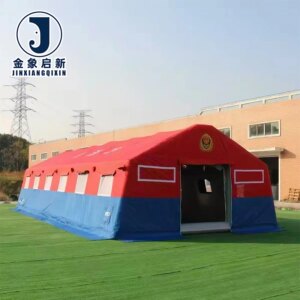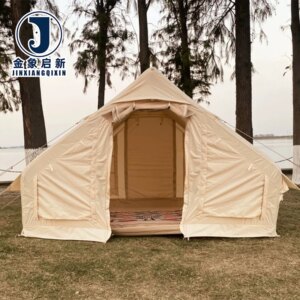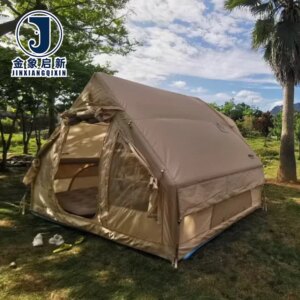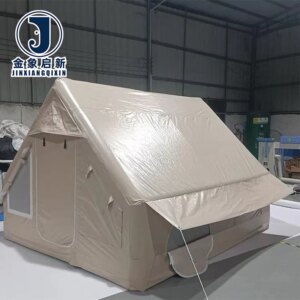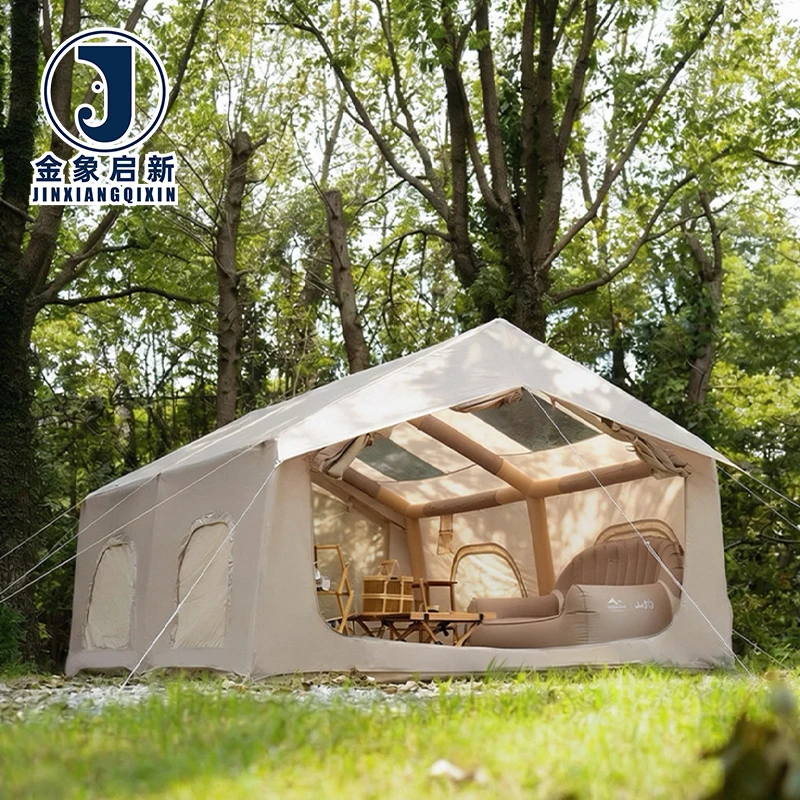
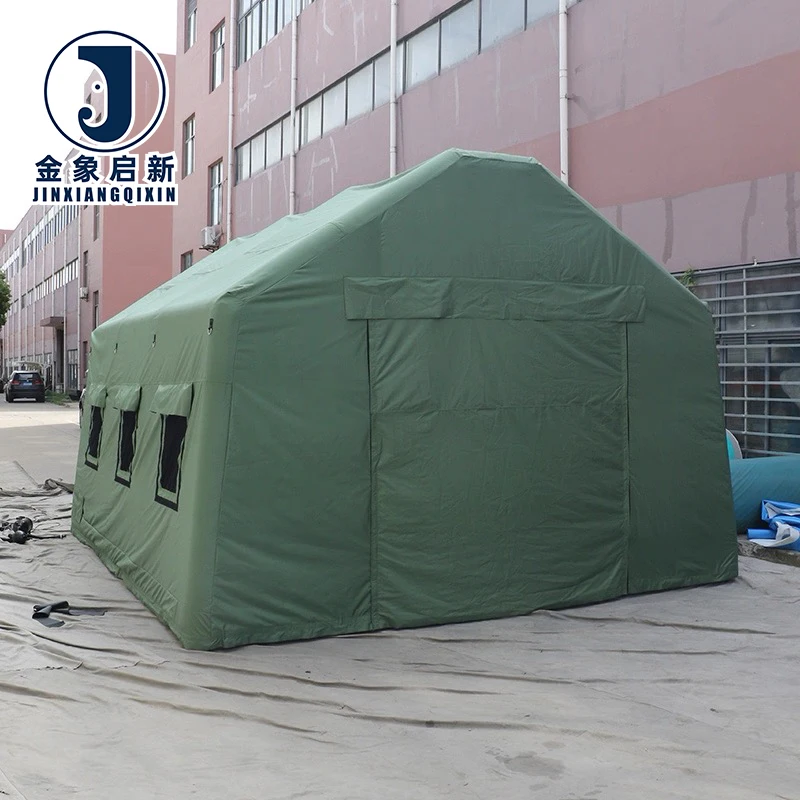
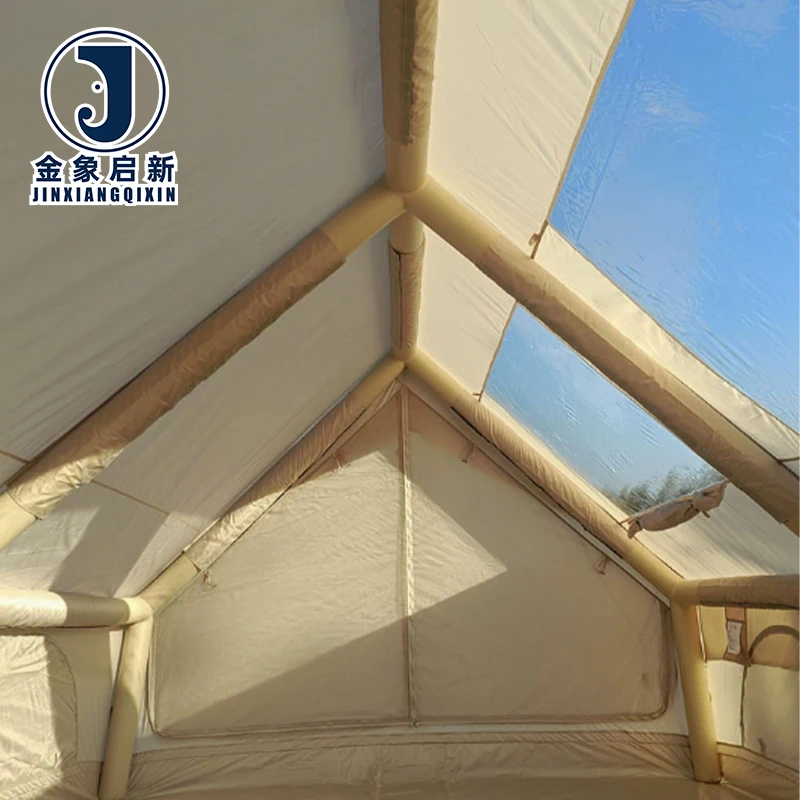

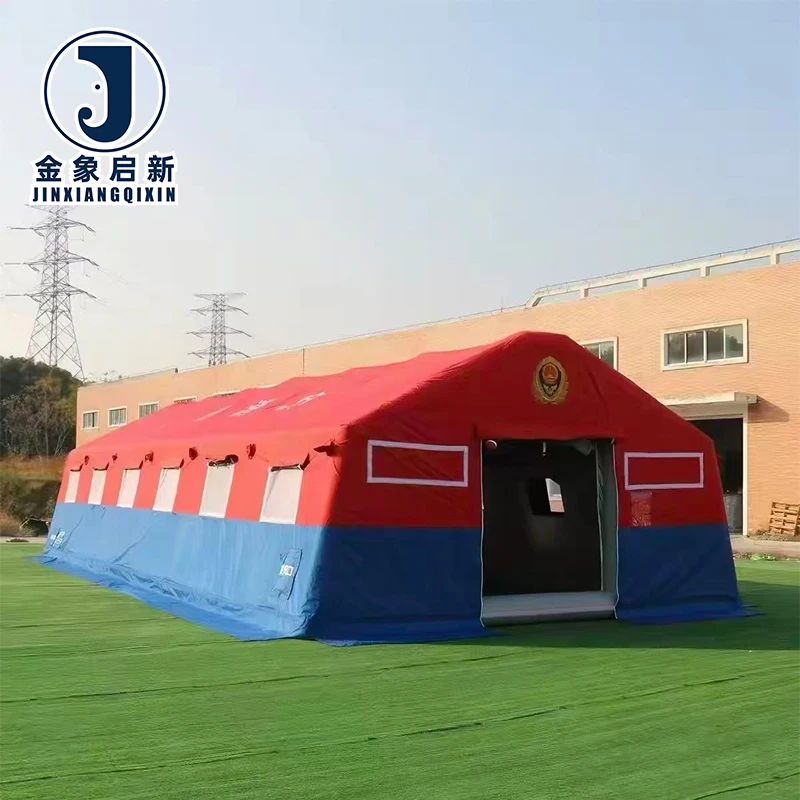
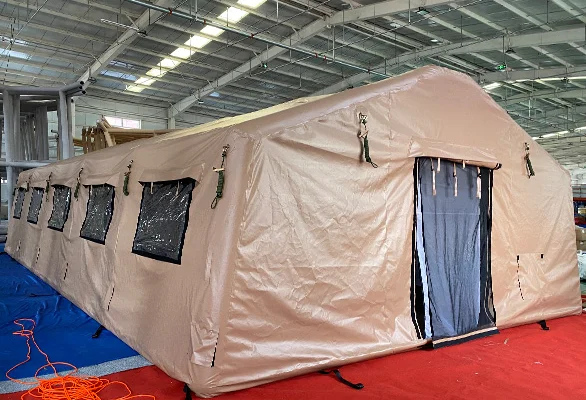
Description
Roll-to-Roll Consistency — Every batch of inflatable tent fabric is produced under strict coating weight and adhesion control, ensuring uniform GSM, colour, and waterproof performance from the first roll to the last in your shipment.
Technical Specifications
| Parameter | Value |
|---|---|
| Product Type | Inflatable Tent |
| Core Material | PVC Tarpaulin |
| Waterproof Rating | Minimum 3000mm water column (batch inspection verified) |
| UV Resistance Test Standard | ASTM G154 cycle testing |
| Tear Strength Test Standard | ISO 13937-2 |
| Flame Retardancy Classification | EN 13501-1 |
| Construction | Single layer |
| Deployment Method | Quick automatic opening |
| Season Rating | 4-season |
| Design | Extended type |
| Capacity | 2–8 person |
| Customization | OEM & ODM — size, thickness, colour, pattern printing, structural modifications |
| Key Features | Waterproof, UV-resistant, tear-resistant, flame retardant, anti-static |
| Certifications | ISO9001, ISO14001, ISO45001, CE |
Application Suitability
| Application | Exposure & Requirement |
|---|---|
| Emergency disaster relief shelters | Rapid deployment under severe weather, continuous rain and wind exposure, repeated inflation cycles |
| Construction site temporary enclosures | Dust, debris impact, UV exposure over extended project timelines, frequent relocation |
| Outdoor event logistics and staging | High foot traffic abrasion, sun exposure, quick teardown and repackaging |
| Agricultural mobile storage | Moisture ingress from ground contact, chemical exposure from fertilisers, seasonal UV load |
| Military and field hospital structures | Strict flame retardancy compliance, multi-season temperature swings, sterilisation washdowns |
Why Batch Colour Variation Ruins Inflatable Tent Inventory
Consistent dyeing and coating across every roll in a single production run eliminates visible shade shifts when tents are installed side by side.
Wholesale buyers who distribute inflatable shelters to end users face a specific problem: when two tents from the same order sit next to each other at a campsite or event, even a slight colour difference becomes immediately obvious to the buyer’s customer. This is not a cosmetic complaint — it triggers returns and damages the distributor’s brand reputation. [NEED_CITE: colour consistency standards for coated fabrics in batch production]. The issue traces back to pigment dispersion during the coating stage and temperature variation across the curing oven. Without controlled process parameters, each roll exits the line with a marginally different hue.
Stock Availability and Volume Planning for Inflatable Tent Fabric
Three full production lines and thirty-six sets of processing equipment provide the throughput needed to fill container orders without splitting batches across different machines. When inflatable tent fabric is produced on a single line for one order, the coating weight, surface texture, and colour remain within tight tolerances throughout. Buyers sourcing inflatable shelter bulk quantities can plan their container loading based on roll count and weight data provided before dispatch.
Pre-Shipment Inspection Against Stated Performance Metrics
Every roll undergoes inspection before packing, with documented checks against the material specification sheet. The batch inspection report records waterproof pressure, tear strength per ISO 13937-2, flame retardancy classification per EN 13501-1, and UV resistance per ASTM G154 testing. [NEED_CITE: pre-shipment quality verification protocols for industrial coated fabrics]. This documentation travels with the shipment, giving importers a verifiable record that the material they received matches the quoted specification — addressing one of the most common disputes in cross-border fabric procurement.
How Coating Weight, Base Fabric, and Surface Finish Interact
The waterproof rating of minimum 3000mm water column is achieved through the interplay of PVC coating thickness and base fabric weave density. Coating alone does not determine waterproofness; if the base fabric has an open weave, the coating must bridge larger gaps, which increases the risk of pinholes under inflation pressure. The single-layer construction means the fabric must handle both the structural load of inflation and the environmental barrier simultaneously — a requirement that makes tear strength per ISO 13937-2 directly relevant to field performance. Surface finish options affect how the material behaves during fabrication: a glossy surface sheds dirt more readily but may require different heat-welding temperatures than a matte finish. Flame retardancy classified to EN 13501-1 aligns with European building and event safety standards, though buyers targeting other markets should confirm which classification their jurisdiction requires. The quick automatic opening design places additional stress on the fabric at fold points, making the adhesion between coating and base fabric critical to long-term durability.
The Hidden Cost of Specifying Fabric Without Verifying Delivered Weight
Quoted GSM that does not match the material on arrival is one of the most damaging failures in wholesale fabric procurement. When inflatable tent fabric arrives lighter than specified, the shortfall shows up as reduced tear resistance, lower waterproof head pressure, and faster degradation under UV exposure. The buyer absorbs the cost in warranty claims and lost accounts — not the mill that shipped underweight material. [NEED_CITE: GSM verification methods for incoming coated fabric inspection]. Batch inspection records with per-roll weight data prevent this failure from reaching your warehouse.
Production Control That Supports Your Distribution Commitments
Deep process control over coating weight and adhesion comes from nearly three decades focused exclusively on coated fabric, not from general-purpose manufacturing. The ten-technician R&D team develops samples for custom colour, thickness, and pattern printing requirements before full-scale production begins, reducing the risk of bulk-order rejection. Dedicated QA/QC at every production stage means issues are caught during coating, curing, and winding — not at the packing bench. One hundred percent inspection before shipment is a standard procedure, not an optional upgrade. [NEED_CITE: ISO 9001 quality management in coated textile manufacturing]. Custom widths, colours, and prints are produced with defined minimums and lead times communicated at quotation stage.
Documentation & Verification
- Material specification sheet stating GSM, base fabric type, coating composition, and colour reference for each roll
- Batch inspection report covering waterproof pressure, UV resistance, tear strength, and flame retardancy metrics
- Roll packing list with individual roll count, net weight, and gross weight for container loading calculation
- Certificate of origin and customs documentation support for cross-border procurement clearance
- ISO9001, ISO14001, ISO45001, and CE certification documents available per shipment
Fabrication, Handling & Storage
- Heat-weld parameters must be calibrated to the specific PVC coating thickness and surface finish of this inflatable tent fabric before production runs
- Store rolls upright on pallets in dry, shaded conditions to prevent compression creasing that weakens the coating at fold lines
- Allow cold-transported rolls to reach ambient temperature before unrolling to avoid cracking the PVC coating at low-flex points
- Use compatible PVC adhesives for field repairs, matching the coating chemistry to ensure bond strength at patched seams
- Plan cutting layouts around the roll width to minimise offcuts and reduce the number of welded seams in finished inflatable tent panels
What We Need to Quote Your Inflatable Tent Fabric Order
Provide your target application, the environmental conditions the end product will face, and the fire classification your market requires. Specify the roll width you need, annual volume, and whether colour matching to a Pantone or RAL reference is required. Let us know if you need finished cut sizes or roll stock only, and whether a production sample should be sent for your approval before bulk manufacturing.
Frequently Asked Questions
Q: How do you ensure roll-to-roll colour consistency across a bulk order?
A: Pigment dispersion is controlled at the mixing stage with measured ratios, and each batch is run on a single production line to avoid cross-machine colour variation. The curing oven temperature profile is locked for the full run. A colour reference sample is retained and compared against every roll during the pre-shipment inspection, with results recorded on the batch report.
Q: What documentation verifies the GSM of each roll on arrival?
A: Each shipment includes a material specification sheet stating the exact GSM and a batch inspection report with per-roll weight verification. Buyers can conduct incoming inspection using a calibrated scale and sample cutter to confirm the delivered weight matches the quoted specification before releasing the material into production.
Q: What are the minimums and lead times for custom colour or printed inflatable tent fabric?
A: Custom colours and pattern prints have defined minimum order quantities based on the roll width and coating setup requirements. Typical multi-week lead times apply for non-stock grades, with sample production completed before full-scale manufacturing begins. Provide your Pantone or RAL reference and required width at inquiry stage.
Q: How is container loading optimised for wholesale roll shipments?
A: Roll count, individual roll weight, and dimensions are calculated at quotation stage to maximise container utilisation. The roll packing list provided before dispatch details the loading plan. Rolls are packed to prevent shifting during transit and to protect the coating surface from compression damage.
Q: What test metrics are included in the batch inspection report?
A: The standard batch inspection report covers waterproof pressure at minimum 3000mm water column, tear strength per ISO 13937-2, flame retardancy classification per EN 13501-1, and UV resistance per ASTM G154 cycle testing. Third-party laboratory reports can be arranged for specific certification requirements upon request at order stage.