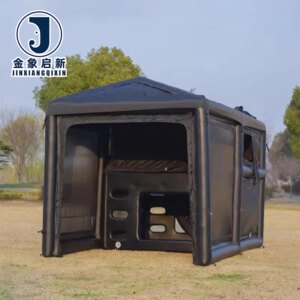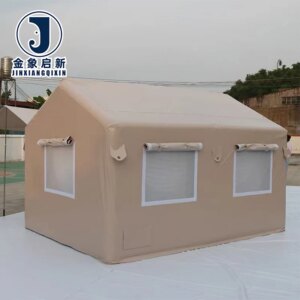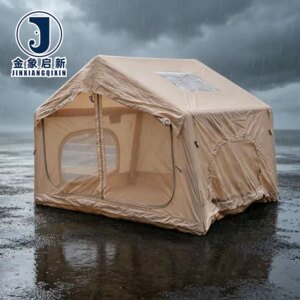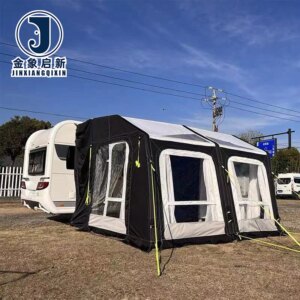
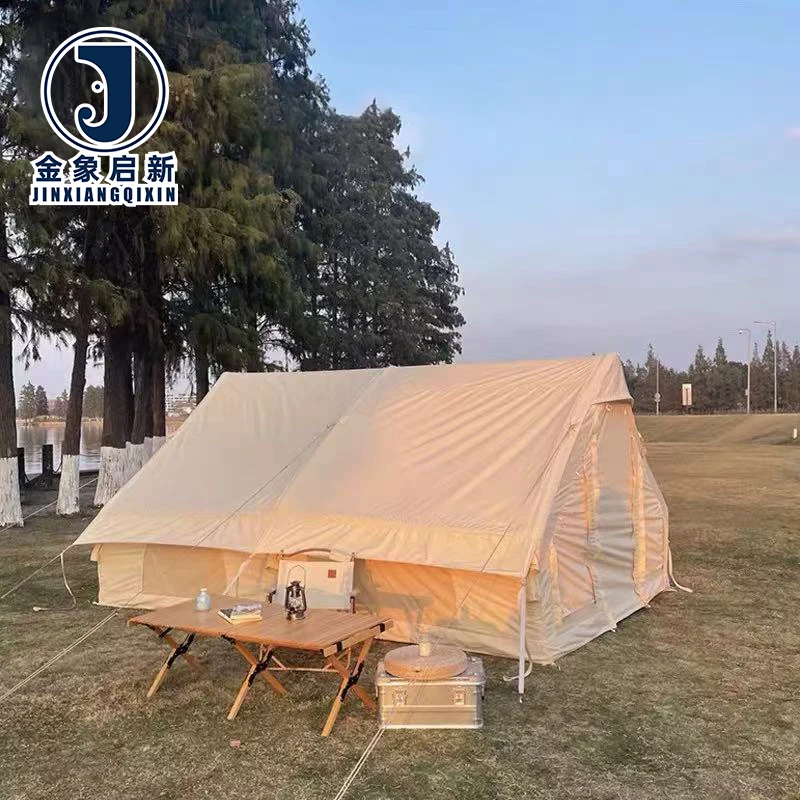
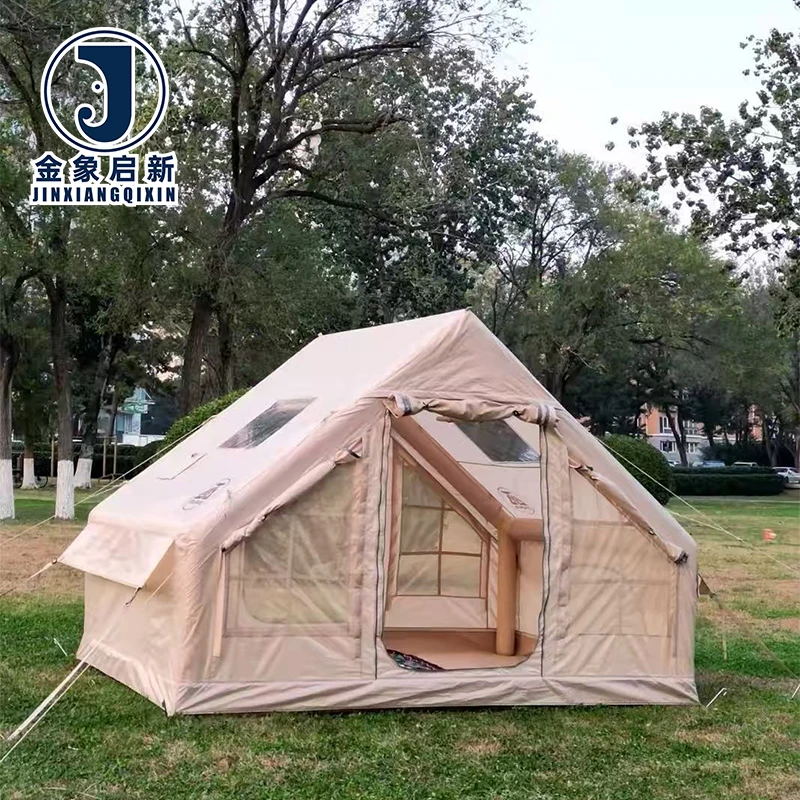
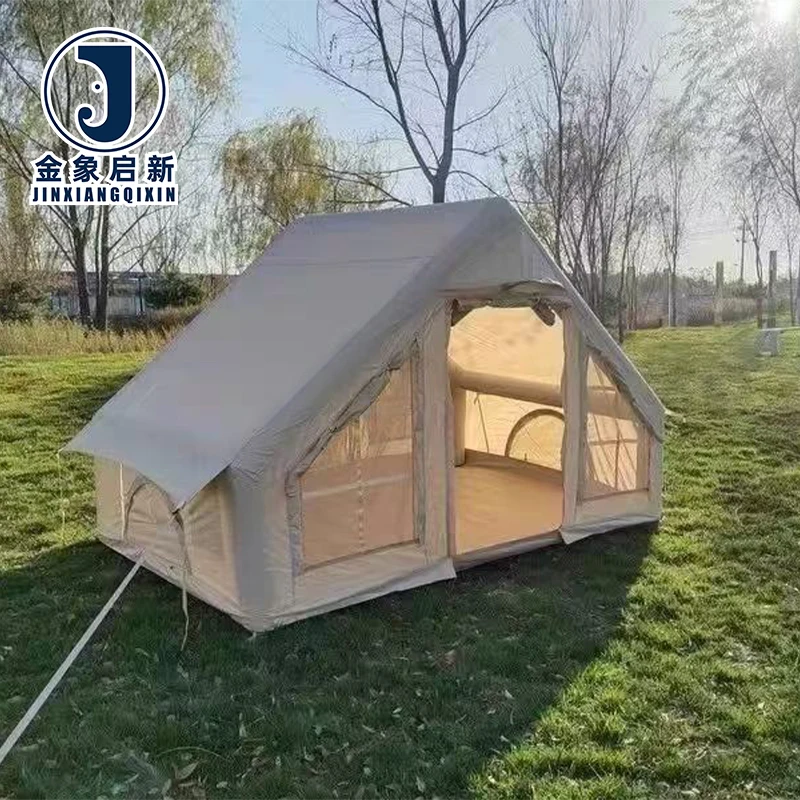
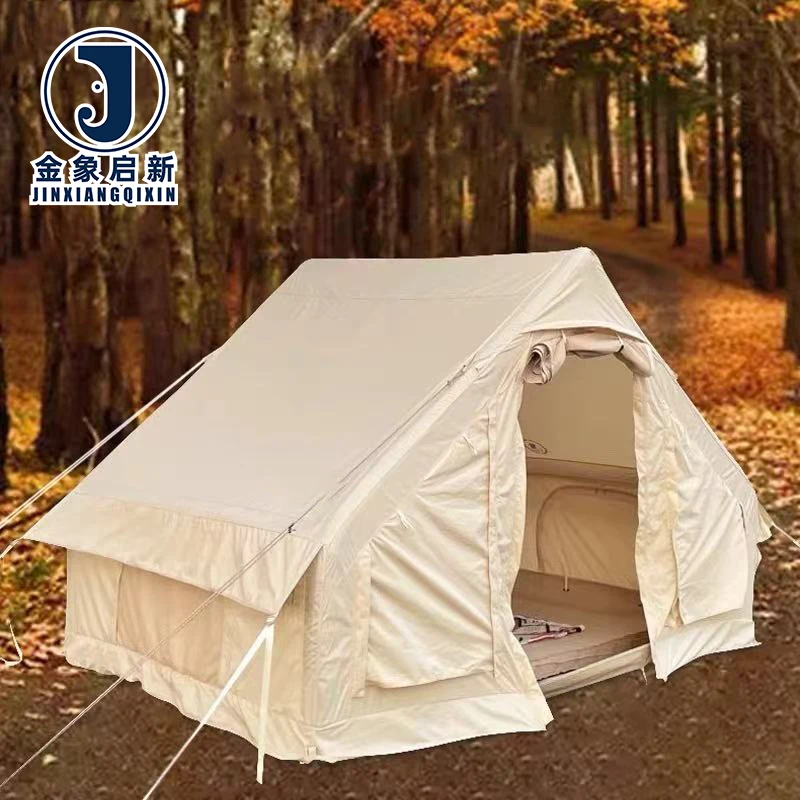
Description
Batch-Matched Roll Supply — every roll in your container verified against the order specification for GSM, colour and coating adhesion before dispatch, supporting consistent output across full production runs of inflatable tent structures.
Technical Specifications
| Parameter | Value |
|---|---|
| Product Type | Inflatable Tent |
| Core Material | UV Water-resistant PVC Fabric |
| Key Performance | Waterproof, UV-resistant, Tear-resistant |
| UV Protection Rating | 50+ (test basis not stated) |
| Waterproof Rating | Hydrostatic head ≥5000mm (test standard not stated) |
| Tear Strength | ≥300N warp and weft (test standard not stated) |
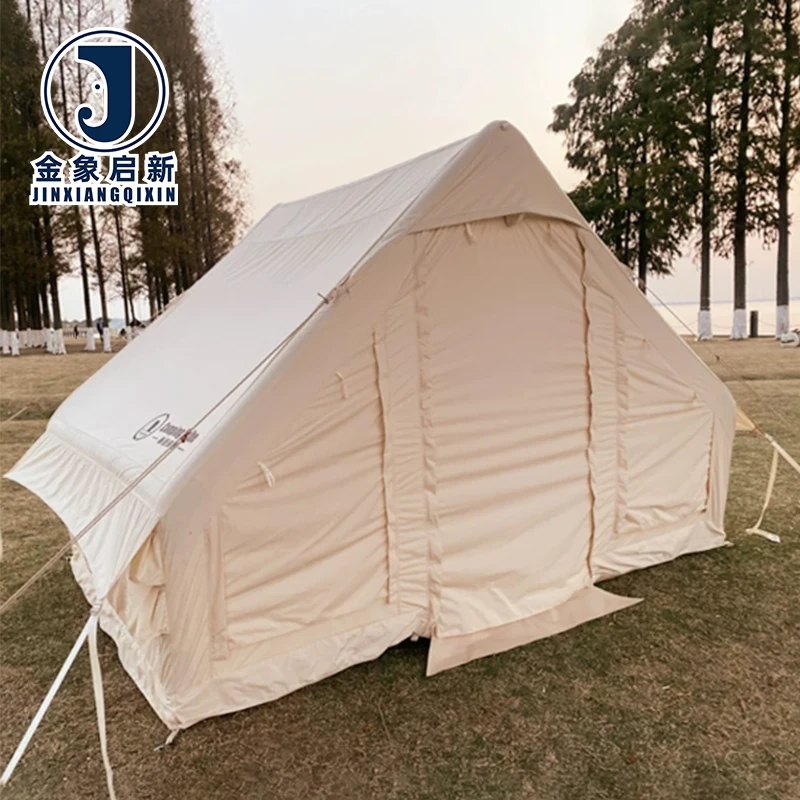
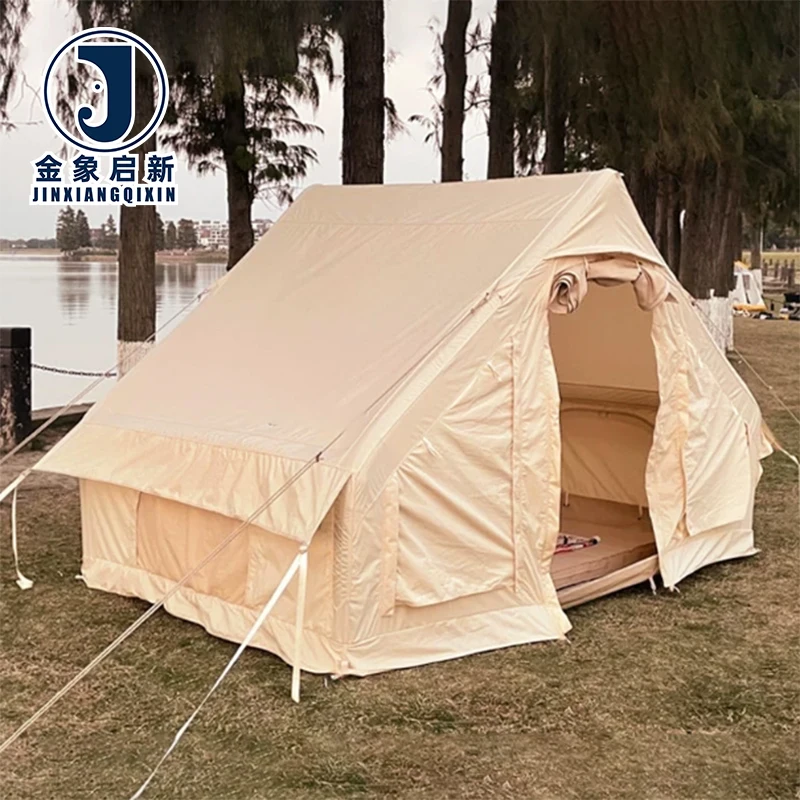
| Design | Single Layer, One Bedroom & One Living Room |
| Capacity | 4-Person |
| Season Suitability | Four-Season Use |
| Fabric Thickness Range (custom) | 0.3mm–0.8mm |
| Color Matching | Pantone system |
| Printing Option | Heat transfer printing |
| Customization | OEM & ODM (Material Selection, Product Design) |
| Quality Control | Full-process inspection with dedicated QA & QC staff |
| Standards | ISO 9001, ISO 14001, ISO 45001, CE |
Application Suitability
| Application | Exposure & Requirement |
|---|---|
| Commercial inflatable camping tent manufacturing | Repeated inflation cycles, outdoor weathering, UV exposure across four seasons |
| Outdoor equipment OEM product lines | Batch colour and weight consistency across multiple production runs |
| Expedition company supply | Tear resistance under wind load, waterproof performance in sustained rain |
| Disaster relief temporary shelters | Rapid deployment, structural integrity under continuous inflation pressure |
| Large-scale outdoor event structures | High-visibility branding, abrasion from ground contact and rigging hardware |
Why Colour Shifts Between Rolls Wreck a Tent Production Run
Roll-to-roll colour consistency is a coating process discipline, not a Pantone chart promise.
When a commercial tent maker cuts panels from three different rolls and stitches them into one inflatable structure, even a slight hue variation becomes visible across the seam lines. The buyer sees a defective product; the manufacturer absorbs the return cost. This Inflatable Tent Fabric roll stock is produced under controlled coating conditions with batch-level colour verification, so panels cut from consecutive rolls match once assembled and inflated. Batch inconsistency in coated fabric orders is one of the most common reasons for rejection at the buyer’s warehouse [NEED_CITE: roll-to-roll colour variance in coated PVC fabric production].
Roll Stock Graded for Inflatable Structure Demands
Inflatable tents place a specific set of stresses on coated fabric that differ from static tarpaulin applications. The material must hold air pressure across welded seams while remaining flexible enough to fold, pack and deploy repeatedly. This Inflatable Tent Fabric roll is supplied in thickness options from 0.3mm to 0.8mm, allowing manufacturers to select the grade that balances pack weight against structural rigidity for their target product line. Thinner gauges suit lightweight backpacking tents where carry weight matters; heavier gauges serve expedition and relief shelters where durability under prolonged inflation takes priority.
Coating Adhesion and the Weld Line Reality
The point where an inflatable tent fails first is almost always the welded seam, not the body of the fabric. Coating adhesion to the base fabric determines whether the weld holds under repeated inflation and deflation cycles. Poor adhesion causes delamination at the heat-welded joint long before the fabric itself reaches its tear limit. Our coating process is controlled to maintain consistent adhesion across the full roll width, giving fabricators a predictable weld window when setting temperature and dwell time on their hot-air or RF welding equipment. Consistent coating weight across the roll means the same weld settings work from the first panel to the last [NEED_CITE: coating adhesion test methods for PVC coated fabrics].
Reading the Specs Beyond the GSM Number
A single GSM figure tells you the weight of the fabric per square metre, but it does not tell you how that weight is distributed between the base fabric and the coating. Two rolls at the same GSM can perform very differently depending on the denier of the yarn and the density of the weave in the base cloth. A higher denier base with a lighter coating will resist tearing better than a low denier base buried under heavy coating to hit the same weight target. For inflatable tent panels, tear strength in both warp and weft directions matters because wind loads do not respect the machine direction of the fabric. The ≥300N tear reading on this material reflects the combined contribution of base cloth construction and coating formulation, not one or the other in isolation [NEED_CITE: relationship between base fabric denier and tear performance in coated textiles].
The Cost of Ordering on Weight Alone
Purchasing decisions based solely on quoted GSM lead to a predictable pattern: the roll arrives, the warehouse puts it on the scale, and the weight matches. But the tent built from that fabric fails at the weld within months because the coating formulation was adjusted downward to hit the weight target at lower cost. Weld failures, colour mismatches across rolls and UV degradation that appears in the first season are all downstream consequences of specifying on a single number. Buyers who verify coating adhesion, tear strength and colour consistency before committing to full container volumes avoid these field failures and the reputational damage that follows [NEED_CITE: field failure analysis of PVC coated fabric tent structures].
Why Manufacturers Source This Roll Stock Here
Nearly three decades of coated fabric production provide the process stability that inflatable tent manufacturers need when ordering by the container. Three full production lines and 36 sets of equipment support bulk volume without sacrificing the coating consistency that weld performance depends on. A 10-person R&D team handles material selection and sample development, producing trial rolls within days so fabricators can run weld tests before committing to a production order. Dedicated QA and QC staff inspect every roll before shipment, generating a batch-specific quality record that travels with your documentation package. Samples are developed against your target thickness, colour and print specification, not pulled from a generic stock shelf.
Documentation & Verification
- Material specification sheet confirming GSM, base fabric denier and coating weight per roll
- Batch-specific inspection report covering tear strength and coating adhesion metrics
- Roll packing list detailing container load by roll count and gross weight
- UV and waterproof test documentation where grade is applicable to the order
- Certificate of origin and customs documentation for international shipment
Fabrication, Handling & Storage
- Set hot-air weld temperature to match the PVC coating formulation — request our recommended weld parameter sheet for the selected thickness
- Store rolls upright on end caps to prevent flat-spot deformation on the outer wrap layers
- Allow cold-stored rolls to acclimatise before unrolling to avoid coating crack at low temperature
- Use heat transfer printing on the coated surface for branding, verifying adhesion on a test panel first
- Cut panels with the warp direction aligned to the primary inflation stress axis for optimal tear resistance
Before You Request a Quote
Tell us the inflation pressure your tent design operates at, the target pack weight for the finished product, and the annual roll volume you plan to source. If your market requires specific UV or fire performance grades, share the test standard your end customer references so we can match the formulation. Confirm whether you need rolls at a standard width or a custom slit width to reduce offcut waste on your cutting table.
Frequently Asked Questions
Q: How is GSM verified on arrival against what was quoted?
A: Every roll ships with a batch-specific inspection record showing the measured weight per square metre taken during production. We recommend buyers perform a scale check on a sample cut from the outer wrap of each roll upon receipt and compare it against the packing list. Any discrepancy outside the agreed tolerance is addressed through our after-sales process.
Q: How do you control colour consistency across rolls in a bulk order?
A: Colour is matched to the Pantone reference you provide, and each production batch is checked against the approved master sample before rolls are packed. Consecutive rolls from the same batch are loaded together in the container so that panels cut from adjacent rolls maintain visual uniformity across stitched or welded seams.
Q: What test basis supports the UV 50+ rating?
A: The UV protection rating is stated as 50+ based on our internal formulation specification. The specific test standard and exposure duration are confirmed at the quotation stage based on the destination market. We supply the applicable test documentation with the shipment when a certified grade is specified on the purchase order.
Q: What custom width and roll length options are available?
A: Rolls are supplied in custom widths to match your panel cutting layout, reducing offcut waste on the factory floor. Roll length is set to your order specification, balancing handling convenience against the number of splice points in your production run. Minimum order quantities and lead times for non-standard widths are confirmed at quotation.
Q: What is the MOQ and lead time for custom thickness and colour?
A: MOQ and lead time depend on the selected thickness within the 0.3mm to 0.8mm range and whether the colour is a standard stock shade or a custom Pantone match. Custom formulations and colours require a sample approval step before full production. Submit your target specifications and volume for a detailed quotation with scheduling.