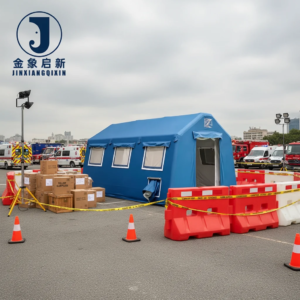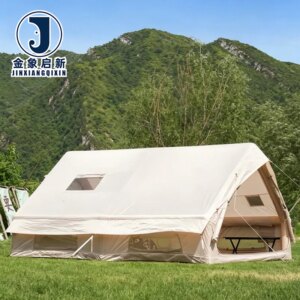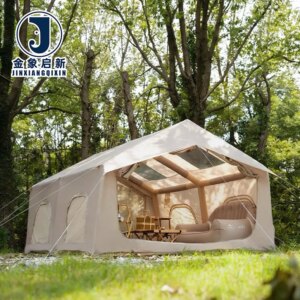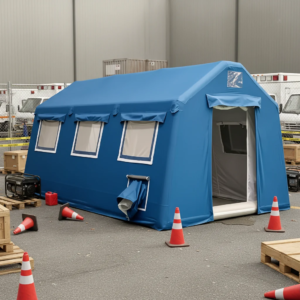
Description
Production Line Scale — 3 full production lines and 36 sets of professional equipment ensure container-quantity inflatable tent fabric orders ship with batch-to-batch consistency and on-time delivery.
Technical Specifications
| Parameter | Value |
|---|---|
| Product Type | Inflatable Tent |
| Core Material | PVC tarpaulin |
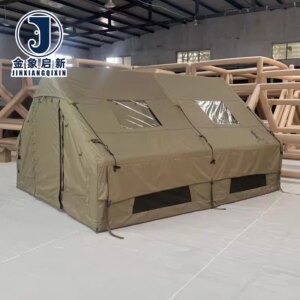
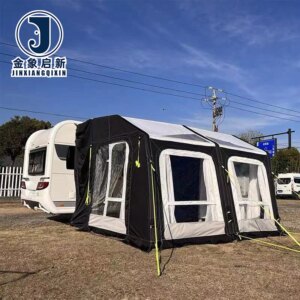
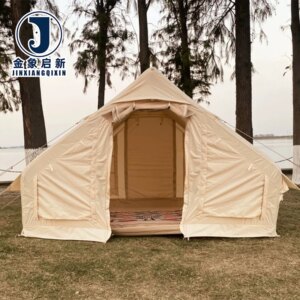
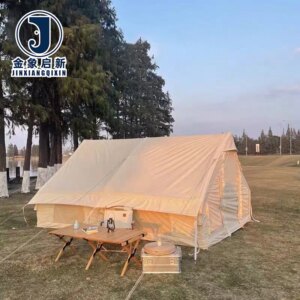
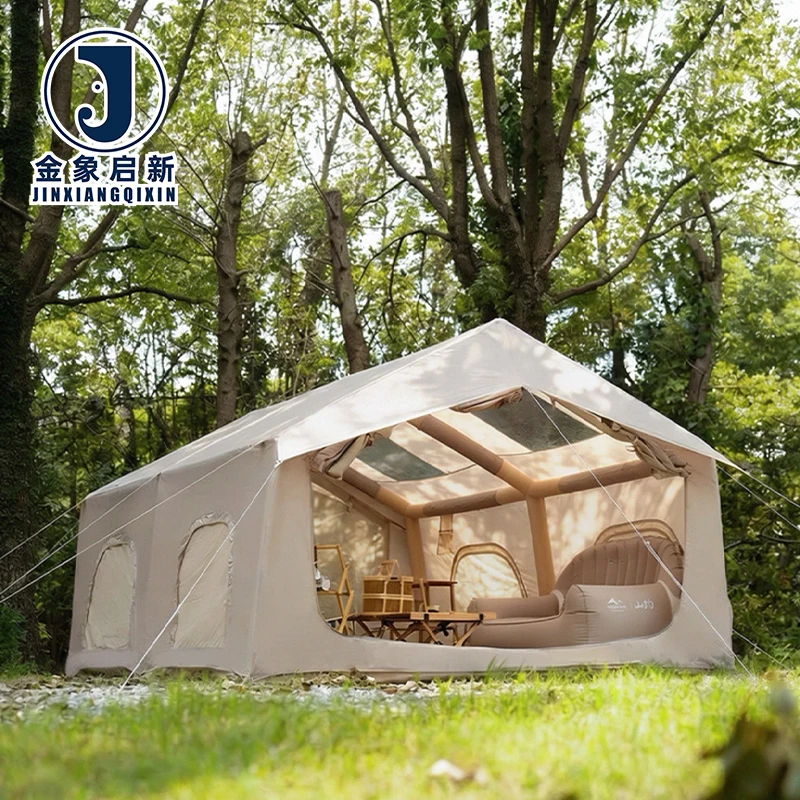
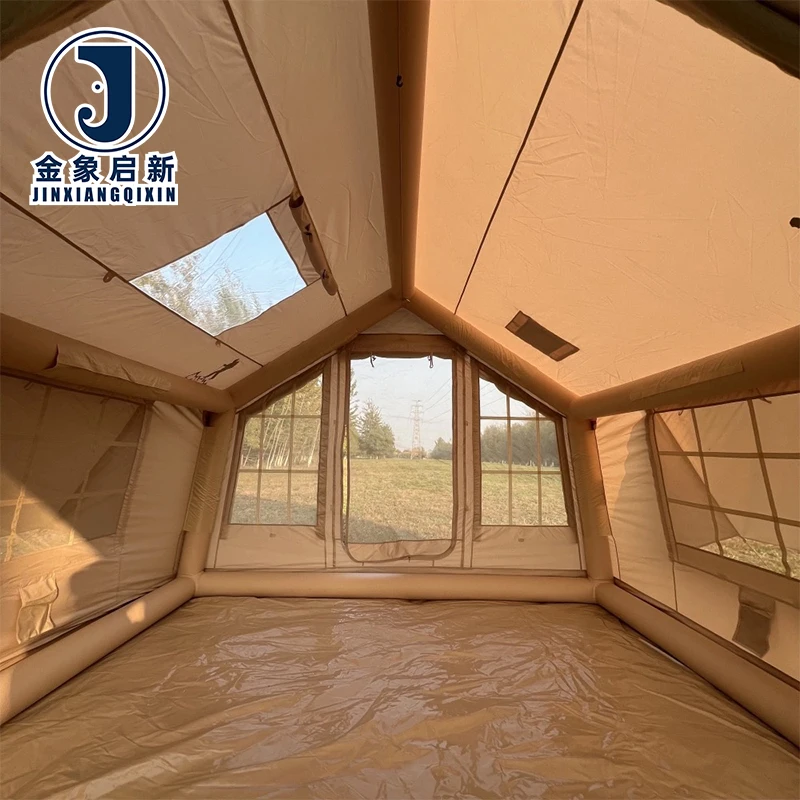
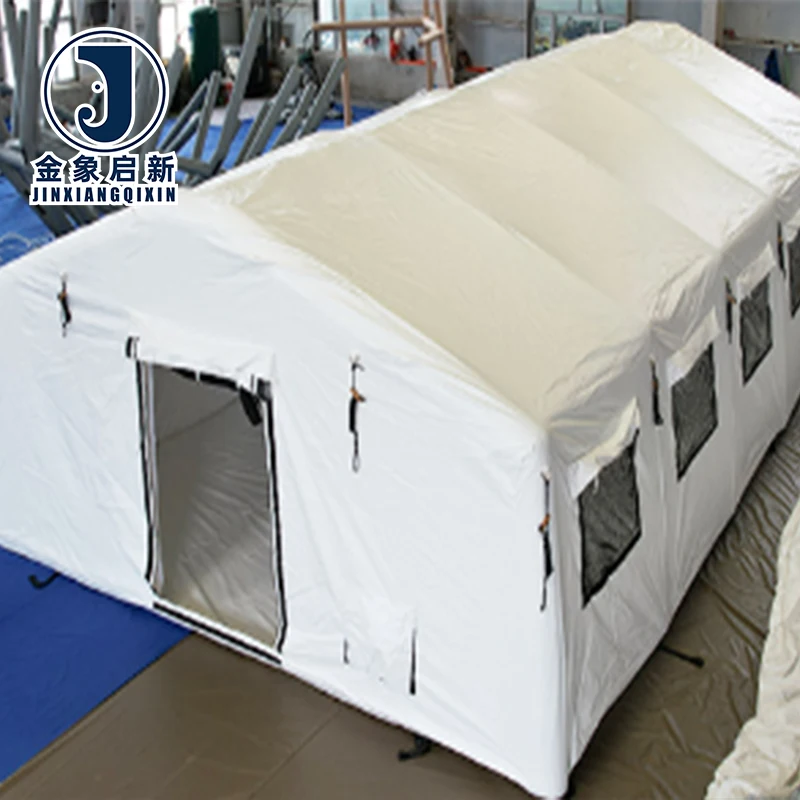
| Product Form | Inflatable structure with quick automatic opening |
| Waterproof Performance | Fully waterproof coated construction |
| UV Resistance | Available in UV-resistant grades — confirm the UV treatment level required for your market |
| Tear Resistance | Tear-resistant PVC construction |
| Design Classification | Four-season, single-layer inflatable structure |
| Customization | OEM & ODM: sample customization, pattern printing, custom sizing |
| Quality Control | Full-process inspection with dedicated QA & QC staff |
| Pre-shipment Testing | 24-hour inflation testing for structural integrity |
| Certifications | ISO 9001, ISO 14001, ISO 45001, CE |
| Sample Lead Time | 7–10 days |
| Bulk Lead Time | 15–30 days |
Application Suitability
| Application | Exposure & Requirement |
|---|---|
| Inflatable tent & awning manufacturing | Fabric cut and heat-welded into finished inflatable products requiring air-holding integrity and consistent GSM across roll lots |
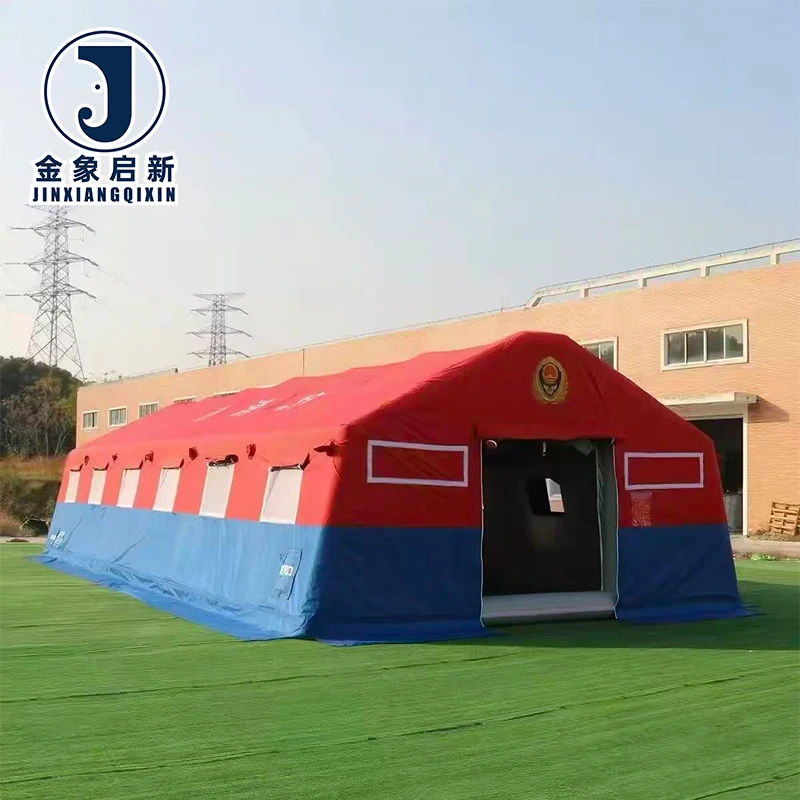
| Emergency disaster relief procurement | Large-volume orders demanding specification consistency across multiple deployments in diverse climatic zones |
| Outdoor event infrastructure | Membrane and inflatable structures exposed to sustained UV, rain, and wind requiring tear-resistant membrane fabric |
| Construction site temporary shelter | Rapid-deployment workspace needing waterproof, tear-resistant cover rated for four-season field conditions |
| Industrial equipment storage | Enclosed inflatable structures protecting assets from moisture ingress and particulate contamination |
Why Roll-to-Roll Consistency Matters More Than Stated GSM for Inflatable Tent Fabric
Colour shift between rolls is invisible on the cutting table — it becomes obvious only after panels from different rolls are welded side by side on the finished structure.
When inflatable tent fabric wholesale buyers place container-quantity orders, the stated GSM on the quotation rarely tells the whole story. A fabric that measures correctly on the first roll can drift lighter on subsequent rolls if coating weight is not controlled at every stage [NEED_CITE: coating weight variance across production batches per ISO 2286]. For inflatable structures, even slight variation in coating adhesion or plasticiser content affects heat-weld parameters, forcing fabricators to recalibrate machines mid-production run. Batch inconsistency in inflatable structure fabric bulk orders translates directly into rework costs and delayed project timelines.
Batch Uniformity Across the Cutting Floor
Inflatable tent fabric wholesale procurement for membrane structures demands that every roll in a shipment behaves identically under the heat-weld bar. When coating weight or plasticiser ratio shifts between rolls, the weld temperature that produced a clean seam on Roll 3 may burn through or under-fuse on Roll 7. Maintaining consistent dye lots and coating formulation across all rolls in a container order eliminates this variable from the fabricator’s workflow.
Coating Formulation and Air-Holding Integrity
The performance of inflatable structure fabric bulk supply depends on the relationship between coating adhesion and base fabric weave density. A PVC coating that penetrates the interstices of the base fabric creates a continuous air barrier, while a coating that sits only on the surface risks delamination at flex points [NEED_CITE: coating adhesion test methods per ISO 2411]. For inflatable tents that cycle through repeated inflation and deflation, this internal bond strength determines whether seams hold air or leak after a dozen deployment cycles.
Understanding What GSM Does and Does Not Tell You
A higher GSM figure does not automatically mean a stronger inflatable tent fabric. The base fabric denier, weave density, and the ratio of coating to yarn all contribute to tensile and tear behaviour. A 650 GSM fabric built on a low-denier, high-density base can outperform a 650 GSM fabric with heavy coating over a coarse weave. For inflatable structure applications, tear propagation resistance at welded seams is often more critical than raw tensile strength [NEED_CITE: tensile and tear test methods for coated fabrics per ISO 1421]. Specifying only by GSM leaves these critical variables uncontrolled.
The Hidden Cost of Specifying Fabric Without Verifying Coating Adhesion
Buyers who approve samples cut from a single roll often discover problems only when production begins on the full order. If the coating adhesion on later rolls falls below that of the approved sample, welded seams on finished inflatable structures can fail during the 24-hour inflation test — at the exact point where the load cycles most. This type of failure is rarely caught by a simple GSM check [NEED_CITE: seam peel strength failure modes in coated fabric structures]. It requires in-process peel testing at the coating stage and documented results before the rolls leave the factory.
Why Sourcing Inflatable Tent Fabric Here Reduces Procurement Risk
Roll-to-roll consistency is maintained through dedicated QA and QC inspection at every production stage, not just at final packing. Three full production lines equipped with 36 sets of professional equipment allow large inflatable tent fabric wholesale orders to be completed on a single production run, keeping dye lot and coating batch uniform throughout the shipment. A 10-technician R&D team handles custom pattern printing, sizing, and sample development so that OEM and ODM buyers can validate fabric behaviour before committing to bulk. Every roll ships with a batch reference on the packing list, enabling traceability from the container to individual roll. Pre-shipment 24-hour inflation testing on finished samples verifies that the fabric meets air-holding requirements. ISO 9001, ISO 14001, ISO 45001, and CE certifications underpin the quality management framework.
Documentation & Verification
- Material specification sheet stating base fabric, coating type, and colour reference per roll batch
- Roll packing list with batch traceability numbers linking each roll to its production run
- Pre-shipment inspection record confirming coating adhesion and visual consistency across the order
- UV and performance test reports provided where applicable to support stated treatment claims
- Certificate of origin and customs documentation package included with every container shipment
Fabrication, Handling & Storage
- Heat-weld temperature profiling recommended for each new roll batch to match PVC coating formulation variance
- Store rolls upright on pallets to prevent compression marks that distort fabric flatness on the cutting table
- Avoid dragging PVC tarpaulin rolls across concrete floors to protect coating surface from abrasion scoring
- Use pattern layouts that account for fabric width tolerance to maximise yield and minimise off-cuts per roll
- Clean welded seams with compatible PVC solvent before applying repair patches on finished inflatable structures
What to Include in Your Inflatable Fabric Enquiry
Specify the inflation cycle frequency and operating temperature range for your inflatable structures, along with the target market’s fire classification or compliance requirements. Confirm whether you need rolls in standard widths or custom widths to match your cutting table, and indicate your annual volume to align production scheduling. If pattern printing or OEM branding is required, provide artwork files early to allow sample development within the standard sample lead time.
Frequently Asked Questions
Q: How is roll-to-roll colour and GSM consistency maintained across a bulk inflatable fabric order?
A: Production scheduling groups a full container order onto a single coating run, keeping dye lot and plasticiser batch constant. QA staff sample-test coating weight and colour at intervals during the run, and every roll is logged with a batch reference for traceability before dispatch.
Q: What custom widths and container loading options are available for wholesale inflatable tent fabric orders?
A: Custom widths are produced to match buyer cutting-table requirements, subject to line capability. Roll lengths and packing formats are arranged to optimise container loading by roll count and weight, reducing per-unit freight cost on inflatable structure fabric bulk shipments.
Q: What is the MOQ for custom colour or printed inflatable tent fabric, and how are samples handled?
A: Minimums vary by colour and print complexity. Samples are developed within 7–10 days for buyer approval before bulk production proceeds. The R&D team works with OEM and ODM buyers to confirm pattern placement and colour matching on the sample roll.
Q: How does the fabric perform under heat-welding and high-frequency joining for inflatable structure seams?
A: PVC tarpaulin construction supports both hot-air welding and high-frequency joining. Consistent coating formulation across the roll lot ensures stable weld parameters. The 24-hour inflation test protocol on finished products validates seam integrity and air-holding performance.
Q: What documentation accompanies each bulk shipment of inflatable tent fabric?
A: Each shipment includes a material specification sheet, roll packing list with batch references, pre-shipment inspection record, applicable test reports, certificate of origin, and full customs documentation. These documents support quality verification at the buyer’s receiving dock.