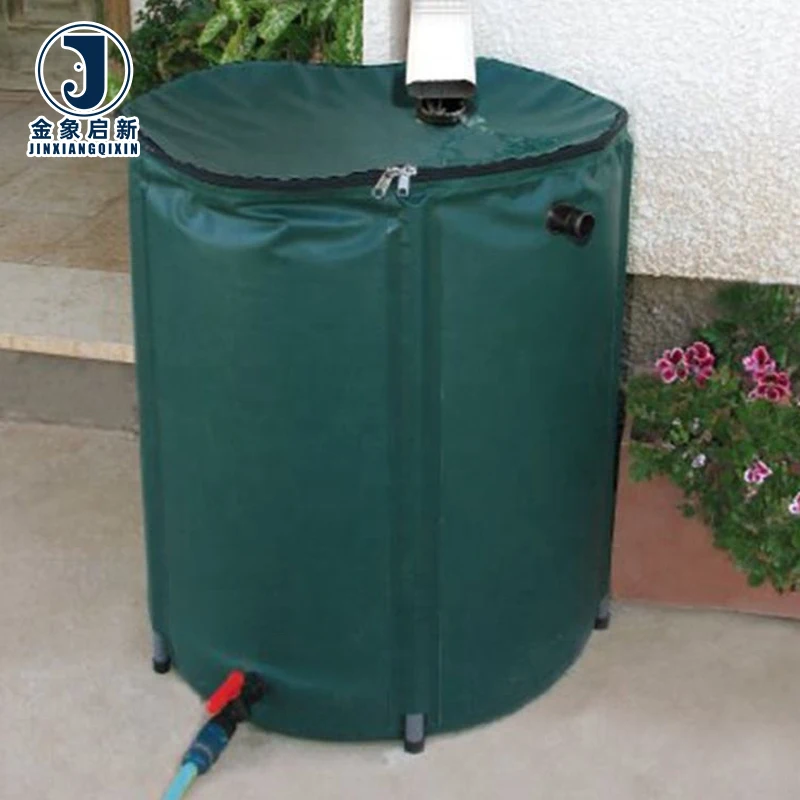
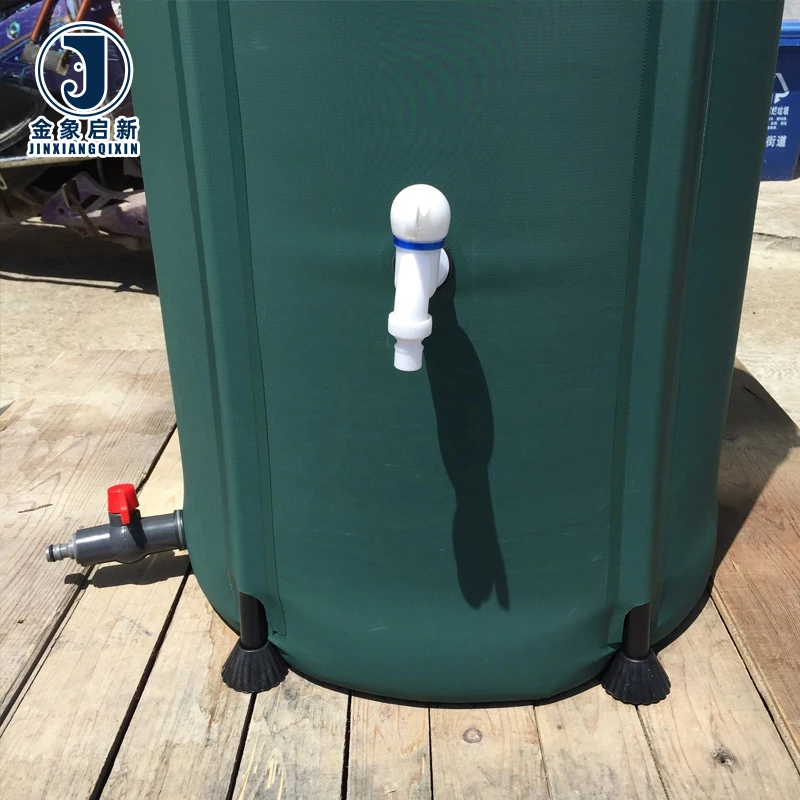
Description
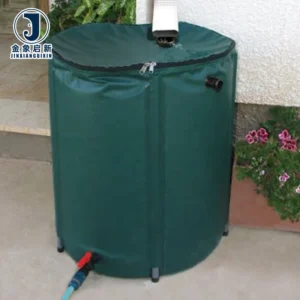
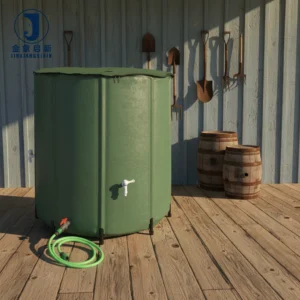
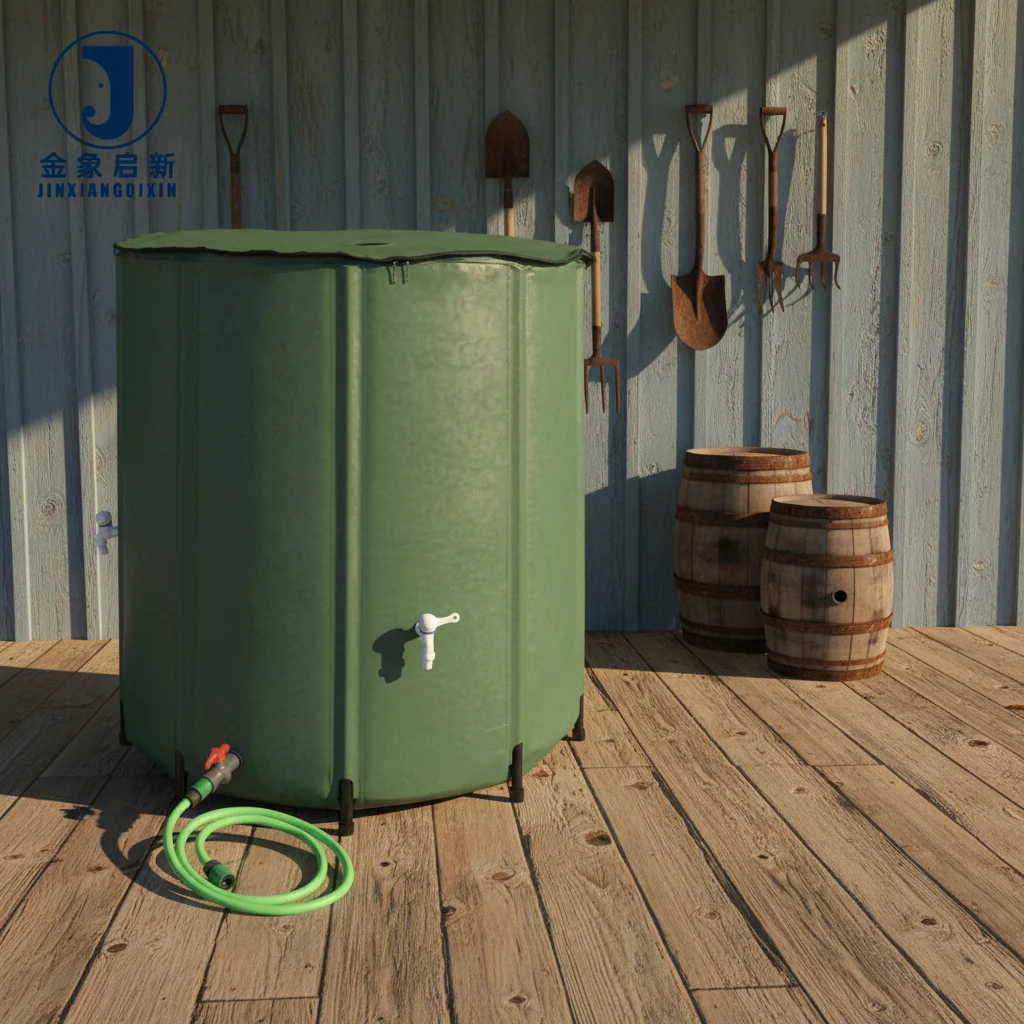
Bulk Roll Consistency — Three full production lines maintain coating weight and colour uniformity across every roll in a container load of collapsible water tanks.
Technical Specifications
| Parameter | Value |
|---|---|
| Product Type | Collapsible Rain Water Storage Tank |
| Base Fabric Denier | 500D / 1000D |
| Coating Material | PVC |
| Support Structure | PVC Support Rod |
| Capacity Options | 200L / 380L / 500L / 750L |
| Waterproof | Yes |
| Anti-Mildew | Yes |
| Anti-Bacteria | Yes |
| Shrink-Resistant | Yes |
| Abrasion-Resistant | Yes |
| Tear-Resistant | Yes |
| Windproof | Yes |
| Flame Retardant | Grade not stated — confirm required standard |
| UV Treatment | Test basis not stated — request report per batch |
| Anti-Static | Surface resistance not confirmed |
| Weight (GSM) | Not stated in source |
| Assembly State | Collapsible / Foldable |
Application Suitability
| Application | Exposure & Requirement |
|---|---|
| Garden rainwater collection | Seasonal outdoor exposure, UV and rainfall, frequent folding between seasons |
| Agricultural water storage | Continuous sun exposure, contact with organic runoff, abrasion from soil and gravel surfaces |
| Sustainable rainwater harvesting | Long-term standing water contact, algae and bacteria resistance, structural stability under full load |
| Industrial liquid containment | Heavier fill weights requiring high-denier base fabric, chemical exposure from site runoff, wind load on open sites |
Why Batch-to-Batch Consistency Matters More Than Quoted GSM
A tank that arrives lighter or a different shade than the sample breaks trust with the end user before they even fill it.
Purchasing PVC collapsible rain water tanks in volume exposes a common gap: the material weight and colour on the sample rarely match every unit in a full container. Distributors placing repeat orders often find that one batch feels noticeably thinner, or a green tank from lot A sits visibly off-tone next to a green tank from lot B on a retail shelf. This inconsistency forces buyers to inspect every shipment manually and field complaints from their own customers. [NEED_CITE: coating weight variance tolerance across production runs for PVC coated fabrics] The cost of a single rejected container far outweighs any per-unit saving from a less controlled supply chain.
Capacity Tiers From the Same Material Platform
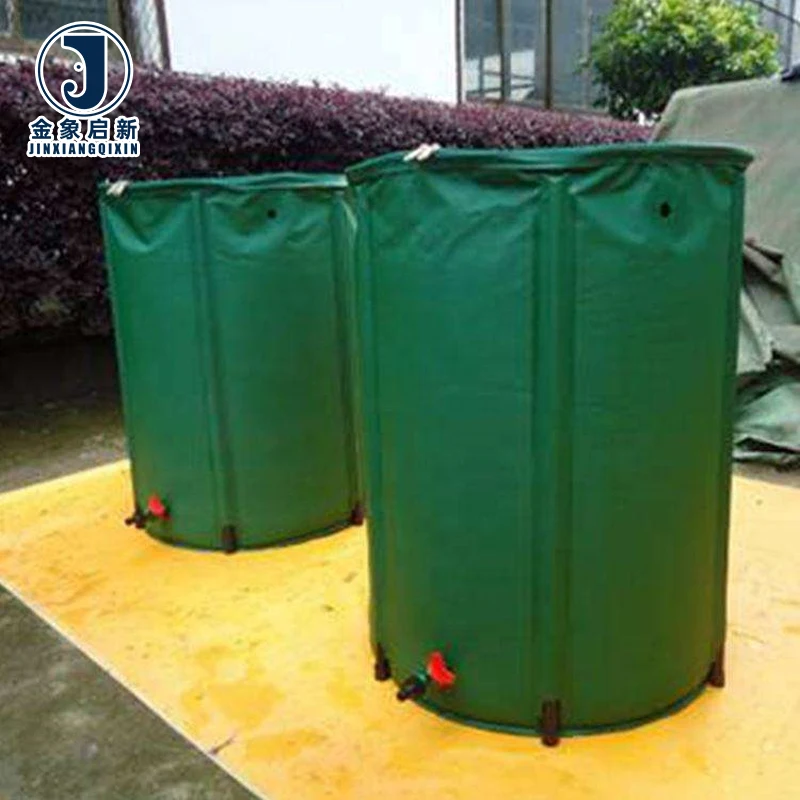
Stocking the full range of collapsible PVC rain water tanks — from 200L to 750L — from a single manufacturer means the base fabric, coating formulation and seam construction remain consistent across every capacity. Warehouse operators loading mixed containers avoid the risk of combining units made with different PVC grades or adhesive systems. Each tank in the shipment behaves predictably under the same storage and deployment conditions, simplifying both quality control and end-user support.
Roll-to-Roll Fabric Consistency for Volume Orders
When ordering PVC collapsible rain water tank wholesale quantities, the base fabric must hold the same denier, coating adhesion and surface treatment from the first roll to the last. Our production lines run continuous coating processes where PVC resin viscosity, oven temperature and line speed are monitored at every stage. This control ensures that 1000D panels cut from different rolls in the same production batch exhibit matching tensile behaviour and seam weld strength. [NEED_CITE: PVC coating adhesion test methods per ISO 2411 for coated fabrics]
How Denier Selection Affects Tank Performance
The choice between 500D and 1000D base fabric directly determines how the tank handles mechanical stress when filled. A 1000D weave uses thicker yarns in both warp and weft directions, creating a denser grid that resists tear propagation at the seam line where water pressure concentrates. The 500D option reduces unit weight and fold-down bulk, making it practical for garden-scale tanks at 200L and 380L where the hydrostatic load is lower. PVC coating weight then seals the weave and provides waterproofing, but it cannot compensate for an underspecified base fabric — the denier and weave density carry the structural load, while the coating protects it.
The Hidden Cost of Underspecified Material
A collapsible tank built on fabric that is lighter than agreed will show stress at the PVC support rod pockets first. As water fills the tank, the rods push outward against the fabric, and a base cloth with insufficient denier will stretch and eventually split at those contact points. Similarly, anti-mildew and anti-bacteria treatments that are not verified by batch testing may degrade within the first season, leaving stored water discoloured and the inner surface stained. [NEED_CITE: accelerated degradation of unverified biocide treatments in PVC water containment applications] Buyers who accept delivery without cross-checking material specification against the approved sample absorb these failures as returns and replacement shipments.
Why Sourcing Collapsible Tanks Here Reduces Your Risk
Our 10-person R&D team develops samples for each capacity variant within days, so you confirm the exact denier, colour and treatment before production begins. Three full production lines and 36 sets of professional equipment provide the throughput to fill container orders on schedule without subcontracting to external workshops. Dedicated QA/QC staff inspect every production stage — from base fabric incoming check to final seam weld test — with 100% pre-shipment inspection on finished tanks. Material specification sheets, batch test reports and pre-shipment inspection records ship with every order, giving you documented proof to present to your own compliance teams. Nearly 30 years of focused PVC coating experience means our process parameters are refined, not experimental.
Documentation & Verification
- Material specification sheet confirming 500D or 1000D denier and PVC coating type per tank capacity
- UV and flame retardant test reports issued against the specific production batch where applicable
- Pre-shipment inspection record covering seam weld integrity and support rod pocket reinforcement
- Roll packing list detailing unit count, capacity mix and gross weight per container
- Certificate of origin and customs documentation prepared for international shipment clearance
Fabrication, Handling & Storage
- Heat-weld seams at manufacturer-recommended temperature to maintain PVC coating adhesion at joint lines
- Store folded tanks flat and avoid stacking heavy items on top to prevent permanent crease marks in the PVC
- Deploy on level ground free of sharp stones to protect the abrasion-resistant base from puncture at contact points
- Clean inner surfaces with mild detergent only — harsh solvents may degrade the anti-bacteria treatment layer
- Inspect PVC support rod pockets periodically for stretching, especially on 500D tanks at 500L and 750L capacity
Preparing Your Inquiry
Specify your target capacity mix, preferred denier and the compliance standards required in your destination market. Confirm whether you need finished units or bulk fabric for local assembly, and indicate your annual volume to receive accurate lead time and container loading plans. Request a pre-production sample if colour matching or printed branding is part of your specification.
Frequently Asked Questions
Q: How is batch-to-batch colour and material consistency controlled across a container load?
A: Each production run uses PVC resin and pigment from the same batch, mixed under controlled ratios. Line operators check coating weight and colour against the approved sample at set intervals. A pre-shipment inspection record documents the verification, so every unit in your container matches the original sample specification.
Q: What is the MOQ for each capacity variant and can mixed capacities share one container?
A: Minimum order quantities apply per capacity, but different sizes from 200L to 750L can be combined in a single container. This allows distributors to stock a full product range without exceeding volume limits on any one model. Provide your target quantity breakdown for a detailed loading plan.
Q: How are units packed for export to prevent compression damage during sea freight?
A: Folded tanks are packed flat with the PVC support rods separated to avoid pressure points during transit. Cartons are stacked to distribute weight evenly, preventing permanent creasing or coating adhesion damage. A packing list with unit count and gross weight accompanies each shipment.
Q: Can the PVC mesh cloth denier be specified per capacity or is it fixed per model?
A: Both 500D and 1000D options are available, and denier can be assigned per capacity variant. Higher-capacity tanks at 500L and 750L typically benefit from 1000D for structural load support, while 200L and 380L units suit 500D. Confirm your preference during sample development.
Q: What documentation is provided for customs clearance and import compliance?
A: Each shipment includes a certificate of origin, commercial invoice, detailed packing list and material specification sheet. Where applicable, UV or flame retardant test reports for the specific batch are attached. All documents are prepared to support customs clearance in the destination country.