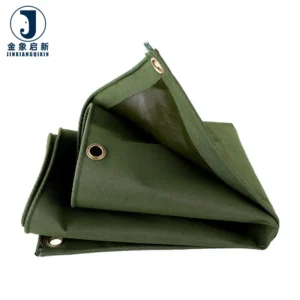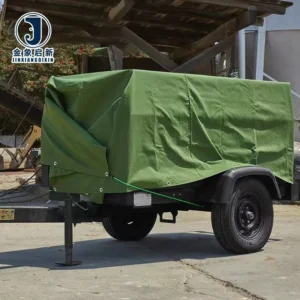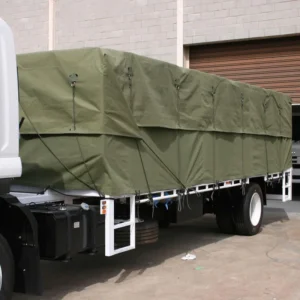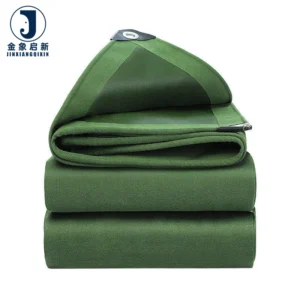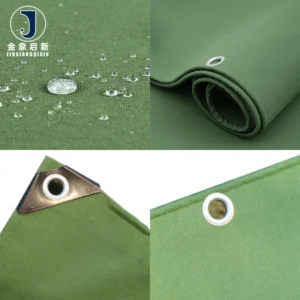


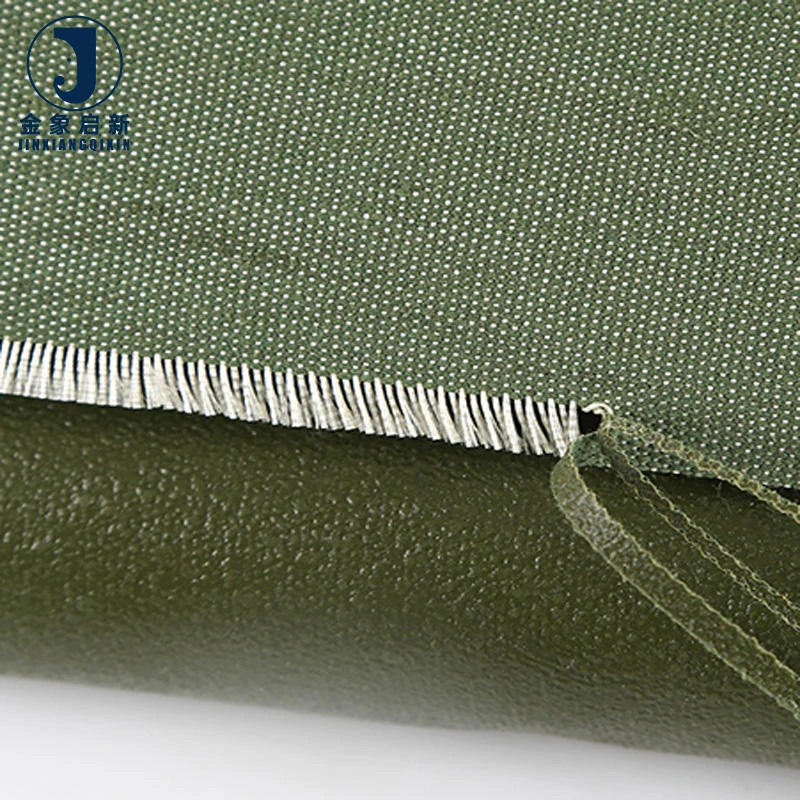
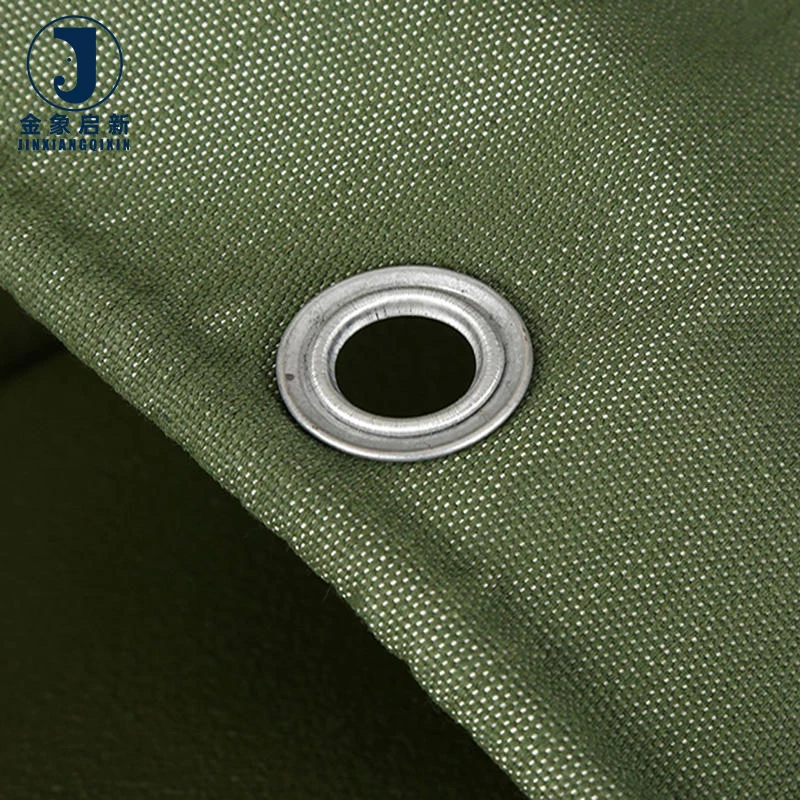
Description
Consistent Roll Weight — every roll of canvas tarpaulin is weighed and recorded against the stated 600 gsm before dispatch, eliminating the gap between quotation and arrival.
Technical Specifications
| Parameter | Value |
|---|---|
| Product Type | Canvas Tarpaulin |
| Base Fabric | Polyester cotton industrial textile with 8-12 strands of fine cotton yarn |
| Weight | 600 gsm |
| Thickness Options | 0.5 mm / 0.6 mm / 0.7 mm |
| Roll Width | 2 m |
| Roll Length | 100 m |
| Colour | Army Green Camouflage / Custom |
| Waterproof | Claimed (rating not stated in source) |
| UV Treatment | Claimed (test basis not stated in source) |
| Flame Retardant | Available in flame retardant grades — confirm the grade required for your market |
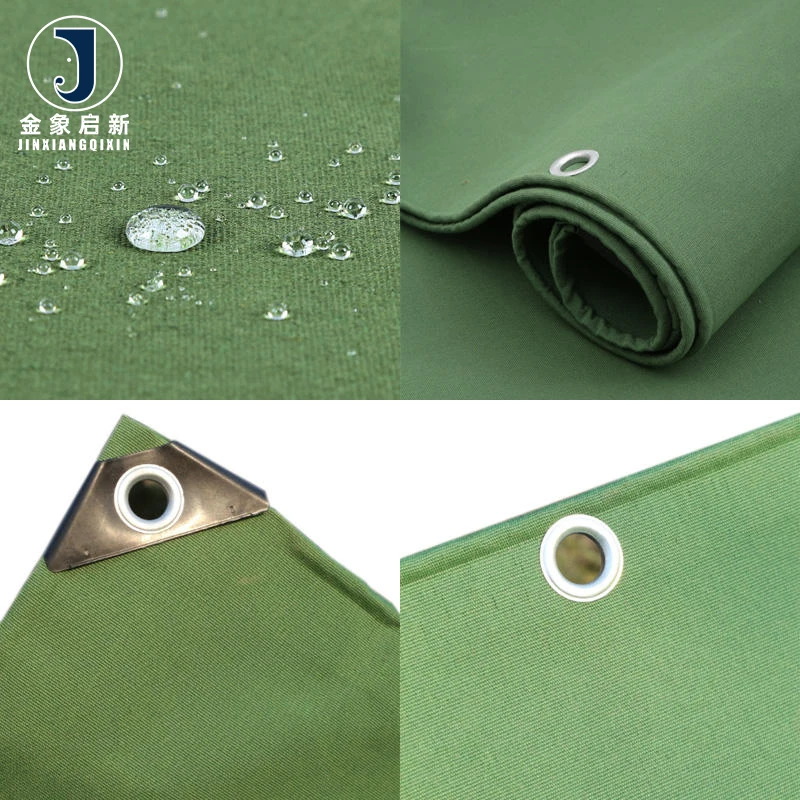
| Eyelet Spacing | Rust-proof aluminium eyelets every 1 m at corners and hem |
| Hem Reinforcement | Folded and sewn seams with poly-rope insertion |
| Standards | CE, ISO (specific standards not detailed) |
Application Suitability
| Application | Exposure & Requirement |
|---|---|
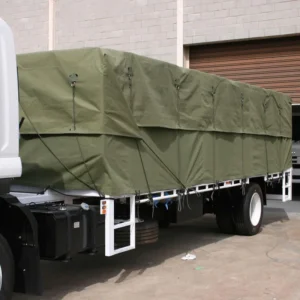
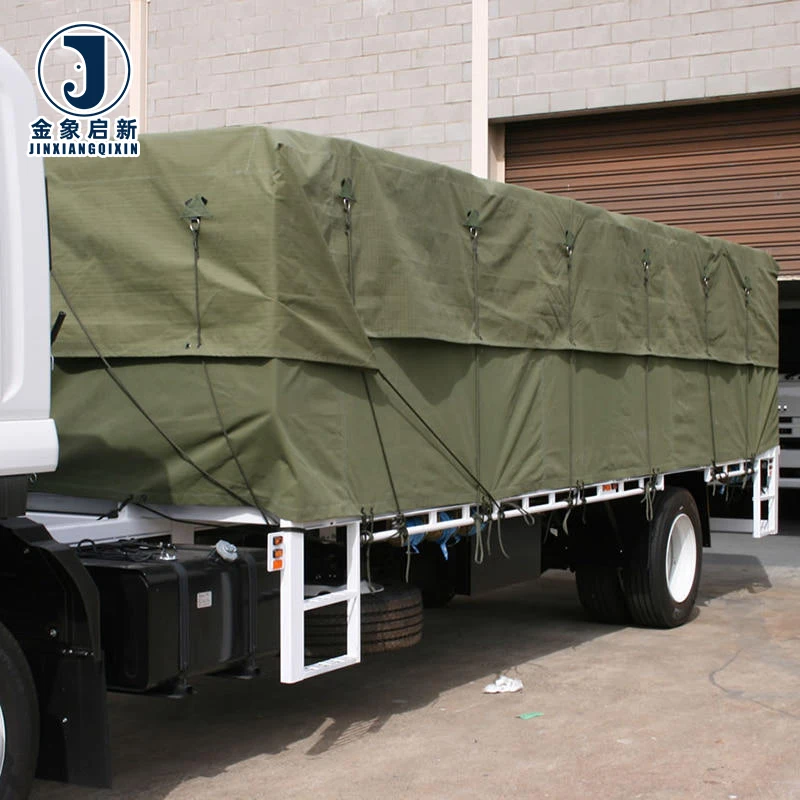
| Asphalt truck cover | High surface temperature from hot mix, constant road abrasion, repeated folding at load points |
| Construction site open-air cover | Wind-driven rain, UV exposure, contact with alkaline dust and mortar splatter |
| Tent and temporary structure fabric | Tension loading at ridge and pole points, weather cycling, cut-and-sew fabrication from roll stock |
| Industrial stockpile cover | Long-term outdoor storage, tie-down strap abrasion at edges, bulk material contact |
Why Batch Colour Shift Across Rolls Ruins a Fleet Installation
Matching colour across an entire container of canvas tarpaulin rolls requires single dye-lot discipline from the dye house through to packing.
Fleet operators ordering cut-to-fit truck covers often discover that two rolls installed side by side show a visible tone difference once fitted on adjacent trailers. The quotation may reference one Pantone or RAL code, but production runs spanning multiple batches drift outside the acceptable delta-E tolerance. This is not a cosmetic issue alone — a visible mismatch signals to the end customer that the fleet lacks uniformity and can trigger rejection of an entire installation. [NEED_CITE: colour fastness test methods for industrial textiles]
Roll-to-Roll Weight Consistency for Container-Volume Buyers
When you are loading a container by roll count, the 600 gsm specification must hold from the first roll to the last. Jinxiang runs dedicated QA at every production stage, recording net weight per roll against the specification before packing. This gives tarpaulin importers a reliable basis for container load planning — gross weight, roll count and cubic volume all stay within the tolerance needed for accurate freight costing.
Cut-to-Size Capability from Stock and Custom Runs
Canvas tarpaulin rolls in 2 m × 100 m format cover a wide range of truck and trailer dimensions with minimal waste. For buyers who need finished covers rather than raw roll stock, custom cut-to-size production is available with reinforced aluminium eyelets at 1 m intervals and poly-rope hem binding. The three thickness options — 0.5 mm, 0.6 mm and 0.7 mm — allow you to match material weight to the specific abrasion and flex demands of each application without over-specifying.
Understanding the Polyester-Cotton Base Fabric Construction
The 8-12 strand fine cotton yarn woven into a polyester cotton industrial base gives this canvas tarpaulin its balance of tensile strength and hand feel. Pure polyester offers higher tear resistance but less surface grip; pure cotton absorbs moisture and degrades faster outdoors. The blended construction retains the dimensional stability of polyester while the cotton component improves coating adhesion and reduces surface slip during handling. At 600 gsm, the base fabric density supports tie-down loads distributed across the aluminium eyelet pattern without localised tearing at the hem. [NEED_CITE: tensile and tear test methods for coated fabrics per ISO 1421]
The Hidden Cost of Ordering on GSM Alone
A quoted 600 gsm figure tells you nothing about base fabric denier, weave density or coating-to-substrate adhesion. A roll that meets weight by loading the coating heavily but uses a lighter base fabric will pass a scale check yet fail at the flex points where tie-down straps concentrate stress. Buyers who specify GSM without also requesting a base fabric denier and weave count leave a gap that can surface only after the cover has been in service for several months, by which time the supplier relationship and the project timeline are both compromised. [NEED_CITE: relationship between base fabric density and coated fabric tear propagation]
What Sets This Supply Chain Apart
Three full production lines with 36 sets of professional equipment support bulk roll output without the bottlenecks that delay custom-width orders. The 10-person R&D team handles sample development for non-standard colours and cut sizes within days rather than weeks. Dedicated QA/QC operates at every stage — not just final inspection — so coating weight, colour consistency and eyelet placement are verified in process. Pre-shipment inspection records travel with each consignment, giving the buyer a documented chain from production to port.
Documentation & Verification
- Material specification sheet stating 600 gsm weight, polyester-cotton base fabric and colour reference per roll
- Pre-shipment inspection record confirming GSM, thickness and aluminium eyelet placement against the purchase order
- Roll packing list with individual roll net weight and dimensions for container loading calculations
- CE and ISO certificates covering the production facility and quality management system
- Certificate of origin and customs documentation matched to each shipment
Fabrication, Handling & Storage
- Sew seams with UV-stable polyester thread at 4-5 stitches per cm to match the 600 gsm fabric density
- Position aluminium eyelets through the poly-rope reinforced hem to distribute tie-down strap tension across the full edge
- Store rolls horizontally on pallets in a dry, shaded area to prevent permanent creasing of the 0.5-0.7 mm canvas
- Allow rolls to acclimatise for several hours before unrolling in cold conditions to avoid stiffness-related cracking
- Use neutral pH cleaners on the polyester-cotton surface; avoid solvents that degrade the coating bond
What to Include in Your Enquiry
Specify the truck or trailer model, required cover dimensions, and whether you need roll stock or finished cut-to-size covers. Confirm the thickness option — 0.5 mm, 0.6 mm or 0.7 mm — that matches your abrasion and flex requirements. State your annual volume and target container load to receive accurate roll count and freight weight data.
Frequently Asked Questions
Q: How is GSM verified roll by roll and how can I recheck on arrival?
A: Each 600 gsm canvas tarpaulin roll is weighed during pre-shipment inspection and recorded on the packing list. On arrival, you can cut a measured sample from the roll end and weigh it on a calibrated scale. Any deviation outside the agreed tolerance is flagged before dispatch, not after.
Q: How do you control colour consistency across rolls in the same container?
A: We assign a single dye lot per purchase order so all rolls in one shipment come from the same dyeing batch. This eliminates visible colour shift when covers are installed side by side on adjacent trucks or across a single job site.
Q: What roll width and length options are available, and what is the minimum order?
A: Standard roll format is 2 m × 100 m. Custom widths and cut-to-size finished covers are available. Minimum order depends on whether you need a standard colour from inventory or a custom dye lot — provide your target volume and we confirm the threshold per colour.
Q: How are eyelets and hem reinforcements specified for truck cover tie-down loads?
A: Rust-proof aluminium eyelets are set every 1 m along corners and hem, with poly-rope inserted inside folded and sewn seams. This distributes tie-down strap tension across the hem line rather than concentrating load at individual eyelet points, reducing tear-out risk under road vibration.
Q: What container loading data do you provide for freight planning?
A: Each shipment includes a roll packing list showing roll count, individual net weight, gross weight and cubic volume. This lets importers plan container loading by roll count and calculate freight cost per roll before the goods leave the factory.