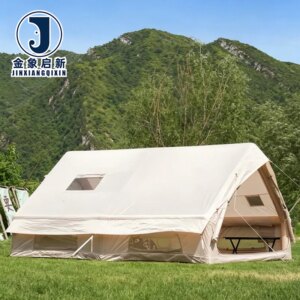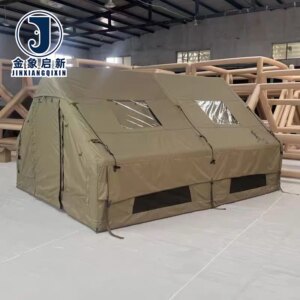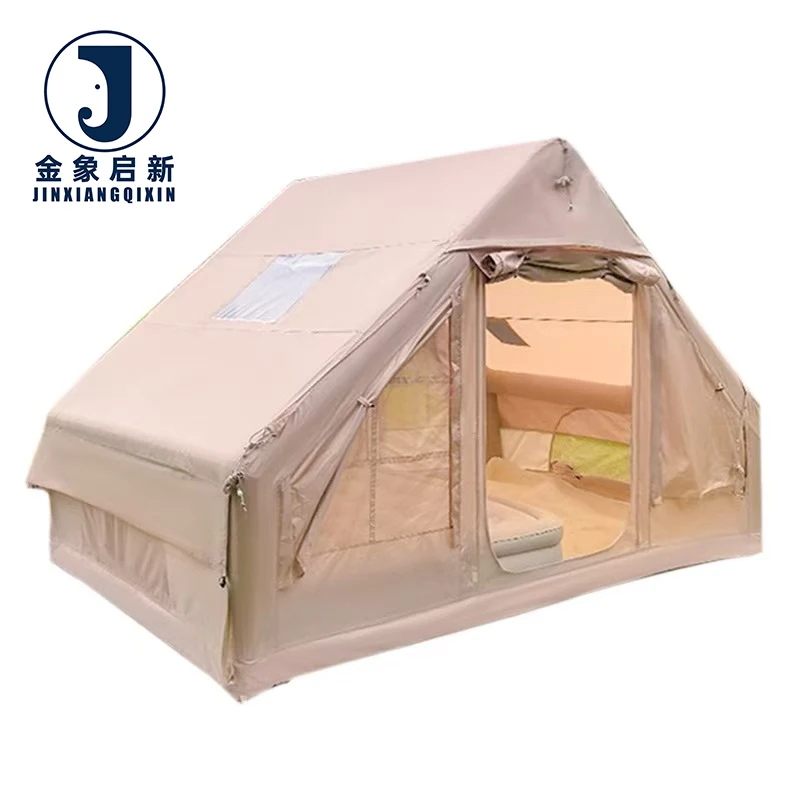
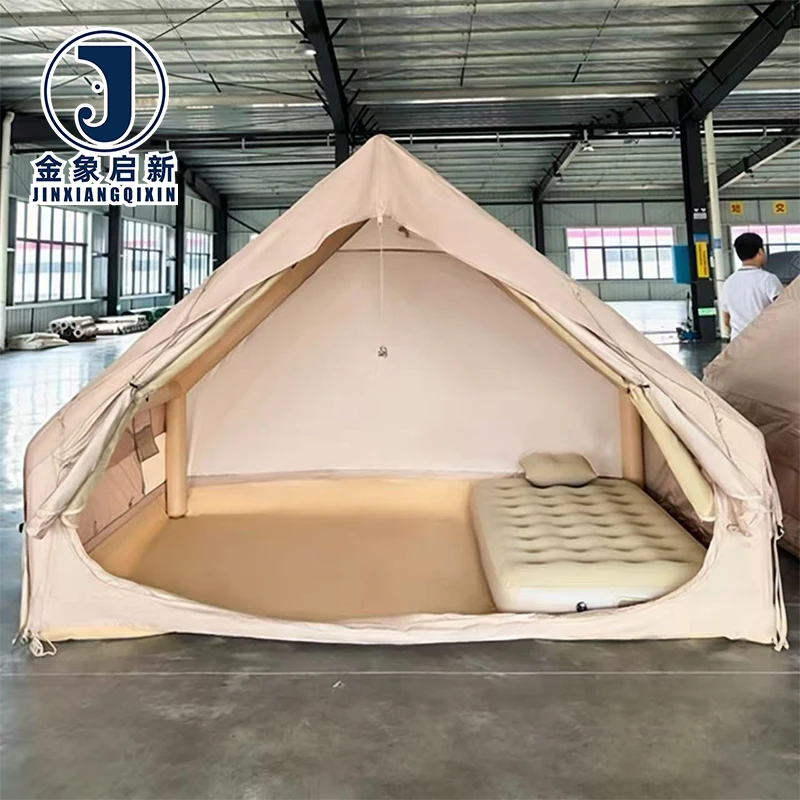
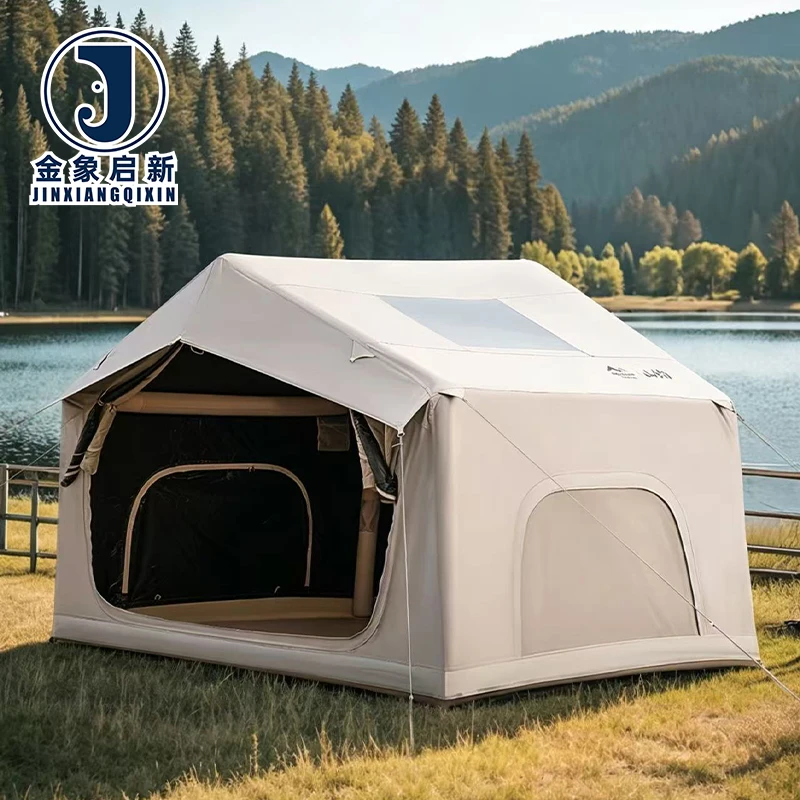
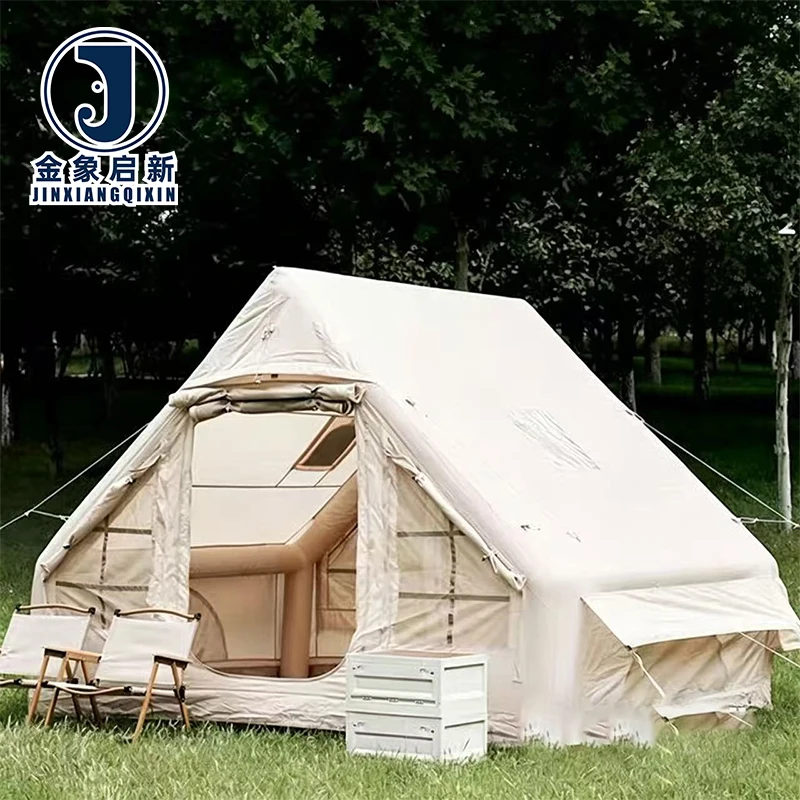
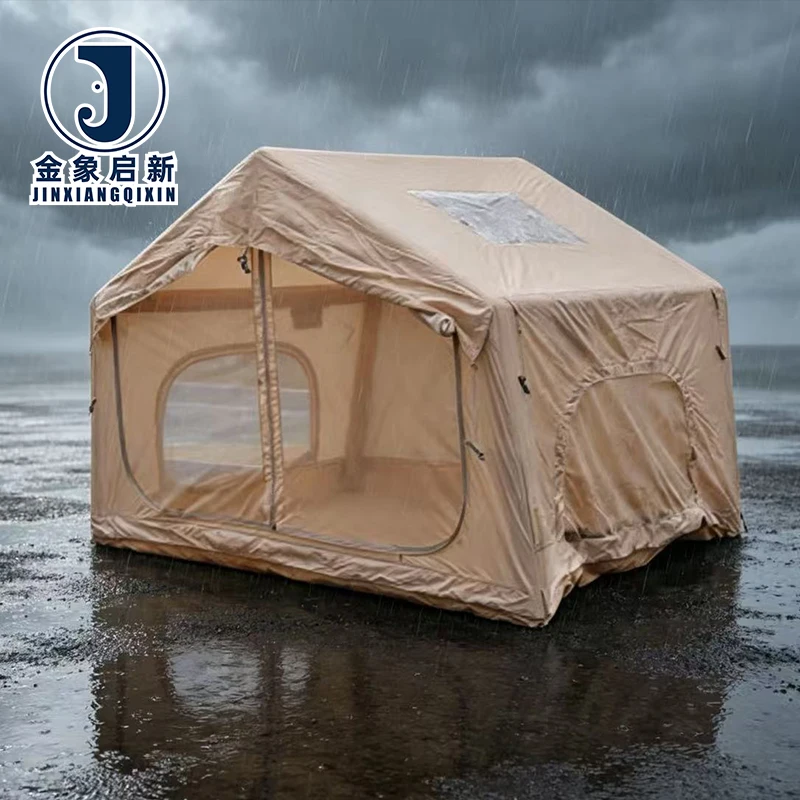
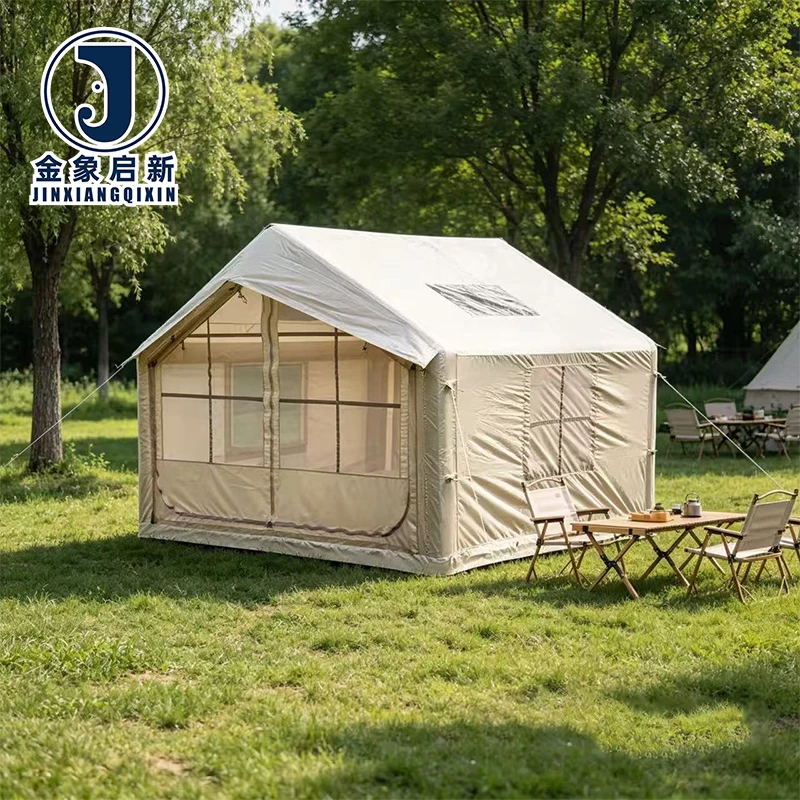
Description
Bulk PVC-Coated Roll Stock for Inflatable Camping Tents — 3 full production lines and 36 sets of processing equipment deliver batch-to-batch consistency in GSM, colour, and coating adhesion across every roll shipped.
Technical Specifications
| Parameter | Value |
|---|---|
| Product Type | Inflatable Camping Tent |
| Core Material | PVC Tarpaulin |
| Key Performance | Waterproof, UV-resistant (test basis not stated in source), Tear-resistant, Fire-retardant (grade not stated in source), Anti-static (standard not stated in source) |
| Capacity | 1-2 Person |
| Construction | Single layer |
| Opening Mechanism | Quick Automatic Opening |
| Season Rating | Four-season |
| Customization | OEM & ODM — sample customization, pattern printing |
| Certifications | ISO9001, ISO14001, ISO45001, CE |
Application Suitability
| Application | Exposure & Requirement |
|---|---|
| Commercial expedition base camps | Extended outdoor exposure, wind loading, repeated inflation cycles, rapid deployment needs |
| Industrial field operation shelters | Remote-site logistics, equipment protection, compliance with site fire-safety protocols |
| Outdoor equipment storage for logistics fleets | Constant UV and moisture exposure, abrasion from loading and unloading, seasonal temperature swings |
| Auxiliary facilities for outdoor trip operators | High guest turnover, cleaning chemical exposure, quick setup and teardown between events |
Why Batch Consistency Matters More Than Quoted GSM for Inflatable Camping Tent Fabric
A roll that measures correct on the scale can still fail at the seam if coating adhesion varies from one batch to the next.
When procurement teams source inflatable tent fabric in volume, the quotation states a target weight and treatment package, yet arrival inspections often reveal material that is lighter than agreed or shows colour shift between rolls. This inconsistency forces fabricators to re-cut panels, re-weld seams, and absorb waste — costs that never appear on the original purchase order. Inflation chambers are especially sensitive because uneven coating thickness creates weak points that leak under sustained internal pressure [NEED_CITE: tensile and tear test methods for coated fabrics per ISO 1421]. Sourcing an inflatable camping tent manufacturer that controls coating weight in-line, rather than relying on post-production spot checks, eliminates the most common source of batch rejection.
Roll-to-Roll Colour and Thickness Uniformity Across Bulk Orders
Colour variation between rolls becomes immediately visible once tent panels are erected side by side at a base camp or commercial event site. Our in-process QA checkpoints monitor pigment dispersion and coating thickness at every stage of the production run, so the inflatable camping tent manufacturer maintains colour uniformity within a defined tolerance band. Thickness consistency also ensures that welding parameters set for the first roll remain valid for subsequent rolls, preventing seam failures that would otherwise go undetected until inflation testing.
Coating Adhesion and Weld Integrity for Inflation Chambers
Inflatable tent structures depend on airtight seams that withstand repeated pressurisation cycles. If the coating separates from the base fabric at the weld line, the chamber loses pressure and the structure sags — often within the first field deployment. Our coating process controls adhesion strength between the PVC layer and the base fabric, verified through peel-strength testing at intervals across each roll. Fabricators ordering from this inflatable camping tent manufacturer can expect predictable hot-air weld behaviour without re-calibrating equipment between batches.
Understanding the Specification Stack Behind Inflatable Tent Fabric
Waterproof performance in PVC tarpaulin relies on continuous coating coverage across the entire fabric surface, with no pinholes or thin spots that allow moisture ingress during prolonged rain. Tear resistance is governed by the base fabric denier and weave density working together; a higher denier yarn arrests tear propagation, while coating weight adds mass but does not directly improve tear strength on its own. Fire-retardant and anti-static treatments are available in various grades — confirm the grade required for your target market, as standards differ between regions [NEED_CITE: DIN 4102 fire classification for building materials]. UV-resistant treatment is offered to extend service life under direct sunlight; request the specific test basis when placing an order. Single-layer construction reduces overall weight, which is an advantage for rapid-inflation camping applications where portability matters.
The Hidden Cost of Overlooking Weld-Line Performance
Buyers who focus solely on face weight and tensile figures often miss the point where inflatable tent structures actually fail: the welded seam. When coating adhesion is marginal, the weld line delaminates under the flexing loads caused by wind gusts or internal pressure changes, and the repair cost in the field far exceeds the price difference between a controlled and an uncontrolled production run. Batch inspection that covers only GSM and colour, without verifying peel strength and weld compatibility, leaves this failure mode unaddressed until the tent is already deployed at a remote site [NEED_CITE: peel strength testing standards for coated fabrics]. Fabricators who have experienced premature weld failure will recognise the pattern — the fabric itself holds, but the seam does not.
Why Volume Buyers Source Inflatable Tent Fabric Here
Three full production lines running in parallel mean that large container orders can be scheduled without stacking behind smaller sample runs. Thirty-six sets of professional processing equipment handle coating, laminating, slitting, and winding in-house, keeping lead times predictable for bulk inflatable camping tent fabric orders. A dedicated ten-technician R&D team supports custom colour matching, pattern printing, and sample development within days rather than weeks. Every roll undergoes full-process quality inspection with dedicated QA and QC staff before dispatch, so batch inspection reports reflect actual production data rather than spot-check estimates. ISO9001, ISO14001, ISO45001, and CE certifications are maintained and documentation is supplied with each shipment.
Documentation & Verification
- Material specification sheet confirming PVC base fabric type, coating formulation, and treatment options per roll
- Test report for UV and flame-retardant grades where applicable, matched to order reference
- ISO and CE certificates included with shipping documentation package
- Pre-shipment inspection record covering GSM verification, colour consistency, and coating adhesion
- Roll packing list with individual roll weights and dimensions for container loading reconciliation
- Certificate of origin and customs support documentation for cross-border shipment clearance
Fabrication, Handling & Storage
- Hot-air welding temperature and speed should be calibrated against the PVC coating formulation before production runs begin
- Store rolls vertically on pallets in a dry, shaded warehouse to prevent flat-spot deformation of the coated surface
- Avoid folding single-layer PVC tarpaulin panels sharply; roll loosely for transport to prevent permanent crease marks
- Use mild, non-solvent cleaning agents on the PVC surface to preserve coating integrity and treatment effectiveness
- Inspect weld seams after first inflation cycle to identify any adhesion issues early in the fabrication sequence
What We Need From Your Enquiry
To provide an accurate specification and lead time, share your target roll width, annual volume estimate, and whether you require finished tent panels or raw roll stock only. Specify any fire-retardant or anti-static grade your destination market mandates so we can confirm test availability. If custom colour or pattern printing is needed, send reference samples or Pantone codes for colour matching. Request a pre-production sample to validate material performance before committing to full container quantities.
Frequently Asked Questions
Q: What fire-retardant and anti-static certifications are provided with the inflatable camping tent fabric?
A: Fire-retardant and anti-static treatments are available in multiple grades. The specific certification supplied depends on the grade selected for your order. We provide test reports matched to the treatment applied, so confirm your destination market’s standard — such as DIN 4102 or NFPA 701 — when requesting a quotation. Our team will match the appropriate grade and include documentation with each shipment.
Q: Can I order custom sizes or branded printing on the tent fabric?
A: Yes. OEM and ODM services include custom dimensions, pattern printing, and colour matching. Our ten-technician R&D team develops pre-production samples within days so you can approve material, colour, and print quality before bulk manufacturing begins. Specify your branding requirements and target roll width when submitting your enquiry.
Q: How do you ensure colour and thickness consistency across multiple rolls?
A: Dedicated QA and QC staff monitor pigment dispersion and coating thickness at in-process checkpoints throughout every production run. Each roll is measured against the stated specification before dispatch. Batch inspection reports accompany shipments, providing traceable data on GSM, colour, and coating adhesion for your quality records.
Q: What is the MOQ and lead time for bulk orders of inflatable camping tent fabric?
A: Minimum order quantities and lead times depend on roll width, colour, and treatment requirements. Standard stock grades typically carry lower minimums, while custom colours and printed patterns require longer scheduling. Submit your volume estimate and specification preferences, and we will respond with a detailed quotation including realistic delivery timelines.
Q: What documentation is included with each shipment for compliance verification?
A: Every shipment includes a material specification sheet, batch inspection report, roll packing list, certificate of origin, and applicable test reports for treatments ordered. ISO9001, ISO14001, ISO45001, and CE certificates are provided upon request. This documentation package supports customs clearance and on-site compliance audits at your destination.