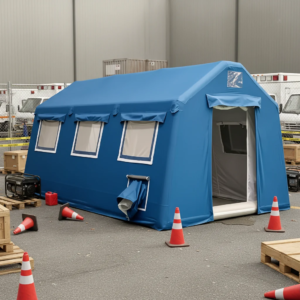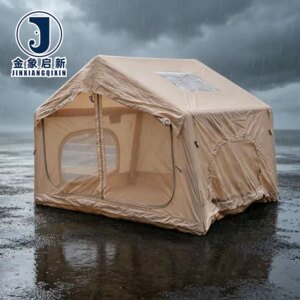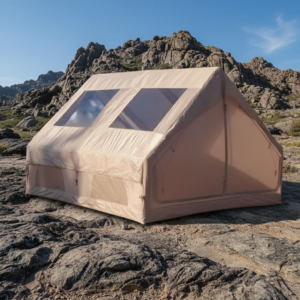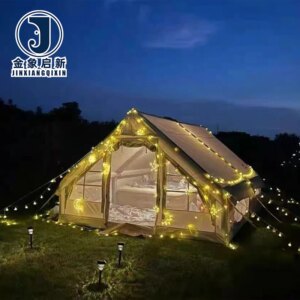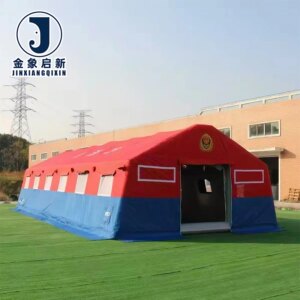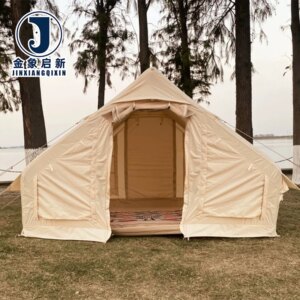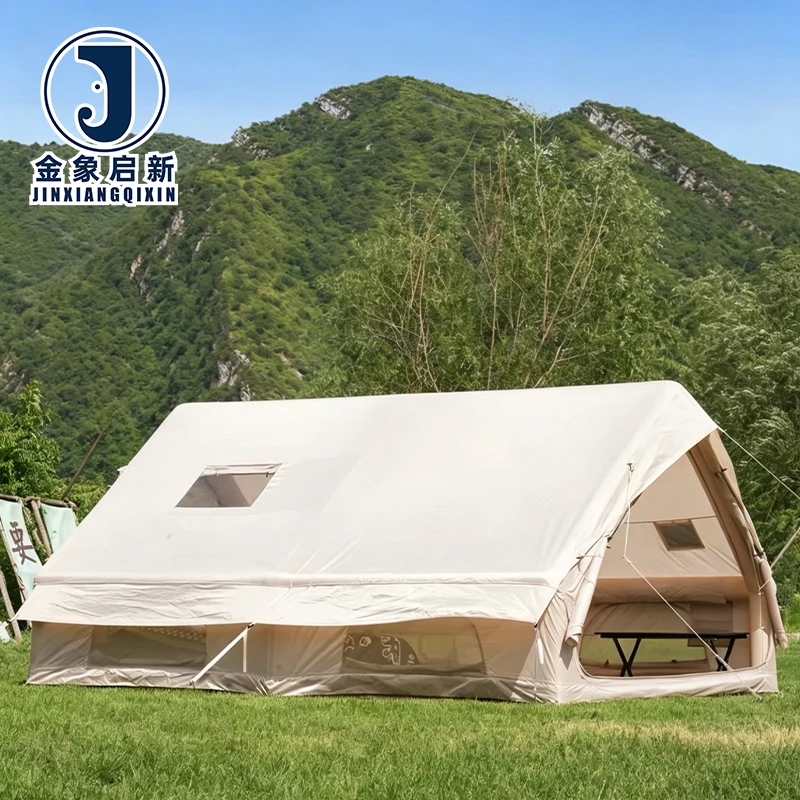
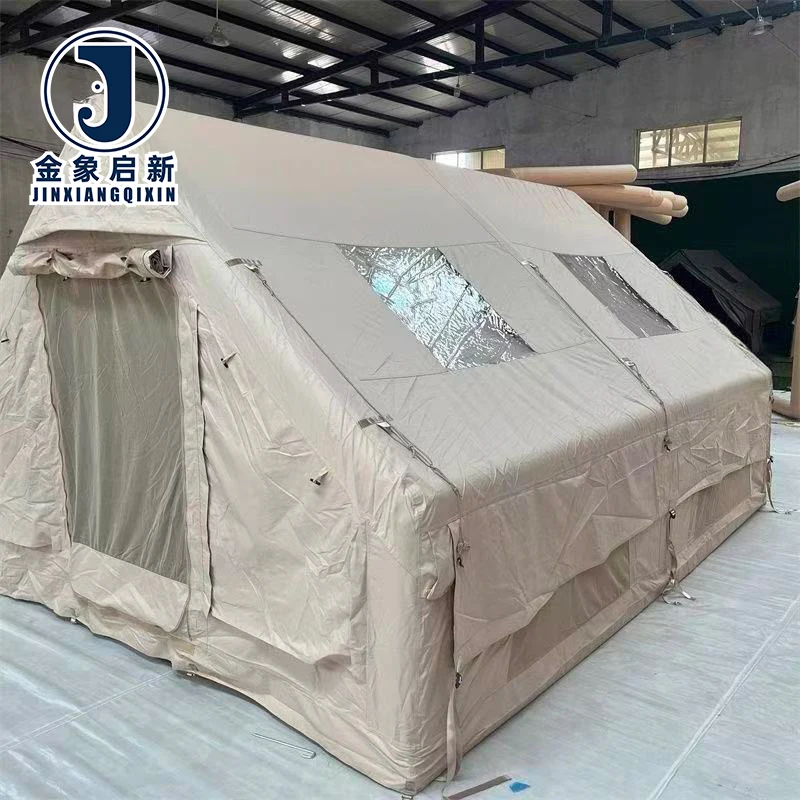
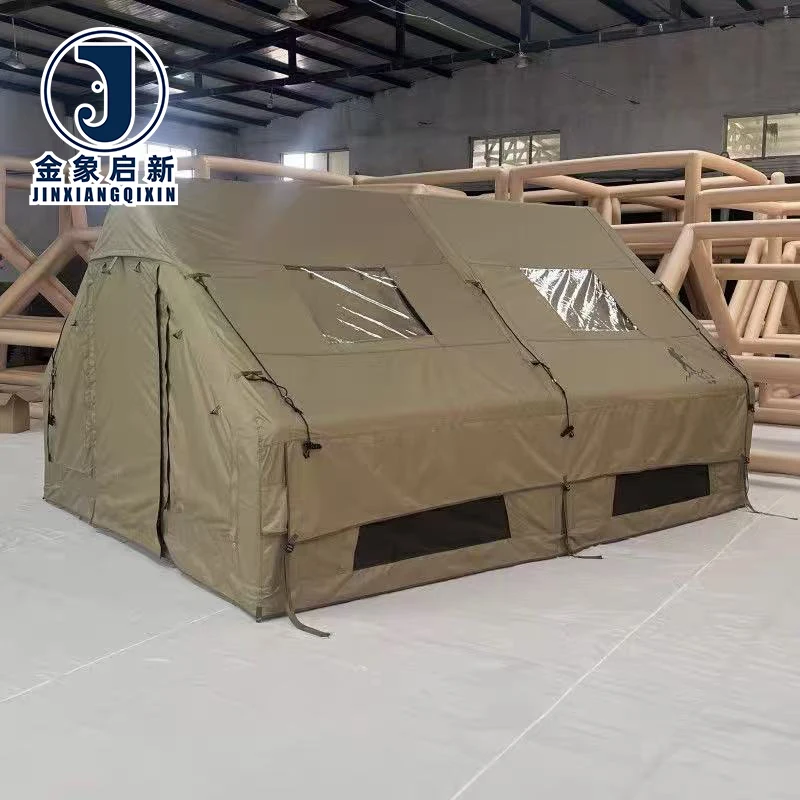
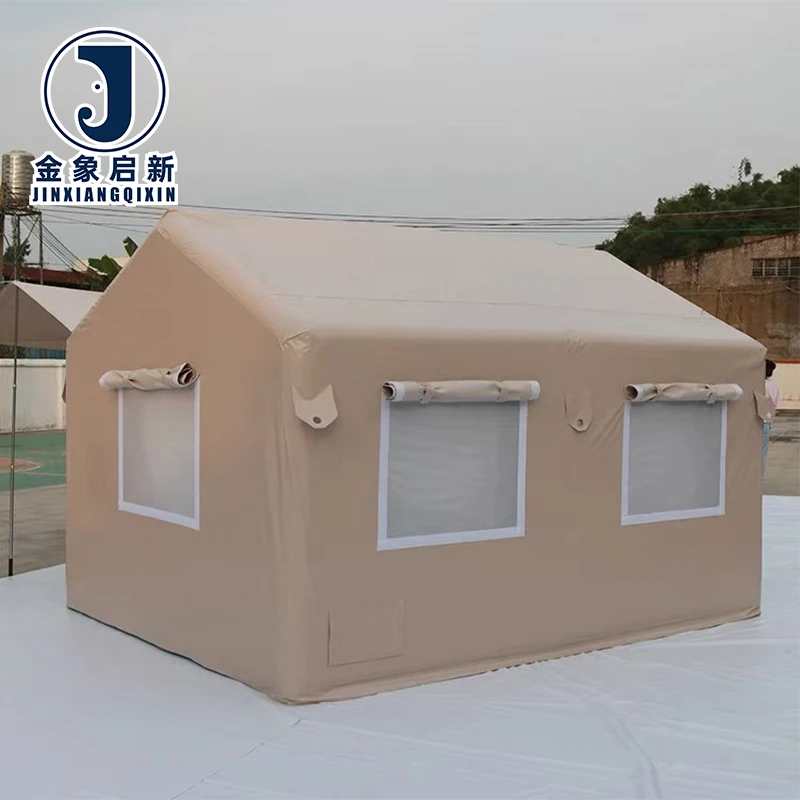
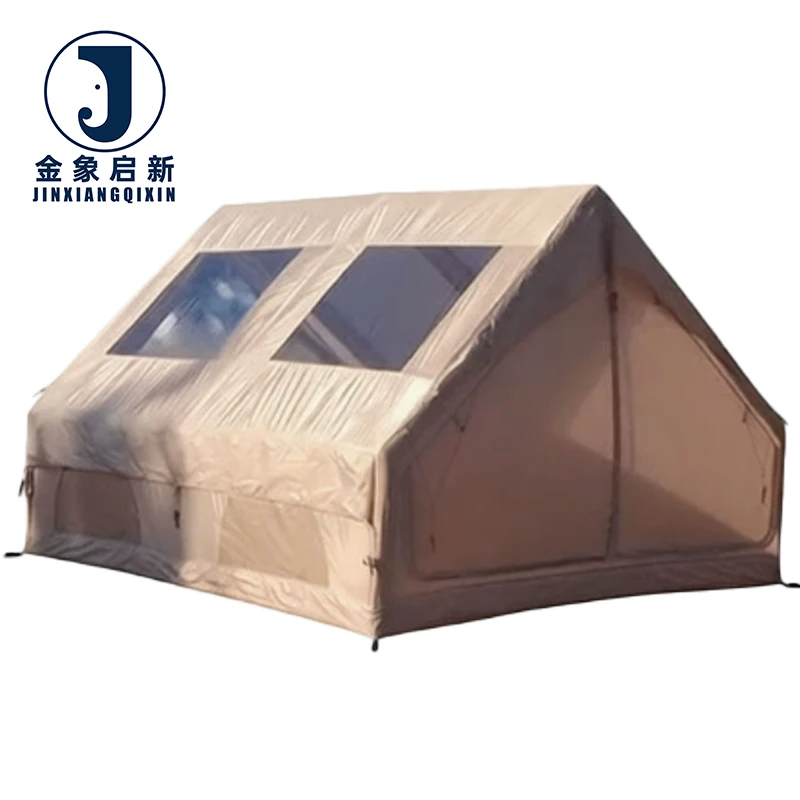
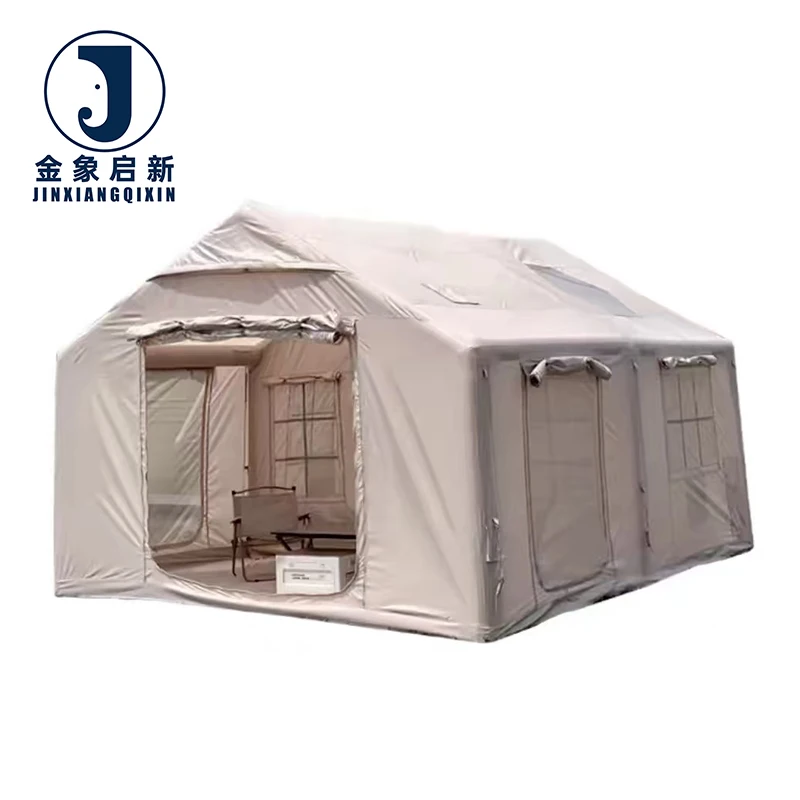
Description
Batch-Consistent Roll Output — 3 full production lines with dedicated QA/QC at every stage ensure roll-to-roll uniformity in GSM, coating weight, and colour reference before dispatch.
Technical Specifications
| Parameter | Value |
|---|---|
| Product Type | Inflatable Tent |
| Core Material | PVC tarpaulin |
| Waterproof Rating | Waterproof (rating not stated in source) |
| UV Treatment | UV-resistant (test basis not stated in source) |
| Flame Retardant Grade | Fire-retardant (grade not stated in source) |
| Anti-Static | Anti-static (surface resistance or standard not stated in source) |
| Tear Resistance | Tear-resistant (test standard not stated in source) |
| Season Rating | Four-Season |
| Opening Mechanism | Quick Automatic Opening |
| Capacity | 8-10 Person |
| Customization | OEM & ODM (sample customization, pattern printing) |
| Production Facility | 9,180 m² with 3 full production lines |
| Processing Equipment | 36 sets of professional equipment |
| R&D Team | 10 technicians |
| Standards | ISO9001, ISO14001, ISO45001, CE |
Application Suitability
| Application | Exposure & Requirement |
|---|---|
| Commercial event pavilions | Frequent inflation/deflation cycles, public safety compliance, UV exposure across seasons |
| Outdoor exhibition spaces | Prolonged weather exposure, wind load on membrane surfaces, abrasion from rigging hardware |
| Industrial site temporary accommodations | Dust and chemical exposure, fire-retardant site requirements, repeated relocation |
| Emergency response shelters | Rapid deployment demand, waterproof membrane integrity, varied climate conditions |
What "Fire-Retardant" Means Without a Grade Behind It
Inflatable Tent Fabric roll buyers need the test standard before the claim.
Many inflatable structures fail site inspection because the fabric supplier declared fire-retardant treatment without specifying which classification was achieved. Commercial events and industrial sites each enforce different fire codes, and a blanket claim does not satisfy a site safety officer asking for documentation. When sourcing Inflatable Tent Fabric roll / wholesale, the procurement specification must name the standard required in the destination market. [NEED_CITE: fire classification standards for temporary membrane structures]
Stock Grades and Width Availability for Roll Buyers
Purchasing Inflatable Tent Fabric roll / wholesale means balancing lead time against specification flexibility. Stock grades ship from available inventory in standard widths, reducing wait times for manufacturers running continuous production. Custom widths require dedicated line scheduling and carry minimum order thresholds that vary by colour and treatment combination.
Colour and Coating Consistency Across the Container
Batch-to-batch colour variation becomes visible when multiple rolls are cut and welded into adjacent tent panels. Dedicated QA/QC at every production stage with 100% inspection before shipment addresses this directly. Each roll is checked against the batch colour reference, and coating adhesion is verified to prevent delamination during the heat-welding process that inflatable tent manufacturing demands. [NEED_CITE: coating adhesion test methods for PVC tarpaulin]
How GSM, Base Fabric, and Coating Weight Interact
GSM alone does not define how an inflatable tent membrane will perform under wind load or repeated inflation cycles. The base fabric denier and weave density determine tensile and tear strength, while the PVC coating weight governs waterproof integrity, UV stability, and weldability. A heavier coating on a loosely woven base may show high GSM but poor tear propagation resistance. Buyers specifying Inflatable Tent Fabric roll / wholesale should request the material specification sheet that breaks down base fabric construction and coating weight separately.
The Hidden Cost of Specifying on Price per Kilogram Alone
Choosing roll stock based solely on unit cost often leads to downstream failures that surface only after fabrication. Coating that is too thin for the intended weld temperature causes seam failure at the point of maximum membrane flex. Colour drift between rolls forces the manufacturer to sort and match panels manually, adding labour and delaying shipment. These costs accumulate silently through the production run. [NEED_CITE: weld strength versus coating weight in PVC coated fabrics]
Volume Capacity and Quality Control Infrastructure
Three full production lines and 36 sets of professional processing equipment support bulk roll output without sacrificing per-roll inspection. The 10-person R&D team handles material selection, custom width development, and sample approval before mass production commitment. A 9,180 square meter facility provides the floor space for dedicated coating, curing, and winding stations that maintain consistent tension across the roll. ISO9001, ISO14001, ISO45001, and CE standards govern the production environment, and pre-shipment inspection records document every roll in the container.
Documentation & Verification
- Material specification sheet stating GSM, base fabric denier, coating weight, and colour reference per batch
- Pre-shipment inspection record confirming 100% inspection of every roll before container loading
- Roll packing list with individual roll count, net weight, and batch reference for traceability
- Certificate of origin and customs documentation support for international roll shipments
Fabrication, Handling & Storage
- Heat-weld temperature and dwell time must match the PVC coating weight to achieve full seam fusion without scorching
- Store rolls horizontally on pallets in a dry, shaded warehouse to prevent flat spots and UV degradation before fabrication
- Allow cold-stored rolls to acclimatize to workshop temperature before unrolling to avoid coating micro-cracking
- Use mild, non-solvent cleaners on the PVC surface to preserve UV treatment and coating adhesion over repeated use cycles
- Pattern printing requires surface tension verification to ensure ink adhesion on the specific coating finish supplied
Request a Quotation with Your Specifications
Provide the destination market fire-retardant classification, required roll widths, annual volume estimate, and any custom colour or printed branding requirements. Specify whether you need raw roll stock or pre-cut panels, and request a sample roll for weld parameter testing before committing to the full production order.
Frequently Asked Questions
Q: How is colour consistency maintained across rolls in the same order?
A: Dedicated QA/QC at every production stage includes colour reference checks against the approved batch standard. Each roll undergoes 100% inspection before shipment, and the roll packing list documents the batch reference for traceability. This prevents visible colour variation when multiple rolls are fabricated into adjacent inflatable tent panels.
Q: What stock widths and roll lengths are available, and can custom dimensions be ordered?
A: Stock grades ship in standard widths from available inventory for faster lead times. Custom widths and roll lengths are available through OEM & ODM services, subject to minimum order quantities that vary by colour and treatment specification. The 10-person R&D team develops samples for approval before mass production.
Q: How can GSM be verified on arrival against the quotation specification?
A: The material specification sheet provided with each shipment states the GSM, base fabric construction, and coating weight for that batch. Buyers can conduct independent weight verification by cutting a measured sample from the roll end. Pre-shipment inspection records document the verified weight before dispatch.
Q: How are rolls packed and loaded into containers to prevent transit damage?
A: Rolls are packed horizontally on pallets with protective end caps and stretch wrapping to prevent crushing and moisture ingress. The roll packing list details the roll count, weight, and batch reference for each container, supporting efficient unloading and inventory reconciliation at the destination warehouse.
Q: What are the minimum order quantities for custom width, colour, or printed rolls?
A: Minimum order quantities depend on the specific combination of width, colour, and treatment grade requested. Custom specifications require dedicated production line scheduling and sample development through the R&D team. Contact the sales team with your exact requirements to receive a quotation with lead time and minimum stated clearly.