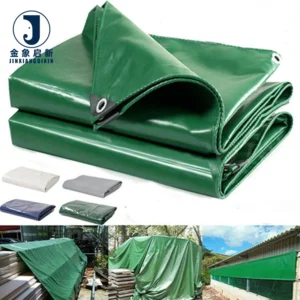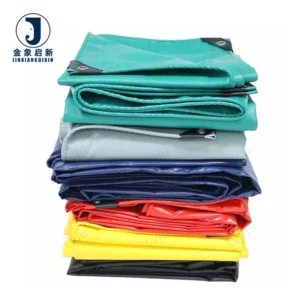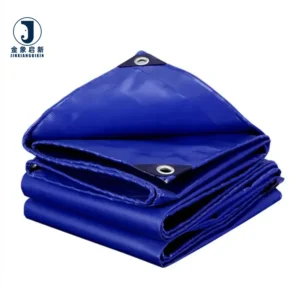

Description
Verified GSM per roll — every roll of PVC knife coated tarpaulin leaves the production line with a measured weight record, ensuring the specification on the quote matches the material on your warehouse scale.
Technical Specifications
| Parameter | Value |
|---|---|
| Product Type | PVC Knife-Coated Fabric |
| Weight Range | 300–600 gsm (multiple grades available — confirm grade for your application) |
| Base Fabric | Polyester woven substrate |
| Coating Method | Knife coated |
| Coating Material | PVC |
| Flame Retardant Grade | Available (grade not stated in source — confirm the grade required for your market) |
| Anti-Static | Available (standard not stated in source — specify the standard required) |
| Anti-Mildew | Available |
| Anti-Cold | Available |
| UV Treatment | Available (test basis not stated in source — confirm test standard for your region) |
| Waterproof Rating | Fully waterproof coated construction |
| Outdoor Durability | Suited to extended outdoor exposure |
| Format | Roll stock, configurable width and length |
Application Suitability
| Application | Exposure & Requirement |
|---|---|
| Tarpaulin distribution and import | Container-load consistency — rolls must match on GSM, colour and width for downstream slitting and fabrication |
| Tent, awning and inflatable manufacturing | Roll-to-roll uniformity in coating weight and surface finish for heat-welded panel assembly |
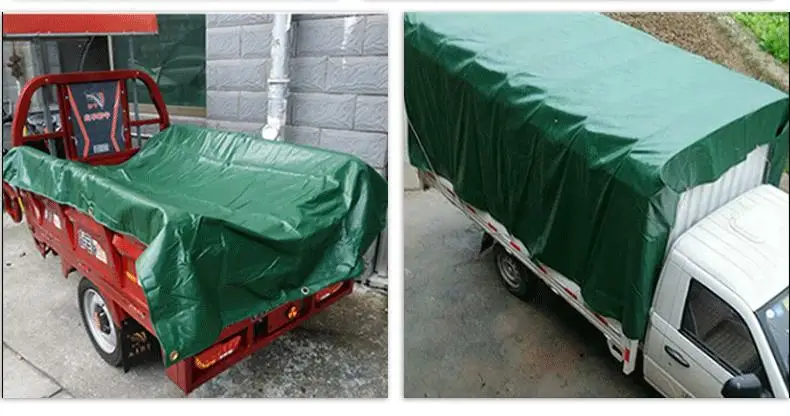
| Truck cover and side curtain fabrication | Constant flexing, road abrasion and UV exposure demanding reliable coating adhesion across the full roll length |
| General-purpose heavy-duty covers | Outdoor weather, mechanical handling and repeated folding requiring balanced tensile and tear performance |
Why Stated GSM Does Not Guarantee Delivered Weight
Weight verification at dispatch is the only control that matters to a wholesale buyer.
A distributor importing container loads of PVC knife coated tarpaulin roll wholesale expects every roll to match the quoted specification. Yet it is common for material to arrive lighter than agreed — the difference is rarely visible until the roll is weighed on the warehouse floor. Over a full container, even a small shortfall per roll compounds into significant lost material and margin. [NEED_CITE: weight discrepancy as a common complaint in coated fabric imports] Batch-to-batch weight control starts at the coating head and must be confirmed again before the rolls are packed.
How Knife Coating Delivers Uniform Weight Across the Roll
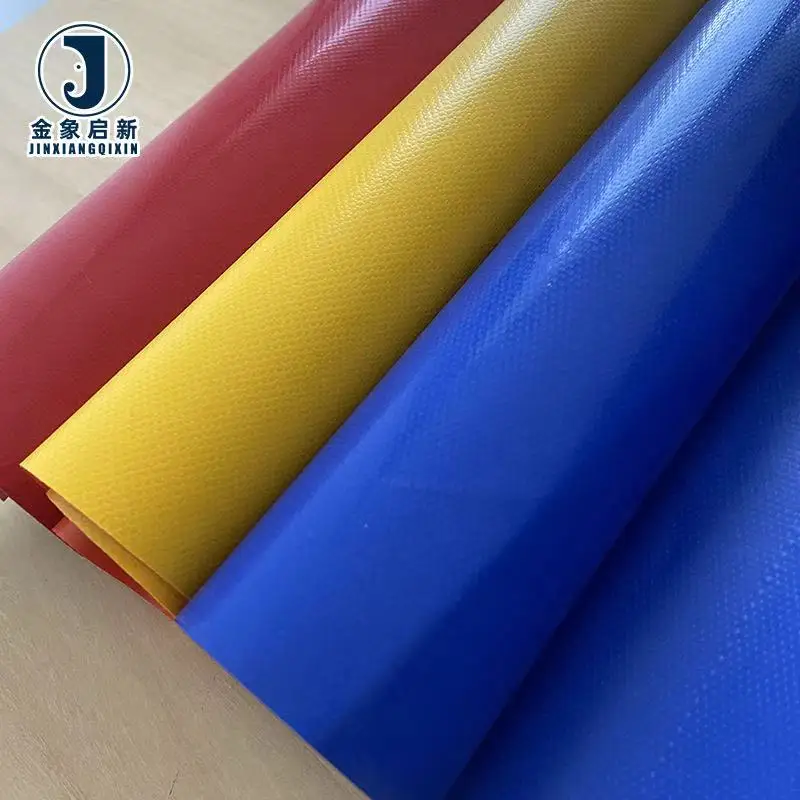
Knife coated PVC construction applies the coating compound through a precision blade gap, producing a consistent film thickness from edge to edge and from the first metre to the last. For buyers sourcing PVC knife coated tarpaulin roll wholesale, this method gives predictable coating weight across the full roll length — critical when downstream fabricators set heat-weld parameters based on a known material thickness. The polyester base fabric is tension-controlled during coating to minimise stretch distortion, preserving dimensional stability for accurate cutting and panel sizing.
Colour Consistency From First Roll to Last
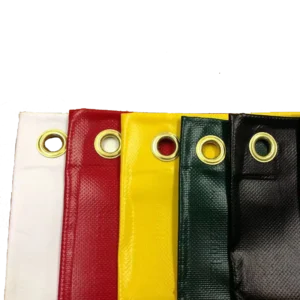
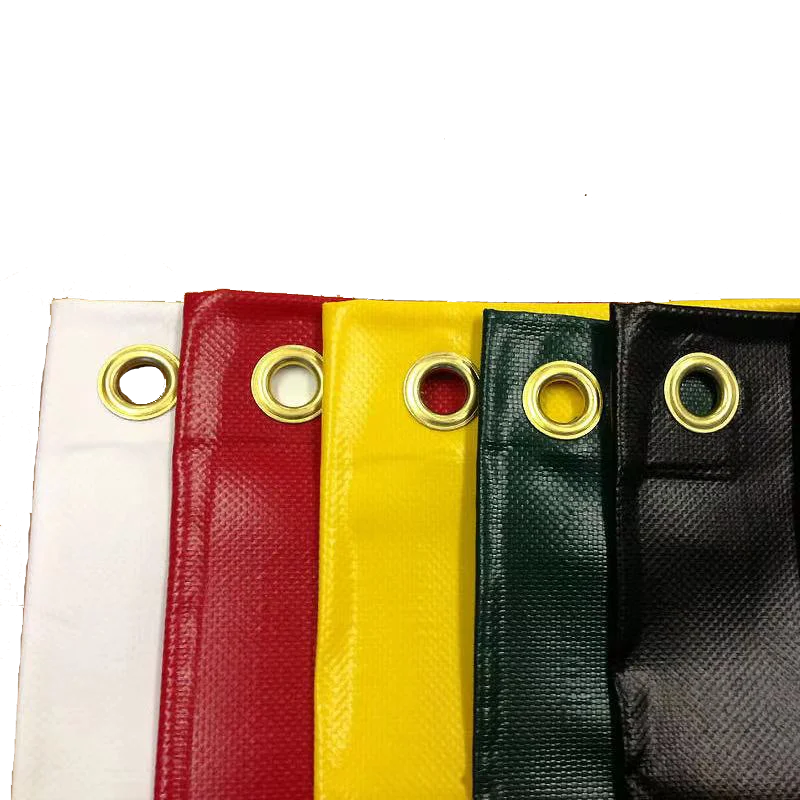
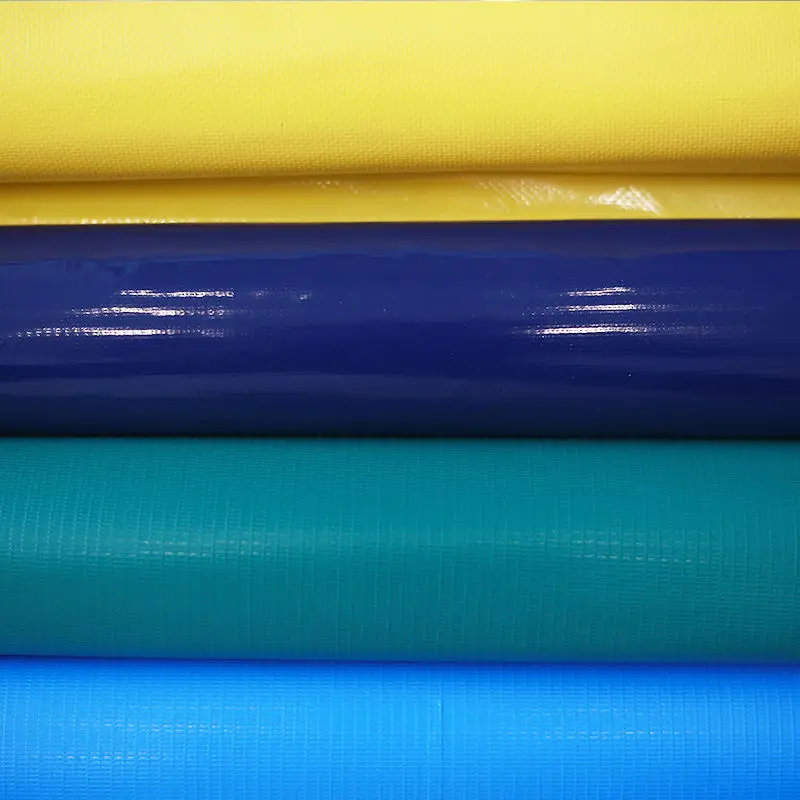
When multiple rolls are installed side by side on a truck curtain or a large tent panel, even a slight shade variation becomes immediately visible. Colour matching is controlled at the compounding stage where pigment is blended into the PVC paste, and verified again after coating against a retained batch sample. Each production run references a master colour standard so that repeat orders maintain continuity with earlier shipments. [NEED_CITE: colour fastness and batch matching standards for coated textiles]
Reading the Specification Sheet Beyond the GSM Number
The stated gsm value tells you the total mass per square metre but not how that mass is distributed between base fabric and coating. A heavier coating layer increases waterproofness and surface durability but can reduce flexibility and add stiffness to the hand. Conversely, a denser polyester base fabric with a leaner coating will offer higher tensile and tear strength at the same total weight. Knife coated PVC bonds directly to the substrate through the blade gap, producing strong coating-to-yarn adhesion that supports reliable heat welding — the weld line draws strength from the coating layer itself rather than a separate adhesive film. For buyers specifying PVC knife coated tarpaulin roll wholesale, understanding this balance allows grade selection matched to the end-use: lighter grades for temporary covers and awnings, heavier grades for truck curtains and industrial enclosures that face daily mechanical stress.
The Hidden Cost of Selecting the Wrong Roll Grade
Choosing a roll grade based on price per kilogram alone leads to downstream failures that far outweigh the initial saving. A roll that is lighter than the agreed GSM will have less coating material, making the fabric more vulnerable to abrasion at fold lines and flex points. Insufficient coating weight also compromises heat-weld integrity — the seam fails before the fabric body does, typically at the point where the load flexes most during transport. When a flame retardant grade is specified without confirming the applicable test standard, the material may pass a supplier’s internal check but fail the fire classification required on the job site. [NEED_CITE: fire classification requirements for temporary structures and transport covers] Colour variation between rolls in the same shipment forces the fabricator to sort and re-match, adding labour cost and delaying project completion.
What Supports Consistent Supply at Container Scale
Three full production lines with 36 sets of professional equipment allow parallel runs of different grades and widths, so a mixed container order does not mean longer wait times. A 10-person R&D team handles custom width, colour and treatment specifications, developing samples within days for buyer approval before the production run begins. Dedicated quality inspection covers every roll at every stage — coating weight, colour match, surface finish and dimensional accuracy — with a full pre-shipment check recorded before dispatch. ISO and CE certified production provides a documented quality framework that supports compliance for regulated end-uses. Nearly 30 years of focused coated fabric production means the process parameters for each grade are established and repeatable, not experimental.
Documentation & Verification
- Material specification sheet listing exact GSM, base fabric denier and coating weight per roll
- Pre-shipment inspection record confirming measured weight and visual check for every roll
- Roll packing list with net and gross weight and running metre count per roll for container planning
- Test reports for UV and flame retardant grades supplied where applicable to the order
- Certificate of origin and customs documentation supporting the destination import process
Fabrication, Handling & Storage
- Heat-weld temperature and dwell time must be matched to the specific PVC coating weight for reliable seam strength
- Store rolls upright on pallets in a shaded, ventilated area to prevent flat-spot deformation of the coating surface
- Allow cold-stored rolls to reach ambient temperature before unrolling to avoid cracking in anti-cold treated grades
- Cut panels with a minimum seam allowance suited to the roll thickness for clean welded or stitched joins
- Use compatible PVC-based repair patches and solvent cements that bond to the knife coated surface without delamination
- Plan cutting layout against the roll width to minimise off-cuts and reduce the number of welded seams in the finished panel
Preparing Your Enquiry for Accurate Quotation
Specify the end-use application and the environmental exposure the fabric will face so that the correct GSM grade and treatment package can be recommended. Confirm the roll width and length that suits your container loading plan, along with the target container quantity. State any fire classification, anti-static standard or UV test requirement that applies in your destination market so that the correct grade is produced and documented from the outset.
Frequently Asked Questions
Q: How is GSM verified per roll and what records ship with the order?
A: Every roll is weighed and measured after production. A pre-shipment inspection record is generated showing the actual GSM, roll dimensions and visual assessment. This document accompanies the shipping paperwork along with the material specification sheet, so you can reconcile received stock against the purchase order on arrival.
Q: How is colour consistency controlled across multiple rolls in one shipment?
A: Pigment is blended into the PVC compound at the mixing stage against a retained master standard. During production, rolls are compared under controlled lighting to the batch reference sample. Any roll that falls outside the accepted tolerance is separated before packing, ensuring uniform appearance when panels are installed side by side.
Q: What stock widths and roll lengths are available, and what is the MOQ for custom sizes?
A: Standard widths are held for common grades and ship in full container loads. Custom widths and lengths are produced to order with minimum quantities set per grade and colour. Request a quotation with your required dimensions and container volume so that the production plan and lead time can be confirmed.
Q: Can treatment grades be mixed in a single container order?
A: Yes, multiple treatment grades such as flame retardant, anti-static and anti-mildew can be combined in one container, subject to the minimum run length for each variant. This allows distributors to restock several product lines in a single shipment and reduce per-unit freight cost.
Q: What certifications and test reports are available for regulated applications?
A: Test reports for UV stability and flame retardant performance are supplied with the applicable roll grades. Confirm the specific standard required in your market — such as the fire classification for temporary structures or transport covers — so that the correct grade is selected and the matching documentation is prepared before dispatch.