Description
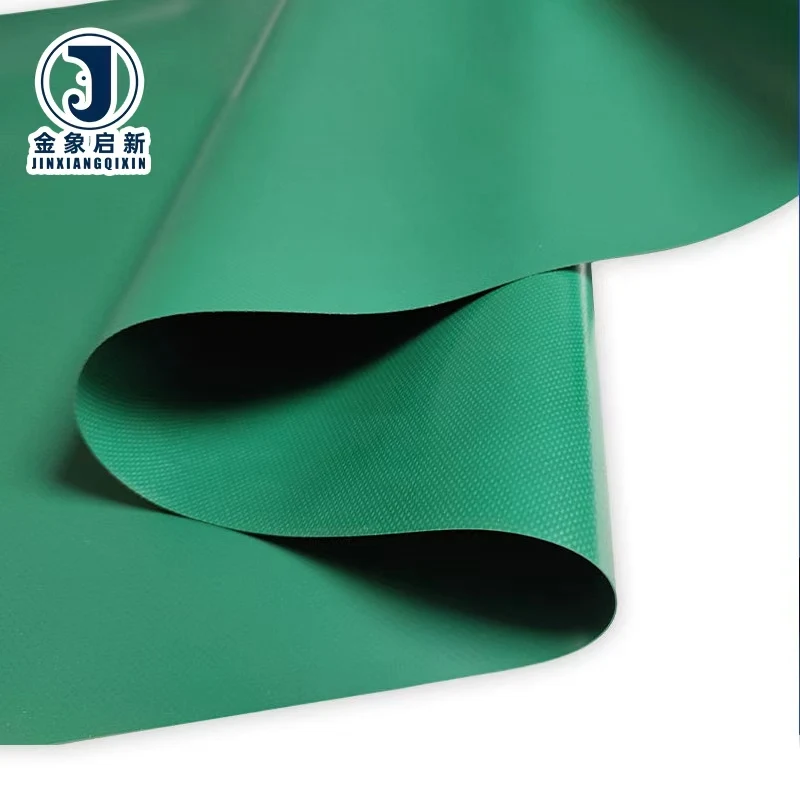
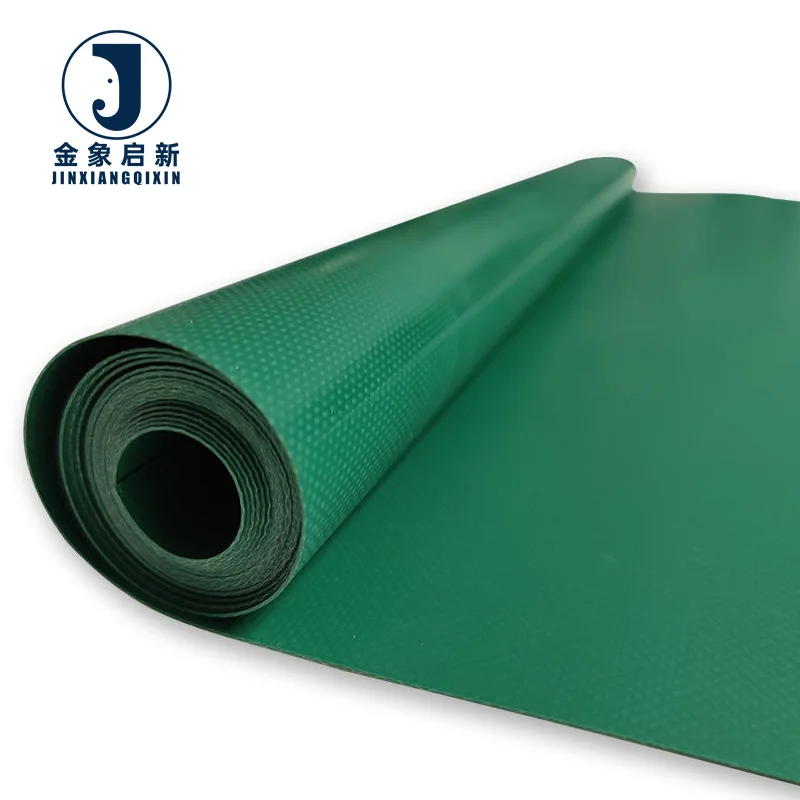
Roll-to-Roll Consistency — Three full production lines and 36 sets of professional equipment maintain coating weight and colour match across every roll in a container load.
Technical Specifications
| Parameter | Value |
|---|---|
| Product Type | PVC Knife-Coated Fabric Roll |
| Base Fabric Denier | 500D / 1000D / 500D–2000D (options depend on grade) |
| Weight Range | 400–500 g/m², 700–1000 g/m², 1100–1500 g/m² (grade-dependent) |
| Total Thickness | 0.35–0.45 mm / 0.70–1.0 mm / 1.2–1.5 mm (grade-dependent) |
| Tensile Strength | Warp 1500–3000 N/5 cm, Weft 1200–2800 N/5 cm (test basis not stated) |
| Roll Width | 2 m, 4 m, 6 m or custom |
| Roll Length | 100 yards, 100 metres, or as specified |
| Coating Method | PVC knife-coated on polyester base |
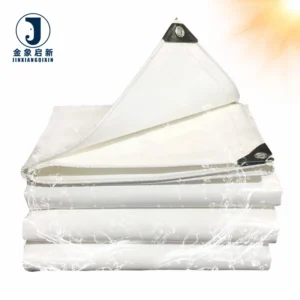
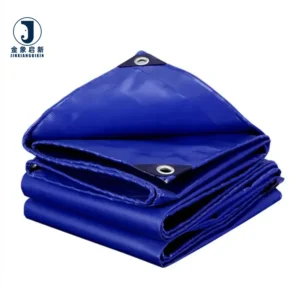
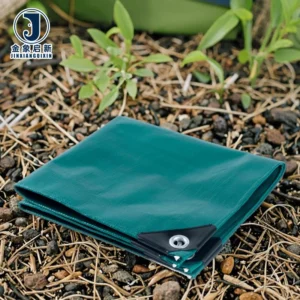
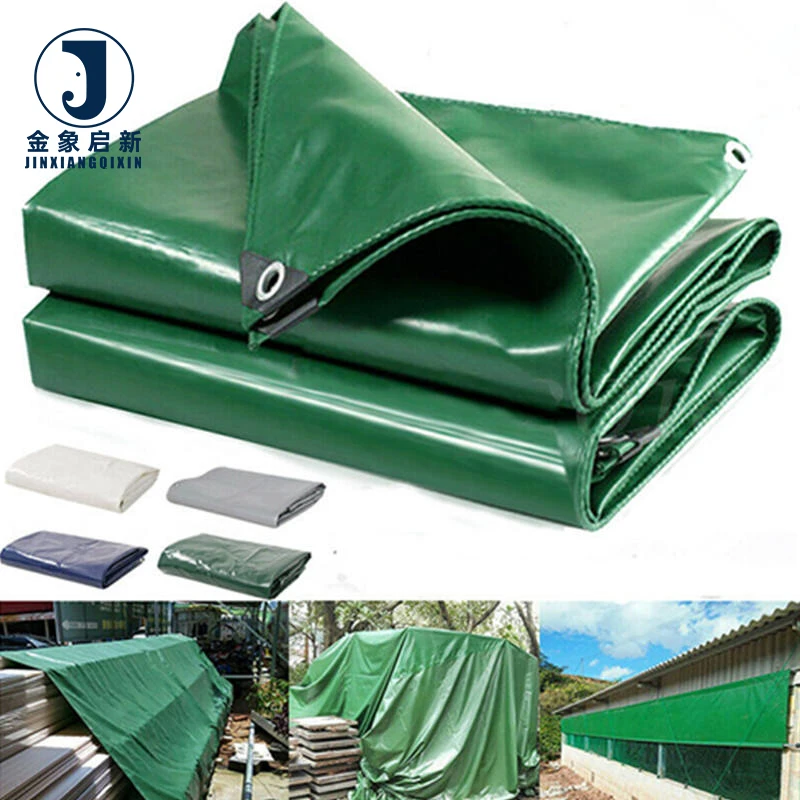
| Colour Options | Blue, Blue/Orange, Green, Grey, Black, Clear, Grey/Green, Orange, or custom |
| Surface Treatment | Anti-UV treatment available (test basis not stated), waterproof, mildew-resistant |
| Standards | ISO and CE certified production |
Application Suitability
| Application | Exposure & Requirement |
|---|---|
| Tarpaulin distribution and import | Container-volume restocking of standard widths with predictable GSM and colour uniformity across rolls |
| Tent, awning and inflatable fabrication | Roll stock cutting yield, weldability at seam lines, consistent coating adhesion for heat-welded joints |
| Logistics fleet in-house cover production | Side curtain and truck cover conversion, abrasion at flex points, tie-down stress at reinforced edges |
| Tensioned membrane and canopy structures | High tensile load, long-term UV exposure, dimensional stability under wind and thermal cycling |
| Construction and agricultural site covers | Temporary weather protection, puncture resistance from equipment contact, water ingress prevention |
Why Colour Shift Between Rolls Costs More Than the Fabric Itself
Batch-to-batch colour control is enforced at the coating stage, not inspected after the fact.
When you unroll two adjacent sheets on a job site and one reads slightly warmer or cooler than the other, the entire installation looks compromised. This is a recurring complaint from buyers who source PVC coated tarpaulin roll wholesale from suppliers that mix batches mid-order [NEED_CITE: colour consistency control methods in PVC coating lines]. The problem is rarely the pigment — it is the coating weight variance and oven temperature fluctuation between production runs. Our in-process QA checks coating weight and colour reference at every stage, ensuring rolls within a single shipment stay matched.
Stock Availability and Volume Planning for Distributors
Tarpaulin distributors and importers need to know that a container load will arrive with uniform quality and predictable yield. When you order PVC coated tarpaulin roll wholesale, the roll count, net weight, and container loading plan are documented before dispatch. Standard widths of 2 m, 4 m, and 6 m cover most conversion needs without excessive trimming waste, and custom widths are produced with reasonable minimums. Each roll ships with its own weight record, so you can reconcile inventory against the original specification without guesswork.
Coating Weight and Adhesion Control Across Production Runs
[NEED_CITE: PVC knife-coating adhesion test methods per ISO 2411]
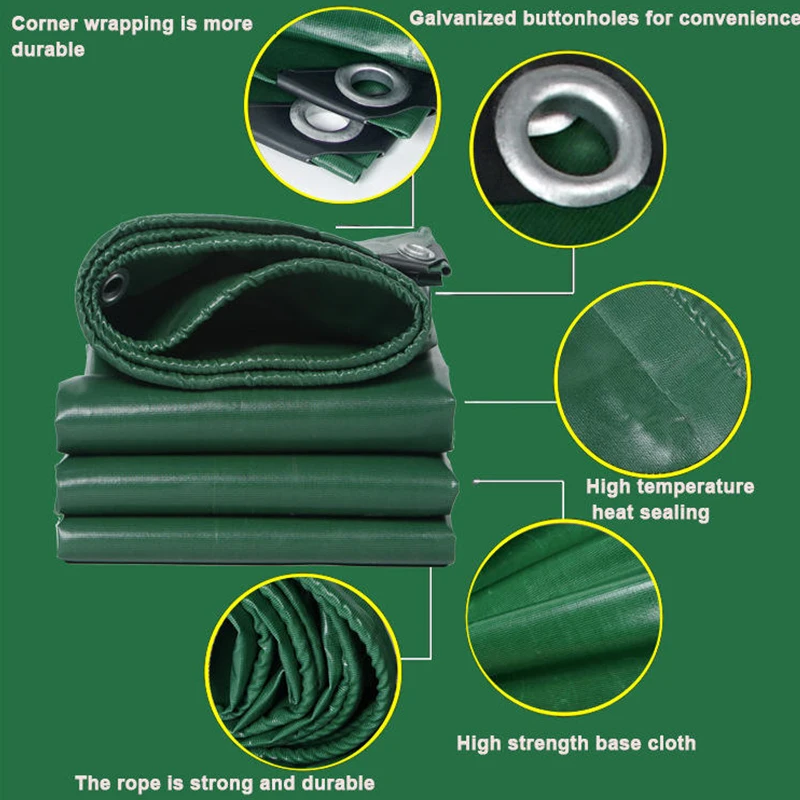
Coating weight directly affects weld strength, tear behaviour, and how the fabric handles during fabrication. On our knife-coating lines, the PVC compound is metered onto the polyester base fabric and cured under controlled temperature profiles. This process gives the coating a mechanical bond with the base yarns, which is essential for heat-welded seams that must hold under flexing loads. The adhesion is verified during production rather than sampled after the fact, so welded joints on fabricated covers and structures perform consistently at the stress points where the material bends most.
Reading the Specification Sheet Beyond the GSM Number
GSM alone does not tell the full story of how a coated fabric will perform. A 700 g/m² roll built on a 1000D base with tight weave density will tear differently than one on a 500D base with heavier coating to reach the same weight. The base fabric denier and knitting density determine how a tear propagates once initiated — higher denier yarns resist tear spread, while coating weight contributes more to surface abrasion resistance and weld integrity. Thickness values of 0.35 mm through 1.5 mm correspond to these different constructions, and the right balance depends on whether the end use prioritises flexibility for folding or rigidity for tensioned structures. Roll width selection — 2 m, 4 m, or 6 m — also affects fabrication efficiency, as wider rolls reduce the number of welded seams needed to cover a given area.
The Hidden Cost of Specifying on Price Per Kilogram Alone
When purchasing decisions rest solely on cost per kilogram, the result is often a lighter base fabric buried under extra coating to hit the target GSM. The fabric feels right on the scale but tears more easily because the yarn structure is undersized for the load. Similarly, ordering a flame-retardant grade without confirming the specific classification for your market can lead to rejection at site inspection — the material may carry a treatment that satisfies one standard but not the local building or mining code [NEED_CITE: regional fire classification requirements for temporary structures]. Colour inconsistency across rolls in the same order forces fabricators to reject panels or accept visible mismatches, creating waste that exceeds any initial saving.
Why Converters and Distributors Source Roll Stock Here
Nearly 30 years of focused production on coated fabrics means process parameters are refined rather than experimental. Three full production lines with 36 sets of professional equipment support bulk container volumes without sacrificing the coating consistency that fabricators depend on. The 10-person R&D team handles custom width, colour, and sample development with turnaround measured in days rather than weeks. Every roll undergoes dedicated QA/QC inspection at each production stage, with 100% pre-shipment verification before loading. This is the infrastructure behind a PVC coated tarpaulin roll wholesale operation that prioritises repeat orders over one-off shipments.
Documentation & Verification
- Material specification sheet listing exact GSM, base fabric denier, and coating weight per roll grade
- Roll packing list with individual roll count, net weight, and container loading arrangement
- Pre-shipment inspection record confirming 100% verification before dispatch
- Colour reference and GSM spot-check results across rolls within the same production batch
- ISO and CE certificates accompanying each container shipment
- Certificate of origin and customs documentation for cross-border clearance
Fabrication, Handling & Storage
- Heat-weld at temperatures matched to the PVC coating thickness — heavier grades like 1100–1500 g/m² need higher dwell times for full adhesion
- Store rolls upright on pallets to prevent flat spots and permanent creasing across the 2 m to 6 m widths
- Allow cold-weather rolls to reach ambient temperature before unrolling to avoid coating micro-cracking
- Use sharp rotary blades when cutting 1000D and 2000D base fabrics to prevent frayed edges at weld zones
- Plan panel layout on 4 m and 6 m widths to minimise offcuts and reduce welded seam count on large covers
- Clean surfaces with mild detergent only — solvent-based cleaners can degrade the PVC coating surface over time
What to Include in Your Roll Stock Inquiry
Specify the end-use application and the environmental exposure the fabric will face — this determines the appropriate GSM tier and base fabric denier. Provide your required roll width, target roll length, and estimated annual volume so we can confirm stock grades or schedule a production run. If your market requires specific fire classification or UV test documentation, state the standard name so we match the correct treatment grade. Request a sample roll or swatch if you are validating a new supplier or converting to a different specification.
Frequently Asked Questions
Q: How is GSM verified on each roll before shipment?
A: Every roll is weighed and measured during pre-shipment inspection. The actual GSM is recorded against the stated specification on the inspection record. Any roll falling outside tolerance is flagged before loading. This prevents the common problem of quoted weight not matching what arrives at your warehouse.
Q: What roll widths and lengths are available, and what are the minimums on custom sizes?
A: Standard roll widths are 2 m, 4 m, and 6 m, with lengths of 100 yards or 100 metres. Custom widths and lengths are available with reasonable production minimums. Sample development for non-standard specifications typically takes days, not weeks, allowing you to validate before committing to a full container order.
Q: How do you control colour consistency across rolls in the same order?
A: Colour is controlled at the coating stage through compound matching and oven temperature monitoring, not just inspected after production. Rolls within a single order are produced in the same batch run, and spot-checks against the colour reference confirm match before packing. This eliminates the visible variation that appears when panels are installed side by side.
Q: What documentation ships with each container load?
A: Each shipment includes a material specification sheet, roll packing list with weight and count, pre-shipment inspection record, ISO and CE certificates, and certificate of origin. Test reports for UV or flame-retardant grades are included where applicable. All documents support customs clearance and buyer verification.
Q: How is roll stock packed and protected during ocean freight?
A: Rolls are packed on pallets with protective wrapping to prevent moisture ingress and surface damage during transit. The packing list details roll arrangement within the container for efficient unloading. Proper upright storage orientation is maintained to avoid permanent creasing or coating deformation across the full roll width.