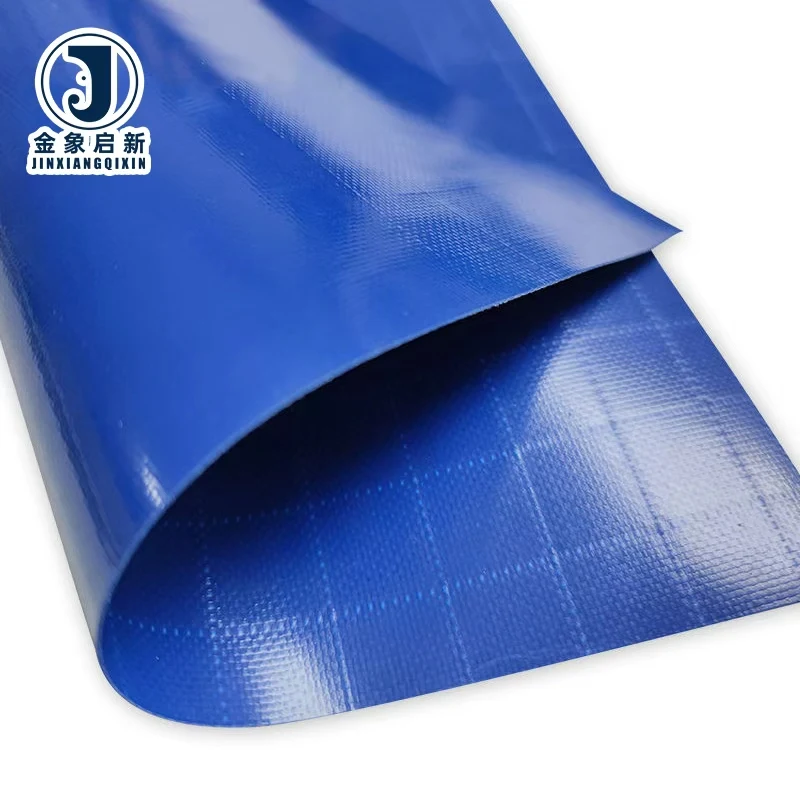
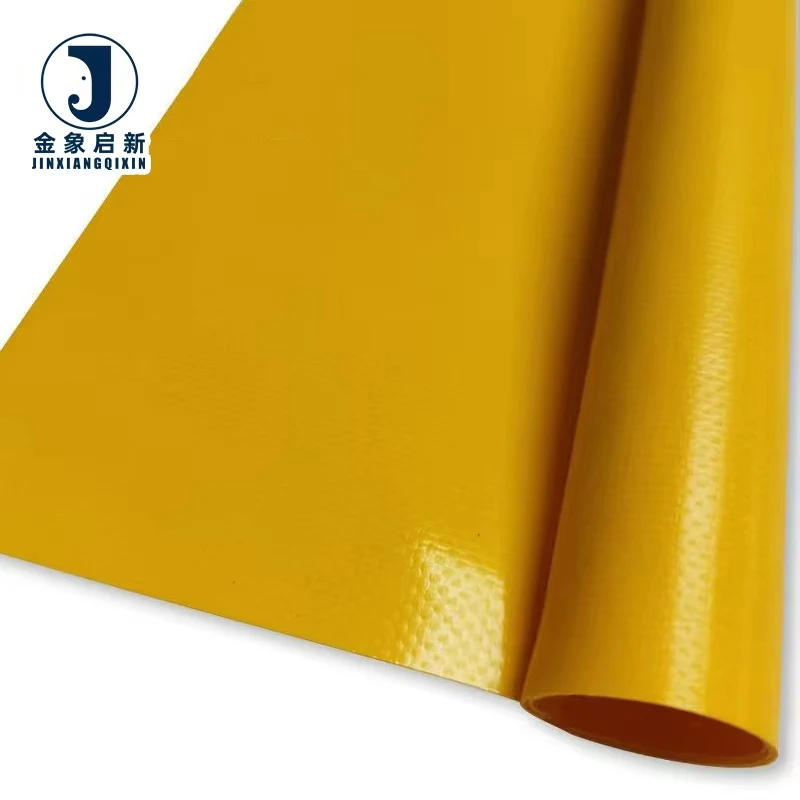
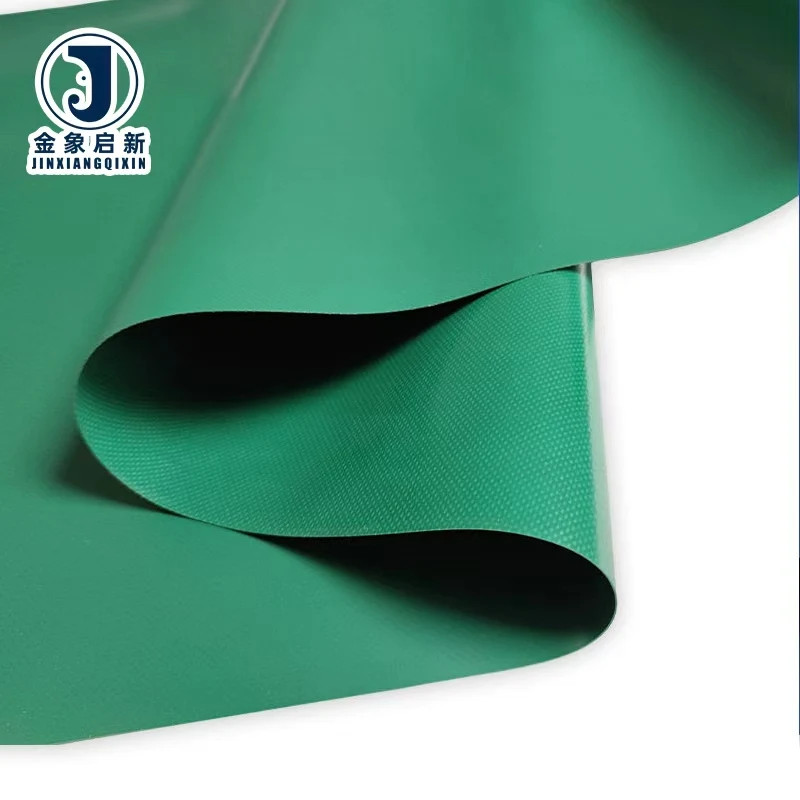
Description
Coating Weight Control — Every roll is weighed and recorded before dispatch to confirm the spec on paper matches the roll on the pallet.
Technical Specifications
| Parameter | Value |
|---|---|
| Product Type | PVC Coated Tarpaulin Roll |
| Base Fabric Denier | 500D*1000D |
| Yarn Count | 500D-500D |
| Total Thickness | 0.38mm |
| Density (Mesh Count) | 30*19 |
| Tensile Strength (Warp) | 2050 N |
| Tensile Strength (Weft) | 1900 N |
| Material | PVC & Polyester |
| Coating Material | PVC |
| Brittle Temperature | ≤ -50 ~ -60 ℃ |
| Softening Temperature | ≥ 80 ℃ |
| Melting Point | 212 ℃ |
| Density Parameter | 1.15–2.00 g/cm³ |
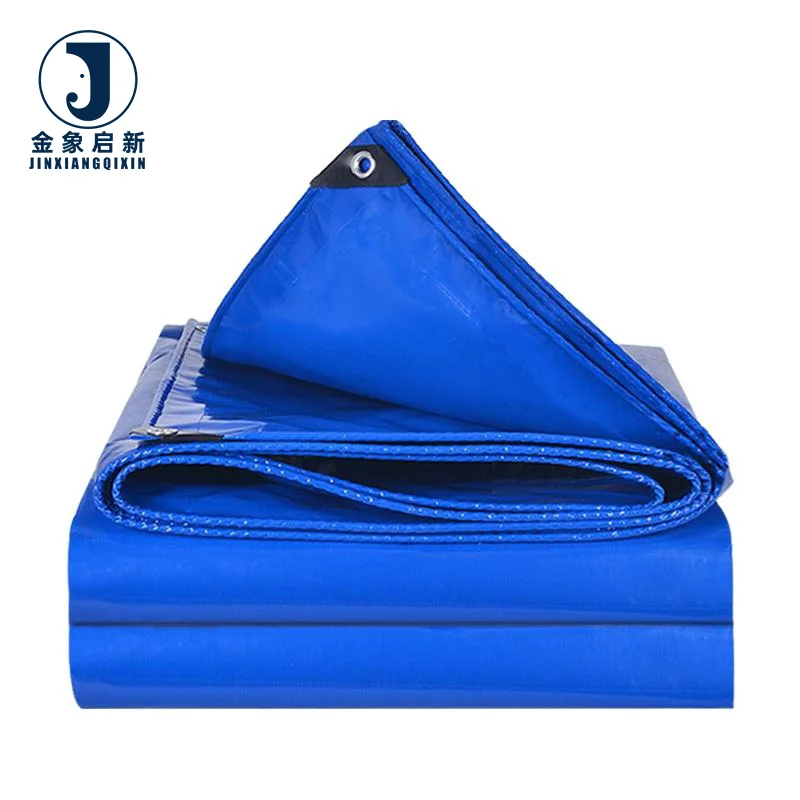
| Edge Finishing | High temperature heat sealed seamless edge wrapping |
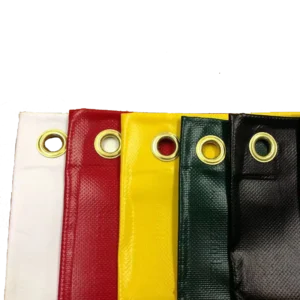
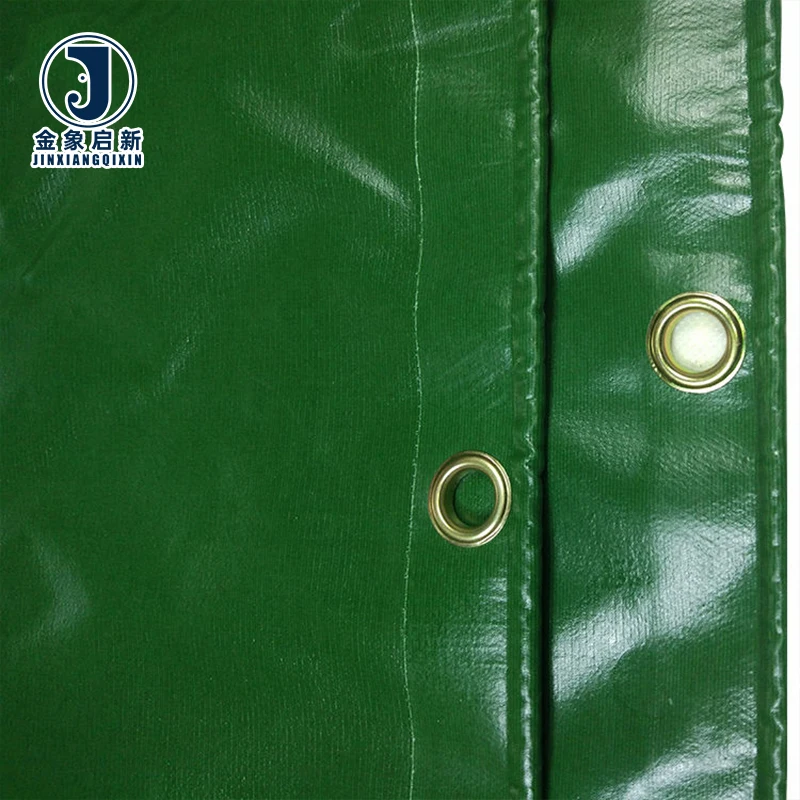
| Eyelet | 3cm enlarged aluminum alloy buttonhole |
| Corner Reinforcement | Reinforced corners on all sides |
| Rope | 5mm thick rope without splicing |
| Features | Water resistant, waterproof, flame retardant (grade not stated in source), anti-UV (test basis not stated in source) |
| Package | Roll packing, bale packing, carton |
| Standards | ISO, CE |
Application Suitability
| Application | Exposure & Requirement |
|---|---|
| Truck and trailer cover | Constant flexing, road vibration, wind load, UV and rain exposure |
| Railway wagon cover | Long-haul transit, weather cycling, tie-down tension at grommets |
| Machine and equipment cover | Outdoor storage, dust ingress, moisture, intermittent handling |
| Construction site cover | Debris impact, weather protection, temporary enclosure |
| Awning and tent fabrication | Roll-fed cutting and welding, colour uniformity across panels |
| Garden and terrace rain cover | Seasonal water exposure, folding and storage stress |
Why Batch Consistency Matters More Than the Quoted GSM for PVC Coated Tarpaulin Roll Wholesale
The quoted GSM means nothing if roll-to-roll weight drifts once production starts.
Buyers who source PVC coated tarpaulin roll wholesale often discover that the material arriving at the warehouse sits below the weight stated on the quotation. A roll specified at a certain GSM may arrive lighter because coating thickness varied across the production run. When fabricators cut and weld these rolls into finished covers, the lighter sections flex and abrade faster, and failures show up at the weld line or at stress points around the eyelets. Distributors then face returns from their own customers, eroding margin and reputation. [NEED_CITE: ISO 1421 tensile and tear test methods for coated fabrics]
Roll-to-Roll Weight Verification Before Dispatch
Each roll in a PVC coated tarpaulin roll wholesale shipment is individually weighed and recorded against the specification sheet before it leaves the production floor. The target GSM is set at the coating head, and in-process checks confirm that the wet coating thickness stays within tolerance as the line runs. This is not a sample-based spot check — it is a 100% inspection protocol applied to every roll in the order. When the container is sealed, the packing list carries the net weight per roll, so the receiving warehouse can cross-check on arrival without guesswork.
Colour Uniformity Across the Full Container Load
For buyers purchasing PVC coated tarpaulin roll wholesale in multiple rolls of the same colour, batch-to-batch shade consistency is a common source of complaint. Rolls produced in different dye lots or with pigment added at varying stages can show visible shade differences once laid side by side on a truck or awning frame. Our production process locks the colour reference at the compounding stage and runs the entire order from a single pigment batch where volume allows. Each roll is tagged with its batch number so that the colour traceability chain is intact from the mixer to the container. [NEED_CITE: Pantone or RAL colour reference systems for industrial coated fabrics]
Choosing Width and Roll Length for Efficient Fabrication
The product family spans denier options from 500D840D through to 1000D2000D, giving fabricators a range of tensile and tear strength profiles within a single supply source. Width and roll length are set to match the cutting table dimensions of the end user, reducing offcut waste and minimising the number of welded seams in the finished cover. For distributors reselling cut sizes, ordering in widths that align with common truck and trailer dimensions means fewer custom slits and faster turnaround. The base fabric construction at 500D1000D with a 3019 mesh count provides a balanced warp-to-weft ratio suited to flat-bed cutting and high-frequency welding.
Reading the Specification Sheet Beyond the GSM Number
GSM alone does not predict how the fabric will behave under load. The 500D1000D denier means the warp yarns are finer than the weft, which shifts tensile balance toward the weft direction — the 1900 N weft versus 2050 N warp reading reflects this construction choice. The 3019 mesh count tells a fabricator how many yarns per unit length carry the load; a denser weave distributes point loads from eyelets and tie-downs more evenly. The 0.38mm total thickness sits in the mid-range for knife-coated PVC, balancing flexibility for folding against puncture resistance for site use. PVC knife coating, as opposed to laminating, bonds the coating into the weave interstices rather than sitting on the surface, which improves peel strength at welded seams and reduces delamination risk when the fabric flexes repeatedly. [NEED_CITE: knife coating versus lamination adhesion mechanisms in PVC coated polyester]
What Happens When Specification Choices Are Wrong
Ordering a roll that is too light for the application leads to early coating abrasion at fold lines and around grommet reinforcements, where stress concentrates with every tie-down cycle. Choosing a fabric without confirming the flame retardant grade needed for the destination market can result in a failed site inspection and a full material rejection — available in flame retardant grades, but confirm the grade required for your market before production starts. Colour shade drift between rolls in the same shipment forces fabricators to sort and segregate panels, adding labour and delaying delivery. Inadequate edge sealing allows moisture to wick into the base fabric at cut edges, accelerating yarn degradation and reducing service life well before the coating itself fails. [NEED_CITE: common failure modes in PVC coated tarpaulin at reinforced hems and eyelets]
Why Distributors Source This Product Line Here
Three full production lines and 36 sets of professional equipment support bulk roll output with reliable scheduling, so a multi-container order does not stall behind a single-line bottleneck. A 10-person R&D team handles custom width slitting, colour matching and sample development in-house, cutting the turnaround from enquiry to approved sample. Dedicated QA/QC runs at every production stage with 100% pre-shipment inspection, meaning the packing list you receive reflects measured values, not target values. Nearly 30 years of coating process control means adhesion weight and coating penetration are managed by experienced line operators, not left to automated guesswork. Roll packing, bale packing and carton options are selected to match the buyer’s warehouse racking and distribution format, reducing repacking labour at destination.
Documentation & Verification
- Material specification sheet stating base fabric denier, mesh count and coating weight per roll
- Pre-shipment inspection record with individual roll weight verification
- Roll packing list with net weight, roll count and batch number for container loading
- Colour reference confirmation tied to a single pigment batch across the order
- Test reports for UV and flame retardant grades where applicable and confirmed at enquiry
- ISO and CE certificates available with each shipment
Fabrication, Handling & Storage
- Set high-frequency welder dwell time to suit the 0.38mm total thickness for consistent seam peel strength
- Use the 3cm enlarged aluminum alloy buttonhole specification to match grommet press die size
- Store rolls upright on end cores to prevent flat-spot creasing across the 500D*1000D base fabric
- Allow rolls to acclimatise above the brittle temperature threshold of -50 to -60 ℃ before unrolling in cold climates
- Cut with a heated blade to seal edges and prevent fraying of the 30*19 mesh count base weave
- Apply the 5mm thick rope through reinforced hem channels to distribute tie-down load evenly
What to Include in Your Enquiry
To quote accurately, we need to know the end-use application and the environmental exposure the finished cover will face — whether it is a static outdoor store or a moving truck side curtain. Specify the width and roll length your cutting table requires, and the annual volume you plan to order so that production runs can be batched efficiently. If your market mandates a particular flame retardant or anti-UV standard, state the grade and test method in your initial enquiry so that the correct treatment is formulated before sampling begins.
Frequently Asked Questions
Q: How do you guarantee GSM matches the quotation on arrival?
A: Every roll is individually weighed and recorded against the specification sheet during 100% pre-shipment inspection. The packing list shipped with the container lists the measured net weight per roll, so your receiving team can cross-check against the quoted GSM without opening the packaging. Any roll outside tolerance is flagged and replaced before dispatch.
Q: Can you maintain colour consistency across all rolls in a single order?
A: Yes. The entire order is produced from a single pigment batch where volume allows, and each roll carries a batch number for traceability. This ensures that when rolls are unrolled side by side for fabrication, the shade remains uniform across the full container load.
Q: What width and roll length options are available?
A: Widths and roll lengths are set to match your cutting table dimensions and fabrication requirements. Available denier options in this product family range from 500D840D to 1000D2000D. Provide your target dimensions at enquiry stage so that the production run is slit and wound to your specification.
Q: How are rolls packed for ocean freight?
A: Rolls are available in roll packing, bale packing or carton packaging depending on your warehouse handling and distribution format. The packing method is confirmed at order stage to optimise container loading by roll count and weight, and to protect the coating surface during transit.
Q: What documentation ships with each order?
A: Each shipment includes a material specification sheet, pre-shipment inspection record, roll packing list with batch numbers, and ISO and CE certificates. Flame retardant and anti-UV test reports are provided where the grade has been confirmed and applied to the production run.