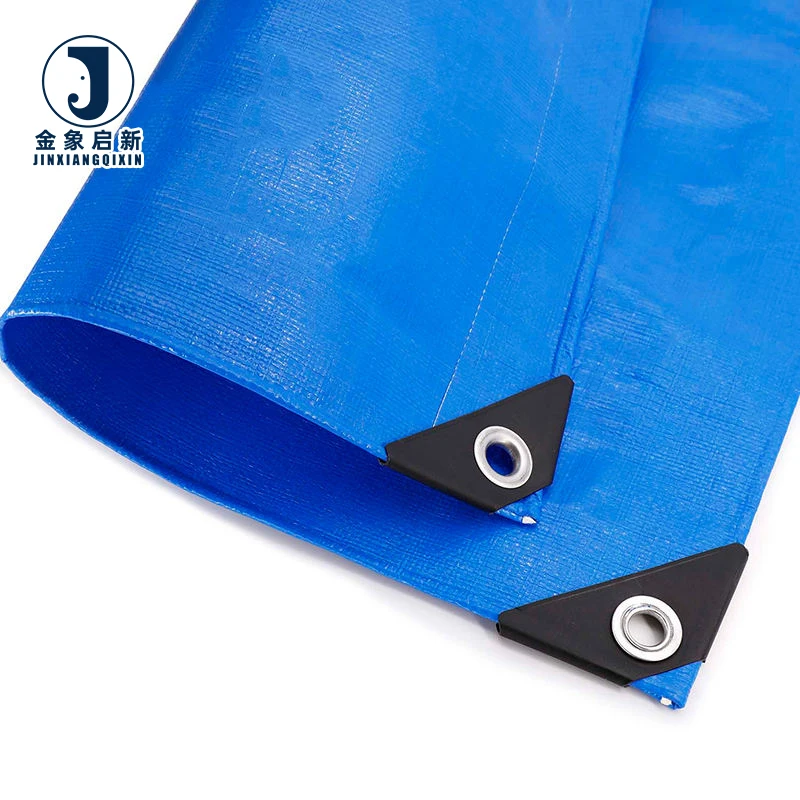
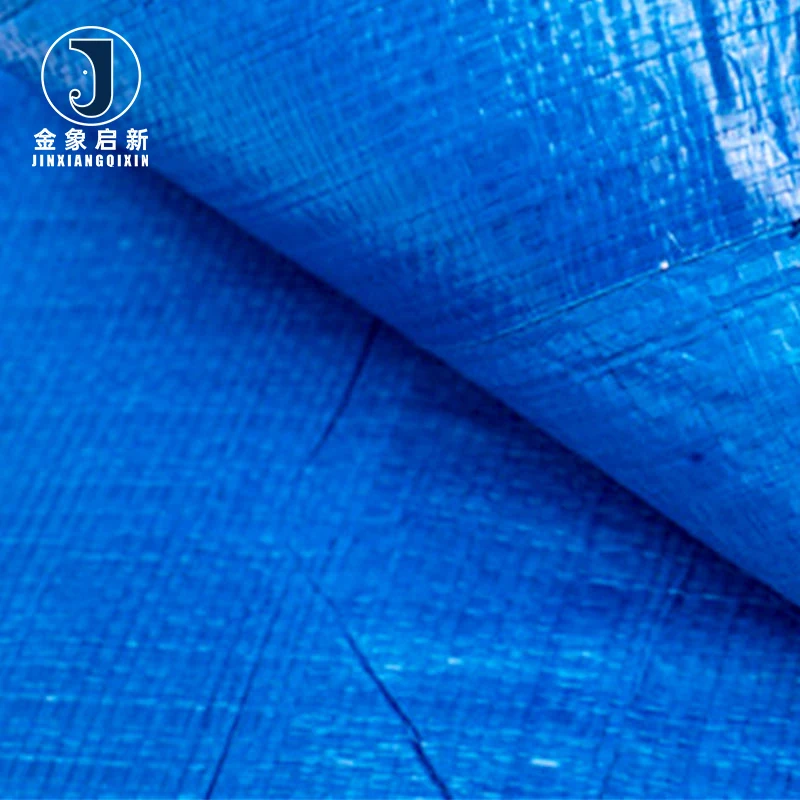
Description
Roll-to-Roll Consistency — every PE tarpaulin roll is weighed, measured and colour-checked against the purchase order before container loading, eliminating GSM shortfalls and batch mismatch at destination.
Technical Specifications
| Parameter | Value |
|---|---|
| Product Type | PE Tarpaulin Roll |
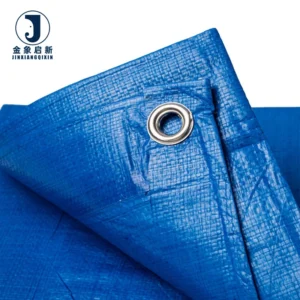
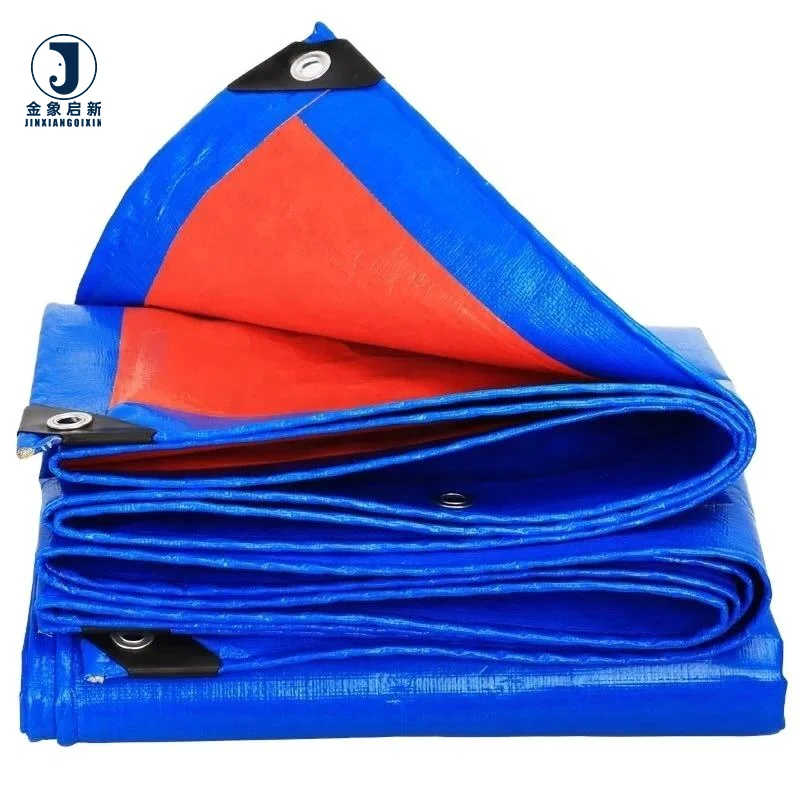
| Material | HDPE weaving with LDPE lamination on both sides |
| Weight (GSM) | 50 gr/m² – 220 gr/m² (confirm grade for your application) |
| Total Thickness | 0.2 mm – 0.4 mm / 8 mil – 16 mil |
| Roll Width | 6 ft, 8 ft, 10 ft, 12 ft / 2 m, 4 m, 6 m |
| Roll Length | 100 yards, 100 meters, or custom |
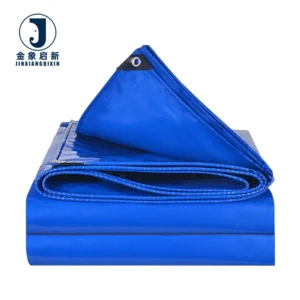
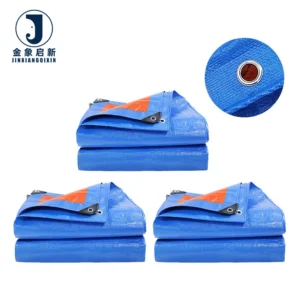
| Finished Sheet Edges | All four edges reinforced with PP rope in hem |
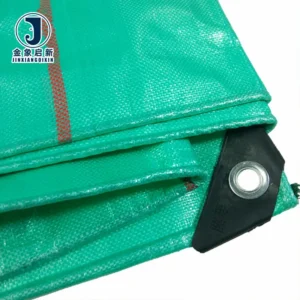
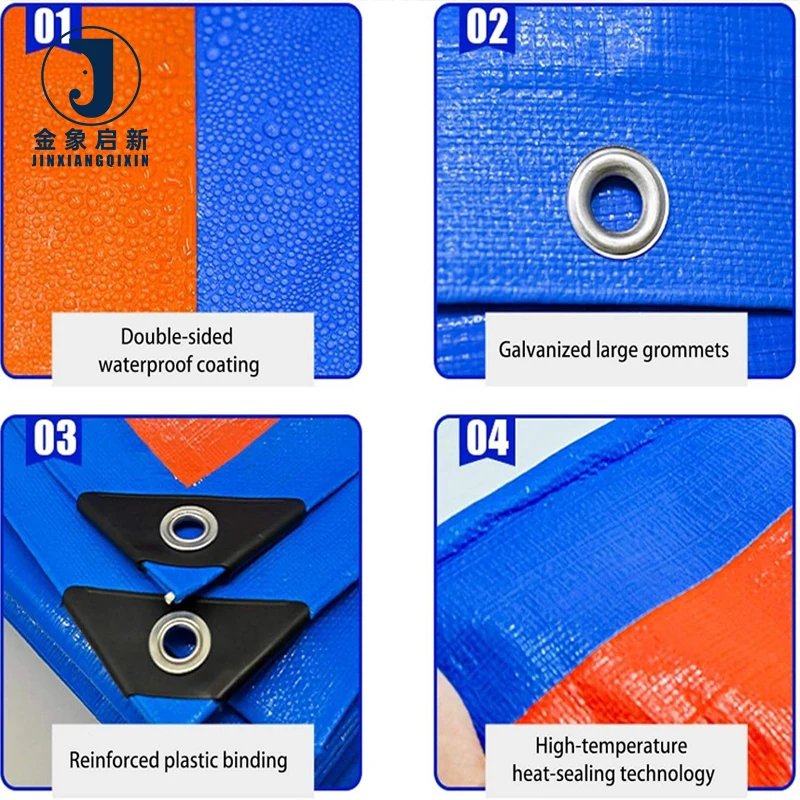
| Eyelets | Galvanized eyelets every 3 ft or 1 m interval |
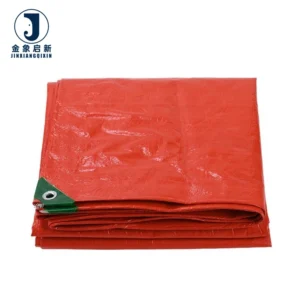
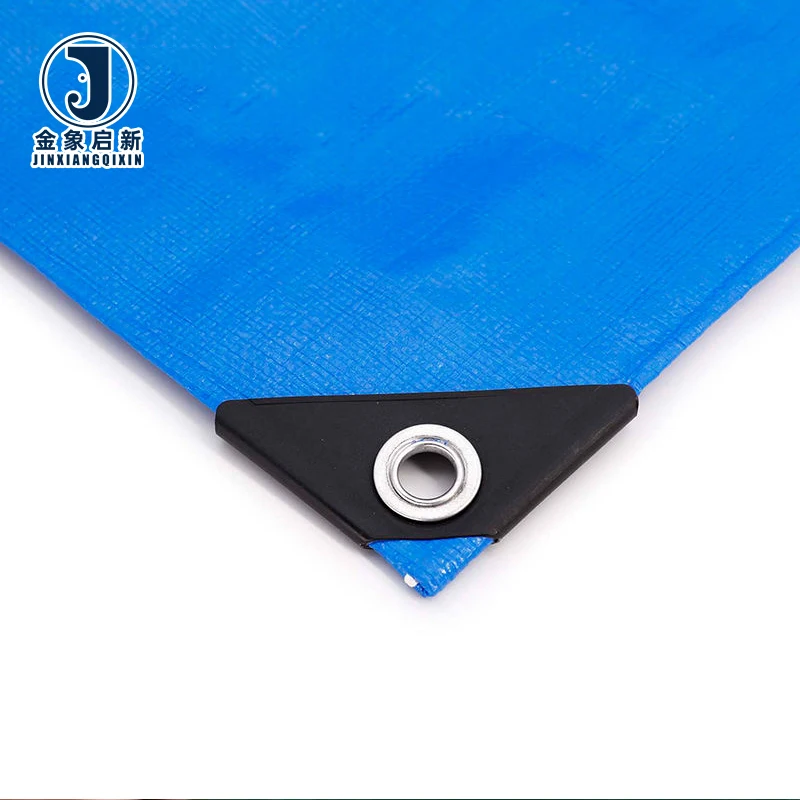
| Corners | Reinforced plastic corners on finished sheets |
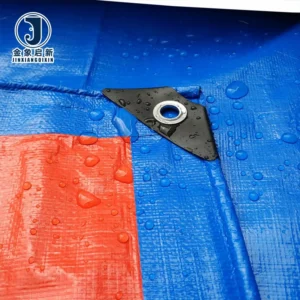
| Colour Options | Blue, Blue/Orange, Green, Grey, Black, Clear, Grey/Green, Orange, or custom |
| UV Treatment | Available (confirm grade required for your market) |
| Anti-Mildew | Available (confirm grade required for your market) |
| Anti-Aging | Anti-oxidant additive available (confirm grade required for your market) |
| Corrosion Resistance | Acid and alkali resistant formulation available (confirm grade required for your market) |
| Certifications | ISO and CE (company-level, not product-specific test report) |
Application Suitability
| Application | Exposure & Requirement |
|---|---|
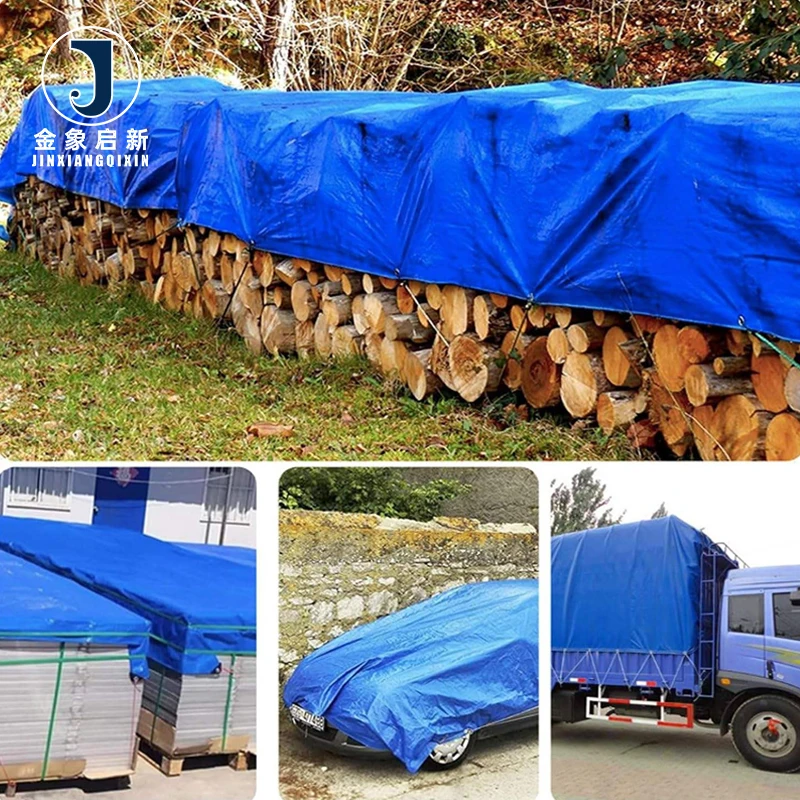
| Scaffolding covers on construction sites | Wind-driven rain, UV exposure, repeated installation and removal, abrasion against steel tube joints |
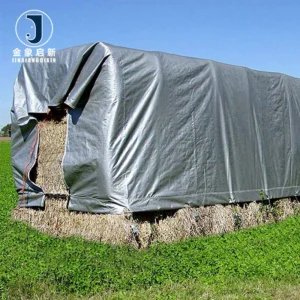
| Agricultural stockpile covers | Direct sunlight, standing water, fertiliser and chemical contact, puncture from uneven surfaces |
| Pond and reservoir lining sheets | Permanent water contact, soil chemistry, UV degradation at exposed edges |
| Transportation and storage wrapping | Road debris impact, tie-down strap pressure, moisture ingress during transit |
| Equipment protection on job sites | Dust, rain, UV, contact with hydraulic fluids and solvents |
Why Colour Shift Across Rolls Matters More Than Price Per Kilogram
Batch colour uniformity is the real benchmark of a reliable PE tarpaulin roll stock supplier.
When a distributor receives a container of PE tarpaulin rolls, the specification sheet may read correctly, but if one roll skews towards a cooler blue and the next leans green-grey, the mismatch becomes immediately visible once the sheets are cut and installed side by side. This is not a cosmetic complaint — end users reject the lot, and the distributor absorbs the return cost. [NEED_CITE: visual colour matching standards for woven laminated fabrics] Colour drift within a single production run typically traces to inconsistent masterbatch dosing or temperature fluctuation at the lamination die. Controlling it requires real-time monitoring at the extrusion stage, not just a final visual check.
Roll Width and Length Selection for Container Loading Efficiency
When buying PE tarpaulin roll stock wholesale, the combination of roll width and container dimensions determines how much dead air you ship. A 20-foot container holds a specific number of rolls depending on diameter, which itself depends on GSM and roll length. Buyers stocking multiple widths — 2 m, 4 m, and 6 m — can mix roll counts to fill the container floor and height, reducing per-roll freight cost. Standard lengths of 100 meters or 100 yards suit most distribution markets, while custom lengths reduce downstream cutting waste for fabricators who produce finished sheets in fixed sizes.
Maintaining GSM Integrity From Quotation to Warehouse Floor
The PE tarpaulin wholesale market is crowded with suppliers who quote one weight and deliver another. A 90 gr/m² roll that arrives at 78 gr/m² has lost roughly 13 percent of its material — most of it in the LDPE coating, which directly reduces waterproof integrity and tear resistance. Pre-shipment weighing of every roll against the stated specification, recorded on an inspection document that travels with the shipment, is the only practical safeguard. [NEED_CITE: coated fabric weight verification methods per ISO testing protocols] This is standard practice on a well-managed production line and should be non-negotiable in any bulk purchasing agreement.
How HDPE Weave Density and LDPE Lamination Interact
The waterproof performance of a PE tarpaulin depends on two separate systems working together: the HDPE woven base fabric provides tensile strength and dimensional stability, while the LDPE lamination on both sides seals the weave gaps and creates the water barrier. A higher GSM achieved by adding more coating — rather than using a denser base weave — may pass the weight check but delivers a heavier sheet with proportionally less structural strength. Tear propagation resistance depends primarily on base fabric denier and thread count. The LDPE lamination thickness affects surface waterproofing, flexibility at low temperatures, and heat-seal behaviour during fabrication. Understanding which component contributes to which property lets a technical buyer specify intelligently rather than relying on GSM alone.
The Hidden Cost of Accepting Generic Roll Stock Without Inspection
A distributor who skips pre-shipment inspection to save a few days of lead time may discover problems only after the rolls reach the regional warehouse. Rolls that are narrower than specified waste material when customers order cut sizes that assume full width. Inconsistent eyelet spacing on finished sheets creates weak points under tie-down straps. [NEED_CITE: field failure analysis of laminated PE tarpaulin sheets] UV treatment that was claimed on paper but not applied at the correct dosage leads to embrittlement within the first season of outdoor use. Each of these defects compounds: one rejected shipment erases the margin on several profitable ones.
Production Controls That Matter at Roll-Stock Scale
Three full production lines with 36 sets of professional equipment provide the capacity to fill container orders without splitting a single batch across multiple runs — the primary cause of roll-to-roll colour and GSM variation. A 10-person R&D team handles custom width slitting, colour matching, and sample development, delivering test rolls within days for buyer approval before full production begins. Dedicated quality checks at every stage — base fabric weaving, LDPE extrusion and lamination, slitting, winding and packing — catch deviations before they compound. [NEED_CITE: quality control checkpoints in PE lamination production] One hundred percent pre-shipment inspection against the purchase order specification is conducted before any roll is loaded for dispatch, and samples are retained from every batch for traceability.
Documentation & Verification
- Material specification sheet stating confirmed GSM, HDPE base weave details, LDPE coating weight and colour reference
- Pre-shipment inspection record verifying roll weight, width and length against the purchase order
- Roll packing list with net weight, roll count and roll ID for container loading planning
- Certificate of origin and customs documentation for international PE tarpaulin shipments
- UV and anti-aging treatment confirmation aligned to the grade specified at order placement
Fabrication, Handling & Storage
- Heat-seal temperature must match the LDPE lamination grade — test on a scrap piece from the same roll first
- Galvanized eyelets at 1 m intervals distribute tie-down load across the PP rope reinforced hem
- Store rolls horizontally on pallets in a shaded area to prevent UV exposure before fabrication
- Unroll flat and allow the sheet to relax before cutting to avoid distorted dimensions from winding tension
- Cut with a hot knife to seal the HDPE weave edge and prevent fraying along the weft line
- Finished sheets with reinforced plastic corners resist tearing at high-stress grommet positions
What to Include in Your Enquiry
Specify the target GSM range, roll width and length preferences, and the colour or colour combination your market requires. If your end users demand UV-treated or anti-aging grades, state the performance level your market expects so the correct formulation can be matched. Indicate whether you need roll stock only or finished sheets with eyelets and hemming, and confirm your annual volume to align production scheduling.
Frequently Asked Questions
Q: How is GSM verified on each roll before shipment?
A: Every roll is individually weighed on calibrated scales and measured for width and length against the purchase order specification. Results are recorded on a pre-shipment inspection document that accompanies the shipment, so the buyer can cross-check on arrival. Any roll falling outside the agreed tolerance is replaced before dispatch.
Q: What widths and roll lengths are available for container loading?
A: Standard roll widths include 2 m, 4 m and 6 m, with imperial equivalents from 6 ft to 12 ft. Roll lengths are 100 meters or 100 yards as standard, with custom lengths available on request. A mixed-width container load plan can be provided to maximise container utilisation and reduce freight cost per roll.
Q: How do you control colour consistency across rolls in the same order?
A: All rolls within a single order are produced in one continuous batch run using the same masterbatch formulation and lamination temperature settings. Colour is checked at the extrusion stage and again at final winding. Rolls from different production runs are never mixed in the same shipment without prior buyer approval.
Q: What documentation ships with the bulk PE tarpaulin order?
A: Each shipment includes a material specification sheet confirming GSM and colour reference, a pre-shipment inspection record, a roll packing list with roll count and weights, and a certificate of origin. UV or anti-aging treatment confirmation is included where applicable based on the grade specified at order placement.
Q: What is the minimum order quantity for a custom width or colour?
A: Minimum order quantities depend on the specific GSM, width and colour requested, as custom runs require dedicated masterbatch preparation and line setup. Submit your target specification and volume for a confirmed minimum and lead time. Sample rolls can be produced for approval before the full order enters production.