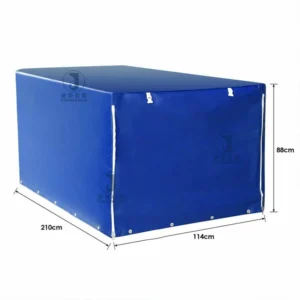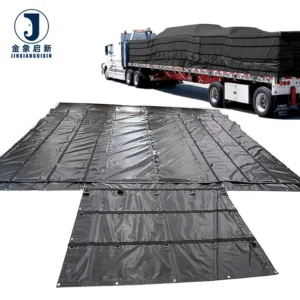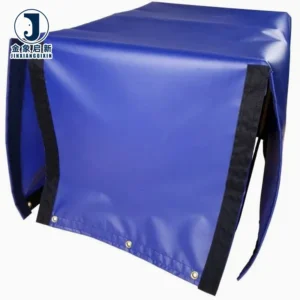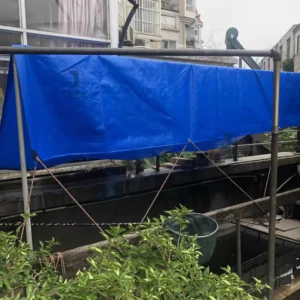
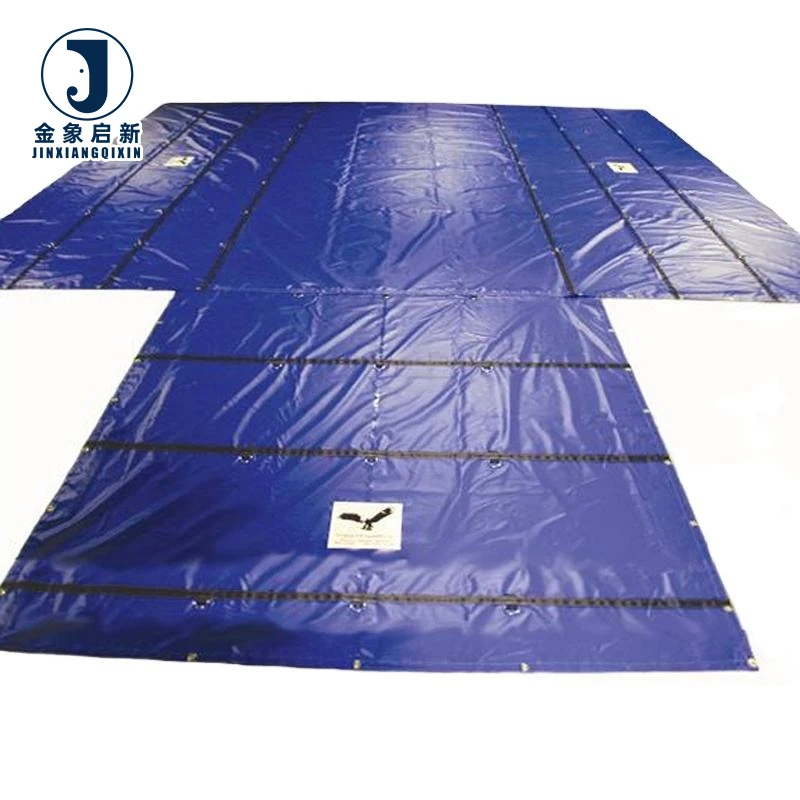
Description
Proven Bulk Consistency — Every roll of PVC Lumber Tarpaulin 8ft. Drop with 3 Rows of D-Rings is weighed and shade-checked against the quoted 610gsm target before dispatch, eliminating the surprise of lighter or off-colour fabric on the receiving dock.
Technical Specifications
| Parameter | Value |
|---|---|
| Product Type | PVC Truck Cover |
| Base Fabric Denier | 1000×1000D |
| Mesh Count | 20×20 / 18×18 |
| Coating Material | PVC |
| Weight | 18 ounces (610gsm) |
| Total Thickness | 0.70–1.0 mm (heavy-duty variant — confirm the grade for this item) |
| Color | Black / Blue |
| Temperature Range | -35 ~ 70 °C |
| Acid-Resistant | Yes (grade not stated) |
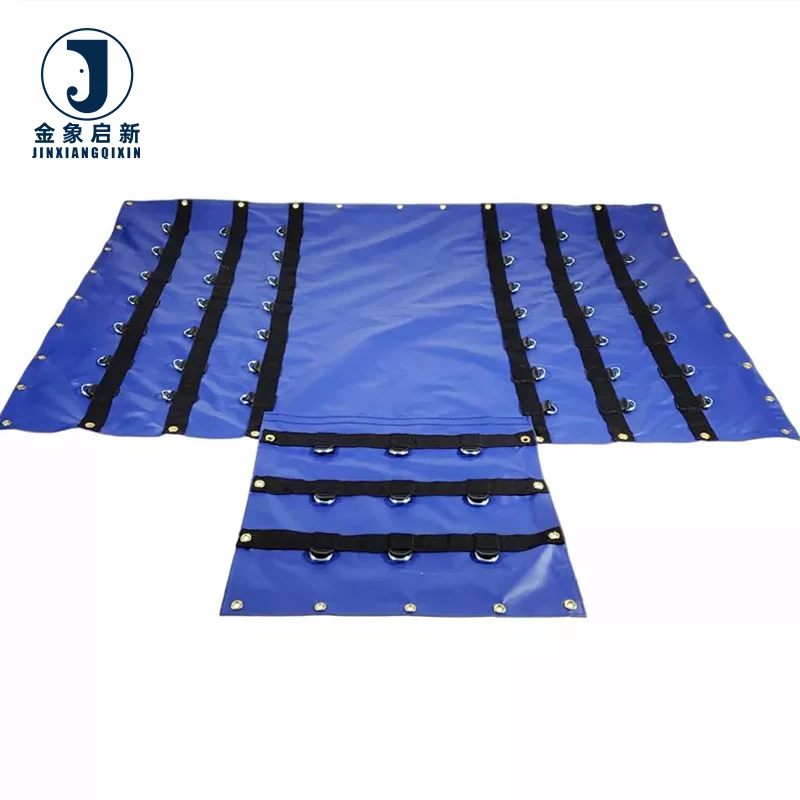
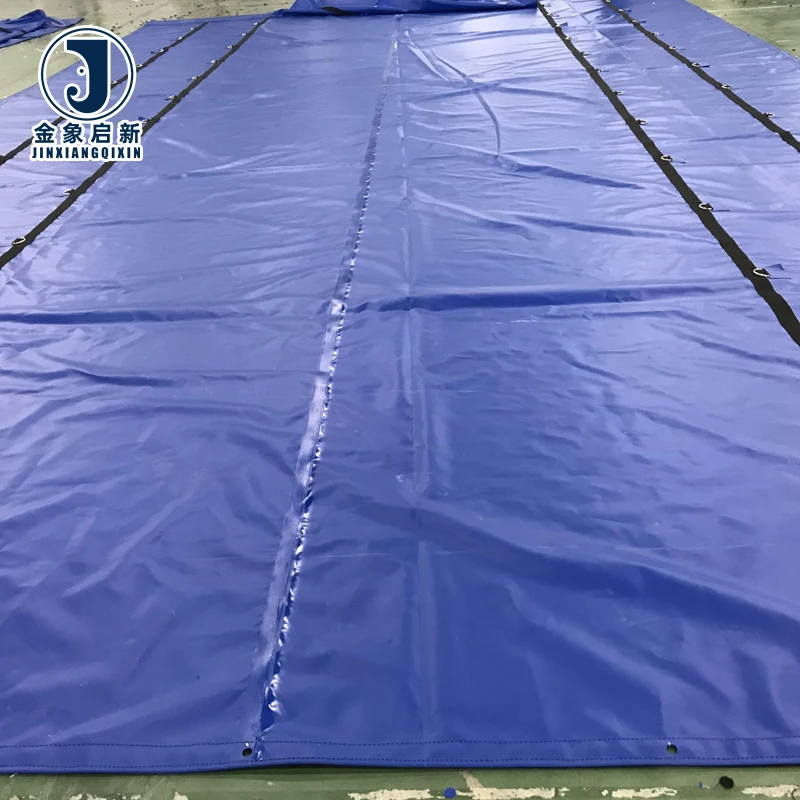
| Dimensions | 24′ × 27′ with 8ft. Drop |
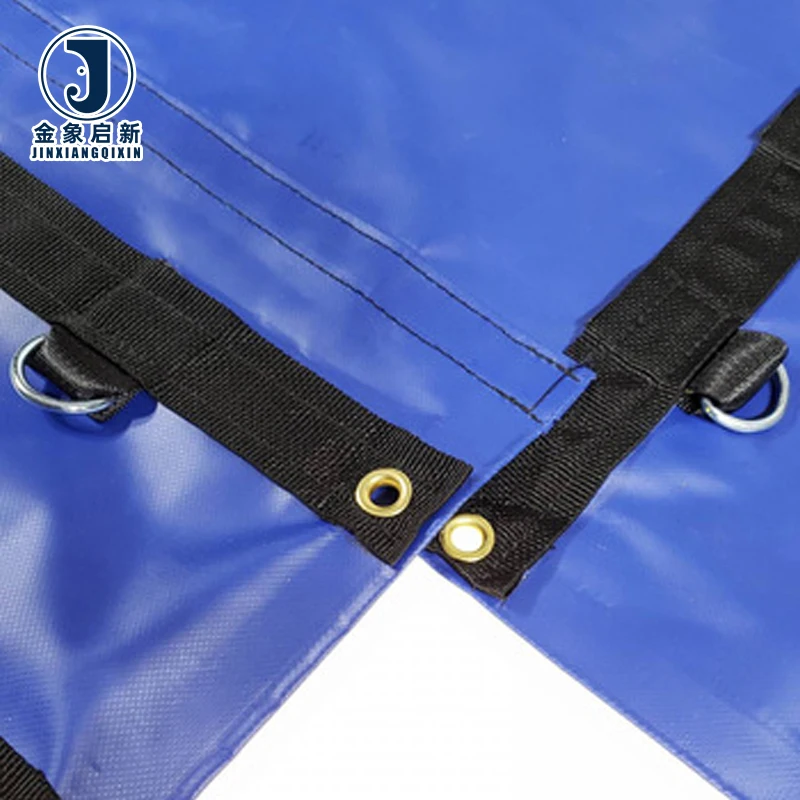
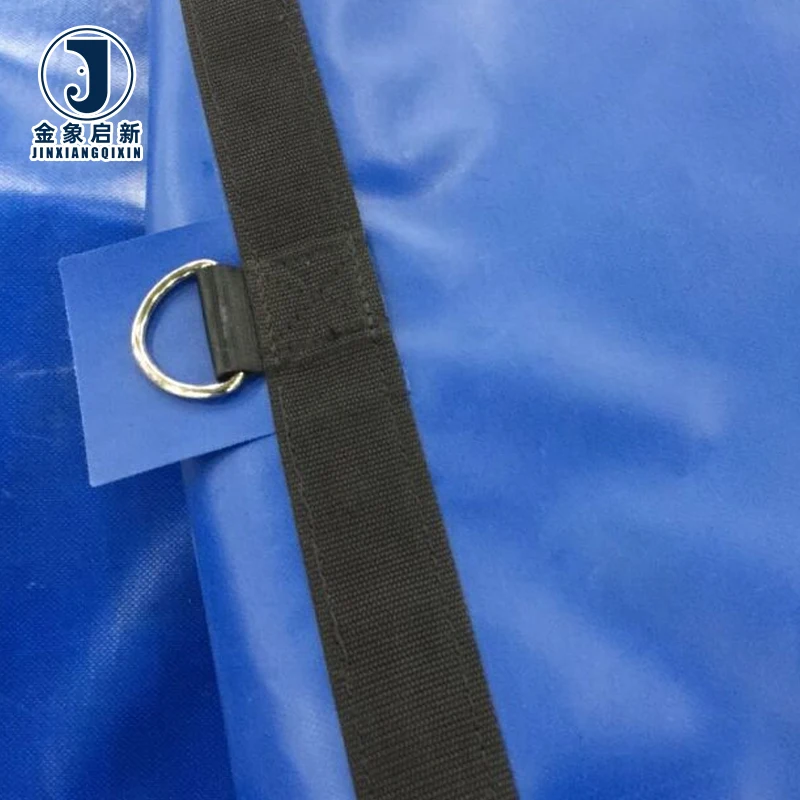
| D-Rings | 3 Rows |
| Tensile Strength (Medium-Duty) | Longitude 1500–2000 N/5cm / Latitude 1200–1800 N/5cm |
| Tensile Strength (Heavy-Duty) | Meridian 2000–2500 N/5cm / Latitude 1800–2200 N/5cm |
| Standards | ISO, CE |
Application Suitability
| Application | Exposure & Requirement |
|---|---|
| Flatbed trailer lumber transport | Constant highway flex, rainwater ingress, UV radiation, road debris impact |
| Long and high stacked loads (wood, wall panels) | Abrasion at contact points, wind uplift, sustained tension from tie-down straps |
| Construction material distribution | Repeated daily deployment and folding, chemical exposure from treated lumber |
| Fleet standardisation across mixed trailers | Roll-to-roll colour and weight consistency for uniform fleet appearance |
Why Roll-to-Roll GSM Variance Undermines Fleet Procurement
A quoted 610gsm means nothing if the scale tells a different story when the container arrives.
When a logistics fleet orders PVC Truck Cover for flatbed trailer deployments in bulk, the expectation is that every roll hitting the warehouse floor matches the specification on the purchase order. In practice, buyers frequently discover that the material weighs less than agreed — sometimes by a margin large enough to compromise tensile performance at critical tie-down points. A shortfall of even a few ounces per square yard across a container load signals inconsistent coating application, and the resulting tarps fail earlier at the welded seams where the load flexes most [NEED_CITE: tensile and tear test methods for coated fabrics per ISO 1421]. Holding GSM within tolerance is not a matter of final inspection alone; it requires in-process control at the coating head.
Bulk Availability Without Sacrificing Shade Uniformity
Fleet operators and tarpaulin distributors ordering PVC Truck Cover for flatbed trailer applications need container-quantity stock that looks identical roll after roll. Colour variation between adjacent rolls becomes immediately visible once tarps are deployed side by side on neighbouring trailers, undermining fleet branding and triggering rejection at the receiving yard. Our in-process QA protocol monitors pigment dispersion and coating weight simultaneously, holding shade within tolerance across every roll in a bulk shipment so that a full container load presents a uniform appearance on arrival.
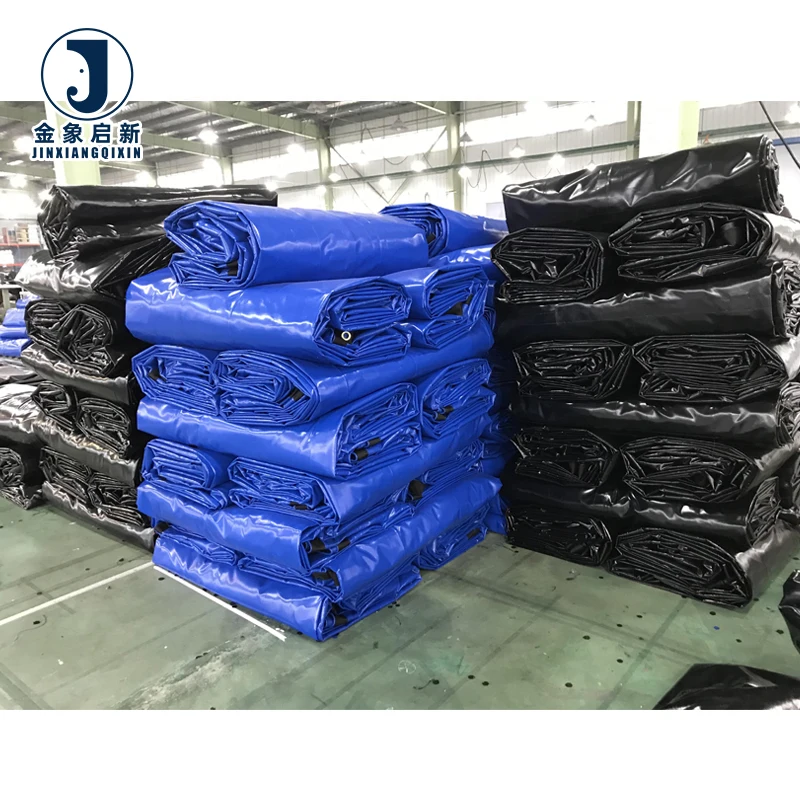
Container Loading Planned by Roll Count and Weight
Efficient freight planning demands certainty on how many rolls fit a container and what the gross weight will be before booking space. Each roll of this PVC lumber tarpaulin is packed with an individual weight record and colour reference, and the loading plan is calculated by roll count and total weight to maximise container utilisation. Distributors stocking standard lumber, steel, and smoke tarp sizes benefit from predictable lead times and documented container plans that integrate with existing warehouse receiving workflows [NEED_CITE: ISO quality management documentation for coated fabric shipments].
Reading the Specifications That Actually Matter
The 1000×1000D base fabric with 20×20 or 18×18 mesh count provides the dimensional stability needed when a loaded flatbed flexes through highway curves and braking events. GSM alone does not determine tear resistance; the denier and weave density of the base fabric govern how a puncture propagates once initiated by road debris. The PVC coating at 610gsm (18oz) contributes waterproofing and UV shielding, but the adhesion between coating and base fabric — governed by coating method and curing parameters — determines whether the laminate delaminates under sustained tie-down tension. Temperature service range from -35 to 70 °C ensures the PVC compound remains flexible in winter dispatches and does not soften excessively on summer asphalt, maintaining D-ring anchorage integrity across seasonal extremes.
The Hidden Cost of Specifying on Price Per Roll Alone
When procurement decisions rest solely on unit cost, the buyer inherits the risk of coating weight shortfalls that only surface after months of service. Tarps that arrive underweight show accelerated wear at hem lines and D-ring anchor points — precisely where the load transfers stress during transit. Welded seams on underweight fabric fail before the body of the tarp does, because there is insufficient coating mass to form a durable thermal bond. A container of off-spec rolls may pass initial visual inspection but generates warranty claims and replacement orders that erode the margin gained on the original purchase [NEED_CITE: weld seam durability testing for PVC coated fabrics under cyclic load].
Why Distributors and Fleets Source This PVC Truck Cover Here
Three full production lines and 36 sets of professional equipment support bulk capacity with reliable on-time delivery, so container orders ship on schedule rather than accumulating back-order penalties. A dedicated QA/QC protocol inspects every roll at each production stage with 100% pre-shipment verification, meaning no PVC lumber tarpaulin leaves the facility without documented weight and colour sign-off. The 10-person R&D team handles custom width and colour development within days, providing samples before commitment. Deep process control over coating weight and adhesion — built over nearly 30 years focused on coated fabric — ensures the 610gsm specification is met consistently, not averaged across a batch. Roll packing lists include individual roll weight and colour reference, giving receiving teams the documentation needed for immediate verification.
Documentation & Verification
- Pre-shipment inspection record confirming 610gsm against the quoted value per roll
- Roll packing list with individual weight and colour reference for receiving check
- Container loading plan detailing roll count and gross weight for freight planning
- Material specification sheet stating base fabric denier, mesh count, and coating type
- ISO and CE certificates covering production and material compliance
- Test report for acid resistance available upon request — confirm the grade required for your market
Fabrication, Handling & Storage
- Heat-weld seams at temperatures matched to the 610gsm PVC coating to ensure bond strength exceeds base fabric tear
- Reinforce D-ring anchor plates through all coating layers to distribute tie-down loads across the 1000×1000D base fabric
- Store rolls upright on pallets to prevent permanent creasing in the 0.70–1.0 mm heavy-duty variant
- Allow cold-stored rolls to acclimate above 10 °C before unrolling to avoid cracking the PVC coating
- Use mild detergent for cleaning; avoid solvents that degrade the PVC surface and compromise colour consistency
- Plan cutting layouts around standard 24′ × 27′ dimensions to minimise waste on flatbed lumber tarp production runs
Before You Request a Quote
Provide your target flatbed trailer models and annual roll consumption so we can align production scheduling with your fleet replacement cycle. Specify whether you need standard Black or Blue, or a custom colour matched to your fleet identity, and indicate if you require roll stock only or finished tarps with D-ring reinforcement. Confirm any acid-resistance grade requirements if your cargo includes chemically treated lumber or building materials.
Frequently Asked Questions
Q: How do I verify the GSM on arrival matches the quotation?
A: Cut a measured sample from each roll, weigh it on a calibrated scale, and compare against the stated 610gsm specification. Our pre-shipment inspection record documents the weight of every roll before dispatch, giving you a baseline for comparison at the receiving dock.
Q: How do you maintain colour consistency across a bulk order?
A: Pigment dispersion and coating weight are monitored simultaneously at the coating head during production. Each roll is shade-checked against the approved colour reference, and the packing list records the colour batch so you can verify uniformity before deployment.
Q: What flatbed tarp sizes are available and how many rolls fit a container?
A: The standard size is 24′ × 27′ with 8ft. Drop. Container loading plans are calculated by roll count and gross weight based on your order quantity, maximising utilisation and providing predictable freight costs for your logistics planning.
Q: What is the MOQ and lead time for custom width or colour?
A: Custom width and colour options are available with MOQs and lead times that depend on the specific requirement. Our R&D team develops samples within days so you can approve shade and weight before full production commitment.
Q: How are D-rings spaced and reinforced for different tie-down systems?
A: The 3-row D-ring pattern distributes tie-down loads across the base fabric. Spacing and hem reinforcement can be adjusted to match your fleet’s specific strap and chain configurations — provide your tie-down specifications when requesting a sample.