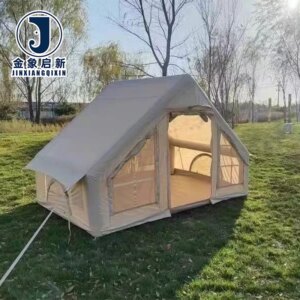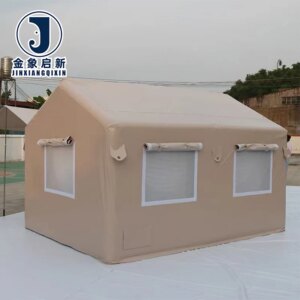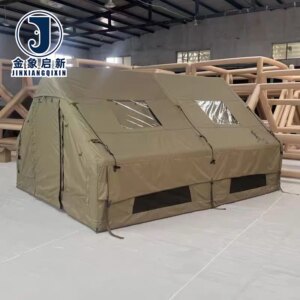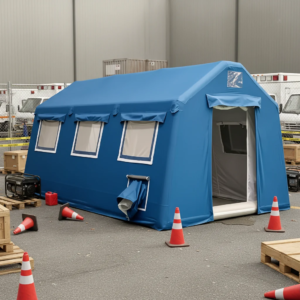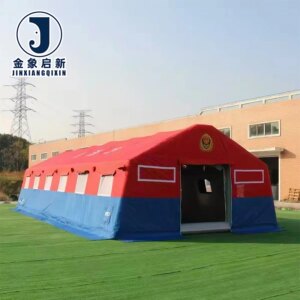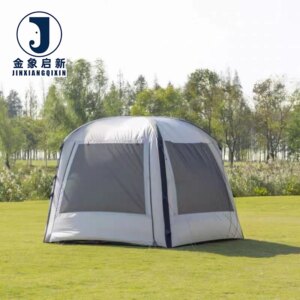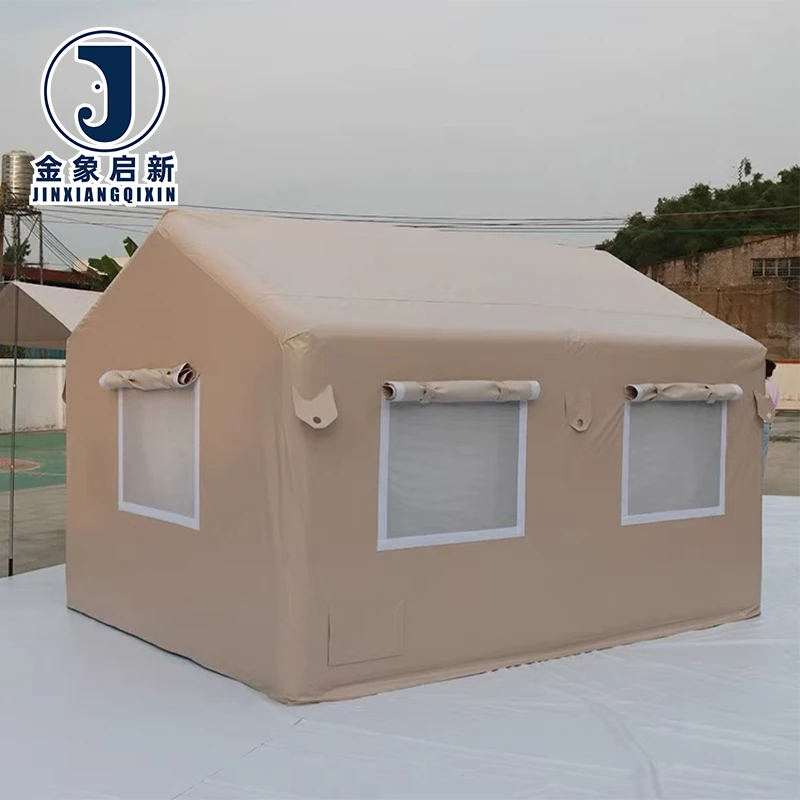
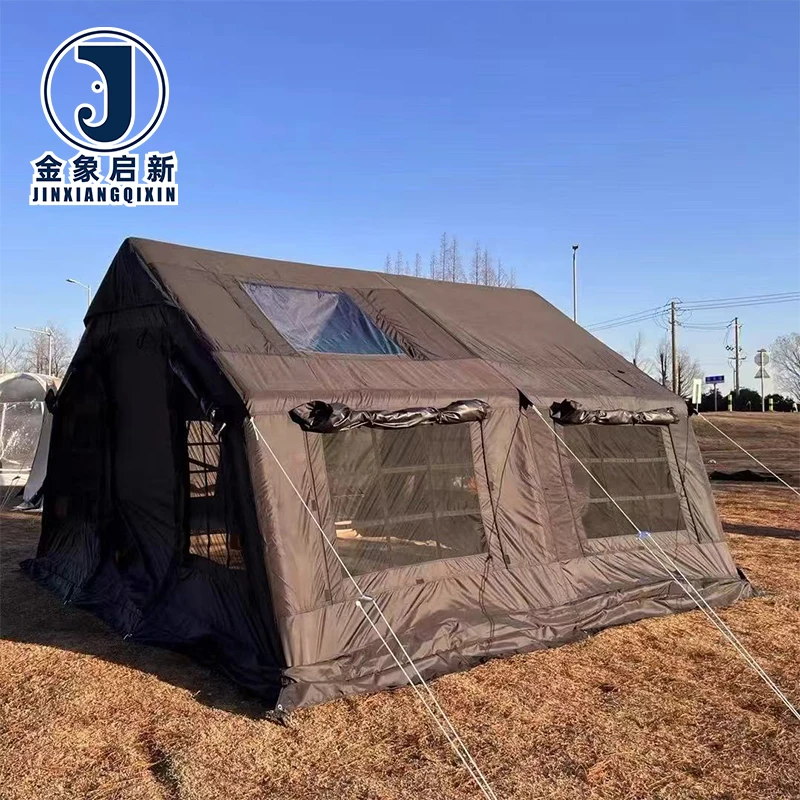
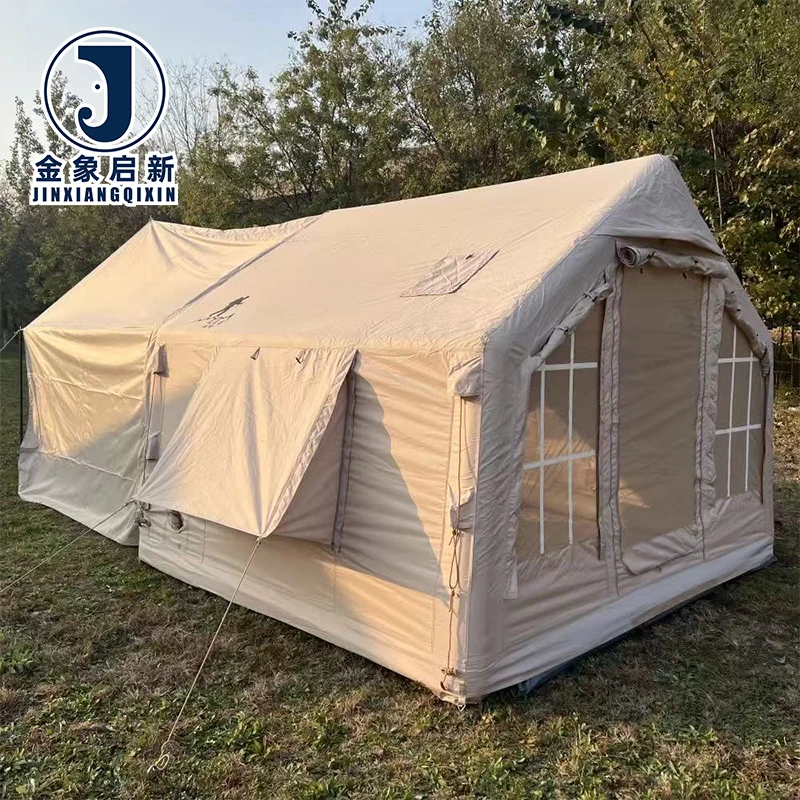
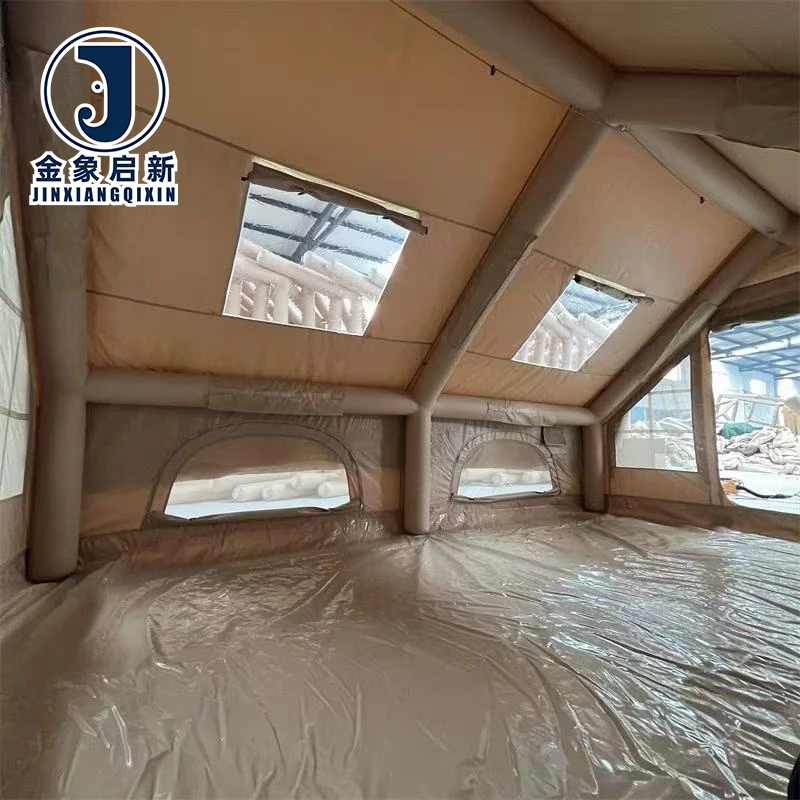
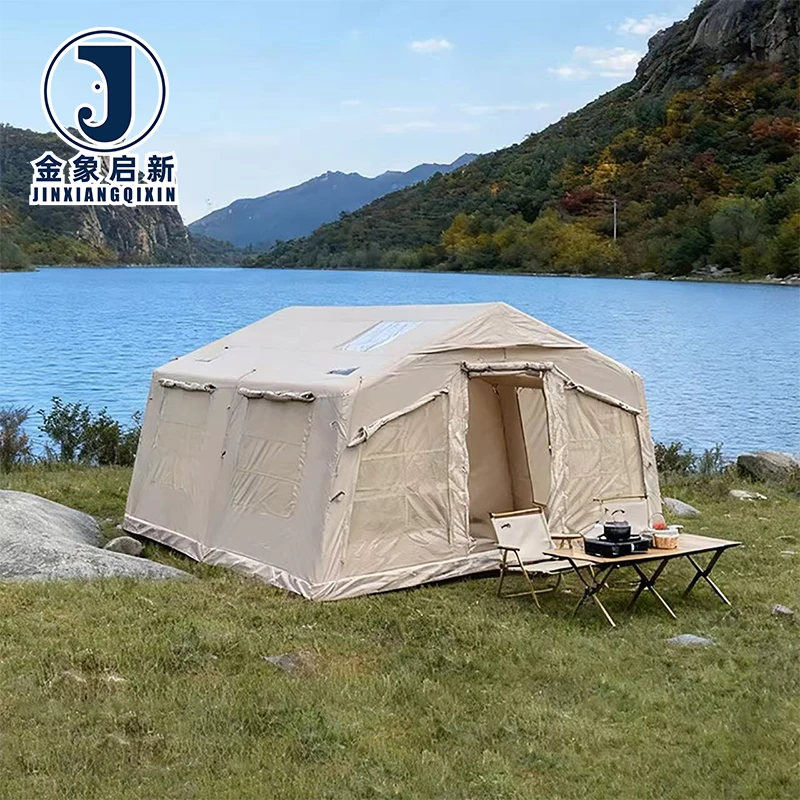
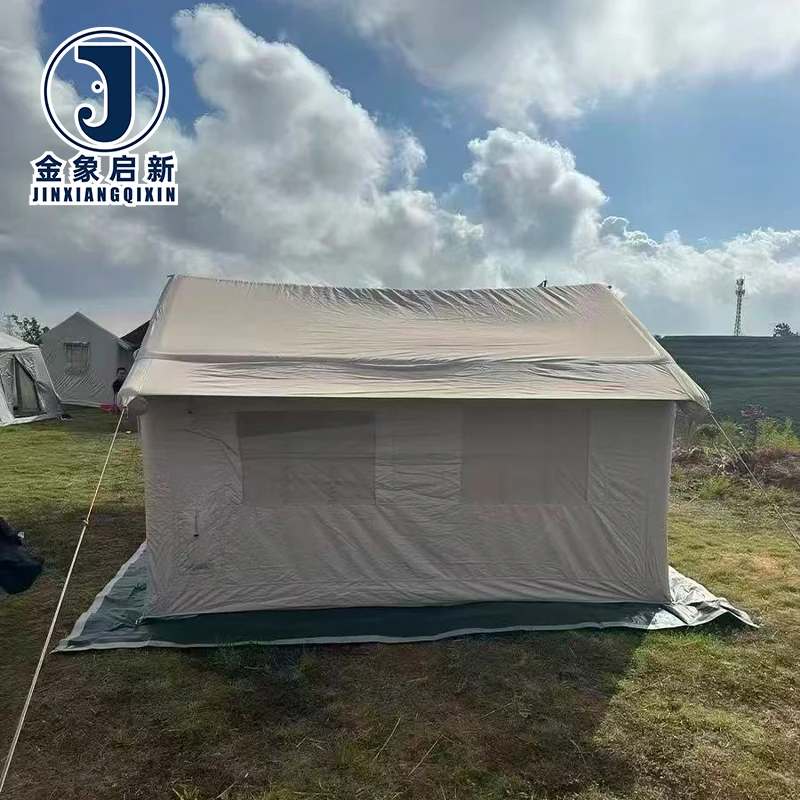
Description
Coated Fabric Expertise — Three full production lines delivering PVC inflatable camping tent fabric by the roll with verified batch consistency for tent and inflatable structure manufacturers.
Technical Specifications
| Parameter | Value |
|---|---|
| Product Type | Inflatable Tent |
| Core Material | PVC Tarpaulin |
| Capacity | 8-10 Person |
| Waterproof Rating | ≥10,000mm |
| Tear Strength | ≥300N |
| Flame Retardant | Available in flame retardant grades — confirm the grade required for your market |
| Anti-Static | Available with anti-static treatment — confirm test basis for your site requirements |
| UV Treatment | Available with UV stabilizers — confirm treatment level for your deployment climate |
| Season Rating | Four-Season |
| Opening Mechanism | Automatic / Quick Inflatable |
| Wind Resistance | up to 60 km/h |
| Construction | Single layer |
| Customization | OEM & ODM — sample customization, pattern printing, custom dimensions, color matching, logo printing |
| Certifications | ISO9001, ISO14001, ISO45001, CE |
Application Suitability
| Application | Exposure & Requirement |
|---|---|
| Commercial camping ground facilities | Continuous outdoor weathering, UV exposure, seasonal inflation and deflation cycles, guest wear |
| Outdoor event management | Rapid deployment, repeated setup and teardown, transport abrasion, varying wind loads |
| Temporary site accommodation | Remote field environments, dust and particulate exposure, sustained internal air pressure |
| Mobile field operations | Quick inflation requirement, structural stability under wind shear, four-season temperature swings |
Why Roll-to-Roll Colour Consistency Determines Your Finished Tent Quality
Colour variation across rolls becomes visible the moment inflatable tubes and panels sit side by side on the completed structure.
When tent manufacturers source PVC inflatable camping tent fabric from multiple batches without lot traceability, the result is a finished product that looks mismatched under natural light. This is not a cosmetic issue alone — colour variance often signals inconsistent coating formulation across the production run, which can extend to differences in weld behaviour and surface tension. Buyers who do not specify batch-level colour matching before production frequently discover the problem only after cutting and welding are complete, when the cost of replacement is already sunk [NEED_CITE: roll-to-roll colour consistency standards for coated technical textiles].
Batch Traceability Across Container Loads
Every roll of PVC inflatable camping tent fabric carries a batch lot number tied to the coating formulation record and colour reference used during production. This traceability lets manufacturers verify that rolls pulled from the same container share the same raw material batch, reducing the risk of panel-to-panel mismatch when inflatable tubes are welded and assembled. For buyers producing multi-panel tents or large inflatable structures, this system means the colour seen on the sample is the colour delivered across the full order.
Coating Weight Verification Before Dispatch
The GSM stated on the quotation must match the material that arrives at the fabrication floor. Rolls are inspected against the specified coating weight before packing, with deviations flagged before they enter the container [NEED_CITE: GSM verification methods for PVC coated fabrics per ISO testing protocols]. This pre-shipment check addresses one of the most common disputes in bulk fabric procurement — material that measures lighter than agreed when the buyer runs their own weight verification on arrival.
Weld Behaviour at Inflation Flex Points
Inflatable tent tubes undergo repeated pressurization and flex cycles that concentrate stress at welded seams. The PVC coating formulation affects how the material responds to heat welding, and inconsistent coating weight across a roll can produce welds that are strong in one section and weak in another. Rolls with verified coating uniformity produce predictable weld parameters, so fabricators can set their heat and pressure once and maintain it through the production run without adjusting for material variation.
How Base Fabric and Coating Weight Interact
The waterproof rating of ≥10,000mm and tear strength of ≥300N are not independent properties — they result from the combination of base fabric denier, weave density, and the coating weight applied to each face. A heavier coating alone does not guarantee higher tear resistance if the base fabric is loosely woven. Conversely, a tightly woven base with insufficient coating will resist tearing but may allow water penetration at the yarn intersections. For inflatable tent applications, the balance between coating thickness and base fabric density determines both airtightness under sustained internal pressure and resistance to puncture during field deployment [NEED_CITE: relationship between base fabric weave and coating adhesion in PVC tarpaulins]. The single-layer construction specified here relies on this balance to maintain structural integrity without the weight penalty of a double-layer build.
The Cost of Ordering Without Verified Test Reports
Specifying flame retardant or anti-static treatment without requiring batch-specific test documentation creates a compliance gap that surfaces at the worst possible moment — when the finished tent fails a site inspection or a regulatory audit. Fabricators who accept rolls based on general claims rather than line-item test reports matching the purchase order risk producing inventory that cannot be legally deployed in markets with strict fire classification requirements [NEED_CITE: fire classification standards for temporary inflatable structures]. The same applies to UV stabilizer claims made without accelerated weathering data to confirm the treatment level actually present in the delivered batch.
Sourcing From a Coated Fabric Specialist
Nearly 30 years of focused PVC coating production means the formulation parameters for inflatable tent fabric are drawn from an established process library, not developed from scratch for each order. Three full production lines and 36 sets of professional equipment support bulk roll output with scheduling reliability, so lead times remain predictable across repeat orders. A 10-person R&D team handles colour matching, pattern printing, and custom width requests at the sample stage before full production commits. Dedicated QA/QC at every production stage with 100% inspection before shipment catches coating weight deviations and colour drift before rolls leave the facility. Samples for custom requirements are developed within days, allowing buyers to validate material against their weld parameters before authorizing a container load.
Documentation & Verification
- Material specification sheet stating GSM, base fabric denier, and coating weight for each roll batch
- Waterproof rating and airtightness test results matched to the delivered roll lot numbers
- UV and flame retardant test reports provided where applicable, tied to purchase order line items
- Pre-shipment inspection record confirming coating weight and colour reference on every roll
- Certificate of origin and customs documentation for international roll-stock shipment
- Roll packing list with batch lot numbers enabling full traceability across container loads
Fabrication, Handling & Storage
- Heat welding parameters should be set based on the specific PVC coating weight verified on the delivered rolls
- Roll stock should be stored vertically on pallets to prevent flat-spot deformation of the coating surface
- Cutting layouts for inflatable tube panels should account for the roll width to minimize off-cut waste
- Anti-static treated surfaces require compatible cleaning agents that do not strip the treatment layer
- Weld seam strength at tube junctions depends on consistent coating weight — verify before full production runs
- Rolls shipped in cold conditions should acclimate to workshop temperature before unrolling to avoid coating cracking
What to Include With Your Inquiry
Provide the target deployment climate and any fire classification or anti-static requirements specific to your market so the correct treatment level can be specified from the start. Include the roll widths and lengths that match your cutting table and tube panel dimensions, along with your annual volume to determine production scheduling. If custom colour or pattern printing is required, share the reference codes or physical samples so a roll-level match can be developed before bulk commitment.
Frequently Asked Questions
Q: How is GSM verified on arrival and what is the tolerance per roll?
A: Each roll is weighed and inspected against the stated GSM before packing, with results recorded on the pre-shipment inspection document. Buyers can cross-check these records against their own measurements on arrival. Tolerance is confirmed at the quotation stage based on the specified coating weight and base fabric construction.
Q: How is colour consistency maintained across rolls within the same bulk order?
A: Rolls in a single order are produced from the same coating batch using a unified colour reference, with batch lot numbers recorded on the packing list. This allows traceability from the coating formulation through to the finished roll, minimizing panel-to-panel variation on assembled inflatable structures.
Q: What roll widths and lengths are available for inflatable tube panel cutting?
A: Standard and custom widths are available to suit different tube panel dimensions and cutting table configurations. Length per roll is set according to order requirements. Confirm your specific cutting layout dimensions at the inquiry stage so the roll format is optimized for your production line.
Q: What are the MOQ and lead time for custom colour or printed rolls?
A: Custom colour and pattern printing are supported through OEM and ODM services, with samples developed for approval before bulk production. Minimum quantities and production timelines depend on the specific colour match and print complexity. Request a quotation with your reference samples to receive confirmed scheduling.
Q: How is roll stock packed and loaded to prevent coating damage during container transit?
A: Rolls are packed to prevent surface contact damage and loaded to avoid compression during shipping. The packing list details roll count, batch lot numbers, and container loading configuration. Proper vertical storage on pallets is recommended upon arrival to maintain coating integrity until fabrication.