

Description
Bulk Roll Consistency — every roll of PVC inflatable tent fabric in your shipment matches the approved sample for colour, coating weight and base fabric construction.
Technical Specifications
| Parameter | Value |
|---|---|
| Product Type | Inflatable Tent Fabric |
| Core Material | PVC tarpaulin |
| Product Forms | Roll stock for inflatable structure fabrication |
| Key Performance | Waterproof, UV-resistant (test basis not stated in source), tear-resistant, fire-retardant (grade not stated in source), anti-static (standard not stated in source) |
| Construction | Single layer |
| Customization Service | OEM & ODM (sample customization, pattern printing) |
| Quality Control System | Full-process quality inspection with dedicated QA & QC staff |
| Testing Performed | Air pressure testing, material strength verification, seam integrity checks |
| Standards | ISO 9001, ISO 14001, ISO 45001, CE |
Application Suitability
| Application | Exposure & Requirement |
|---|---|
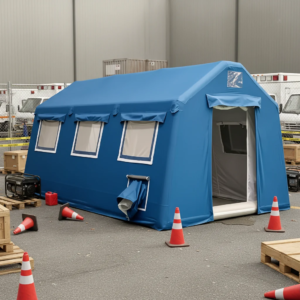
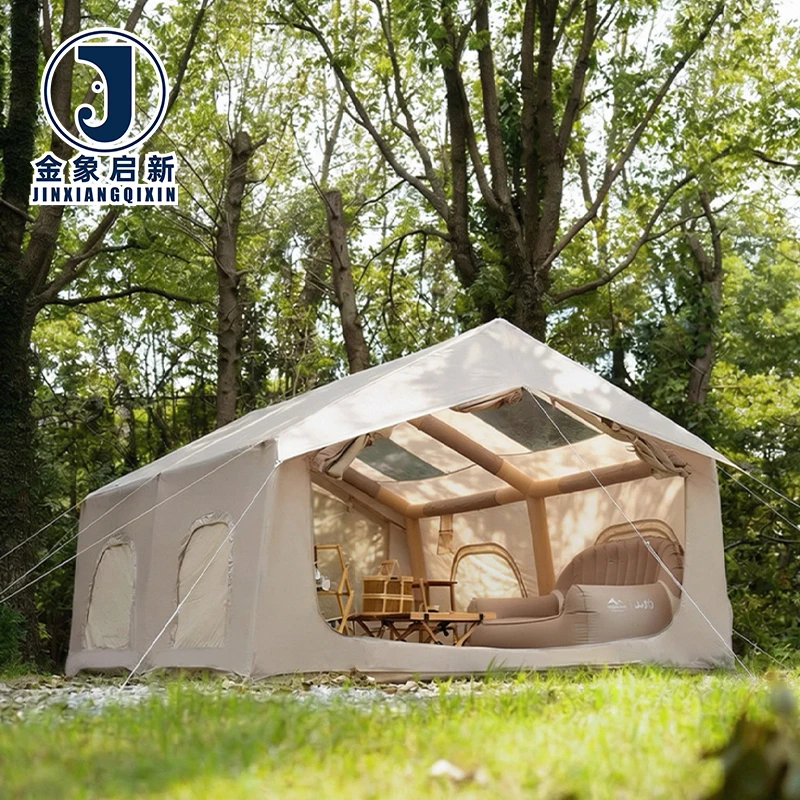
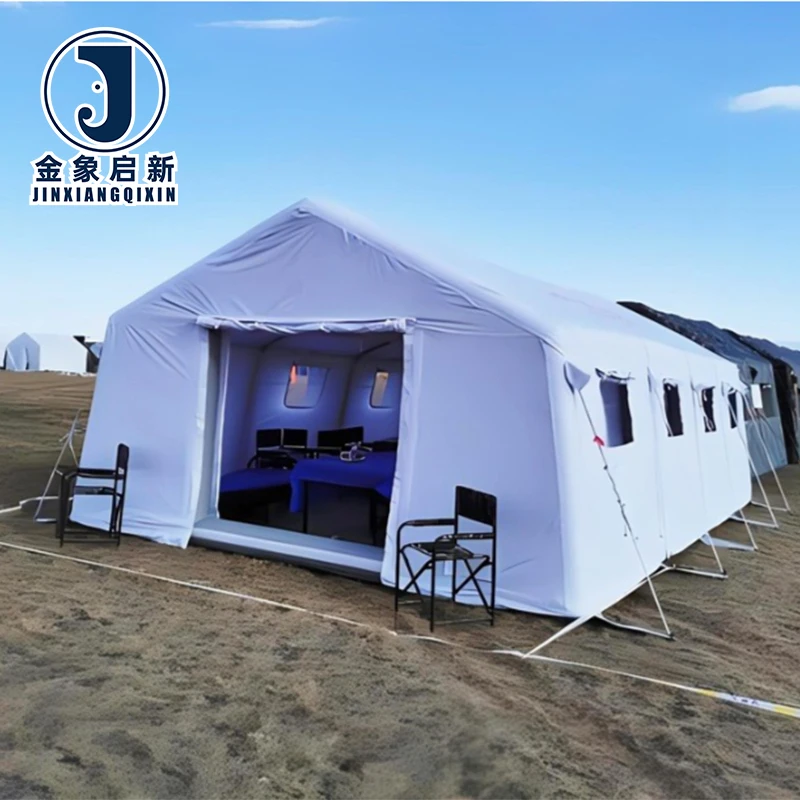
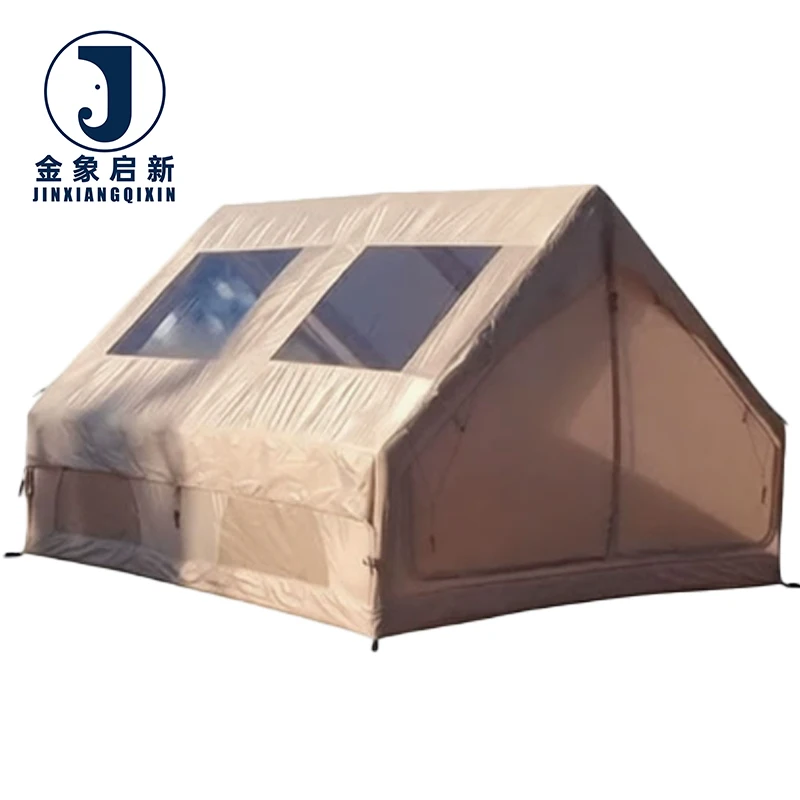
| Inflatable tent manufacturing | Repeated inflation cycles, seam stress at air-beam channels, UV exposure during outdoor events |
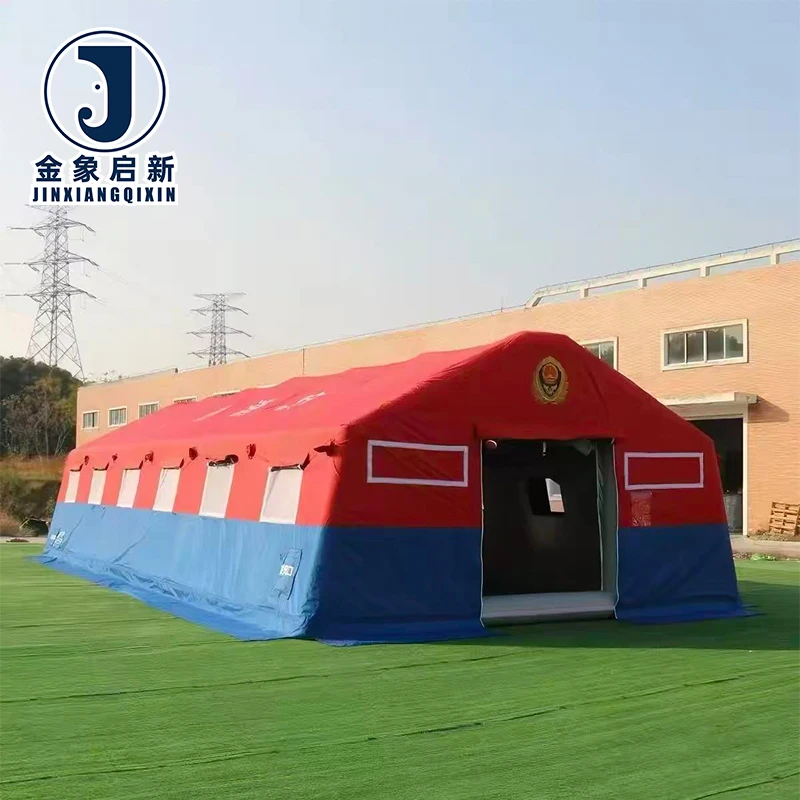
| Emergency disaster relief shelters | Rapid deployment demands, all-weather exposure, fire-safety compliance for temporary habitation |
| Outdoor event logistics structures | Wind load on membrane surfaces, abrasion from rigging contact, batch colour matching across multiple units |
| Commercial inflatable play structures | High-frequency use, surface wear from occupant contact, flame-retardant requirements for public venues |
Why Roll-to-Roll Colour Drift Costs Tent Manufacturers More Than Fabric Price
Batch-controlled coating and pigment dispersion keeps every roll in your container within the same colour tolerance window.
Tent manufacturers assembling multiple inflatable units from a single fabric order face a costly problem when adjacent panels show visible shade variation after welding. The issue rarely originates from a single defective roll — it accumulates across the batch when pigment dosing and coating temperature fluctuate between production runs. Buyers who have received shipments with colour bands visible once panels are heat-welded side by side understand how quickly a material saving is erased by rework, customer rejection and delayed delivery. PVC inflatable tent fabric supplied with documented batch consistency eliminates this downstream cost [NEED_CITE: colour consistency measurement methods for coated textiles per ISO 105 series].
Controlling Coating Weight Across the Roll Width
Uniform PVC coating application is the foundation of predictable fabrication behaviour. When coating weight varies from edge to centre across the web, the fabric reacts differently to heat during welding — seams on lighter-coated edges may fail to fuse while heavier-coated centres require excessive temperature. Our three full production lines maintain controlled coating deposition, and dedicated QA staff verify weight distribution at multiple points across each roll before it enters packing. This consistency matters particularly for inflatable tent fabric because the air-beam channels rely on continuous, predictable weld strength along the entire seam length.
OEM and ODM Customization for Tent Brand Identity
Inflatable tent manufacturers building branded product lines need fabric that accepts pattern printing and custom colour without sacrificing structural performance. Our 10-person R&D team develops samples within days, validating colour match, print adhesion and base fabric compatibility before committing to a bulk run. Whether the requirement is a specific corporate colourway, a printed logo across the membrane surface or a non-standard width to reduce cutting waste, the sample approval step confirms the material performs on your specific cutting and welding line. PVC inflatable tent fabric rolls are produced to the agreed specification with traceable batch references linking raw material input to finished roll output [NEED_CITE: adhesion test methods for printed coatings on PVC tarpaulin].
Reading Beyond the GSM Number on the Quotation
Grammage alone describes weight per square metre but reveals nothing about how that weight is distributed between base fabric and coating. A roll with a heavier PVC coating but a lighter polyester scrim may show competitive GSM on paper yet deliver lower tensile strength and poor tear propagation resistance compared to a roll where more weight sits in the woven base. For inflatable tent structures, the base fabric denier and weave density determine how the membrane handles inflation pressure and wind load, while the coating provides waterproofing and UV protection. When evaluating PVC inflatable tent fabric roll stock, request the base fabric specification and coating weight separately rather than relying on total GSM as the sole selection criterion.
What Happens When the Wrong Roll Specification Reaches Your Cutting Table
Selecting fabric based on total weight without verifying base fabric construction leads to failures that surface after the tent is inflated and under load. Welds may separate at the air-beam junction because the coating thickness at the seam is insufficient for proper thermal fusion, or the fabric may tear along the weft direction when inflation pressure concentrates stress at curved panels. Manufacturers who skip the sample validation step and commit to bulk roll orders based on quotation GSM alone frequently discover these issues only after cutting, welding and assembly are complete — when rework cost has already multiplied. Consistent roll-to-roll quality prevents this class of failure by ensuring the material you tested in sampling is the same material arriving in your container [NEED_CITE: common failure modes in heat-welded PVC membrane structures].
Why Sourcing PVC Inflatable Tent Fabric Here
Three full production lines running dedicated PVC tarpaulin output mean your bulk roll order is manufactured on equipment configured for coated fabric, not repurposed from unrelated product runs.
Thirty-six sets of professional processing equipment support the capacity to deliver container-volume shipments within agreed lead times without subcontracting critical coating stages.
Full-process quality inspection with dedicated QA and QC staff on site ensures every roll passes coating weight verification, colour consistency checks and seam integrity testing before dispatch.
Sample development within days allows you to confirm width, colour, print quality and weld compatibility on your own fabrication line before authorizing production.
ISO 9001, ISO 14001, ISO 45001 and CE certification provides documented management systems covering quality, environmental and occupational safety across production operations.
Documentation & Verification
- Material specification sheet stating base fabric denier, coating type and weight per roll
- Pre-shipment inspection record confirming coating weight and colour match across the order
- Roll packing list with batch reference enabling traceability from raw material to packed roll
- Fire-retardant and anti-static test reports provided for grades where applicable — confirm the standard required for your market
- Certificate of origin and customs documentation supporting international shipment clearance
Fabrication, Handling & Storage
- Heat-weld temperature profiles should be set based on the specific coating weight of each roll batch before starting production runs
- Store rolls upright on pallets in a covered area to prevent edge deformation that affects feeding on automated cutting tables
- Avoid compressing stacked rolls during transport to prevent permanent creasing in the single-layer PVC construction
- Confirm pattern printing ink compatibility with the PVC coating surface before running branded fabric through digital printers
- Allow cold-stored rolls to reach ambient workshop temperature before unrolling to prevent coating cracking at low temperature
Planning Your Fabric Inquiry
To provide an accurate specification and lead time for PVC inflatable tent fabric roll stock, share your target roll width, annual volume requirement and any custom colour or pattern printing needs. If your end product must meet specific fire-retardant or anti-static standards for the destination market, confirm the required test method and grade so we can match the formulation. Let us know whether you need sample rolls for cutting and weld validation before committing to bulk, and provide details of your welding equipment type to ensure fabric compatibility.
Frequently Asked Questions
Q: What roll widths and lengths are available for inflatable tent fabric?
A: Roll widths are produced to match your cutting line requirements, with custom widths available to minimize offcut waste during panel fabrication. Standard and non-standard lengths can be specified based on your production run size. Request a sample roll in your required width to validate feeding, cutting and welding behaviour on your equipment before committing to a bulk order.
Q: How is colour consistency controlled across multiple rolls in one shipment?
A: Each production batch uses controlled pigment dosing and coating parameters verified at multiple points across the roll width. Pre-shipment inspection records document colour consistency checks across all rolls in your order. Batch references on the packing list link each roll to its production run, enabling traceability if a specific roll requires review during your fabrication process.
Q: Can I get pattern printing and branding on PVC inflatable tent fabric rolls?
A: Pattern printing and OEM branding are available as part of the roll customization service. Our R&D team develops print samples to confirm colour accuracy, ink adhesion and surface finish before bulk production. Share your artwork files and colour references early in the inquiry process so sample development aligns with your production timeline.
Q: What are the lead times and minimums for custom width or colour orders?
A: Custom width and colour orders carry production lead times that depend on the specification complexity and order volume. Minimum quantities apply to non-stock configurations to ensure efficient coating line setup. Submit your required width, colour reference and estimated annual volume to receive a specific lead time and minimum order confirmation for your project.
Q: How should I plan container loading for bulk roll shipments?
A: Roll count and total weight per container depend on the specified roll width, length and core diameter. We provide container loading calculations during the quotation stage so you can plan shipment volume and logistics costs accurately. Roll packing lists detail each roll’s position and batch reference for receiving inspection at your facility.