
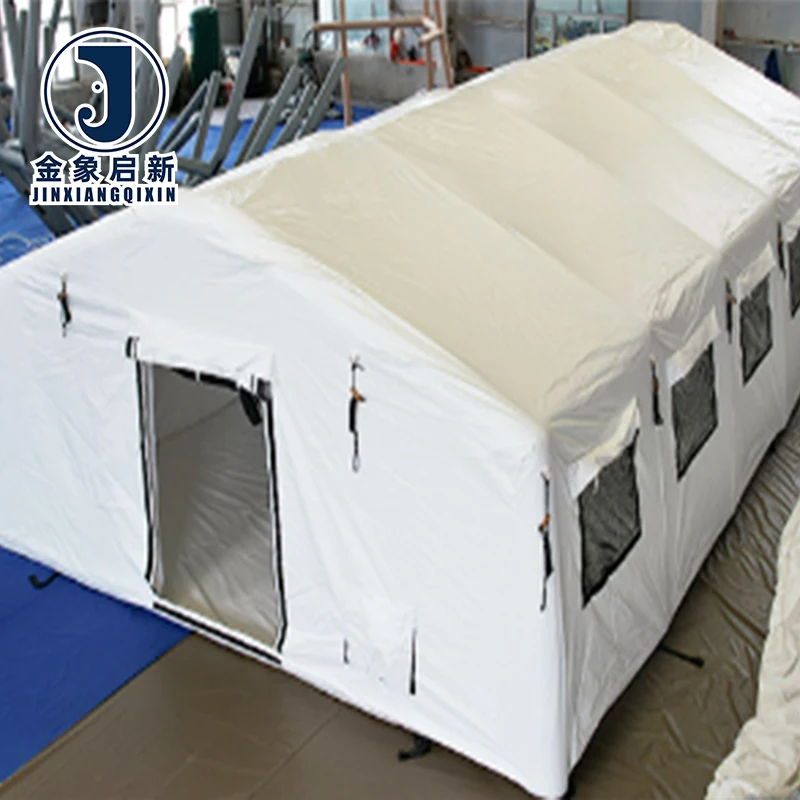
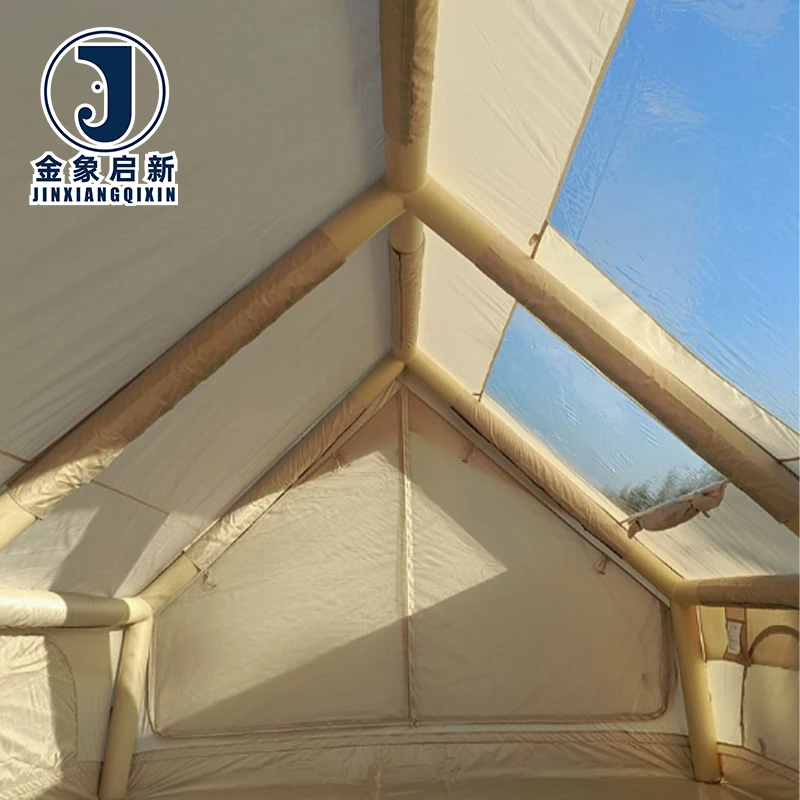
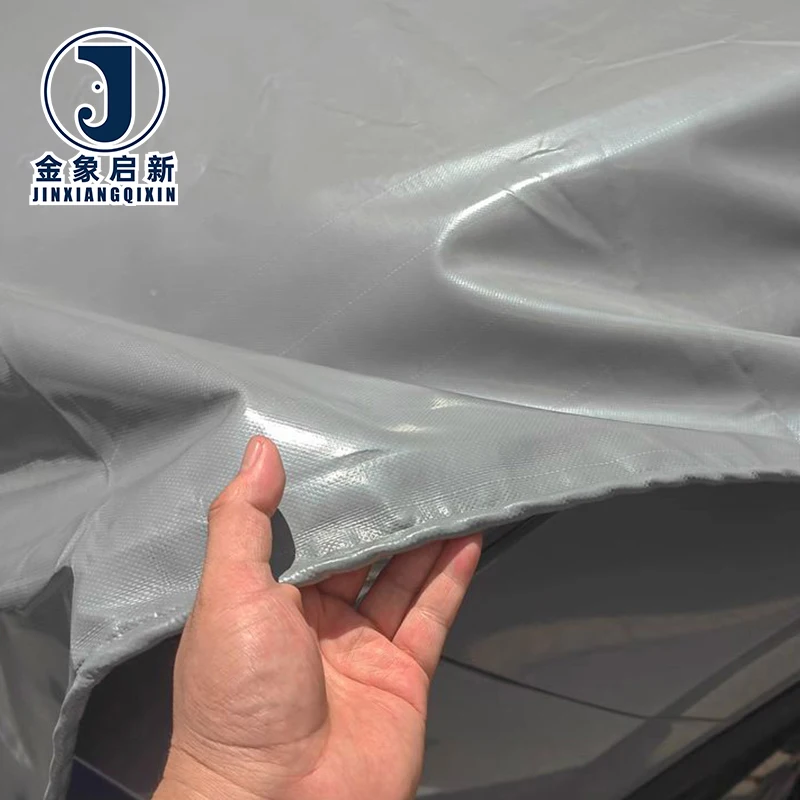
Description
Consistent Roll Output — three full production lines and standardized coating control maintain batch-to-batch GSM and colour uniformity across wholesale inflatable tent material orders.
Technical Specifications
| Parameter | Value |
|---|---|
| Product Type | Inflatable Fabric / Tent Fabric |
| Core Material | PVC Tarpaulin |
| Waterproof | Fully waterproof coated construction |
| UV Treatment | UV-resistant (test basis not stated in source) |
| Tear Resistance | Tear-resistant construction |
| Finish Options | Available in glossy or matte finish |
| Width Options | Custom width available |
| Length Options | Custom roll length available |
| Colour | Single or double side colour, custom colour matching |
| Customization | OEM & ODM, sample development, pattern printing |
| Quality System | Full-process QA & QC inspection |
| Certifications | ISO9001, ISO14001, ISO45001, CE |
Application Suitability
| Application | Exposure & Requirement |
|---|---|
| Inflatable tent panel production | High air pressure cycling, repeated inflation stress, UV and rain exposure |
| Glamping dome and bubble tent | Year-round outdoor weathering, thermal expansion, guest comfort requirements |
| Event and exhibition inflatable structure | Temporary erection and dismantling, transport abrasion, frequent handling |
| Mobile field shelter for remote operations | Rapid deployment, wind load, dust and moisture ingress prevention |
| Tarpaulin distributor regional stock | Roll-to-roll consistency for resale, batch traceability, shelf stability |
Why Colour Shifts Between Rolls Can Derail an Entire Tent Production Run
Specifying colour by RAL or Pantone reference is meaningless unless every roll in the container is measured against the same standard under controlled conditions.
When a tent fabricator cuts panels from three different rolls and the shade drift becomes visible once assembled, the customer sees a defective product — even though every roll individually met the quoted specification [NEED_CITE: colour consistency standards for coated fabric batches]. For wholesale inflatable tent material buyers, this is not a cosmetic complaint; it triggers panel replacement, delays container loading, and damages the fabricator’s reputation with end customers. The root cause typically lies in inconsistent pigment dosing or temperature variation during the coating pass, not in the colour standard itself.
Roll-to-Roll Consistency in Coated Fabric Supply
Buying inflatable tent fabric roll stock in bulk means your cutting floor depends on every roll performing identically. A variance in coating weight from one roll to the next changes how the material behaves during heat welding — one seam may bond perfectly while the next delaminates under the same temperature and dwell time settings. This is why standardized coating process control across all three production lines matters more than the stated GSM figure on any single roll.
Pattern Printing and Custom Branding for Tent Lines
For inflatable tent manufacturers developing branded product lines, pattern printing registration must hold across the full roll length. A print misalignment of even a few millimetres becomes a visible defect once the panel is cut and the tent is inflated. Our R&D team develops print samples alongside material samples so that colour, pattern repeat, and coating adhesion are validated together before the wholesale inflatable tent material order enters production [NEED_CITE: print registration tolerance for flexible coated fabrics].
How GSM and Base Fabric Density Interact in Inflatable Structures
The weight of a PVC tarpaulin roll tells only part of the story. A heavy coating applied over a low-density base fabric may meet the quoted GSM but will lack the tensile strength to withstand inflation pressure without stretching. Conversely, a tight weave with a thin coating delivers strength but may not seal adequately at welded seams. For inflatable tent fabric, the balance between base fabric denier, weave density, and coating weight determines whether the structure holds shape under load or develops stress whitening at the seams. Coating method — whether knife-over-edge, dip, or calender — further influences peel strength and the temperature window available for heat welding during tent fabrication. Width and roll length directly affect cutting layout efficiency: wider rolls reduce splice seams on large panels, while longer rolls minimise changeover downtime on automated cutting tables.
What Happens When Roll Specifications Are Wrong
A roll that is lighter than quoted does not fail gracefully — it fails at the most stressed point, typically where the inflatable beam bends under wind load. Welded seams on underweight material may separate before the fabric body shows any sign of damage, because the coating layer is too thin to form a proper bond [NEED_CITE: seam peel strength requirements for inflatable structure fabrics]. Batch-to-batch GSM variation across a container load forces the fabricator to re-validate welding parameters for every roll, slowing production and increasing scrap. Colour inconsistency between rolls becomes a return liability once the assembled tents are displayed side by side at trade shows or glamping sites.
Why Fabricators Source Rolls Here
Coating weight and adhesion are controlled through in-process measurement on all three production lines, not just final inspection. The 10-person R&D team develops custom width, colour, and print samples within days, allowing fabricators to validate material on their own welding equipment before committing to a full container order. Every roll is inspected against the purchase order specification before packing, with batch reference numbers recorded for traceability. The 36 sets of processing equipment support flexible scheduling so that custom width and colour orders do not sit behind standard stock runs. Dedicated QA and QC staff verify GSM, colour, and dimensional accuracy per roll, generating documentation that travels with the shipment.
Documentation & Verification
- Material specification sheet stating base fabric, coating type, and colour reference per roll batch
- Pre-shipment inspection record confirming GSM and dimensional accuracy for each roll in the order
- Roll packing list with batch reference numbers for full container traceability
- Certificate of origin and customs documentation for import clearance support
- UV and flame-retardant test reports supplied where applicable to the specified grade
Fabrication, Handling & Storage
- Set heat weld temperature and dwell time based on coating thickness confirmed on the received roll
- Store rolls upright on pallets to prevent flat-spot deformation of the PVC coating surface
- Allow cold-stored rolls to acclimate to workshop temperature before unrolling to avoid coating cracking
- Use solvent-based cleaners compatible with the PVC coating to remove surface contamination before welding
- Plan cutting layouts around the supplied roll width to maximise panel yield and minimise waste seams
- Keep printed surface rolls wrapped until cutting to protect the pattern from abrasion and UV fading
What We Need to Quote Your Roll Order
Provide your target roll width, required GSM range, and whether you need glossy or matte finish. Specify your annual roll volume and whether you require pattern printing or solid colour. If your end market mandates a flame-retardant or anti-static grade, share the standard required so we can confirm test availability. Tell us whether you need finished cut panels or raw roll stock only, and whether a pre-production sample on your welding equipment is required before the bulk order.
Frequently Asked Questions
Q: How can I verify the GSM of inflatable tent fabric rolls when they arrive?
A: Request the pre-shipment inspection record that lists measured GSM per roll. On receipt, use a calibrated fabric weight scale to cut and weigh a standard sample area from the outer layer of several rolls. Compare results against the stated specification. Any significant deviation should be reported before cutting begins, with photographs and batch numbers for traceability.
Q: How do you control colour consistency across a container of wholesale inflatable tent material?
A: Pigment dosing is standardised against the approved colour reference at the coating stage, and each roll is visually compared under controlled lighting before packing. The roll packing list includes batch references so you can trace any shade query back to the production run. Pre-production colour samples are available for your approval before the full order enters coating.
Q: What roll width and length should I choose for inflatable tent panel layouts?
A: Wider rolls reduce the number of welded seams on large inflatable panels, improving structural integrity. Your cutting software or manual nesting plan determines the most efficient width. We supply custom widths and roll lengths — share your panel dimensions and target yield so we can recommend the optimal roll size to minimise scrap.
Q: What are the minimums for custom width, colour, or printed inflatable tent fabric rolls?
A: Minimum order quantities depend on the customisation level: standard widths and colours have lower thresholds, while custom Pantone matches, printed patterns, and non-standard widths require larger runs to justify coating line setup. Confirm your exact requirements and we will state the applicable minimum alongside lead time.
Q: How are inflatable tent fabric rolls packed and loaded for container shipping?
A: Each roll is wrapped in protective film and packed upright or horizontal per your preference. The roll packing list states roll count, net weight, and batch reference for each item. Container loading plans are prepared in advance so you can verify weight distribution and total payload before dispatch.