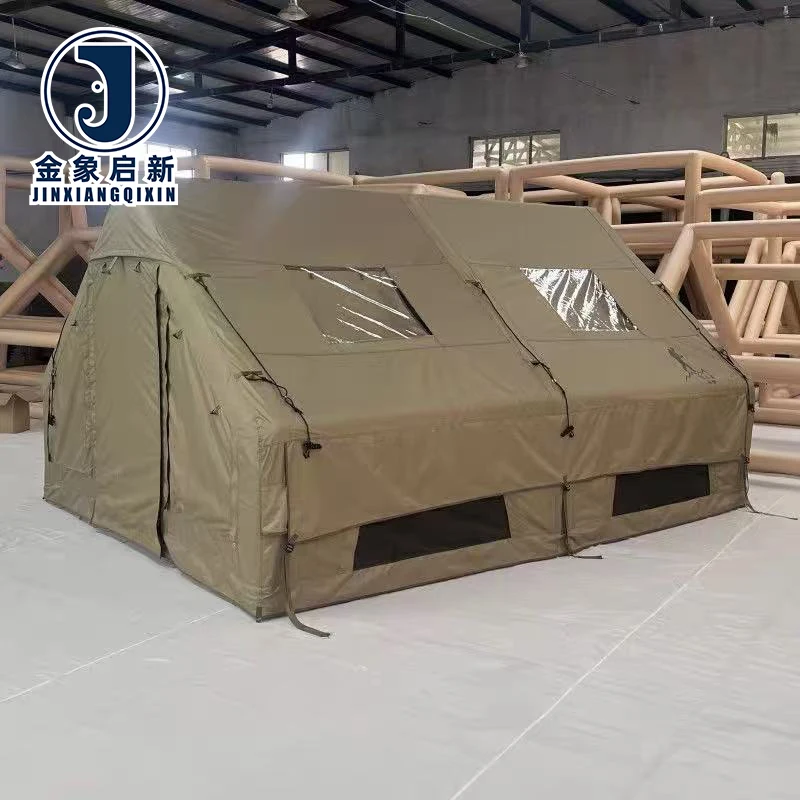
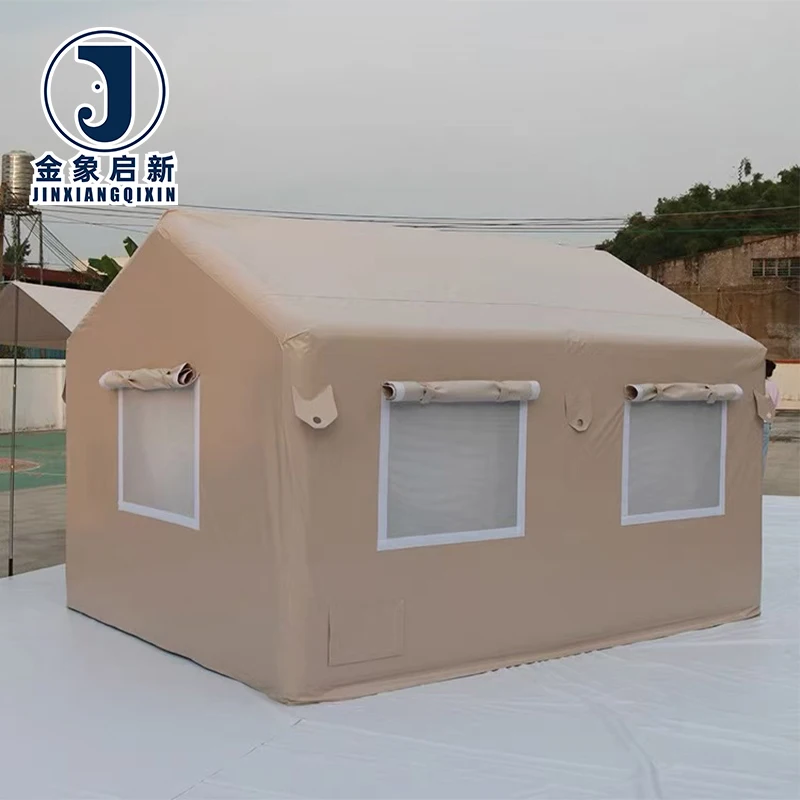
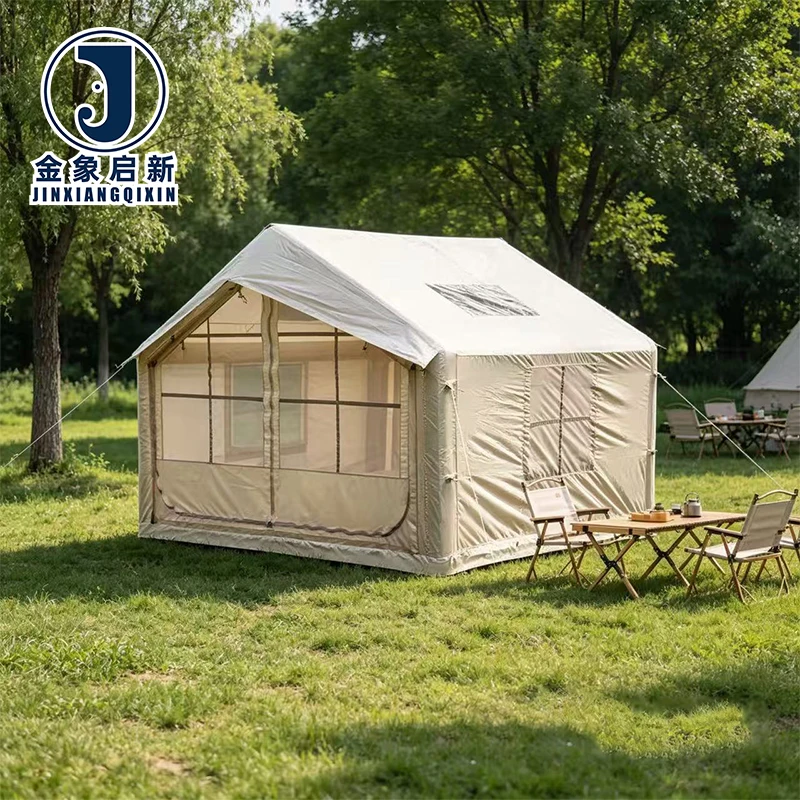
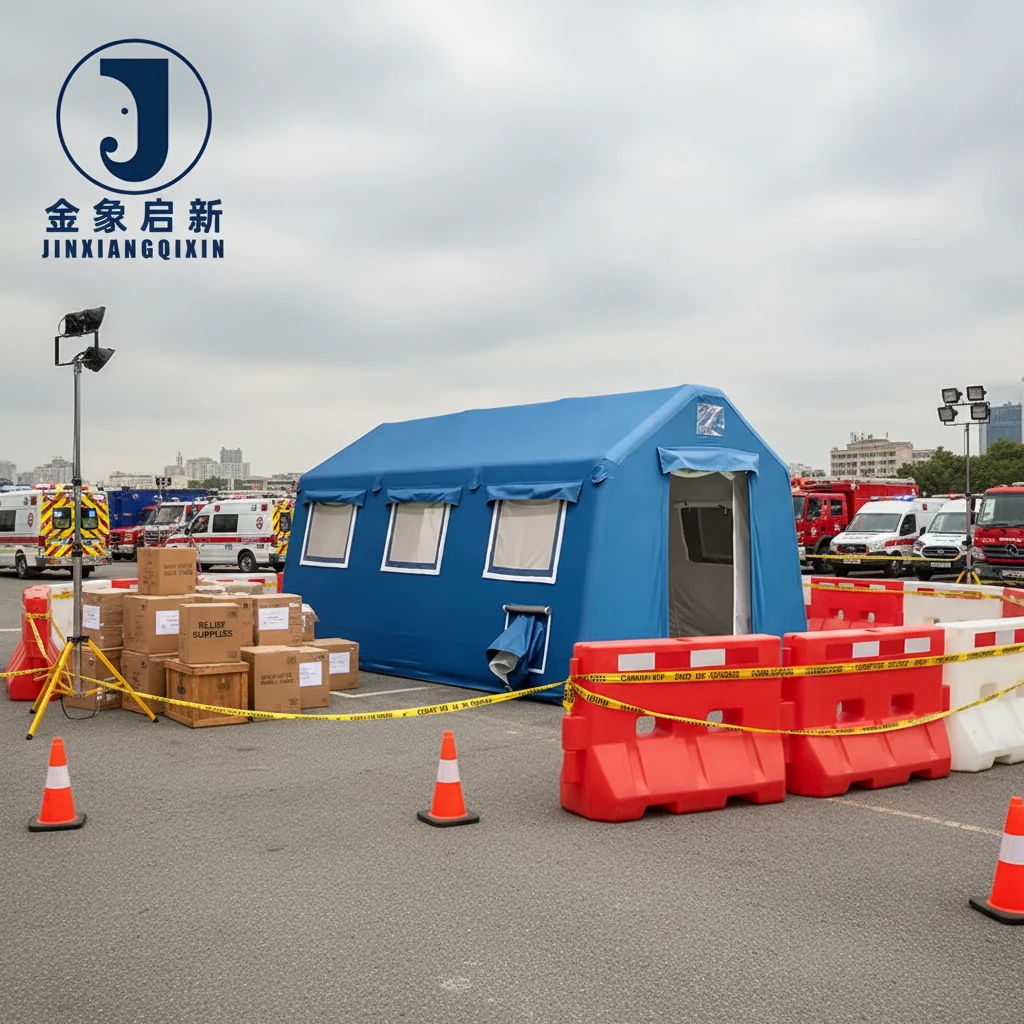
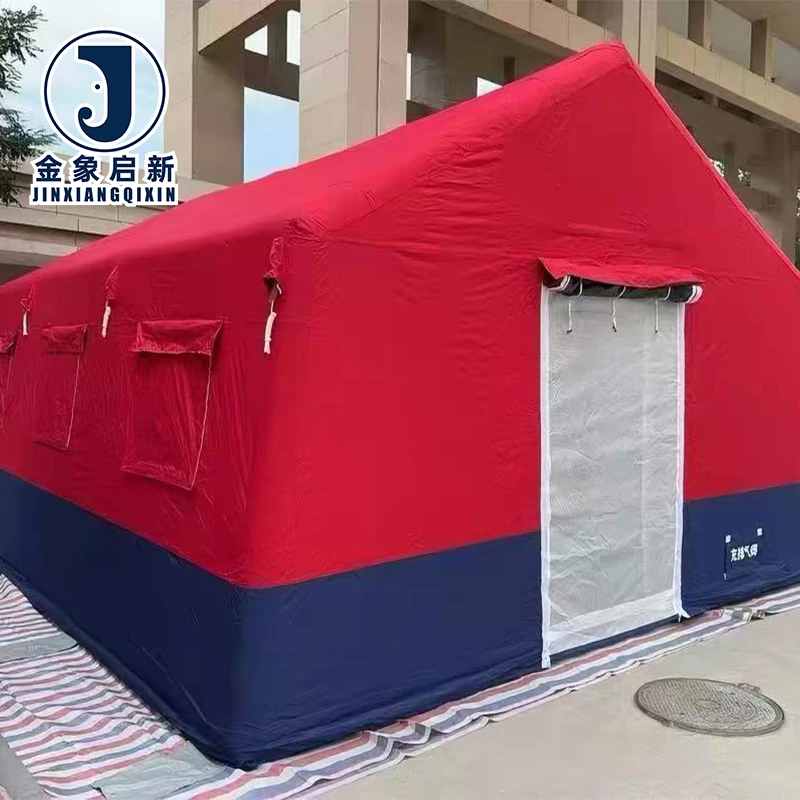
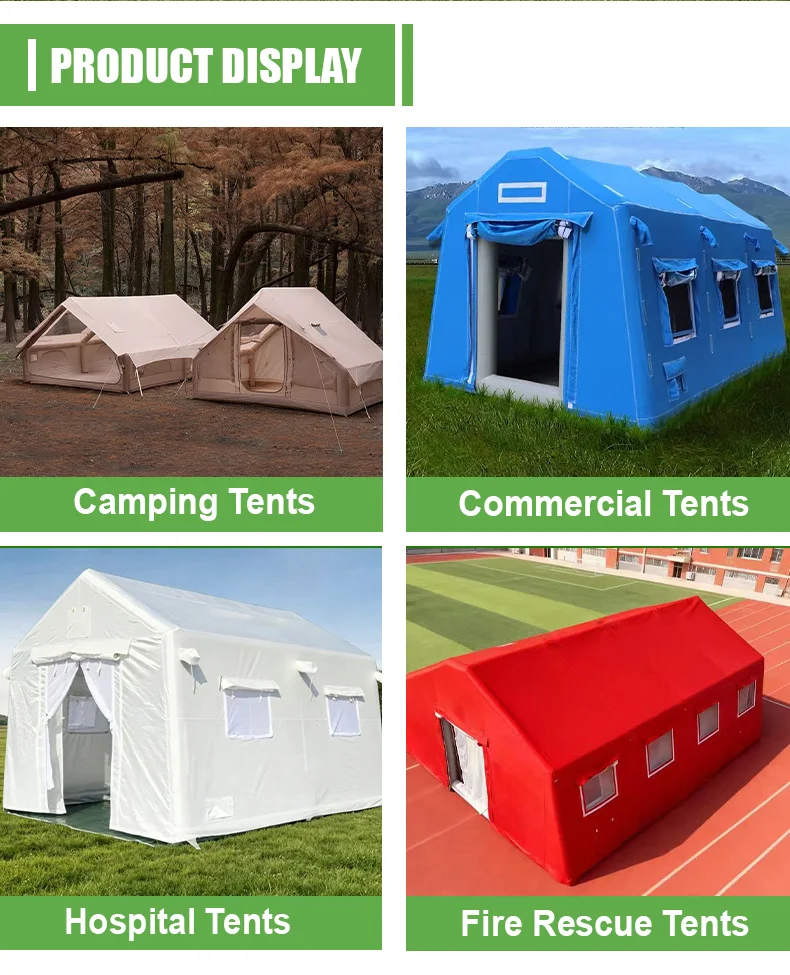
Description
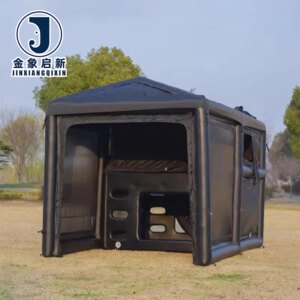
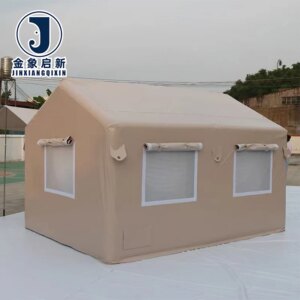
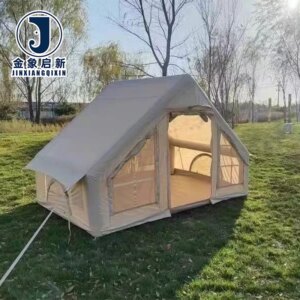
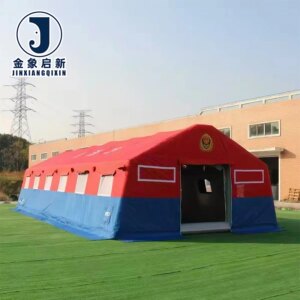
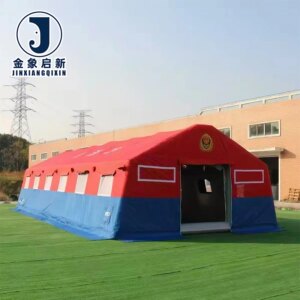
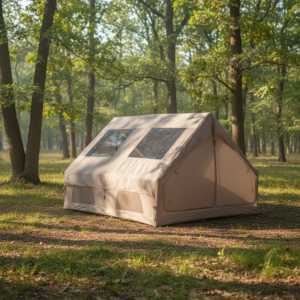
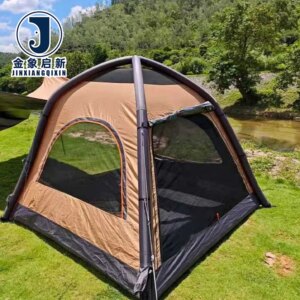
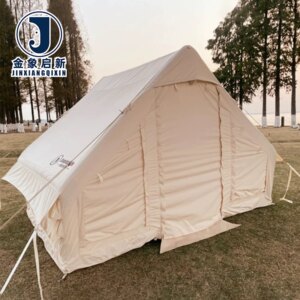
Integrated Fabric-to-Tent Control — Every inflatable camping tent structure we deliver begins on our own coating line, so GSM, adhesion, and color stay locked from the raw PVC roll through to the finished inflated assembly.
Technical Specifications
| Parameter | Value |
|---|---|
| Product Type | Inflatable Camping Tent |
| Core Material | PVC Tarpaulin |
| Waterproof Rating | minimum 3000 mm water column (source value — verify against manufacturer catalog) |
| UV Resistance | 400 hours accelerated aging test (source value — verify against manufacturer catalog) |
| Tear Strength Standard | ASTM D751 (source value — verify against manufacturer catalog) |
| Wind Load Capacity | up to 12 m/s (source value — verify against manufacturer catalog) |
| Operating Temperature Range | -10 °C to 40 °C (source value — verify against manufacturer catalog) |
| Dimensional Tolerance | ±2 cm for large structures (source value — verify against manufacturer catalog) |
| Key Features | Waterproof, UV-Resistant, Tear-Resistant, Inflatable rapid-setup design |
| Customization | OEM & ODM — custom dimensions, color, ventilation configurations, pattern printing |
| Certifications | ISO 9001, ISO 14001, ISO 45001, CE |
Application Suitability
| Application | Exposure & Requirement |
|---|---|
| Temporary construction site shelters | Rain ingress, wind gusts, daily inflation/deflation cycles, worker foot traffic abrasion |
| Disaster relief rapid deployment | Immediate weather protection, transport over rough terrain, repeated re-packing stress |
| Mobile command centers for infrastructure maintenance | UV exposure during extended outdoor positioning, equipment weight on floor panels |
| Equipment storage during outdoor operations | Moisture ingress prevention, dust exclusion, temperature fluctuation across seasons |
| Remote industrial workspace coverage | High wind load on exposed terrain, ground anchoring tension, prolonged sun exposure |
Why "Waterproof" Means Nothing Without a Batch-Specific Test Report
A waterproof rating printed on a quotation only matters if the roll you receive actually matches it.
I have reviewed inflatable tent projects where the fabric arrived with a noticeably different hand-feel from the approved sample, and the buyer had no documentation to challenge the substitution. When a manufacturer cannot produce a batch-specific inspection record showing the measured water column for your production run, the stated waterproof rating is an aspiration, not a guarantee. Waterproof Inflatable Camping Tent procurement requires traceable verification, not marketing claims. [NEED_CITE: test methods for coated fabric waterproof performance per ISO standards]
Coating Control That Starts Before the Fabric Reaches the Cutting Table
When you source an inflatable tent from a supplier who buys pre-coated PVC from a third party and only handles cutting and welding, batch inconsistency becomes a structural risk. Our inflatable camping tent production begins with in-house coating, meaning the GSM, coating adhesion, and surface finish are controlled before the fabric enters the cutting stage. This eliminates the common failure where one panel of a multi-panel tent structure behaves differently under inflation pressure than its neighbor.
Inflation Testing That Simulates Real Deployment Conditions
A tent that holds air in a climate-controlled factory may behave differently on a windy construction site or a remote disaster zone. Our three-stage inflation protocol includes a sustained pressure hold, environmental simulation across the rated temperature range, and structural wind load validation. This sequence ensures the inflatable camping tent you deploy performs identically to the sample you approved, regardless of the field conditions it encounters. [NEED_CITE: inflation pressure testing protocols for temporary pneumatic structures]
Reading the Specs Beyond the Headline Numbers
The relationship between base fabric denier, weave density, and coating weight determines how an inflatable structure behaves under load. A heavier GSM does not automatically mean higher tear resistance if the base fabric uses a loose weave with excessive coating fill — the coating adds weight but contributes little to structural integrity. ASTM D751 tear strength testing evaluates the composite behavior of fabric and coating together, which is why we reference it rather than quoting GSM as a proxy for durability. The operating temperature range of -10 °C to 40 °C defines the boundary where PVC transitions from flexible to brittle at the low end and softens at the high end, directly affecting how the tent holds inflation pressure across seasons. Coating adhesion to the base fabric determines whether welded seams survive repeated inflation cycles or delaminate at the flex points where air beams meet the ground panel.
The Hidden Cost of Specifying Inflatable Tents on Price Alone
When procurement decisions reduce an inflatable tent to the lowest quoted price per unit, the failures that follow are rarely in the fabric itself. They appear at the welded seams where air beams connect, at the reinforcement points where anchoring straps attach, and in the batch-to-batch color variation that makes replacement panels visibly mismatched on a multi-unit deployment site. These failures trace back to insufficient process control during coating and assembly, not to the material category itself. [NEED_CITE: common failure modes in pneumatic temporary shelter structures]
Why Procurement Teams Consolidate Inflatable Tent Orders Here
Our coating-to-assembly integration means a single production team controls every variable from PVC formulation through to the final inflation test. The ten-person R&D team handles dimensional customization, ventilation configuration, and pattern printing under one workflow, eliminating the handoff delays that occur when design and production sit in separate facilities. Three full production lines with thirty-six sets of processing equipment support volume orders without compressing inspection time. Every inflatable camping tent undergoes 100 percent pre-shipment inspection with a batch-specific quality record, so the documentation you receive matches the physical product in the container.
Documentation & Verification
- Material specification sheet stating GSM, base fabric type, coating method, color reference, and dimensional tolerances for each order
- Batch-specific waterproof rating measurement recorded against the stated minimum 3000 mm water column requirement
- UV aging test results from the 400-hour accelerated protocol linked to your production batch number
- Tear strength test data per ASTM D751 included with pre-shipment inspection records
- ISO 9001, ISO 14001, ISO 45001, and CE certificates available for compliance filing
- Third-party testing through SGS or Intertek arranged on request with reports delivered within standard turnaround
Fabrication, Handling & Storage
- Heat-weld seam parameters must be calibrated to the specific PVC coating weight to prevent delamination at inflation flex points
- Store rolled tent fabric vertically on pallets to avoid compression creases that weaken coating adhesion over time
- Allow cold-stored PVC tarpaulin to reach ambient temperature before unfolding to prevent low-temperature cracking
- Use mild detergent for field cleaning — abrasive solvents degrade the PVC surface finish and compromise UV protection
- Field repair kits should include matching PVC tarpaulin patches and compatible adhesive for seamless inflation-seam restoration
- Anchor strap reinforcement points require double-layer PVC patches welded beyond the strap width to distribute load
What to Include in Your Inflatable Tent Inquiry
Provide the deployment environment — wind exposure, temperature range, and expected duration of each setup cycle — so we can recommend the appropriate fabric weight and reinforcement configuration. Specify whether you require finished inflatable camping tent units or PVC tarpaulin roll stock for your own fabrication line. Confirm any fire-retardant or anti-static grades mandated by your local regulations, as these affect coating formulation and testing scope. Include target color references, pattern printing requirements, and expected annual volume so we can align production scheduling accordingly.
Frequently Asked Questions
Q: What customization options are available for inflatable tent dimensions and ventilation configurations?
A: We support full OEM and ODM customization including non-standard dimensions, ventilation port placement, inflation valve positioning, and reinforcement point layout. The ten-person R&D team develops samples incorporating your specifications, and dimensional tolerances are held to ±2 cm for large structures. Pattern printing and branding are integrated during the coating and assembly stages.
Q: How is the stated GSM verified on the finished inflatable tent versus the original quotation?
A: Every production batch includes a material specification sheet documenting the measured GSM against the quoted value. Our in-house coating control means the fabric weight is verified before the tent enters assembly, eliminating the discrepancy that occurs when suppliers source pre-coated rolls from third parties without incoming inspection.
Q: How do you control batch color consistency across large-volume inflatable tent orders?
A: Color matching is managed at the coating stage rather than applied as a surface treatment after weaving. This integrated approach ensures pigment dispersion is consistent across every roll produced in a single batch, preventing the visible panel-to-panel variation that appears when tents from different production runs are deployed side by side.
Q: Can third-party testing be arranged for inflatable tent orders?
A: Third-party testing through SGS or Intertek is available on request, covering waterproof rating, UV aging, tear strength, and fire-retardant grades where applicable. Reports are delivered within standard turnaround, and the test scope is aligned with the compliance requirements of your destination market.
Q: What is the production lead time for custom inflatable tent projects?
A: Non-custom orders follow a standard production schedule, while OEM and ODM projects involving dimensional changes, custom color, or pattern printing require additional time for sample development and approval. The three full production lines support volume scheduling once samples are confirmed.