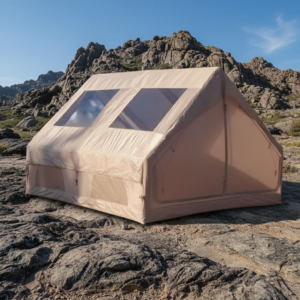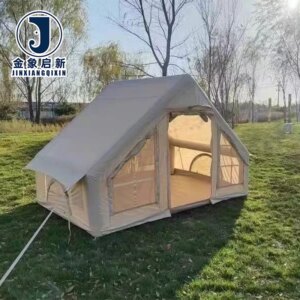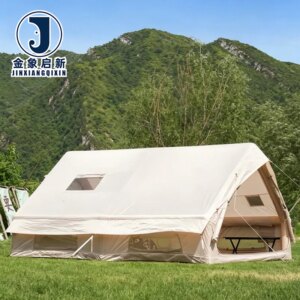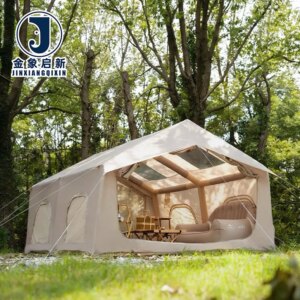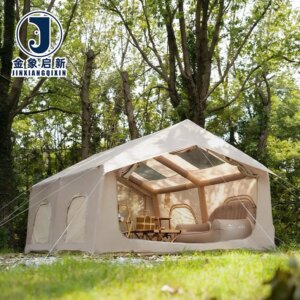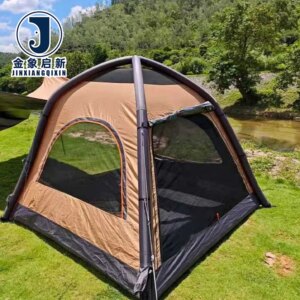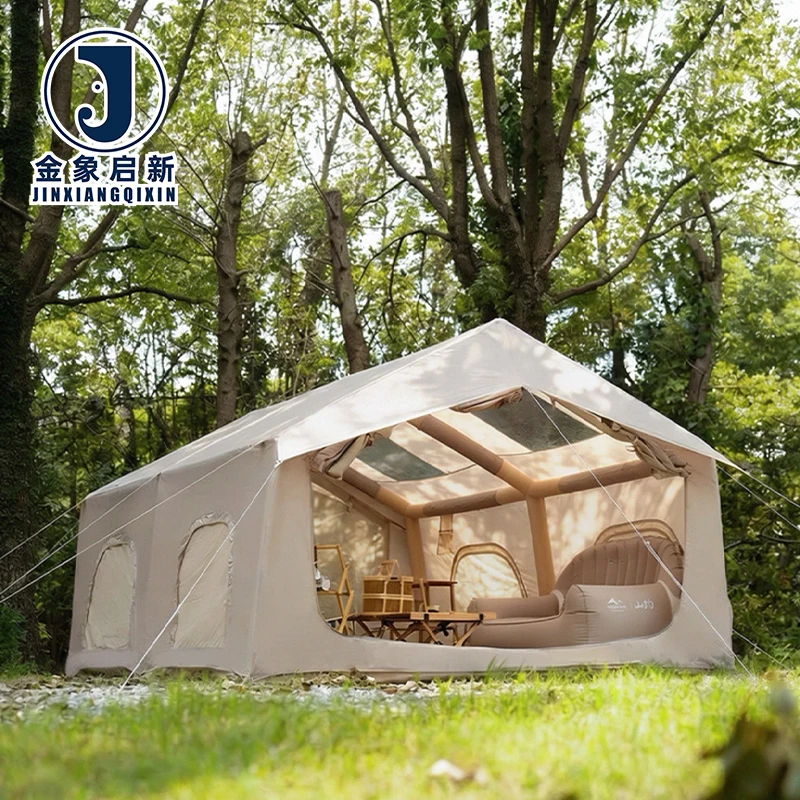
Description
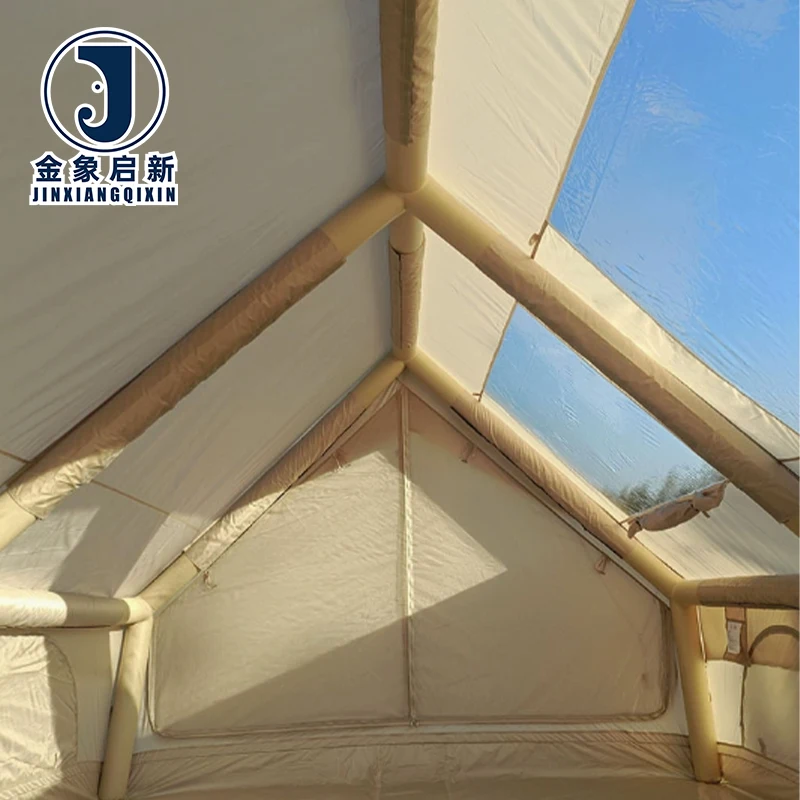
Batch-Consistent Output — three dedicated production lines with full-process QA ensure every roll of inflatable tent fabric matches the specification and colour standard confirmed at sampling.
Technical Specifications
| Parameter | Value |
|---|---|
| Product Type | Inflatable Tent |
| Core Material | PVC tarpaulin |
| Key Performance | Waterproof, tear-resistant |
| UV Resistance | UV-resistant treatment available — test basis to be confirmed per order |
| Flame Retardant | Available in flame retardant grades — confirm the grade required for your market |
| Anti-Static | Not stated in source — specify if required for your application |
| Weight (GSM) | Not stated in source |
| Base Fabric Denier | Not stated in source |
| Total Thickness | Not stated in source |
| Temperature Range | Four-season design (no numeric range stated) |
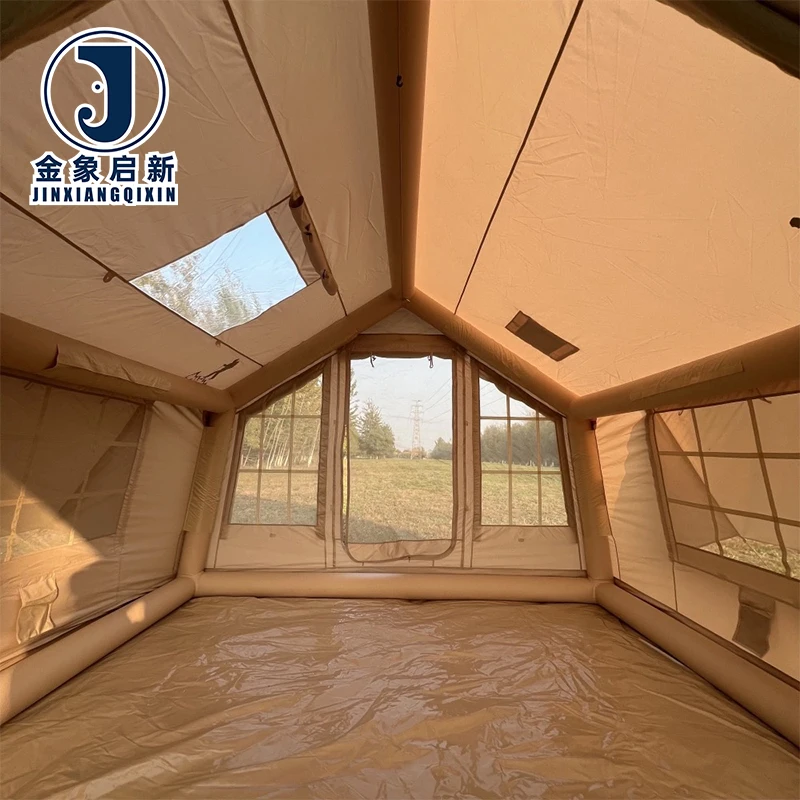
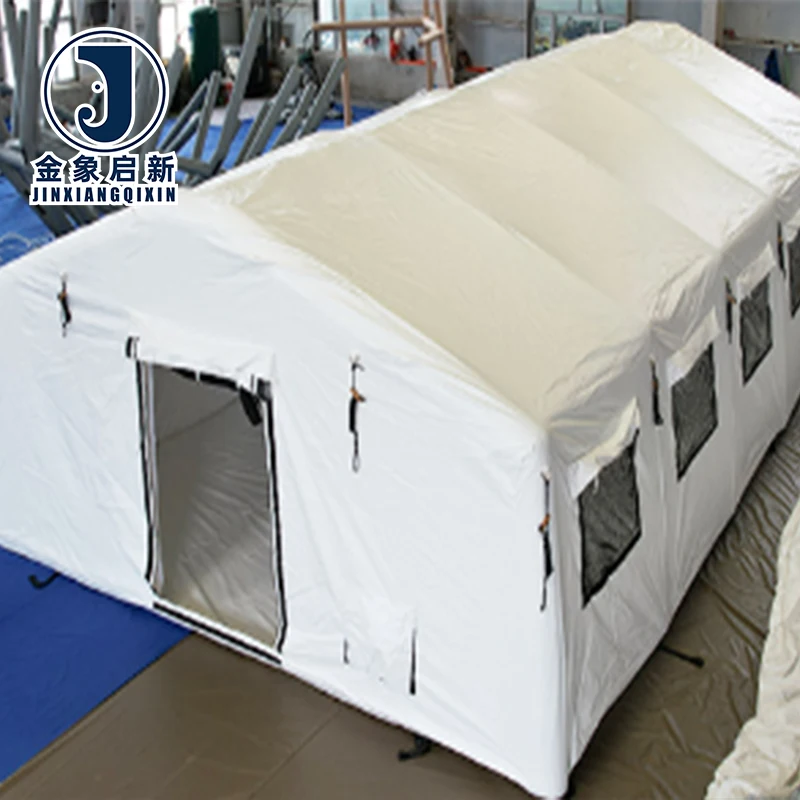
| Product Form | Inflatable structure with quick automatic opening |
| Customization | OEM & ODM: sample customization, pattern printing |
| Quality Control | Full-process inspection; 24-hour inflation test before shipment |
| Standards | ISO9001, ISO14001, ISO45001, CE |
Application Suitability
| Application | Exposure & Requirement |
|---|---|
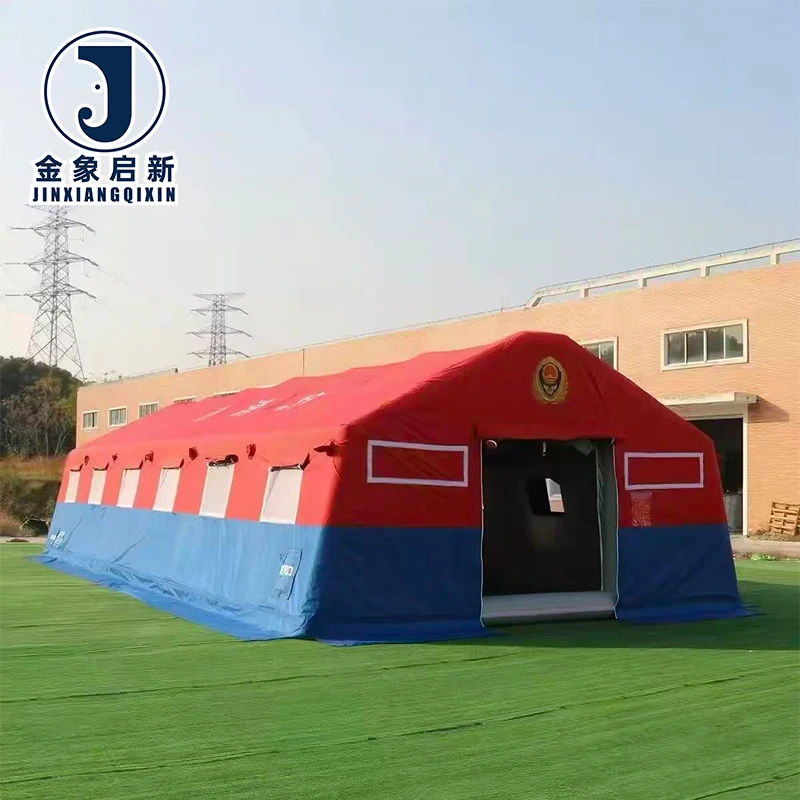
| Emergency disaster relief shelters | Rapid deployment, unpredictable weather, repeated inflation cycles |
| Construction site temporary shelters | Prolonged UV exposure, wind loading, site dust and abrasion |
| Outdoor event infrastructure | High visibility, frequent assembly and teardown, crowd proximity |
| Industrial equipment storage | Waterproof barrier, temperature fluctuation, long-term outdoor standing |
| Emergency response command centers | Immediate inflation reliability, interior climate control compatibility |
Why Colour Consistency Across Rolls Matters for Inflatable Tent Fabric
Matching shade across every roll in a bulk order is a production discipline, not a coincidence.
When inflatable tent fabric is cut and welded into large panels, any shade variation between rolls becomes immediately visible once the structure is inflated and lit by the sun. Buyers sourcing PVC inflatable tent custom orders frequently encounter this when suppliers blend material from different production batches to fill a container. The result is a finished tent where one panel looks noticeably different from the next — a defect that cannot be corrected in the field and often forces rejection of the entire shipment. Consistent colour demands that pigment dosing, coating temperature, and line speed remain locked across the full run [NEED_CITE: colour consistency test methods for coated PVC fabrics].
Roll-Stock Supply for Inflatable Structure Manufacturers
Tent and inflatable structure manufacturers buying PVC inflatable tent fabric by the roll need assurance that the material arriving at their cutting table will behave identically from the first roll to the last. Our PVC tarpaulin base is coated under controlled conditions across three production lines, giving roll-to-roll consistency in weight, coating adhesion, and surface finish. This matters because heat-sealing parameters — temperature, dwell time, and pressure — are calibrated to a specific material profile. When that profile shifts between rolls, seam strength drops and field failures follow.
Volume Pricing Without Volume Surprises
Bulk buyers evaluating an inflatable tent fabric manufacturer quickly learn that quoted specifications do not always survive the journey from sample to container. Our production workflow locks the approved sample specification — including GSM, colour reference, and treatment level — into the manufacturing order so that the material shipped matches the material tested. Every roll undergoes inspection against the order specification before it leaves the facility [NEED_CITE: pre-shipment inspection standards for coated technical textiles].
Reading Between the Specification Lines
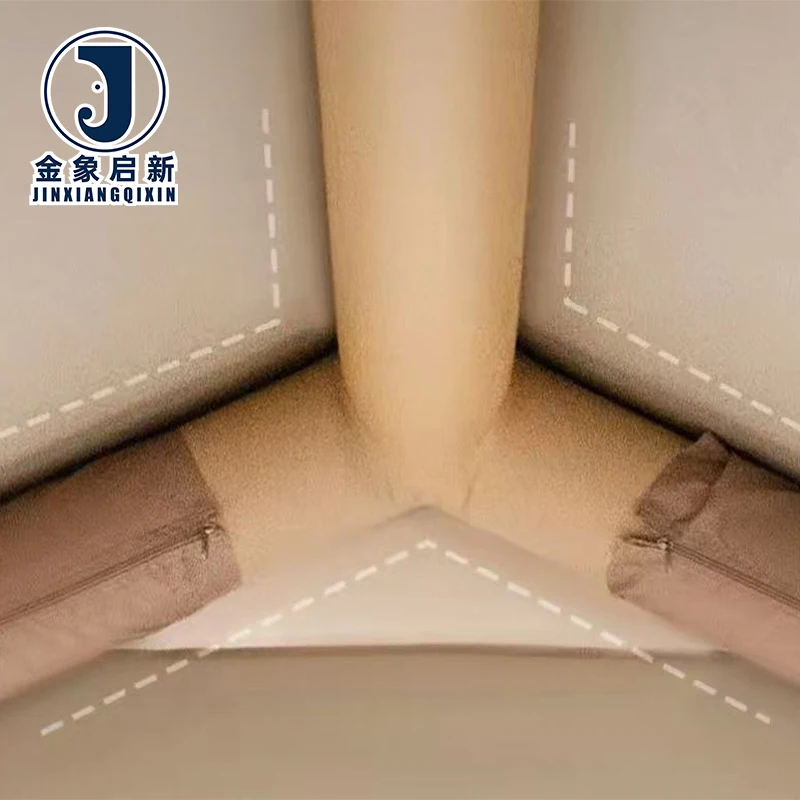
Weight in GSM alone does not define how PVC tarpaulin will perform as inflatable tent fabric. The base fabric denier and weave density determine how the material resists tear propagation at stress points — particularly around inflation tubes and welded corners. Coating method and weight control waterproofing and surface durability, while UV-resistant treatment available on request must be matched to the deployment climate. A four-season design means the material is engineered to handle temperature swings without becoming brittle in cold conditions or softening excessively in direct heat, though the exact numeric range should be confirmed against your project specification.
The Real Cost of Unverified Fabric Specifications
A roll that arrives lighter than the GSM stated on the quotation is a roll that will fail earlier than the project timeline demands. For inflatable tent fabric, underspecification means the inflation tubes may not hold pressure during high winds, or the welded seams may separate under repeated flex cycles. Flame retardant grades claimed without a supporting test report create compliance risk on regulated sites — inspectors ask for documentation, and a missing certificate stops the project. These are not theoretical concerns; they are routine failure modes when sourcing is driven by quoted price rather than verified output [NEED_CITE: common failure modes in inflatable PVC structures under wind load].
Production Capability Backed by Process Control
Jinxiang operates a 9,180 m² facility with three full production lines and 36 sets of processing equipment, giving the capacity to fulfil container-load inflatable tent fabric orders within typical multi-week lead times. A 10-technician R&D team handles material selection, pattern printing layout, and sample development so that custom requirements are resolved before production starts rather than discovered on the cutting floor. Full-process quality control runs at every production stage, with a 24-hour inflation test on finished units verifying seam integrity and structural behaviour before dispatch — not a spot check, but a verification on every unit.
Documentation & Verification
- Material specification sheet stating base fabric type, coating method, and colour reference per roll
- UV-resistant test report tied to batch number where UV treatment is specified
- ISO9001, ISO14001, ISO45001, and CE certificates included in the shipment documentation package
- 100% pre-shipment inspection record with 24-hour inflation test result documented per unit
- Certificate of origin and customs documentation prepared per destination country requirements
Fabrication, Handling & Storage
- Heat-seal at temperatures calibrated to the specific PVC tarpaulin coating weight received
- Store rolls upright on pallets to prevent compression marks on the coated surface
- Allow material to acclimatise to ambient temperature before unrolling in cold conditions
- Use compatible PVC welding tape for field repairs on inflatable tube seams
- Cut panels with allowance for weld-line shrinkage specific to the coating thickness ordered
Specify What the Project Demands
To move from inquiry to sample on PVC inflatable tent custom orders, provide the deployment environment — climate zone, expected wind exposure, and whether the structure will be semi-permanent or repeatedly redeployed. Confirm your market’s fire safety classification so the correct flame retardant grade is quoted. State the roll width and colour reference required, along with estimated annual volume, so production scheduling can be planned against line capacity.
Frequently Asked Questions
Q: How is the stated GSM verified on arrival for inflatable tent fabric rolls?
A: Every roll is inspected against the order specification during our pre-shipment process. The material specification sheet accompanying your shipment states the base fabric type, coating method, and weight. Buyers are also encouraged to conduct independent weight verification on receipt using a calibrated scale and a known-area sample cut from the roll edge.
Q: What UV treatment test basis is available for outdoor inflatable structures?
A: UV-resistant treatment is available and the applicable test basis is confirmed at the quotation stage based on your deployment climate and expected exposure duration. The test report is then tied to your specific batch number and included in the documentation package, giving you verifiable evidence for project compliance rather than an unverified claim.
Q: Can custom width, length, and pattern printing be done on inflatable tent fabric?
A: Yes. Our R&D team develops samples for custom width, length, and pattern printing requirements before production begins. Custom specifications are locked into the manufacturing order once the sample is approved, ensuring the bulk output matches the confirmed prototype in both dimension and print quality.
Q: How is batch-to-batch colour consistency controlled across rolls?
A: Pigment dosing, coating temperature, and line speed are locked to the approved sample parameters for the full production run. Rolls from the same order are produced consecutively to minimise any process drift, and visual inspection against the confirmed colour standard is conducted before packing.
Q: What are the heat-sealing and welded seam requirements for inflatable structures?
A: Sealing parameters depend on the specific PVC tarpaulin coating weight and base fabric construction. We recommend calibrating temperature, pressure, and dwell time to the material sample provided. The 24-hour inflation test on finished units verifies that welded seams hold pressure under sustained load before the product ships.