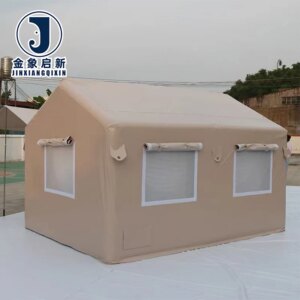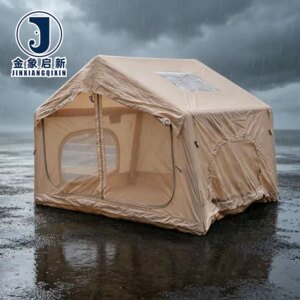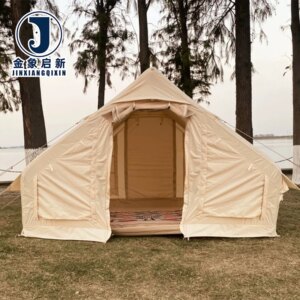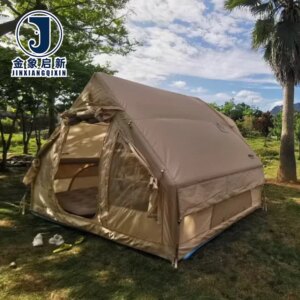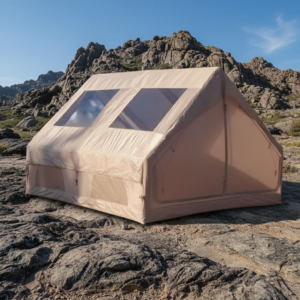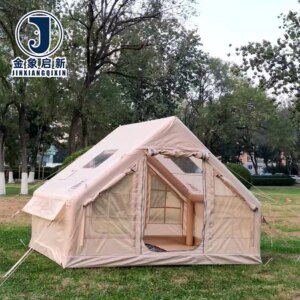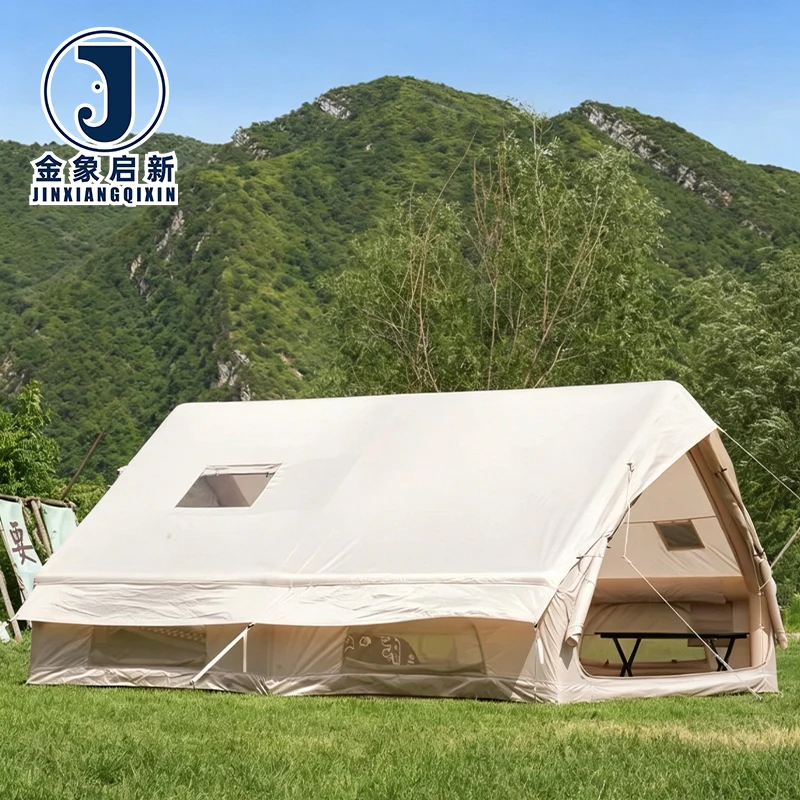
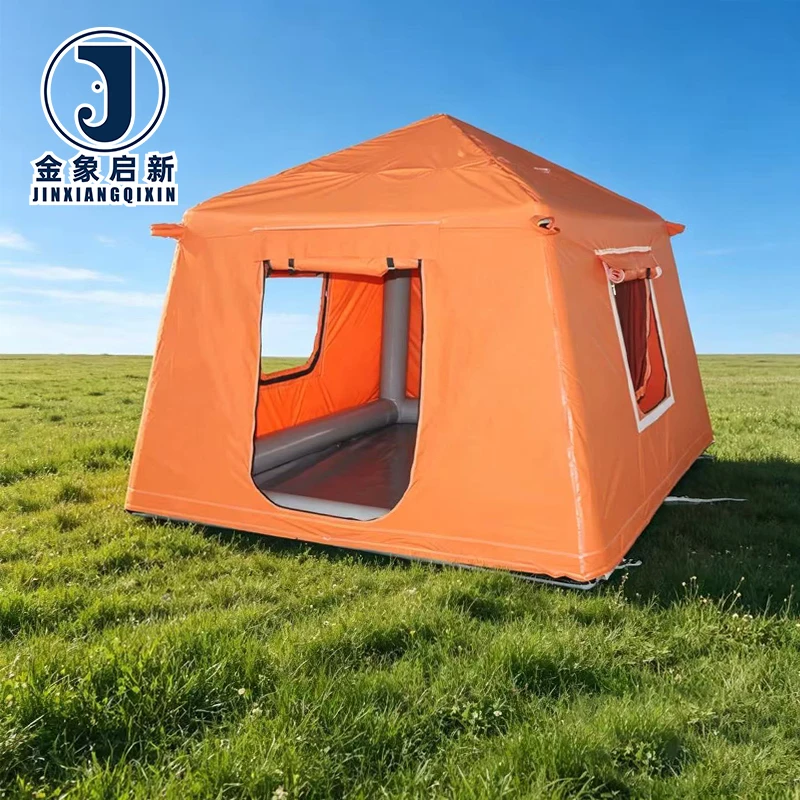

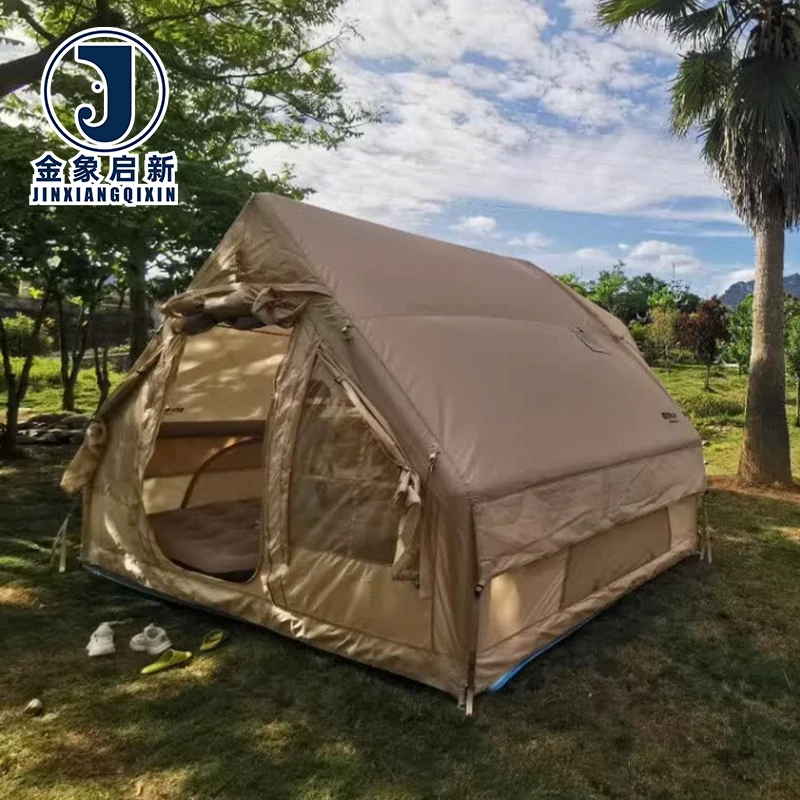
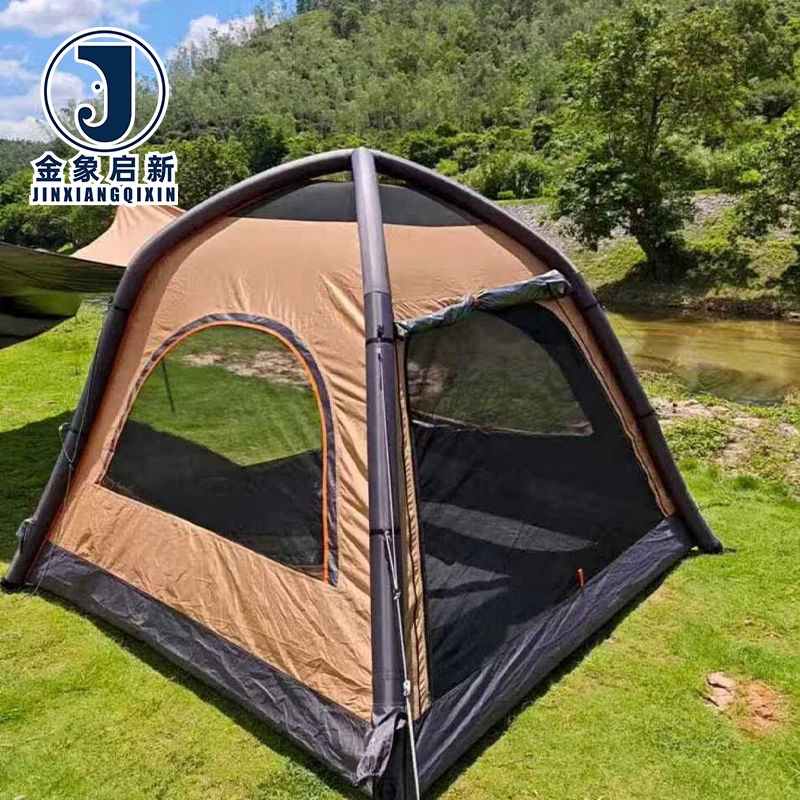
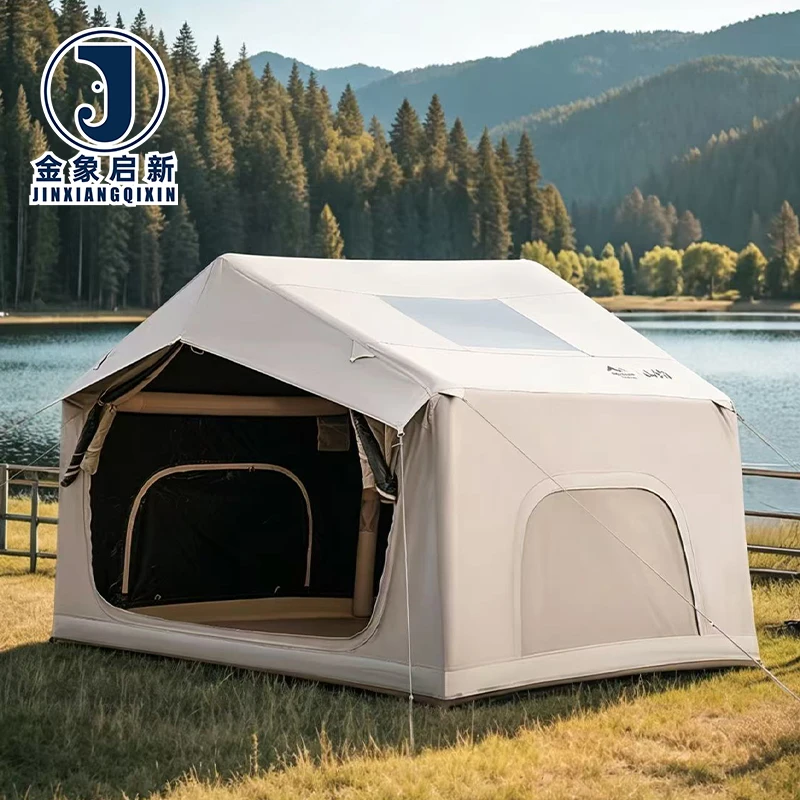
Description
Production Line Control — Roll-to-roll color and weight consistency enforced by dedicated QA at each stage of a 3-line facility, applied to every inflatable tent fabric roll before dispatch.
Technical Specifications
| Parameter | Value |
|---|---|
| Product Type | Inflatable Tent |
| Core Material | PVC Tarpaulin |
| Product Forms | 2-3 Person, Four-Season, Single Layer Construction |
| Key Performance | Waterproof, Tear-resistant, Quick Automatic Opening |
| UV Resistance | UV-resistant treatment (test basis not stated) |
| Customization | OEM & ODM, sample customization, pattern printing |
| Quality Control | Full-process inspection, dedicated QA & QC staff |
| Certifications | ISO9001, ISO14001, ISO45001, CE |
Application Suitability
| Application | Exposure & Requirement |
|---|---|
| Commercial event shelters | Repeated inflation cycles, public contact, branding visibility, rapid deployment |
| Mobile field operations | Transport vibration, variable weather, frequent packing and unpacking |
| Emergency response command posts | Continuous inflation pressure, all-season exposure, high-visibility requirements |
| Industrial site accommodations | Dust and debris abrasion, prolonged UV exposure, chemical splash risk |
Why Roll Consistency Matters More Than Stated GSM for Inflatable Tent Fabric
A uniform coating weight across every roll prevents weld failures and visible colour shifts on the production floor.
When sourcing inflatable tent fabric roll stock for commercial tent manufacturing, buyers often fixate on a single GSM number on the quotation. Yet a batch where individual rolls vary by even a small margin creates real production headaches: heat welding parameters calibrated on one roll produce weak seams on the next, and panels cut from different rolls show visible shade differences once the tent is inflated and displayed in daylight. I have seen tent producers forced to reject entire container loads because the coating weight drifted mid-order, leaving them unable to guarantee airtight seams to their own customers. [NEED_CITE: ISO 1421 tensile and tear test methods for coated fabrics]
How Batch-to-Batch Uniformity Is Maintained
Producing inflatable tent fabric roll stock with reliable consistency starts at the coating head. Across three full production lines and 36 sets of professional processing equipment, coating weight is monitored continuously so that each roll meets the stated specification without drift. A 10-person R&D team calibrates formulation and line speed for each order, ensuring that the PVC compound, plasticiser ratio and curing temperature remain locked throughout the run. This level of control is what allows commercial tent manufacturers to set their heat welding equipment once and trust the seam strength will hold from the first panel to the last.
Colour Matching Across Multiple Rolls
For tent producers printing branded logos or running multi-colour designs, shade variation between rolls is a costly defect. Rolls destined for the same order are produced in a single campaign wherever possible, and colour is checked against the agreed reference under controlled lighting before packing. When pattern printing is specified, the print registration is verified on press and a signed-off sample is held on file so that reorders match the original run. This discipline prevents the situation where a batch of inflatable tent fabric arrives with two visibly different greens or blues, forcing the manufacturer to absorb the loss.
Reading the Specification Sheet Correctly
The performance of PVC tarpaulin in inflatable tent applications depends on how base fabric denier, weave density and coating weight interact — not on any single figure. A heavier coating does not automatically mean higher tear resistance if the base fabric is loosely woven; conversely, a tight weave with insufficient coating adhesion will delaminate at the weld line under inflation pressure. UV-resistant treatment extends outdoor service life, though the specific grade and test basis should be confirmed against your market requirements before production begins. Waterproof performance relies on full encapsulation of the base fabric and sealed seams, both of which are functions of coating thickness and weld quality rather than surface water repellency alone. [NEED_CITE: relationship between base fabric weave density and tear propagation in coated textiles]
The Hidden Cost of Choosing the Wrong Roll Stock
Tent manufacturers who select roll stock based on the lowest quoted GSM often discover the real cost only after the tent reaches the field. Coating that is lighter than agreed may pass an initial visual check but fail the airtight seam test during production, wasting labour and consumables. Colour inconsistency across rolls forces makers to sort and match panels manually, adding days to lead times. UV treatment that lacks a supporting test report can result in premature fading complaints from end users, damaging the tent brand’s reputation. Each of these failures traces back to insufficient specification control at the fabric sourcing stage. [NEED_CITE: field failure analysis of inflatable structure seams under cyclic pressure loading]
Why Procure Inflatable Tent Fabric Here
Every roll of inflatable tent fabric is produced on one of three dedicated lines, giving the facility the capacity to handle large container orders without splitting a batch across machines. A 10-person R&D team develops custom samples within days, including pattern printing and colour matching, so that manufacturers can approve material before committing to volume. Full-process quality inspection with dedicated QA and QC staff means each roll is checked for coating weight, colour and surface finish before it leaves the factory floor. The 9,180 square metre facility supports OEM and ODM workflows from initial sample through to bulk roll dispatch. ISO9001, ISO14001, ISO45001 and CE certifications underpin the quality management system behind every shipment.
Documentation & Verification
- Material specification sheet stating GSM, base fabric denier and coating type for each roll batch
- Pre-shipment inspection record confirming 100% roll-by-roll check before dispatch
- Roll packing list with individual roll count, net weight and dimensions for container loading
- UV treatment test report available upon request with stated test method
- Certificate of origin and customs documentation for cross-border roll shipments
Fabrication, Handling & Storage
- Heat weld temperature and dwell time must be set to match the PVC coating formulation on each roll batch
- Store rolls upright on pallets in a dry, shaded area to prevent surface creasing and edge compression marks
- Allow cold-stored rolls to acclimatise to workshop temperature before unrolling to avoid coating cracking
- Use compatible PVC adhesive for field repairs on single-layer inflatable tent panels
- Plan panel nesting layout to maximise yield from each roll width and minimise offcut waste
- Avoid dragging rolls on unprotected floors to prevent surface abrasion of the coated finish
What to Include in Your Enquiry
To receive an accurate specification and sample, share the inflation pressure your tent design operates at, the climate conditions it will face and any colour or branding requirements for the outer surface. Indicate the roll width and approximate annual volume so that production can be planned on the most suitable line. Confirm whether your market requires a specific UV or fire classification so that the correct treatment grade is included from the outset.
Frequently Asked Questions
Q: How is roll-to-roll colour consistency ensured across a bulk order?
A: Rolls for a single order are scheduled in one continuous production campaign. Colour is checked against the approved reference under standardised lighting at the coating line and again before packing. A retained sample from the approved batch is held on file, so any reorder is matched to the original shade rather than re-formulated from scratch.
Q: What custom widths and roll lengths are available for inflatable tent fabric?
A: Roll width and length are set to match your cutting table and nesting layout. The 10-person R&D team reviews your panel dimensions and recommends a roll width that minimises offcut waste. Sample rolls in the proposed width are produced for approval before the full bulk run is scheduled on the production line.
Q: How is GSM verified on arrival against the quotation?
A: Each roll is weighed and measured during pre-shipment inspection, and the results are recorded on the packing list. Buyers can cross-check by cutting a measured sample from the roll end and weighing it on a calibrated scale. The material specification sheet supplied with every shipment states the target GSM and the acceptable tolerance band.
Q: What pattern printing and branding options are supported on roll stock?
A: OEM and ODM pattern printing is available directly on the roll surface. The R&D team prepares print proofs for approval, and registration is verified on press before the full run proceeds. Custom logos, repeating patterns and multi-colour designs can be applied, with a signed-off print sample retained for consistent reorders.
Q: What is the container loading capacity by roll count and weight?
A: A detailed roll packing list is provided with each shipment, listing individual roll weight, dimensions and total count. This allows your logistics team to plan container loading and maximise utilisation. The dispatch team can adjust roll lengths to fit standard container configurations and avoid wasted space.