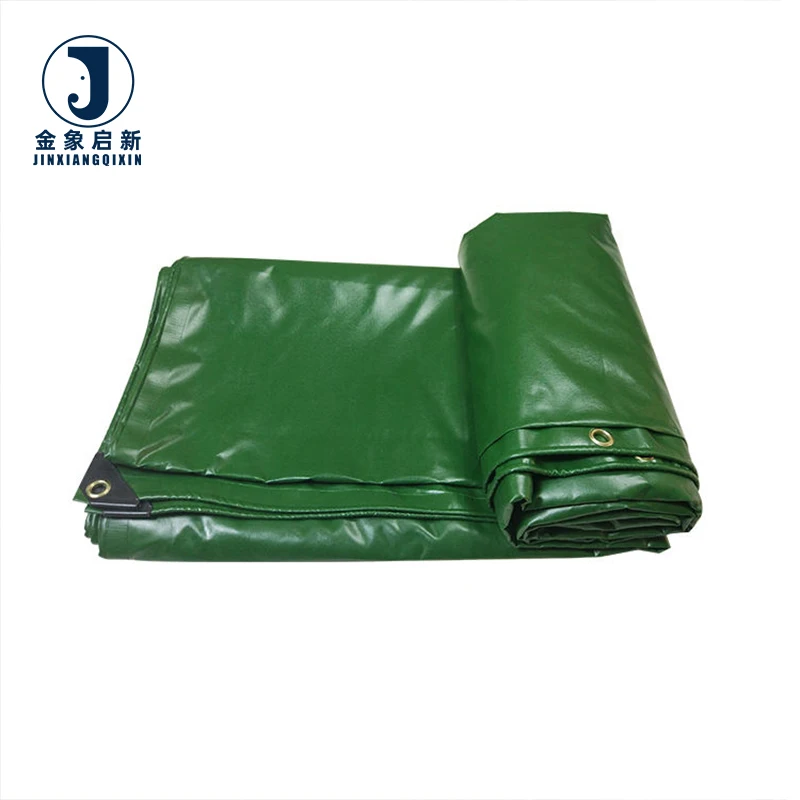
Description
Coated Fabric Bulk Capacity — three full production lines and 36 sets of equipment producing PVC knife-coated tarpaulin rolls with 100% pre-shipment inspection on every unit.
Technical Specifications
| Parameter | Value |
|---|---|
| Product Type | PVC Coated Tarpaulin Roll |
| Material | PVC coated polyester base fabric |
| Thickness Range | 0.35–1.5 mm |
| Weight Range | 400–1500 g/m² |
| Base Fabric Denier | 500D–2000D |
| Tensile Strength (Warp) | 1500–3000 N/5cm (varies by grade) |
| Tensile Strength (Weft) | 1200–2800 N/5cm (varies by grade) |
| Roll Width Options | 2 m / 4 m / 6 m (and imperial equivalents 6 ft / 8 ft / 10 ft / 12 ft) |
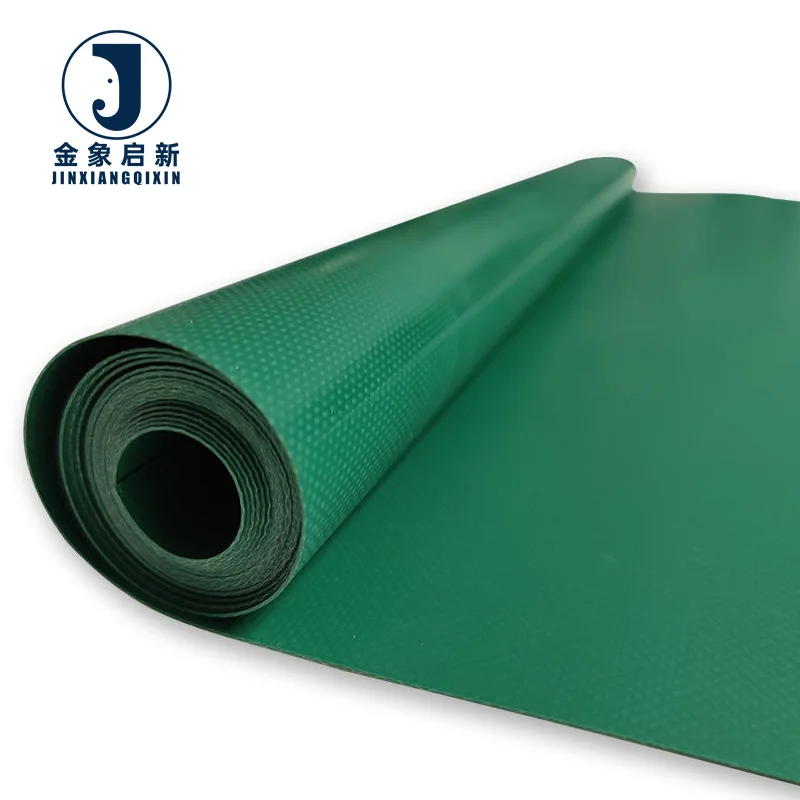
| Roll Length Options | 100 yards / 100 meters / custom |
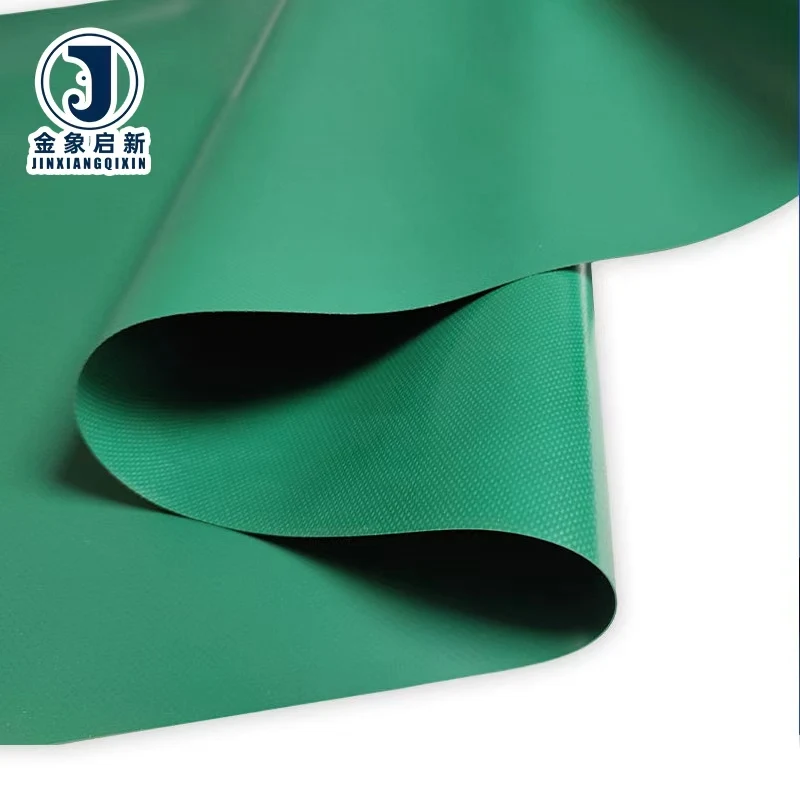
| Surface Finish | Glossy or matte (customisable) |
| Treatment Options | Anti-UV available — confirm the UV grade required for your market; flame retardant available — confirm the grade required for your site |
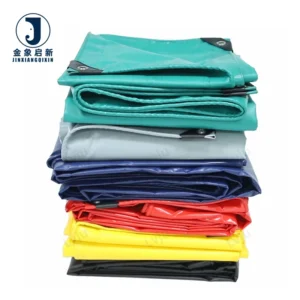
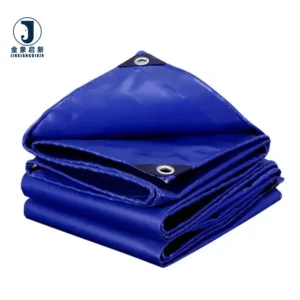
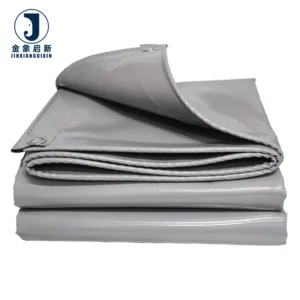
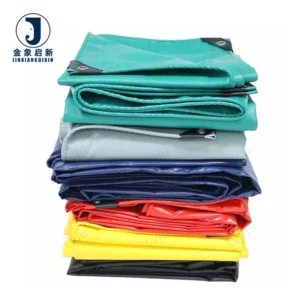
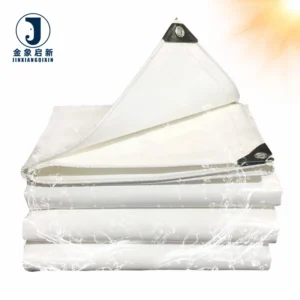
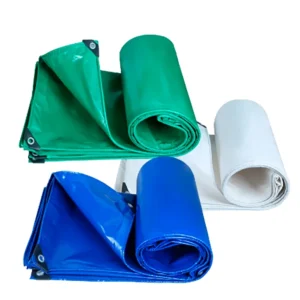
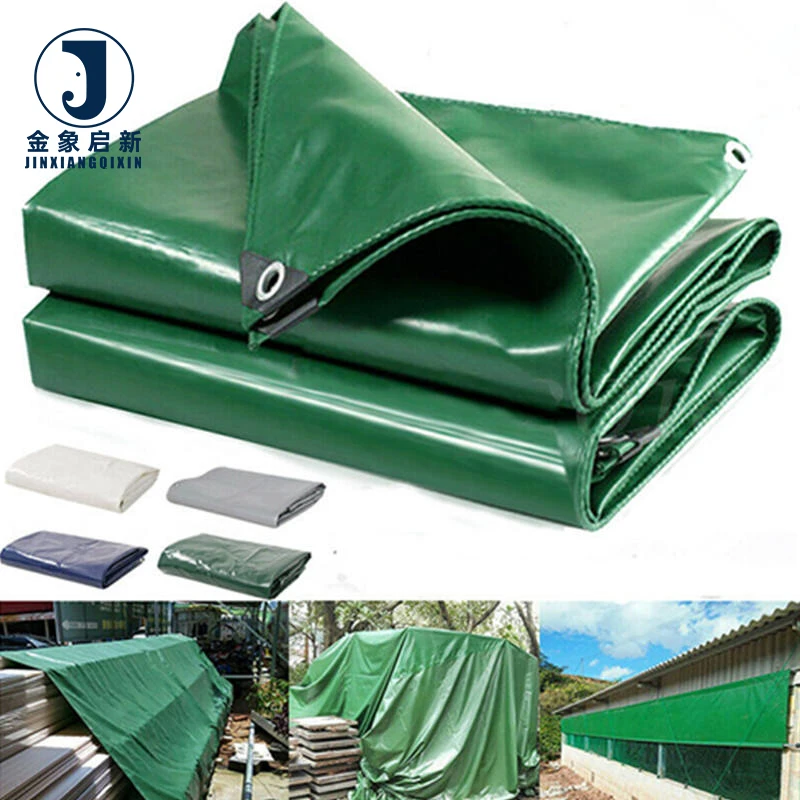
| Colour Options | Blue, Green, Grey, Black, Orange, Clear, dual-tone, or custom |
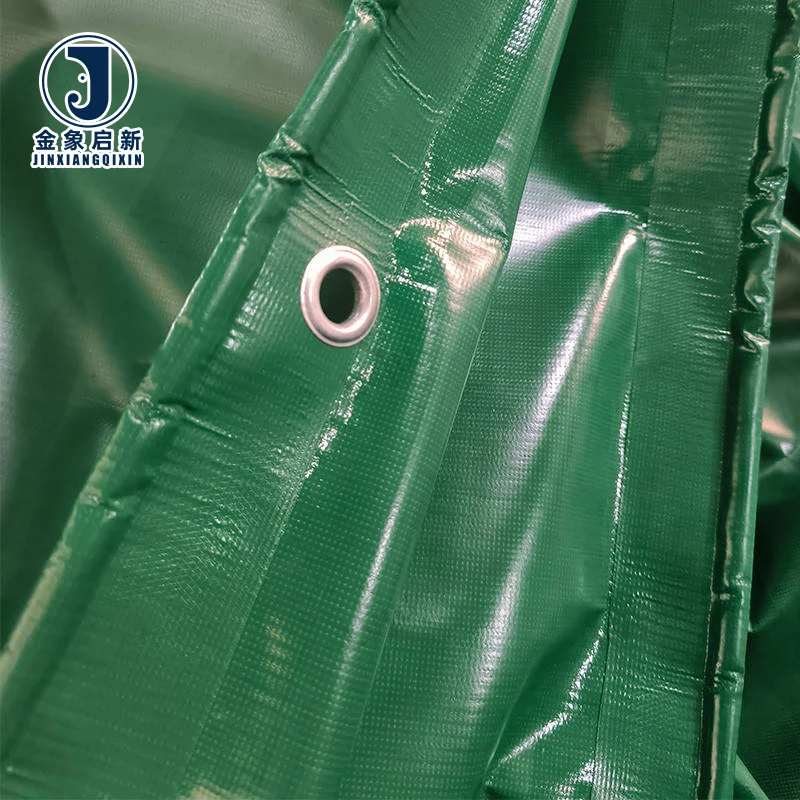
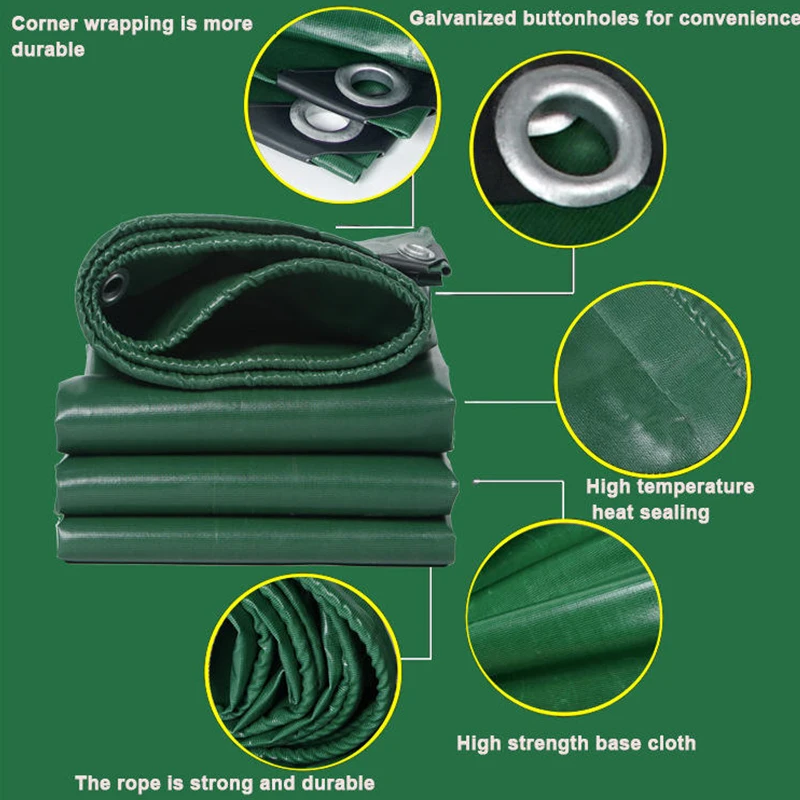
| Fabrication Readiness | Heat-weldable seams, reinforced hems with PP rope, galvanised eyelets at 1 m or 3 ft intervals |
| Key Features | Waterproof, washable, tear resistant, weather proof, mildew proof, anti-aging |
| Certifications | ISO, CE |
Application Suitability
| Application | Exposure & Requirement |
|---|---|
| Truck and trailer tarpaulin covers | Constant flexing at load points, road abrasion, UV exposure, rain and wind at highway speed |
| Membrane and tensioned structural fabric | Sustained tensile load, wind uplift, solar exposure, weld integrity at seam lines |
| Construction site protective covers | Impact from falling debris, prolonged outdoor weathering, frequent repositioning and folding |
| Pond and reservoir liners | Permanent water contact, soil chemistry, puncture risk from substrate irregularities |
| Inflatable and air-supported structures | Continuous internal pressure, cyclic stress, UV and temperature variation |
| Tent and awning fabrication | Repeated assembly and teardown, sun and rain exposure, colour consistency across panels |
Why GSM Alone Fails to Predict Real-World Roll Performance
A 650 g/m² roll with a weak base fabric will underperform a well-engineered 500 g/m² grade every time.
When buyers compare PVC coated tarpaulin roll stock on weight alone, the specification sheet tells only part of the story. The coating-to-yarn ratio, the denier of the base yarn, and the weave density together determine how the material handles under tension, at the weld line, and during repeated folding. A roll that meets the quoted GSM but uses a loosely woven base can split at the hem under load while a properly engineered lighter grade holds firm. [NEED_CITE: tensile and tear test methods for coated fabrics per ISO 1421]
How Roll-to-Roll Consistency Is Controlled Across Production Runs
Maintaining colour and weight uniformity across dozens of rolls in the same bulk order requires process control at the coating head. Each PVC coated tarpaulin roll on this line passes through in-process QA checkpoints where coating weight is measured and colour is verified against the batch reference. This prevents the visible panel mismatch that occurs when rolls from different runs end up side by side on a finished truck cover or awning installation.
What Width and Length Options Mean for Container Loading
Roll stock buyers think in container volume. Available widths from 2 m to 6 m and standard lengths of 100 yards or 100 metres allow loading plans to be calculated by roll count and total weight per container. Wider rolls reduce the number of welds a fabricator must make, cutting labour and potential failure points. Custom lengths can be produced to match specific cutting patterns and reduce off-cuts on the factory floor. [NEED_CITE: container loading optimisation for textile roll goods]
Reading the Specification Sheet Beyond the Weight Number
The relationship between base fabric denier, weave density, and coating thickness determines how a PVC knife-coated tarpaulin roll performs in service. A 1000D base fabric with a tight weave distributes load across more yarns, improving tear propagation resistance compared to a 500D base at similar GSM. Knife coating penetrates the yarn interstices, creating a mechanical bond that supports stronger heat-welded seams than lamination methods. Surface finish — glossy or matte — affects dirt pickup and print adhesion; glossy surfaces shed contaminants more readily while matte finishes accept screen-printed branding with better ink grip. Roll width selection directly influences fabrication yield: a 4 m roll may nest two truck curtain panels with minimal waste, whereas a 2 m roll requires a longitudinal weld that adds a potential failure line.
The Hidden Cost of Specifying on Price Per Kilogram
Choosing roll stock based on the lowest cost per kilogram often leads to material that arrives underweight, with coating adhesion that fails at the first weld. When a batch of rolls shows colour variation, the fabricator must either accept a patchwork appearance on the finished product or reject the entire shipment. Rolls supplied without a documented specification sheet leave the buyer with no basis for a quality claim, turning a procurement saving into a replacement cost. [NEED_CITE: common coated fabric specification discrepancies in bulk imports]
Why Wholesale Buyers Source PVC Coated Tarpaulin Roll Stock Here
Three full production lines with 36 sets of professional equipment provide the volume capacity to fill container orders without extended delays. The 10-person R&D team handles custom width, colour matching, and sample development within days, not weeks. Every roll undergoes 100% pre-shipment inspection, so the GSM and colour documented on the specification sheet match what arrives at your warehouse. In-process QA at each production stage catches coating inconsistencies before they reach the packing area. Nearly 30 years of focused coated fabric production means process parameters are established and repeatable across orders.
Documentation & Verification
- Material specification sheet stating GSM, base fabric denier, coating method, and colour reference per roll batch
- Pre-shipment inspection record with roll-level weight verification before container loading
- Roll packing list with individual roll dimensions and weight for customs and receiving checks
- Test reports for UV and flame retardant treatments included where applicable to the order
- Certificate of origin and customs documentation prepared for each destination market
Fabrication, Handling & Storage
- Heat-weld parameters should be calibrated to the specific thickness range (0.35–1.5 mm) of the grade ordered
- Reinforced hems with PP rope distribute tie-down load across the PVC coated polyester base fabric
- Store rolls upright on cores in a dry environment to prevent edge crushing and flat-spot deformation
- Galvanised eyelets at 1 m intervals provide secure anchor points without tearing through the base fabric
- Glossy finish rolls clean with mild detergent; avoid solvent-based cleaners that soften the PVC coating
- Allow cold-stored rolls to reach ambient temperature before unrolling to prevent coating micro-cracking
What to Include in Your Enquiry
Specify the target application, the exposure conditions the fabric will face, and any fire-retardant or anti-UV grades your market or site requires. Confirm the roll width, length, and colour needed, along with the approximate annual volume so that batch-consistent production can be planned. Indicate whether you require finished cut-and-sewn products or roll stock only, and whether sample rolls are needed before committing to a full container order.
Frequently Asked Questions
Q: How is GSM verified on each roll before shipment and how can I re-check on arrival?
A: Every PVC coated tarpaulin roll is weighed and measured during the pre-shipment inspection, with results recorded on the specification sheet included in the shipping documentation. On arrival, you can verify by cutting a measured sample from the roll end, weighing it on a calibrated scale, and comparing the result to the documented GSM value.
Q: What widths and roll lengths are available and how do they affect container loading?
A: Roll widths are available in 2 m, 4 m, and 6 m, with imperial equivalents of 6 ft through 12 ft. Standard roll lengths are 100 yards or 100 metres, with custom lengths on request. Wider rolls reduce the total roll count per container, so a loading plan should be calculated based on the selected width and grade to maximise container utilisation.
Q: How do you ensure colour consistency across multiple rolls in the same bulk order?
A: All rolls in a single order are produced from the same coating batch with in-process colour checks at the coating head. Each roll is compared to the batch reference standard during the 100% pre-shipment inspection. This eliminates visible panel mismatch when rolls are fabricated into adjacent panels on a truck curtain or awning.
Q: Can custom widths, colours or branding be ordered, and what are the minimums and lead times?
A: Custom widths, Pantone-matched colours, and printed branding are available with minimum order quantities that vary by specification. The 10-person R&D team develops samples within days for buyer approval before production begins. Confirm your required colour reference, print artwork, and target volume so that an accurate lead time can be provided.
Q: Are test reports for anti-UV and flame-retardant treatments provided with the goods?
A: Where anti-UV or flame-retardant treatments are specified on your order, the corresponding test reports are included in the shipment documentation package. Confirm the specific grade or standard required for your market at the enquiry stage so that the correct treatment is applied and documented.