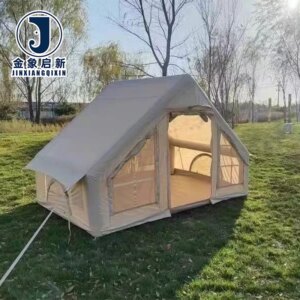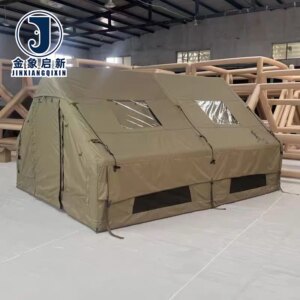

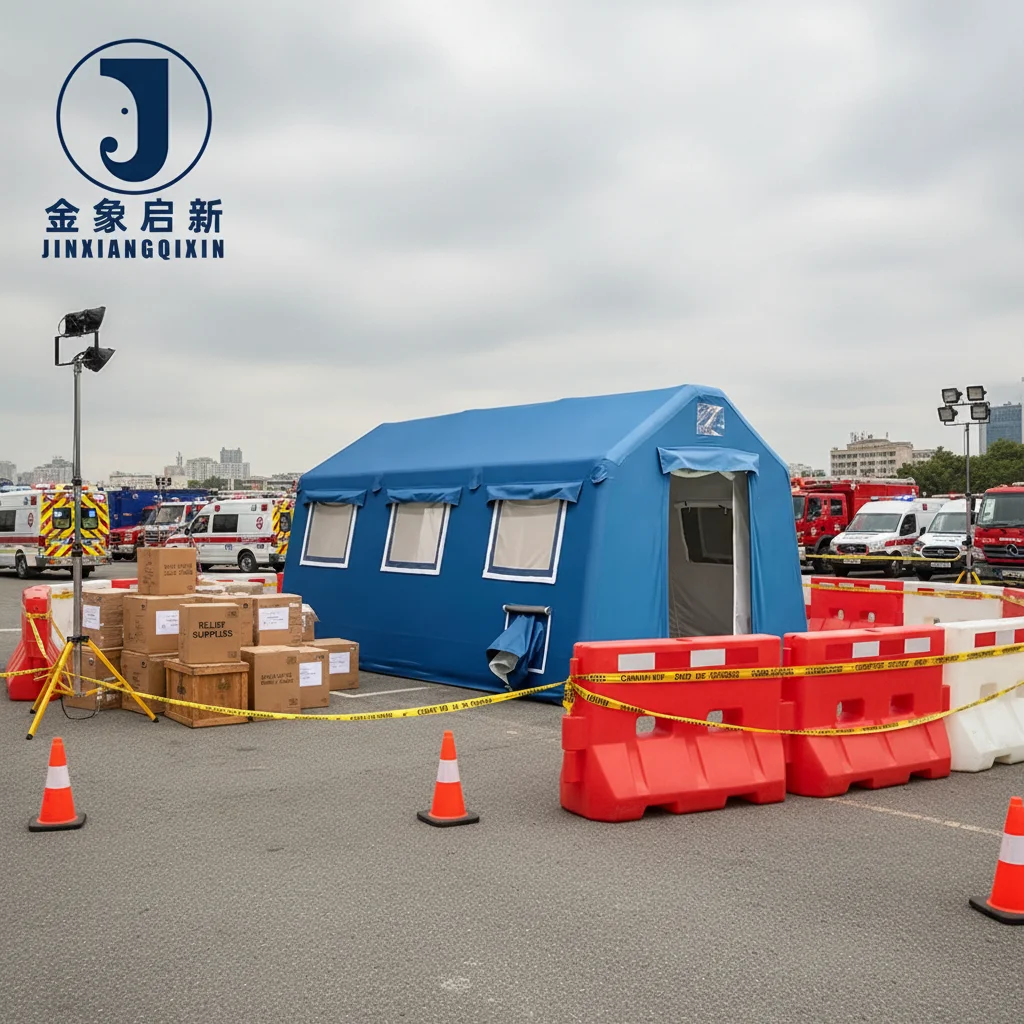
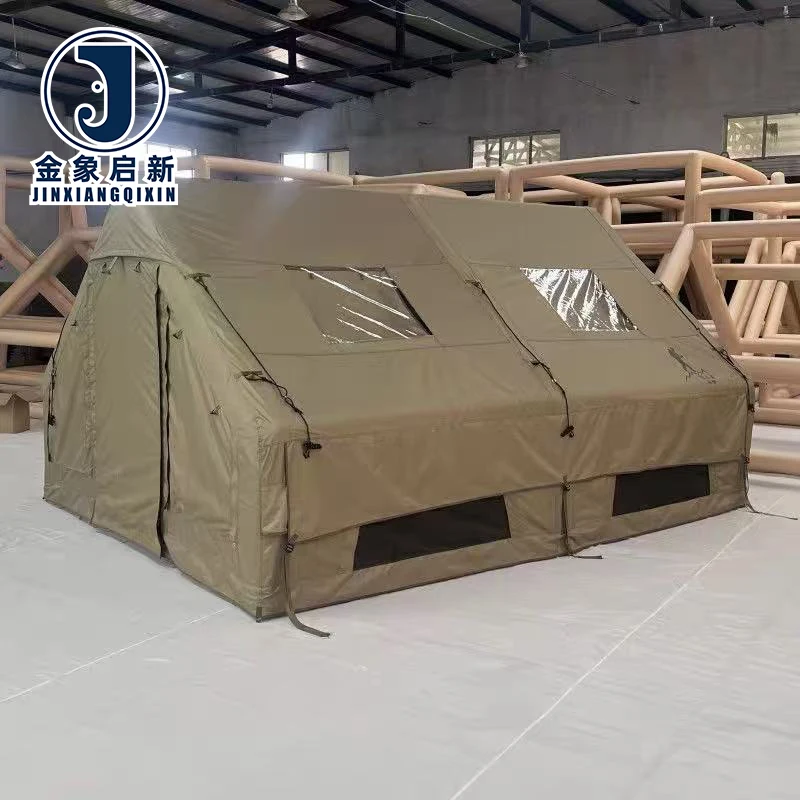
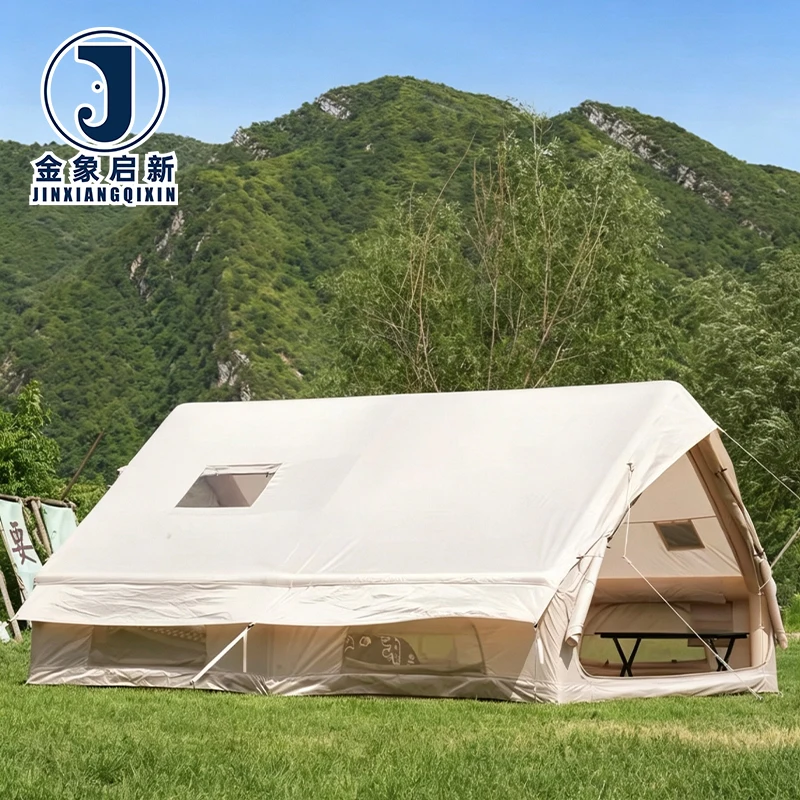
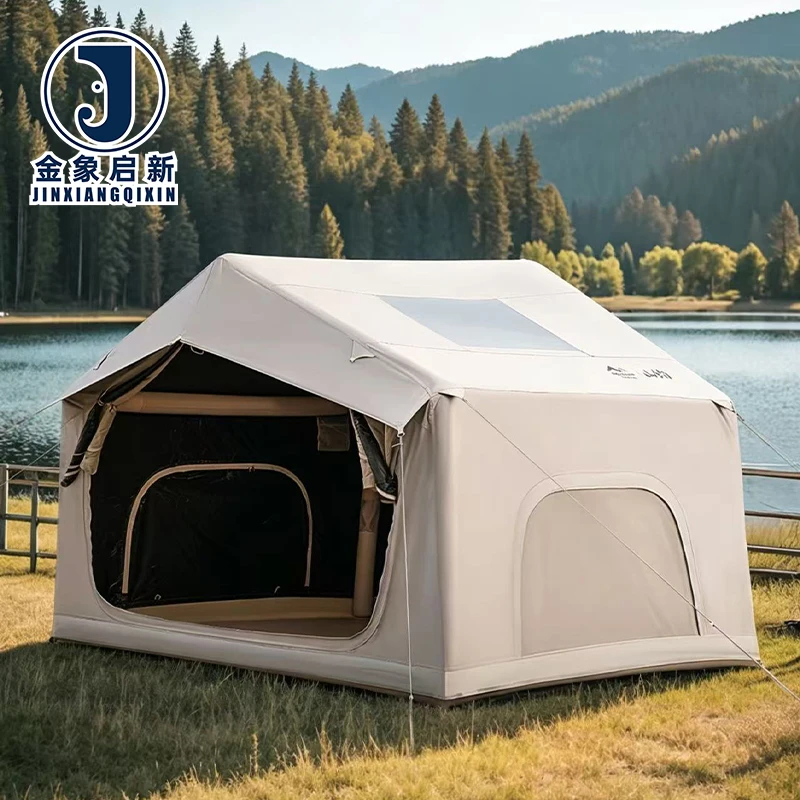
Description
Roll-Stock Consistency — Every roll of PVC inflatable tent fabric is inspected for coating weight and colour uniformity before dispatch, ensuring batch-to-batch reliability for high-volume fabricators.
Technical Specifications
| Parameter | Value |
|---|---|
| Product Type | Inflatable Tent Fabric |
| Core Material | PVC tarpaulin |
| Waterproof Rating | 3000mm water column |
| Season Suitability | 4-season |
| Deployment Mechanism | Quick automatic opening |
| Capacity | 2–8 person |
| Structure Type | Inflatable structure, extended type |
| Tear Resistance | ≥300N |
| Flame Retardancy | EN 13501-1 |
| UV Resistance | Formulated for extended outdoor exposure |
| Setup Time | Approximately 2 minutes (tested to 500+ deployment cycles) |
| Thickness Tolerance | ±0.02mm |
| Seam Strength | 250N |
| Standards | ISO 9001, ISO 14001, ISO 45001, CE |
Application Suitability
| Application | Exposure & Requirement |
|---|---|
| Disaster relief temporary shelters | Continuous weather exposure, rapid deployment, multi-climate resilience from desert to alpine |
| Field command centers | Repeated inflation cycles, structural rigidity under wind load, interior climate control compatibility |
| Emergency equipment storage | Moisture ingress prevention, UV degradation resistance, puncture resistance from stored machinery |
| Material distribution hubs | High-frequency setup and teardown, abrasion from ground contact, large-span structural demands |
| Industrial logistics coordination | Extended outdoor staging, flame retardant compliance on industrial sites, heavy-duty floor anchoring |
Why Batch Consistency Matters More Than the Quoted GSM for Inflatable Structures
A quoted GSM that varies roll-to-roll creates unpredictable heat-weld behaviour and structural weak points across a production run.
When fabricating inflatable tents, the Inflatable Tent manufacturer must hold tight control over coating adhesion and base fabric density. A roll that arrives lighter than specified does not just reduce tear margin — it alters the thermal profile during high-frequency welding. The weld temperature that produced a strong seam on the last batch may burn through or under-fuse the current one, resulting in air-leak failures that only appear after deployment [NEED_CITE: relationship between coating weight variance and heat-weld performance in PVC coated fabrics]. Fabricators running multiple rolls across a single tent structure cannot afford visible colour shifts or thickness variation between panels, as these defects become obvious once the structure is inflated and viewed in daylight.
Roll-to-Roll Coating Uniformity and Weld Integrity
Consistent coating weight across every roll is the foundation of reliable inflatable structure fabrication. When the PVC layer varies in thickness beyond the stated ±0.02mm tolerance, weld parameters must be adjusted mid-run — a practice that introduces operator error and increases rejection rates. This Inflatable Tent fabric is produced under controlled coating conditions with in-process QA at each stage, so fabricators can set weld temperatures and dwell times once and maintain them across the full order.
Colour Matching Across Multi-Roll Orders
Tent manufacturers producing batches of relief shelters or branded event structures need panels that match when assembled side by side. Colour variation between rolls in a single shipment is a common complaint that forces fabricators to sort and re-match panels on the cutting table, adding labour and waste. The QA process here checks colour consistency roll-to-roll before dispatch, reducing the sorting burden and ensuring uniform appearance across the finished Inflatable Tent structure.
Interpreting the Core Specifications for Inflatable Applications
The 3000mm water column rating indicates the hydrostatic pressure the coated fabric can withstand before moisture penetrates — a critical threshold for disaster relief shelters deployed in heavy rain or flood-adjacent zones. Tear resistance at ≥300N reflects the force required to propagate a tear once initiated, which directly affects how the structure handles puncture from debris or sharp ground surfaces during emergency deployment. The EN 13501-1 flame retardant classification aligns with European building material fire standards, a specification frequently required for temporary structures on institutional and industrial sites [NEED_CITE: EN 13501-1 classification scope for temporary membrane structures]. Seam strength at 250N determines the load the welded joints can carry before separation — particularly important at the base-to-wall junctions where inflation pressure concentrates stress.
The Hidden Cost of Specifying Inflatable Fabric on GSM Alone
Selecting inflatable structure fabric based solely on a quoted GSM without verifying coating adhesion and base fabric denier leads to field failures that are expensive and dangerous. A coating that meets the weight target but bonds poorly to the base fabric will delaminate at the weld line under repeated inflation cycles. Fabricators who skip pre-production weld tests on each new roll batch absorb the cost of re-work, delayed shipments, and warranty claims. In disaster relief procurement, a tent that fails during deployment undermines the entire response operation [NEED_CITE: field failure modes in inflatable emergency shelters related to coating delamination]. Specifying without verifying test reports for the claimed flame retardant grade can also result in site rejection during safety inspection, forcing costly last-minute replacement.
Why Fabricators Source This Inflatable Tent Fabric
Three full production lines and 36 sets of professional equipment support bulk roll output with dependable on-time delivery, so fabricators can plan production schedules around confirmed dispatch dates rather than buffer stock. A dedicated 10-person R&D team handles custom width, colour formulation, and pattern printing with samples developed within days — allowing fabricators to evaluate material before committing to volume. QA inspection at every production stage with 100% pre-shipment checking means roll-to-roll consistency is verified before the goods leave the facility, not discovered on the cutting table. Nearly 30 years of focused coated fabric production underpins process control over coating weight, adhesion, and surface finish that newer producers cannot replicate quickly.
Documentation & Verification
- Material specification sheet confirming PVC formulation, coating type, and colour reference per roll
- Waterproof test record documenting 3000mm water column verification per production batch
- EN 13501-1 flame retardant test report supplied with applicable grades
- Pre-shipment inspection record with thickness tolerance and seam strength results
- Roll packing list with gross weight, roll count, and dimensional summary for customs clearance
- Certificate of origin and full export documentation package
Fabrication, Handling & Storage
- Set high-frequency weld temperature based on the verified ±0.02mm coating thickness tolerance for consistent seam fusion.
- Inflate test a welded sample panel before full production to confirm 250N seam strength holds under operating pressure.
- Store rolls upright on padded racking to prevent edge compression marks that transfer to the finished tent surface.
- Avoid cold-temperature unfolding below the PVC brittleness threshold to prevent micro-cracking in the coating layer.
- Use PVC-compatible cleaners only; solvent-based products will degrade the coating and compromise waterproof performance.
- Plan cutting layouts to maximise yield from the available roll width and minimise weld seams in high-stress inflation zones.
Planning Your Roll Order for Inflatable Tent Production
Provide your target roll width, annual volume estimate, and the specific flame retardant or UV performance grade required for your destination market. If your end product requires custom colour matching or printed branding across panels, submit reference samples early so the formulation can be confirmed before bulk production begins. Specify whether you need rolls only or finished cut-to-size panels, and indicate if pre-production sample approval is required before the full order ships.
Frequently Asked Questions
Q: What GSM grades are available for inflatable structure fabric?
A: Multiple GSM grades are produced to suit different inflatable tent specifications, from lighter grades for portable emergency shelters to heavier constructions for semi-permanent field structures. The specific GSM for your application is confirmed during the sampling stage, with actual weight verified on the pre-shipment inspection record against the quoted value. Contact the technical team with your end-use requirements to receive a specification recommendation.
Q: Can I order custom widths or colours with consistent batch matching?
A: Custom widths and colours are supported with sample development prior to bulk commitment. Roll-to-roll colour consistency is checked during QA before dispatch, and custom width orders are produced on dedicated runs to maintain coating uniformity. Minimum order quantities apply for non-standard specifications and are confirmed at the quotation stage along with the production lead time.
Q: Are flame-retardant and UV test reports included with shipment?
A: EN 13501-1 flame retardant test reports are supplied with applicable grades, and UV resistance documentation is provided where the formulation includes verified treatment. Confirm the specific fire classification and UV standard required by your destination market at the inquiry stage so the correct grade is specified and tested before production begins.
Q: What is the lead time and minimum order for custom specifications?
A: Lead times and minimum order quantities depend on the custom width, colour, and treatment combination requested. Standard stock grades ship on shorter timelines, while custom formulations require additional production scheduling. Submit your full specification at inquiry to receive a confirmed lead time and minimum, and request a sample for evaluation before committing to the bulk roll order.
Q: How is weld seam integrity ensured across the roll?
A: Coating thickness is held within ±0.02mm tolerance and seam strength is verified at 250N during pre-shipment inspection. Consistent coating weight across the roll allows fabricators to maintain stable high-frequency weld parameters throughout production. Each batch inspection record documents seam test results, providing traceable evidence that the material meets the stated welding performance specification.