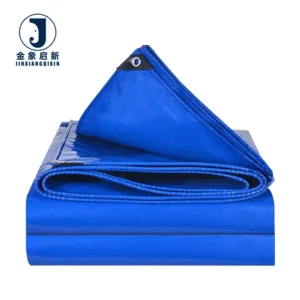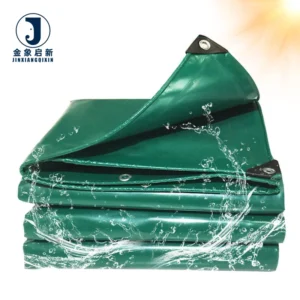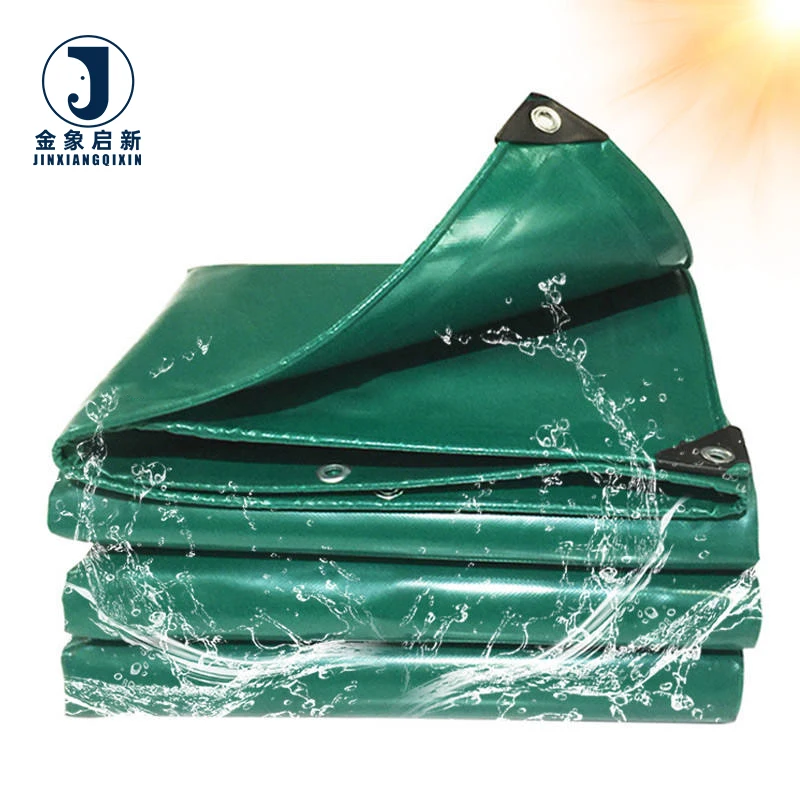
Description
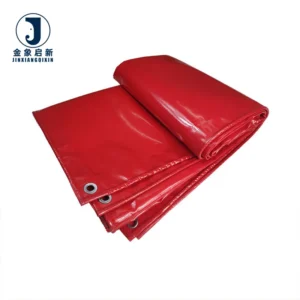
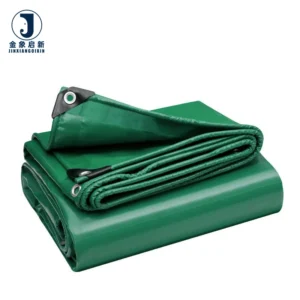
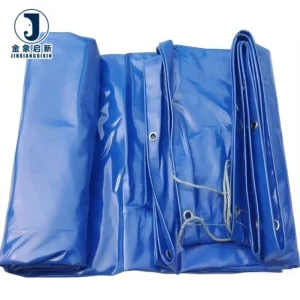
Consistent Roll-to-Roll Quality — Three full production lines with 100% pre-shipment inspection ensure every PVC coated tarpaulin roll in your container matches the stated GSM, colour and width specification.
Technical Specifications
| Parameter | Value |
|---|---|
| Product Type | PVC Coated Tarpaulin |
| Base Fabric | Polyester woven, double-sided PVC coating |
| Weight Range Options | 350 / 400 / 420 / 500 / 600 / 650 / 750 / 900 GSM |
| Thickness Range Options | 0.29 / 0.32 / 0.38 / 0.44 / 0.46 / 0.55 / 0.65 mm |
| Yarn Count Options | 500D×840D / 500D×1000D / 1000D×1000D / 1000D×1300D / 1300D×1300D / 1000D×2000D |
| Mesh Count Options | 30×19 / 20×20 / 30×15 |
| Tensile Strength Warp | 1650 – 3900 N |
| Tensile Strength Weft | 1600 – 3500 N |
| Brittle Temperature | ≤ -50 to -60 °C |
| Softening Temperature | ≥ 80 °C |
| Melting Point | 212 °C |
| Density Parameter | 1.15 – 2.00 g/cm³ |
| Joining Methods | High frequency hot melt, hot air welding, sewing |
| Fire Retardant | Available in flame retardant grades — confirm the grade required for your market |
| Anti UV | Available with UV stabilisation — request test basis for your region |
| Key Features | Waterproof, heavy metal free, anti-mildew, flexible, self-clean surface, printable |
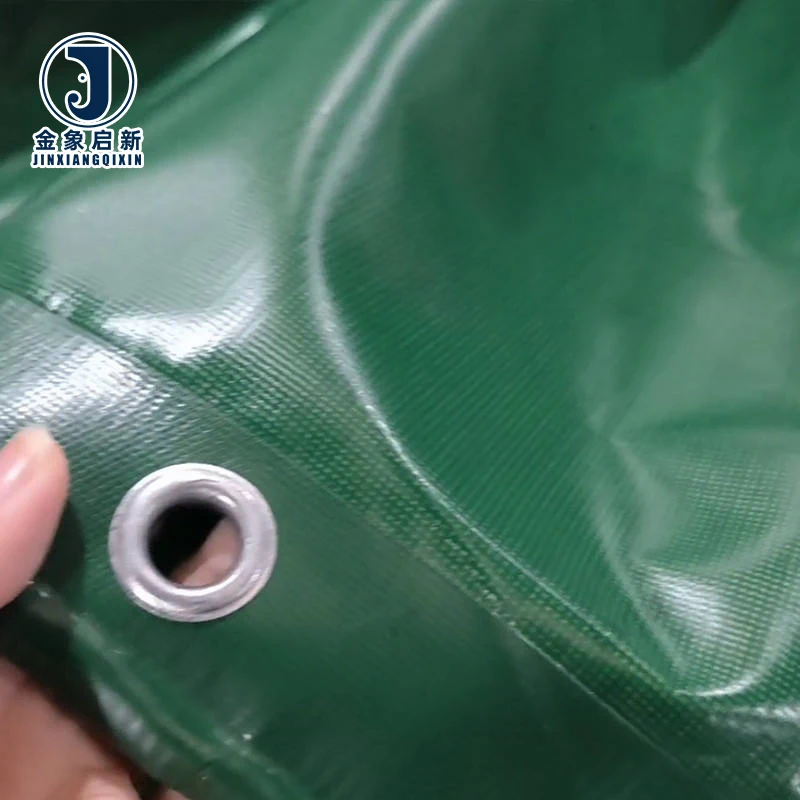
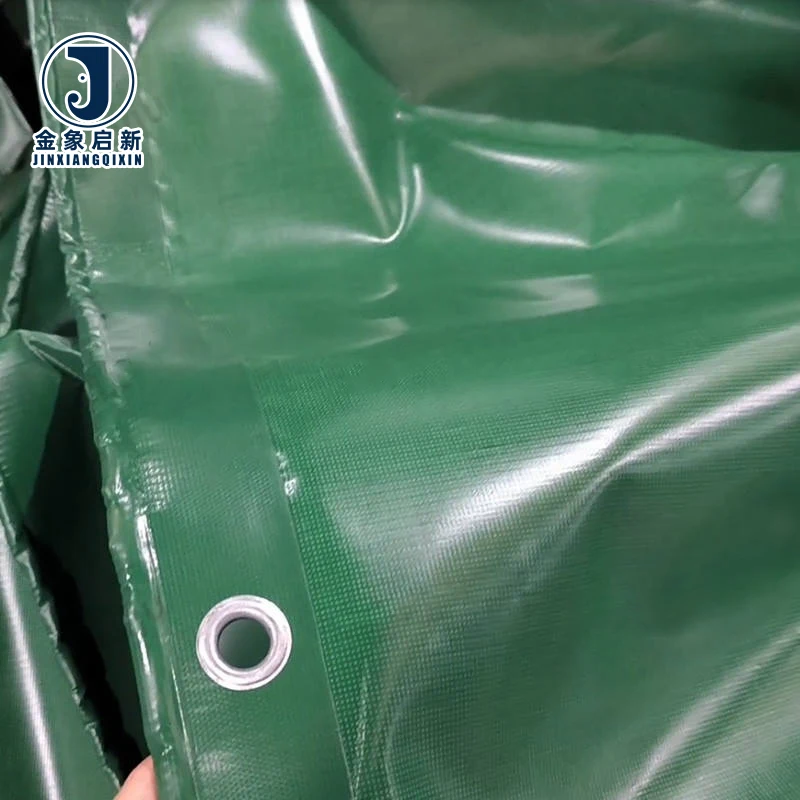
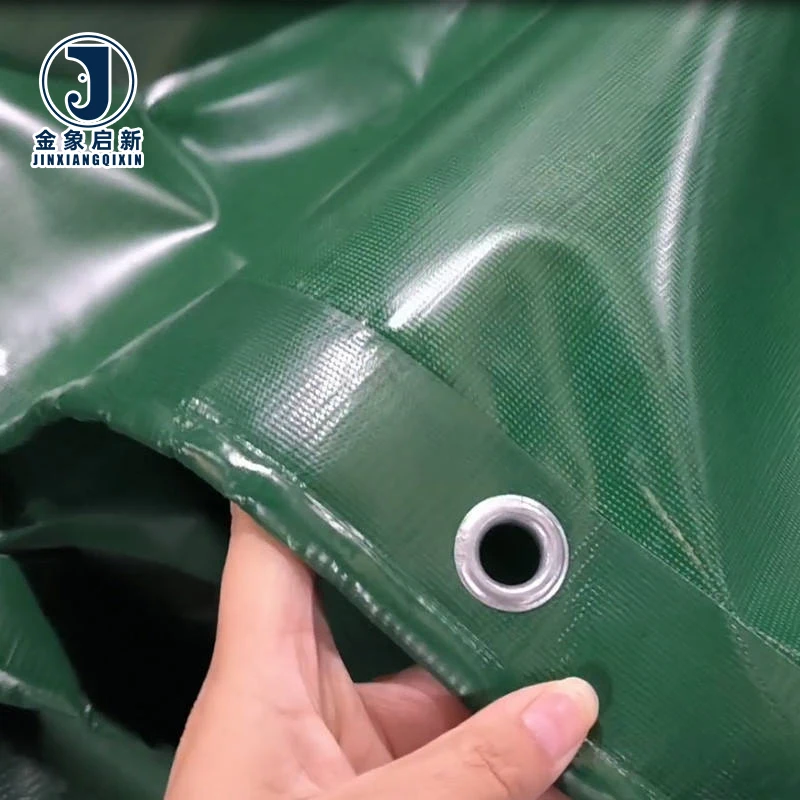
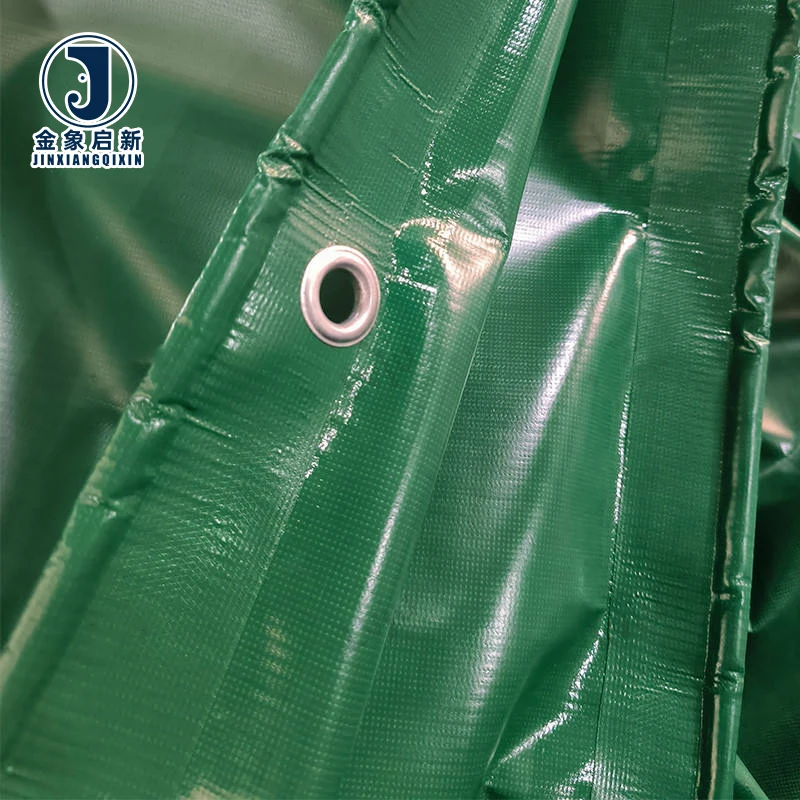
| Edge Finishing | 5 mm rope without splicing, heat sealed seamless edge wrapping, 3 cm aluminium alloy eyelets, reinforced corners |
| Certifications | ISO, CE |
Application Suitability
| Application | Exposure & Requirement |
|---|---|
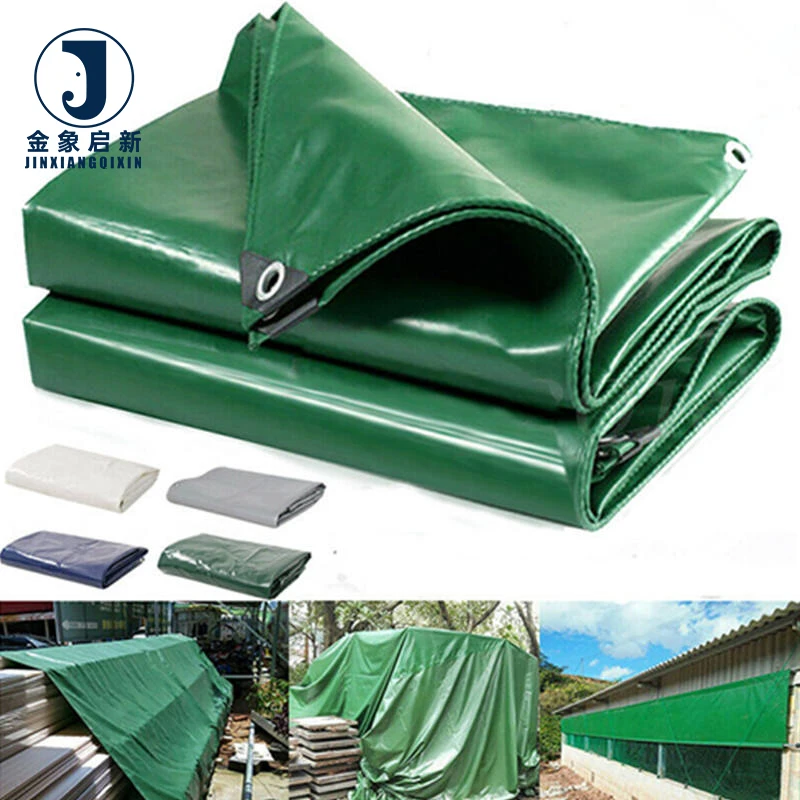
| Tarpaulin distributor stock | Multiple GSM grades for regional resale, batch colour consistency across rolls |
| Truck side curtain & top roof | Continuous flexing, road abrasion, weather exposure, weld integrity at stress points |
| Outdoor event tent & awning | UV and rain exposure, large unsupported spans, printable surface for branding |
| Inflatable & membrane structure | Air retention, seam strength under pressure, repeated inflation cycles |
| Construction site cover | Abrasion from debris, wind load, flame retardant compliance on site |
| Pallet & equipment wrap | Forklift handling, indoor and outdoor storage, puncture resistance |
Why GSM Alone Does Not Tell You the Full Story for PVC Coated Tarpaulin Roll Selection
GSM is only meaningful when paired with base fabric denier and mesh density.
Distributors and fabricators frequently receive PVC coated tarpaulin roll stock that arrives lighter than the quoted weight, or with shade variation visible once unrolled side by side. When sourcing by the container, a discrepancy in coating weight or base yarn count between rolls forces downstream fabricators to adjust welding parameters mid-run, generating scrap and delaying orders. Relying solely on a GSM figure without checking the yarn count and mesh structure behind it leaves you blind to how the fabric will actually behave under tension or at welded seams [NEED_CITE: tensile and tear test methods for coated fabrics per ISO 1421].
Batch Consistency Across Roll Stock
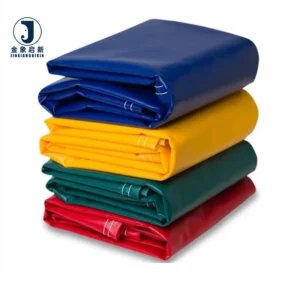
Maintaining uniform coating weight and colour across multiple rolls demands controlled coating line parameters and inline monitoring. Each PVC coated tarpaulin roll in a wholesale order is produced with documented GSM and colour references so that fabricators cutting from consecutive rolls encounter no variation in thickness, hand feel or shade. This consistency is critical when rolls feed automated cutting tables or when finished panels are installed adjacent to each other on a truck curtain or event canopy.
Roll Dimensions and Container Loading
Wholesale buyers need predictable roll widths and lengths to calculate yield per container and minimise offcuts at the fabrication stage. Stock rolls are supplied in widths up to 2.1 m, with custom widths available on request subject to line capability. Container loading plans specify roll count, net weight and stacking orientation so that receiving teams can verify the shipment against the packing list without delay [NEED_CITE: typical container loading practices for coated fabric rolls].
How Base Fabric Construction Drives Real-World Performance
The tensile and tear behaviour of a coated fabric depends on the interplay between yarn denier, mesh count and PVC coating weight. A 1000D×1000D base at 20×20 mesh provides balanced warp-and-weft strength, while a 1000D×2000D construction concentrates heavier yarn in the weft direction for applications where cross-direction loads dominate, such as side curtains that billow under highway wind. Coating adhesion to the base fabric determines whether a welded seam holds or peels apart before the fabric itself fails. The available high frequency hot melt and hot air joining methods rely on a stable PVC layer that softens uniformly at the weld zone. Surface finish — whether the default self-clean coating or a printable top layer — affects ink adhesion for branded rolls and long-term dirt pick-up in outdoor installations. Temperature boundaries matter equally: the material remains flexible down to its brittle point of ≤ -50 to -60 °C and begins to soften at ≥ 80 °C, defining the usable climate range for stock and finished products.
The Hidden Cost of Specifying the Wrong Roll Grade
Choosing a lighter GSM to save on material cost often leads to premature failure at high-stress points — eyelets tearing out under tie-down tension, or seams splitting where a truck curtain flexes most. Rolls that lack documented fire retardant certification can halt a construction project at the inspection stage if the site demands a specific grade. Colour drift between production batches forces a distributor to refuse an entire shipment or absorb the cost of replacing mismatched rolls already sold to end users [NEED_CITE: common tarpaulin failure modes at weld lines and eyelet zones]. Welding parameters calibrated for one coating thickness may burn through or under-bond on a different grade, creating latent defects that only appear once the finished cover is in service.
Why Source Your Roll Stock Here
Nearly 30 years of continuous coated fabric production give this facility deep process control over PVC coating weight and base fabric adhesion, directly supporting the batch consistency that wholesale buyers demand. Three full production lines and 36 sets of professional equipment provide the capacity to fill container orders with reliable scheduling. A 10-person R&D team handles custom width, colour matching and pattern printing with samples developed before bulk commitment, reducing the risk of large-volume mismatches. Dedicated QA and QC at every production stage culminate in 100% pre-shipment inspection on every roll, catching GSM or shade deviations before they reach your warehouse. ISO and CE certifications underpin the documentation package that accompanies each dispatch, satisfying the compliance requirements of cross-border wholesale trade.
Documentation & Verification
- Material specification sheet stating exact GSM, yarn count and mesh per roll grade
- Pre-shipment inspection record verifying weight and colour across the full order
- Roll packing list with roll count, net weight and container loading plan
- Test reports for fire retardant and UV grades where applicable to the order
- Certificate of origin and customs documentation for cross-border shipments
Fabrication, Handling & Storage
- High frequency welding suits all available GSM grades; adjust power and dwell time to coating thickness
- Hot air welding works well on heavier yarn counts such as 1000D×1000D and above
- Store rolls upright on pallets to prevent flat-spotting and permanent crease marks on the PVC surface
- Allow cold-stored rolls to acclimatise before unrolling to avoid coating micro-cracking at low temperatures
- Use mild detergent and soft cloth for cleaning; avoid solvents that attack the PVC coating layer
- Reinforce eyelet zones with additional PVC patches when fabricating tie-down points from lighter GSM rolls
Requesting a Quotation
To receive an accurate quotation, share the GSM grade or range you stock, the roll widths and lengths your cutting line requires, and annual volume so that tier pricing can be structured. If your market demands specific fire retardant or UV grades, state the test standard or certification your end users require. Confirm whether you need plain rolls or custom colour and printed branding so that sample development can begin before bulk production.
Frequently Asked Questions
Q: What GSM grades and widths are available as stock rolls?
A: Roll stock is available in eight weight grades from 350 GSM to 900 GSM, each matched to a specific yarn count and mesh density. Standard widths run up to 2.1 m, with custom widths produced to order. Request the specification sheet to match a grade to your fabrication requirements.
Q: Can I get consistent colour across multiple rolls in one order?
A: Yes. Every roll in a single order is produced against a confirmed colour reference, and 100% pre-shipment inspection checks shade uniformity before dispatch. This eliminates the visible variation that can appear when panels from different rolls are installed side by side.
Q: What is the lead time and minimum order for custom width or colour?
A: Custom widths and colours are produced on dedicated line slots, and lead times depend on current production scheduling and order volume. Minimum quantities apply per colour or width variant. Request a quotation with your target specification to receive confirmed timing and minimums.
Q: Do you provide test reports for fire retardant and UV grades?
A: Test reports are supplied with orders that specify fire retardant or UV-treated rolls. State the standard or grade required by your market — such as a regional fire classification — so that the correct treatment and corresponding documentation are included with your shipment.
Q: How are rolls packed and loaded for container shipment?
A: Rolls are packed in polyester bags and loaded according to a documented plan that lists roll count, net weight and stacking orientation. The packing list accompanies the shipment so that your receiving team can verify quantities and condition on arrival.