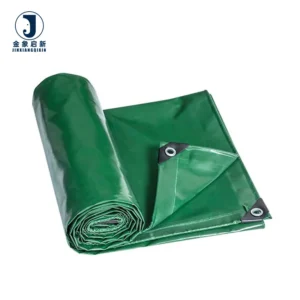
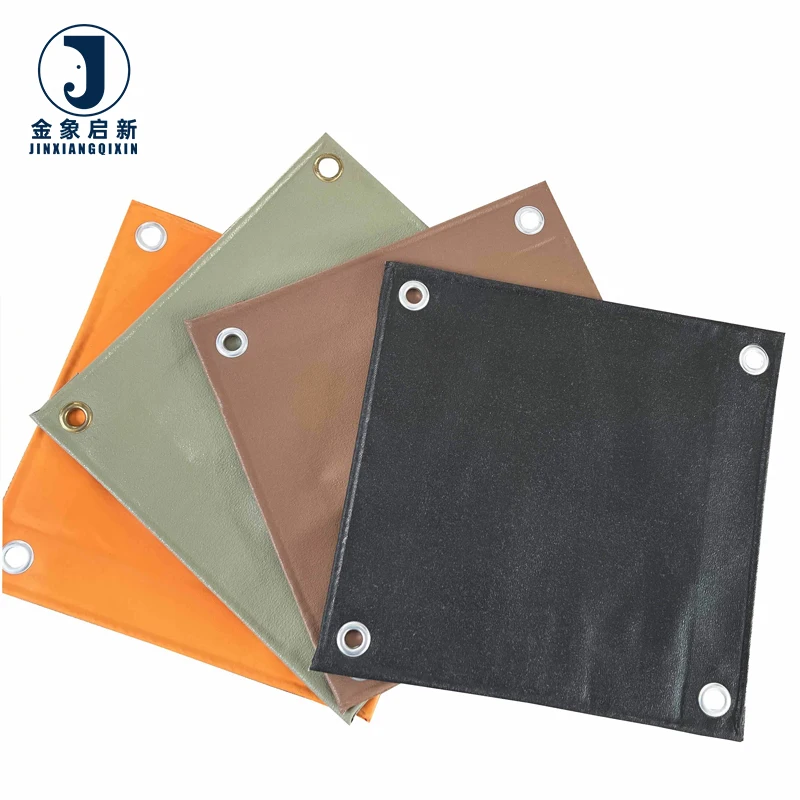
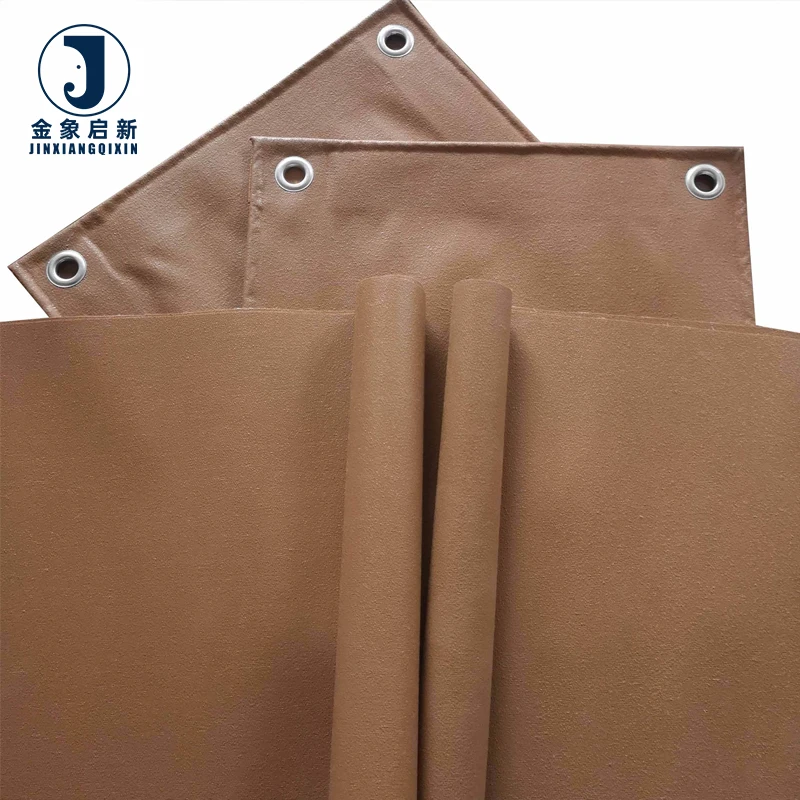
Description
Volume-Grade Consistency — Three production lines run dedicated GSM controls to ensure every roll in a container matches the 500gsm or 600gsm specification ordered, verified before dispatch.
Technical Specifications
| Parameter | Value |
|---|---|
| Product Type | PVC Coated Tarpaulin Roll |
| Coating Material | PVC |
| Weight Options | 500gsm, 600gsm |
| Flame Retardant | Available — confirm the grade required for your market |
| Anti-Static | Available — confirm the standard required for your market |
| Anti-Cold Treatment | Available |
| Anti-Mildew Treatment | Available |
| Weather Resistance | 1-3 years outdoor exposure |
Application Suitability
| Application | Exposure & Requirement |
|---|---|
| Truck cargo cover | Road abrasion, wind flex, UV exposure, frequent tie-down tension |
| Outdoor protective cover | Rain, dust, sun degradation, seasonal temperature swings |
| Pallet and equipment wrap | Storage yard stacking, forklift contact, moisture ingress prevention |
| Tarpaulin distributor stock | Container-load batch consistency, downstream cutting and welding |
Why Roll-to-Roll GSM Variance Destroys Wholesale Margins
A PVC coated tarpaulin roll that arrives lighter than the quoted weight triggers a chain of problems that extends far beyond a single invoice discrepancy. The real cost is not the missing grams — it is the downstream rejection, the re-order, and the damaged reputation with your end customer.
Wholesale buyers and fabricators routinely discover that the GSM stated on the proforma invoice does not match the material that arrives in the container. A roll quoted at 600gsm may arrive closer to 540gsm when measured on a calibrated scale. The fabric feels thinner, the weld seams behave differently under the heat bar, and the tensile performance falls below what the end user specified. For a tarpaulin distributor importing a full container, this means every roll in that shipment is suspect. [NEED_CITE: pre-shipment weight verification practices for coated fabric imports]
The problem compounds when the buyer has already committed to a delivery schedule with their own customers. Returning a container of underweight PVC tarpaulin roll stock is rarely practical. The wholesale buyer absorbs the loss, and the next order goes elsewhere. This is a procurement failure that happens at the coating stage — when process controls on coating weight are loose or when output is not verified against the purchase specification before packing.
Batch Color Matching Across a Container Load
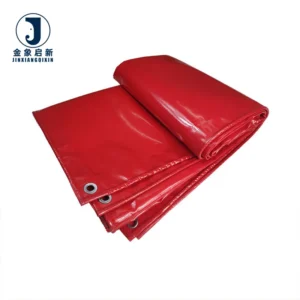
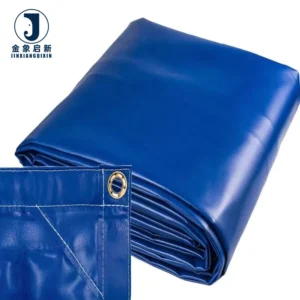
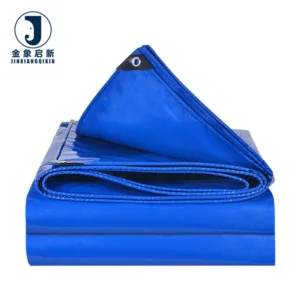
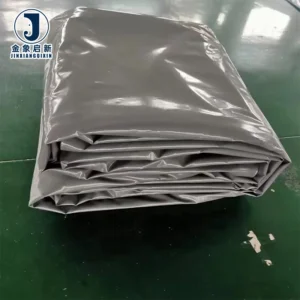
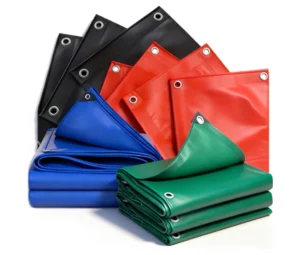
When a fabricator or distributor orders multiple rolls of PVC coated tarpaulin roll stock in a single colour, the expectation is that every roll will look identical when unrolled side by side. In practice, pigment dispersion, coating temperature, and line speed variations can shift hue from one roll to the next within the same production run.
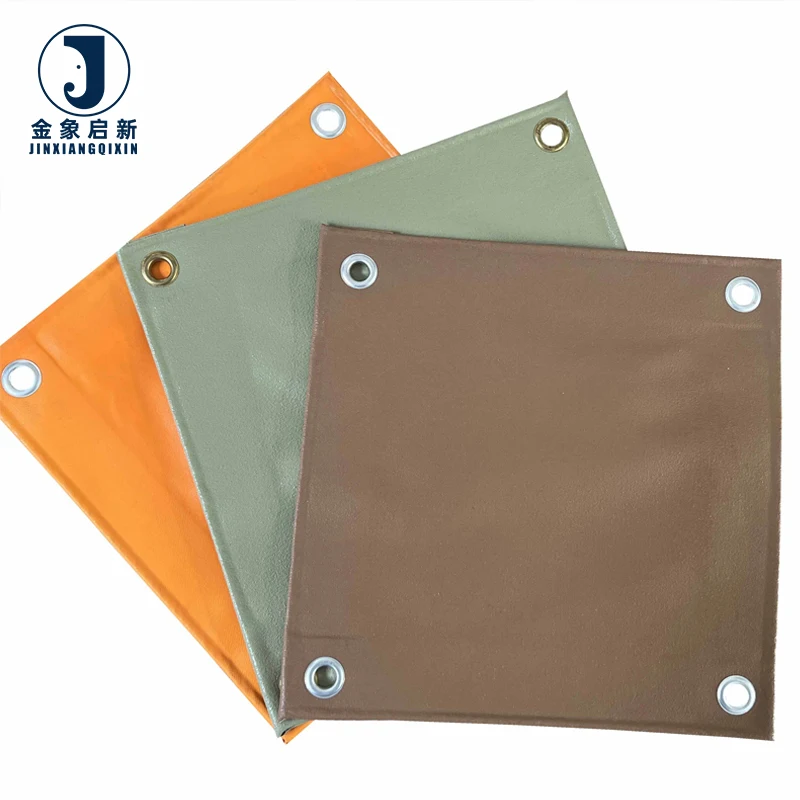
For a tarpaulin importer reselling to end users, a visible colour band across a truck cover assembled from two different rolls is an immediate rejection. Our production protocol holds colour within a defined tolerance window across all rolls in a single order, controlled at the mixing and coating stages rather than corrected after the fact.
Container Loading and Roll Weight Planning
Wholesale PVC tarpaulin roll purchasing is governed by container weight limits as much as by volume. A 20-foot container and a 40-foot high-cube container each have a maximum payload, and the number of rolls that fits depends on the roll diameter, width, and core specification.
The 500gsm and 600gsm grades produce different roll weights at the same linear length, which changes how many rolls a container can legally carry on the road from port to warehouse. We provide a container loading plan that maps roll count, individual roll weight, and total payload so the buyer can confirm the shipment before production begins. [NEED_CITE: container payload limits for rolled textile goods by shipping line]
Understanding the Relationship Between GSM and Actual Performance
GSM alone does not define how a PVC coated fabric will behave under load. The base fabric denier, weave density, and coating adhesion all contribute to the tensile and tear performance of the finished roll. A 500gsm roll built on a high-denier, tight-weave base can outperform a 600gsm roll made on a looser, lower-denier substrate.
The coating method also matters. Knife-over-roll coating drives PVC paste into the fabric interstices, producing higher peel strength and better weld seam integrity than simple dip or spray methods. For wholesale buyers comparing quotations, the coating process and base fabric construction should be evaluated alongside the stated GSM, because these factors determine how the material holds up at the weld line and under sustained tension.
The Hidden Cost of Unverified Material on Arrival
When a distributor receives a container of PVC coated tarpaulin rolls and discovers that the colour drifts between batches or the GSM is inconsistent across the load, the financial impact extends well beyond the material itself. Downstream customers who have already received cut sheets or fabricated covers from the suspect batch issue claims that the distributor must resolve.
Fabricators who weld seams on underweight material find that the heat settings calibrated for the specified GSM burn through or produce weak bonds, generating scrap and delaying production runs. The cost of one container of unverified PVC tarpaulin roll stock can multiply through the supply chain before the root cause is traced back to the coating line. [NEED_CITE: cost of material non-conformance in coated fabric supply chains]
Why Jinan Jinxiang for PVC Roll Stock Procurement
Three full production lines and 36 sets of professional equipment give us the capacity to fulfil container-scale orders without subcontracting to external coating facilities where quality controls are less visible. Every roll produced is logged against the purchase order specification.
Our 10-person R&D team supports custom width, length, and colour development, with sample turnaround measured in days rather than weeks. This matters for wholesale buyers who need to confirm colour, hand feel, and weld behaviour before committing to a full container.
Dedicated QA and QC inspection runs at every production stage, with 100% pre-shipment inspection verifying GSM, colour, and surface quality on every roll before it is packed. Roll packing lists record individual weights and batch numbers for full traceability.
Documentation & Verification
- Material specification sheet listing base fabric, coating type, and confirmed GSM for each grade ordered
- Weight verification record per roll showing measured GSM against the quoted 500gsm or 600gsm target
- Roll packing list with individual roll weights, batch numbers, and linear metres for container reconciliation
- Container loading plan detailing roll count, dimensions, and total payload against shipping line limits
- Certificate of origin and customs documentation package for destination-country import clearance
Fabrication, Handling & Storage
- Heat-weld the 500gsm and 600gsm grades using calibrated temperature and dwell time; test seam peel strength before production runs
- Store PVC coated tarpaulin rolls upright on their cores to prevent flat-spotting and edge compression damage
- Allow cold-stored rolls to reach ambient temperature before unrolling to avoid coating crack at low-flex points
- Use mild, non-solvent cleaners on the PVC surface to preserve anti-mildew and anti-cold treatment integrity
- Plan cutting layouts around standard roll widths to minimise off-cuts and maximise yield per roll
- Reinforce high-stress tie-down points with additional PVC patches heat-welded to the base fabric layer
What We Need to Quote Your Roll Stock Order
To provide an accurate specification and lead time, share the GSM grade you need (500gsm or 600gsm), the roll width and length you are cutting downstream, and your annual volume so we can plan production slots. If your end market requires flame retardant or anti-static treatment, specify the grade or standard your customers demand.
Let us know whether you need a sample roll for weld testing and colour approval before the full order, and confirm any custom colour or surface finish requirements.
Frequently Asked Questions
Q: How can I verify the GSM weight matches the quotation when the rolls arrive?
A: Every roll we ship is weighed and recorded on the pre-shipment inspection record. On arrival, you can cut a measured sample from the roll edge and weigh it on a calibrated scale. The roll packing list included with your shipment shows the measured GSM per roll, so you can cross-check without destroying saleable stock.
Q: What roll widths and lengths are available for container loading?
A: We produce PVC coated tarpaulin rolls in custom widths and lengths to suit your downstream cutting needs and container payload limits. Share your target roll dimensions and we will provide a loading plan showing how many rolls fit your chosen container type and the total shipment weight.
Q: How do you ensure colour consistency across all rolls in one shipment?
A: Colour is controlled at the pigment mixing stage and monitored during coating. All rolls in a single order are produced within the same batch window to minimise variation. If you require a colour reference match, we develop a sample roll first for your approval before running the full quantity.
Q: What documentation is included for customs clearance at destination?
A: Each shipment includes a certificate of origin, commercial invoice, packing list with individual roll details, and the material specification sheet. We also provide customs support documentation tailored to the import requirements of the destination country. Confirm any additional certificates your market requires at the inquiry stage.
Q: What is the minimum order quantity for custom treatments or colours?
A: Minimum quantities depend on the specific treatment and colour requested. Standard 500gsm and 600gsm rolls in stock colours have lower minimums than fully custom runs. Share your treatment requirement and target volume and we will confirm the minimum and lead time for your specification.