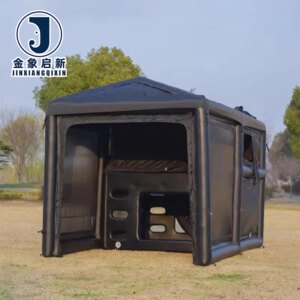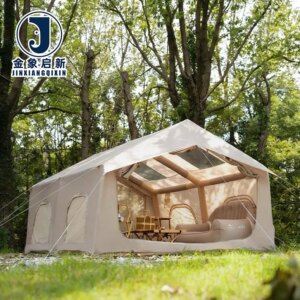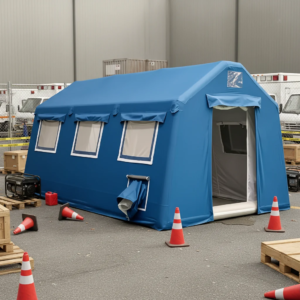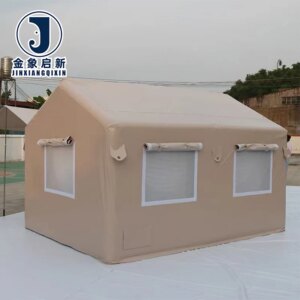
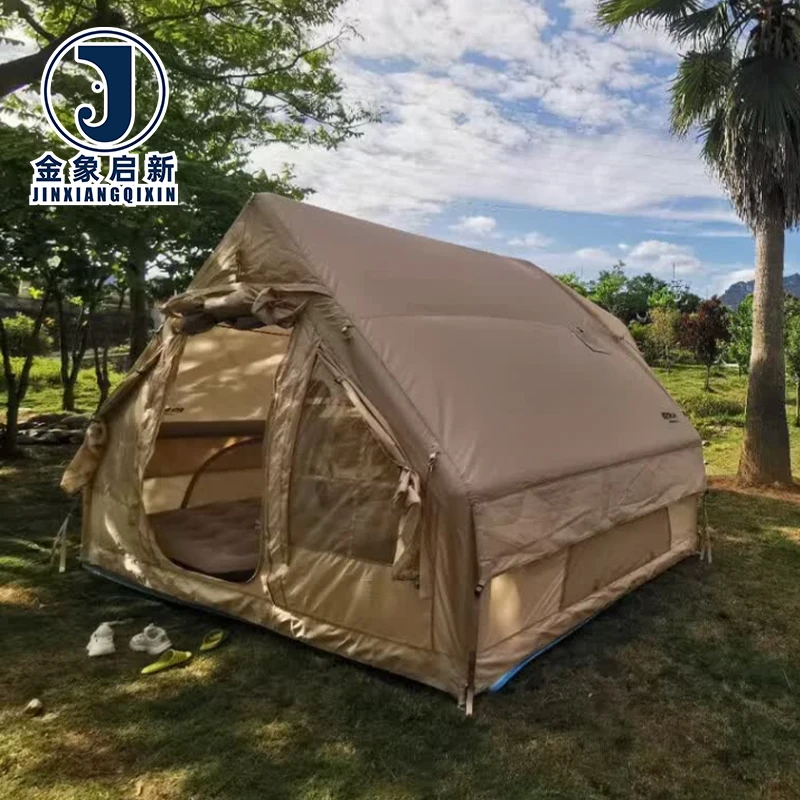
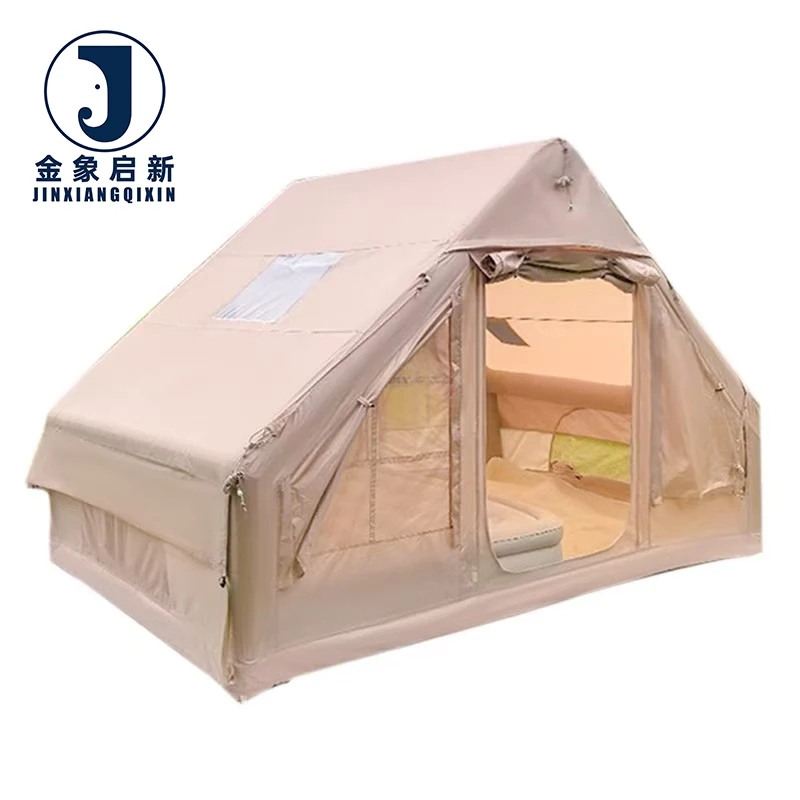
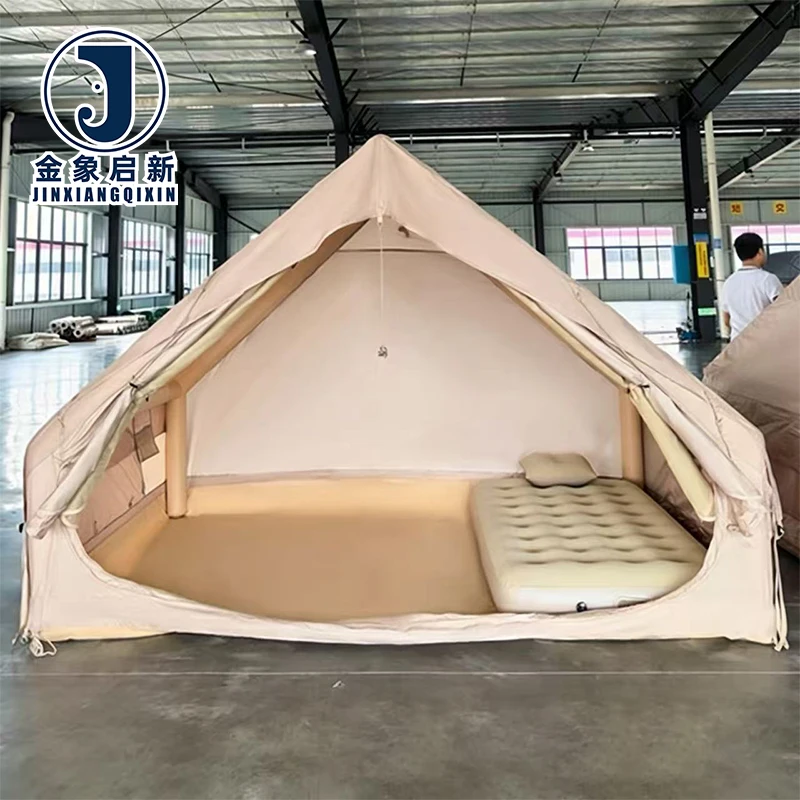
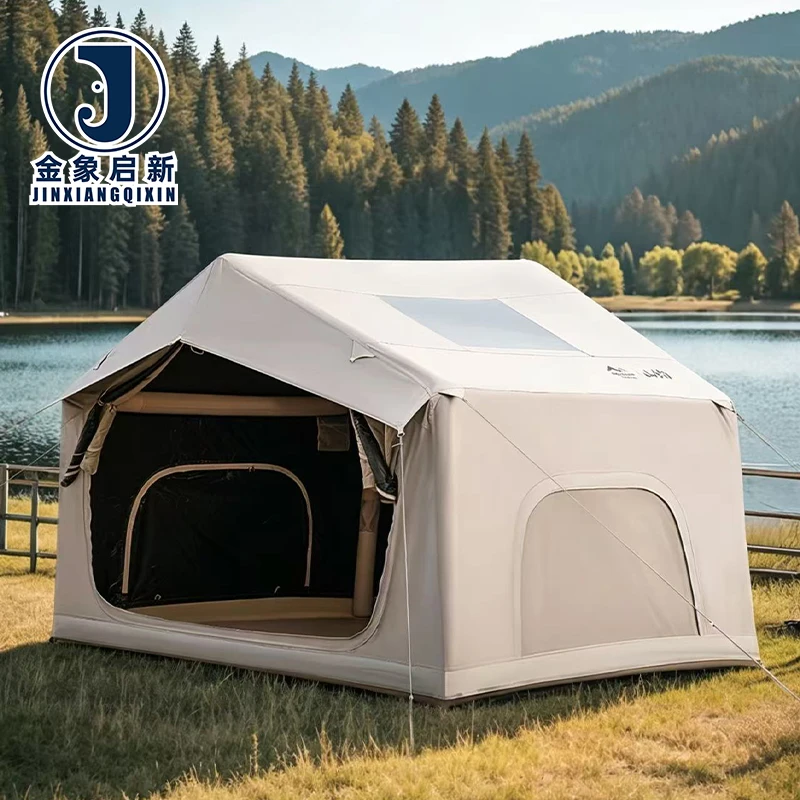
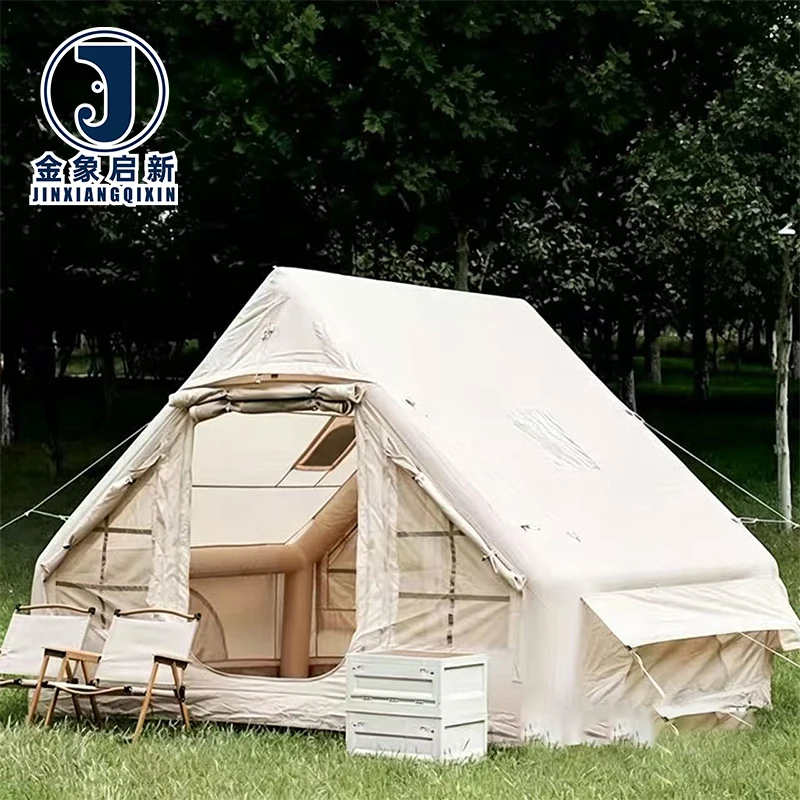
Description
Consistent Roll-to-Roll Supply — Every batch of inflatable tent fabric undergoes dedicated QA&QC checks for colour and coating uniformity before dispatch.
Technical Specifications
| Parameter | Value |
|---|---|
| Product Type | Inflatable tent |
| Core Material | PVC tarpaulin |
| Key Performance | Waterproof, UV-resistant (test basis not stated), tear-resistant |
| Customization | OEM & ODM, pattern printing, sample development |
| Production Lines | 3 full production lines |
| Processing Equipment | 36 sets |
| R&D Team | 10 technicians |
| Quality Control | Full-process QA & QC with 100% pre-shipment inspection |
| Standards | ISO 9001, ISO 14001, ISO 45001, CE |
Application Suitability
| Application | Exposure & Requirement |
|---|---|
| Commercial inflatable event tents | Repeated inflation and deflation cycles, outdoor UV exposure, crowd contact abrasion |
| Temporary industrial site accommodation | Prolonged weathering, wind load on inflated structure, temperature fluctuation |
| Rapid-deployment inflatable shelters | Quick setup demands, transport abrasion during packing and unpacking |
| Summer outdoor commercial use | Direct sunlight, rain exposure, high foot traffic around entry points |
| Inflatable membrane structure fabric | Continuous air pressure, weld seam stress at panel joints, coating adhesion under tension |
Why Batch Colour Consistency Matters on Inflatable Tent Panels
Colour mismatch between rolls becomes glaringly obvious once panels are welded side by side on an inflated structure.
When a tent manufacturer sources Inflatable Tent Fabric from multiple batches, even slight shade variation shows up as visible stripes across the curved surface of an inflated panel. This is not a cosmetic issue alone — buyers face rejection from event clients who expect uniform branding across the entire structure. I have seen fabricators forced to cut and re-weld entire sections because the second batch did not match the first [NEED_CITE: visual tolerance standards for architectural coated fabric panels]. The cost of rework far exceeds the price difference between suppliers who control colour at the coating stage and those who do not.
Coating Adhesion and Weld Integrity Under Inflation Pressure
Inflatable tent structures place constant stress on welded seams because the air pressure pushes every panel outward. The Inflatable Tent Fabric manufacturer must ensure that the PVC coating bonds fully to the base fabric so that heat-welded joints do not delaminate under load. When coating adhesion is weak, the weld line separates from the fabric before the fabric itself reaches its tensile limit. A 10-person R&D team manages coating weight and adhesion parameters on each production run, adjusting formulation to match the end-use inflation pressure the tent will face.
Controlling Roll-to-Roll Consistency Across Bulk Orders
Tent manufacturers buying fabric by the roll need assurance that the tenth roll matches the first in weight, colour and surface finish. Production across 3 full lines with 36 sets of processing equipment allows this Inflatable Tent Fabric supplier to maintain tight process control over coating thickness and colour dosing. Each roll is logged against its batch reference, and pre-shipment inspection covers visual and weight checks so that roll-to-roll variation stays within acceptable limits [NEED_CITE: coated fabric batch consistency test methods per ISO standards].
Reading the Specifications Beyond Stated GSM
GSM alone does not predict how well a PVC tarpaulin will hold air pressure or resist tearing at a welded corner. The base fabric denier and weave density determine how the load distributes across the panel when the structure is inflated. A tighter weave with matched coating weight delivers higher tear propagation resistance than a heavier coating on a loose base cloth. Surface treatment options — glossy or matte finish — affect how the fabric behaves during heat welding and how well printed patterns adhere over repeated inflation cycles. UV-resistant treatment is available in different grades — confirm the grade required for your target market before placing a bulk order.
The Hidden Cost of Overlooking Weld Seam Specifications
When the weld seam fails before the fabric does, the entire panel loses pressure and the inflatable structure sags or collapses. This failure almost always occurs at the point where the load flexes most — typically around valve openings and curved panel junctions. Fabricators who do not specify weld-compatible coating grades end up with seams that peel apart during the first inflation test on site [NEED_CITE: welded seam peel strength testing for PVC coated fabrics]. The rework involves cutting out the failed panel, sourcing replacement fabric, and re-welding under time pressure while the event or project waits.
What This Supplier Brings to Inflatable Tent Fabric Orders
Nearly 30 years of PVC coated fabric production means the coating formulation and process parameters are well established for inflatable applications. Three full production lines handle bulk roll output without compressing lead times on custom widths or colours. The R&D team develops samples within days so that tent manufacturers can run weld trials and inflation tests before committing to a full order. Dedicated QA and QC staff inspect every roll before it leaves the facility, checking colour, weight and coating integrity. Pattern printing and OEM branding are handled in-house, keeping the entire supply chain from raw fabric to finished printed roll under one roof.
Documentation & Verification
- Material specification sheet stating base fabric, coating type, and colour reference per batch
- UV-resistant test report provided where applicable — request before order confirmation
- Pre-shipment inspection record covering weight, colour, and coating checks per roll
- Roll packing list with batch numbers for traceability through your production line
- Certificate of origin included for customs clearance in destination markets
Fabrication, Handling & Storage
- Set heat weld temperature and dwell time to match the PVC coating grade on this tarpaulin
- Reinforce valve openings with additional fabric patches to distribute inflation stress
- Store rolls upright on pallets to prevent flat-spot creases in the PVC coating
- Allow cold-stored rolls to reach ambient temperature before unrolling to avoid coating crack
- Use mild detergent and soft cloth for cleaning to preserve the surface coating finish
- Plan panel cutting layout to minimise offcut waste on each roll width ordered
What to Include in Your Enquiry
Provide the intended inflation pressure range and panel dimensions so the correct base fabric grade can be recommended. Specify the target market and any fire safety or UV compliance requirements the finished tent must meet. Indicate the roll width, colour codes and whether pattern printing or OEM branding is needed. Confirm whether you require sample rolls for weld and inflation testing before the bulk order ships.
Frequently Asked Questions
Q: How is roll-to-roll colour consistency controlled across large inflatable tent fabric orders?
A: Each production batch is dosed from a single colour formulation and logged against a batch reference. Pre-shipment inspection includes visual comparison of rolls side by side under standard lighting. If your order spans multiple production runs, request that all rolls be held for a consolidated colour check before dispatch to avoid shade variation on assembled panels.
Q: What UV-resistant test basis is available, and how to specify grade for your target climate?
A: UV-resistant treatment is offered in different grades suited to varying levels of sun exposure. The test basis and grade should be confirmed against the climate and expected service conditions in your destination market. Request the applicable test report before order confirmation so you can verify compliance with local standards or client specifications.
Q: What customization options exist for pattern printing, width, and cut sizes on inflatable tent fabric?
A: OEM and ODM services cover custom roll widths, cut lengths, and pattern printing directly onto the PVC coating. The R&D team handles print specification and sample development within days. Provide your artwork files, colour references and required dimensions to receive a sample roll for print quality and weld compatibility evaluation.
Q: How are samples developed and approved before bulk roll production?
A: The R&D team prepares sample rolls based on your specification for base fabric, coating weight, colour and treatment. Samples ship within days so you can conduct weld trials, inflation tests and print evaluations. Once the sample is approved, bulk production follows the same formulation and process parameters locked during sampling.
Q: What documentation is included with each shipment for customs and quality traceability?
A: Each dispatch includes a material specification sheet, roll packing list with batch references, certificate of origin and pre-shipment inspection record. UV or fire-retardant test reports are included where applicable. These documents support customs clearance and allow you to trace each roll back to its production batch for quality audits.