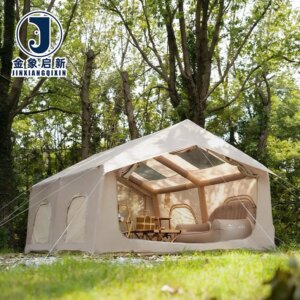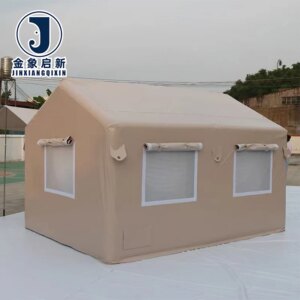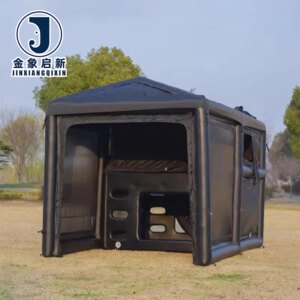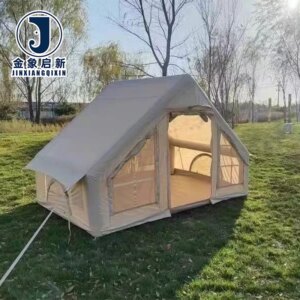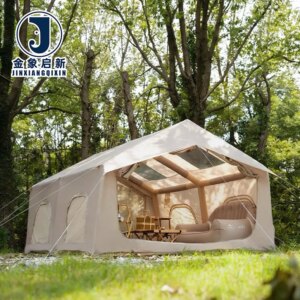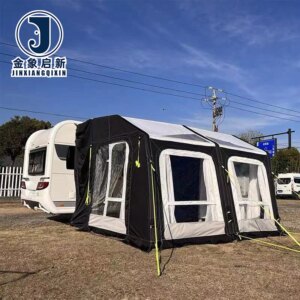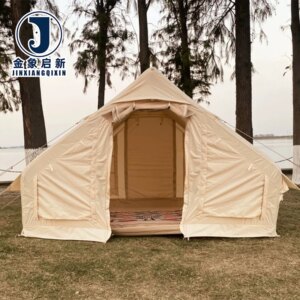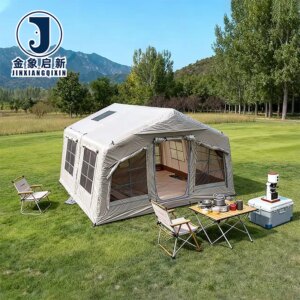


Description
Batch-Consistent Quality — strict full-process QA and 100% pre-shipment inspection across three production lines keep roll-to-roll and unit-to-unit consistency under control for every Inflatable Tent wholesale order.
Technical Specifications
| Parameter | Value |
|---|---|
| Product Type | Inflatable Tent |
| Core Material | PVC Tarpaulin (PVC knife-coated fabric) |
| Product Form | Inflatable structure, single layer construction |
| Waterproof | Yes (verify against manufacturer catalog) |
| UV-Resistant | Yes (test basis not stated — confirm test method for your market) |
| Tear-Resistant | Yes (verify against manufacturer catalog) |
| Flame Retardant | Yes (grade not stated — confirm the grade required for your market) |
| Anti-Static | Yes (standard or surface resistance not stated — verify against manufacturer catalog) |
| Key Features | Waterproof, UV-resistant, tear-resistant, flame retardant, anti-static |
| Customization Service | OEM & ODM (sample customization, pattern printing, size adjustments, color options) |
| Standards | ISO 9001, ISO 14001, ISO 45001, CE |
Application Suitability
| Application | Exposure & Requirement |
|---|---|
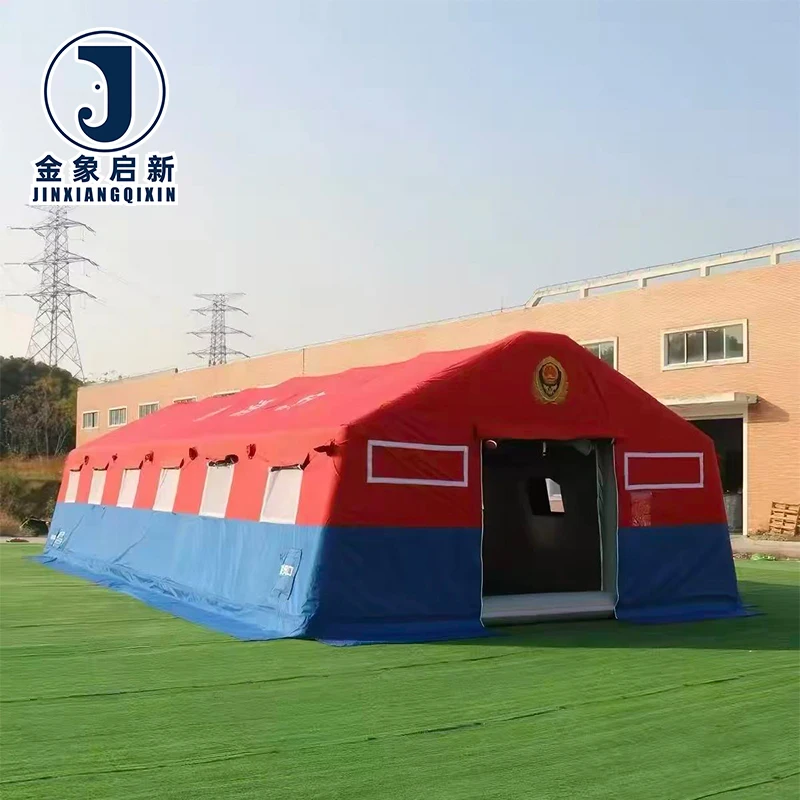
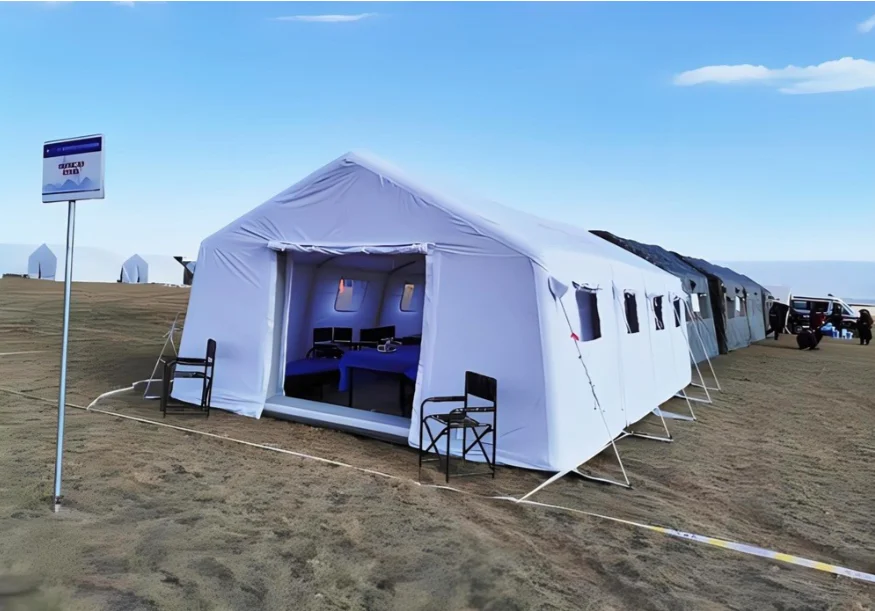
| Disaster relief temporary shelters | Rapid deployment, prolonged weather exposure, repeated inflation cycles, transport abrasion |
| Construction site command centers | Continuous outdoor UV exposure, wind loading on inflated structure, dust and debris contact |
| Outdoor equipment storage shelters | Extended standing water contact, mechanical abrasion from stored machinery, temperature fluctuation |
| Logistics staging yard shelters | Frequent setup and teardown, forklift proximity damage risk, road dust and diesel exposure |
| Infrastructure project work areas | Multi-season weather cycling, weld seam stress under inflation pressure, ground moisture ingress |
Why "Flame Retardant" on a Quote Means Nothing Without the Grade
Inflatable Tent wholesale buyers routinely receive material described as flame retardant, only to discover during site inspection that the grade does not satisfy the local fire authority. A retardant claim without a named standard is a procurement liability, not a safety feature.
I have watched entire shelter deployments get held at customs because the test certificate referenced a standard the destination country does not recognise. The tent fabric itself may self-extinguish in a lab, but if the paperwork does not map to the jurisdiction’s accepted classification — whether that is B1, M2, NFPA 701, or something else — the shipment sits in a bonded warehouse while project timelines slip. This is the single most common documentation gap I see in industrial inflatable structure procurement. [NEED_CITE: fire classification standards for temporary structures across jurisdictions]
How Knife-Coated PVC Holds Up Under Repeated Inflation
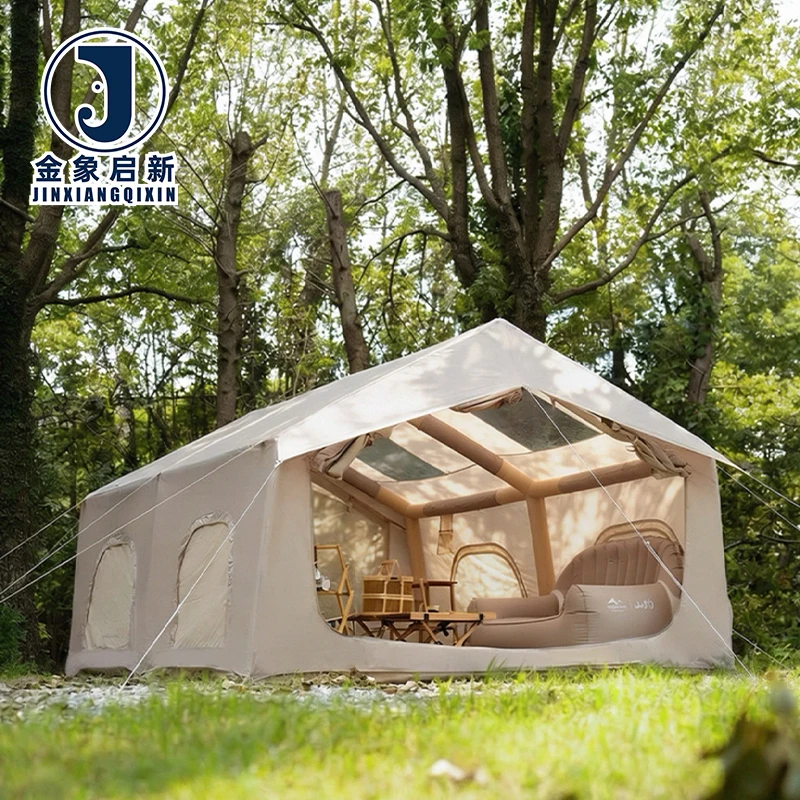
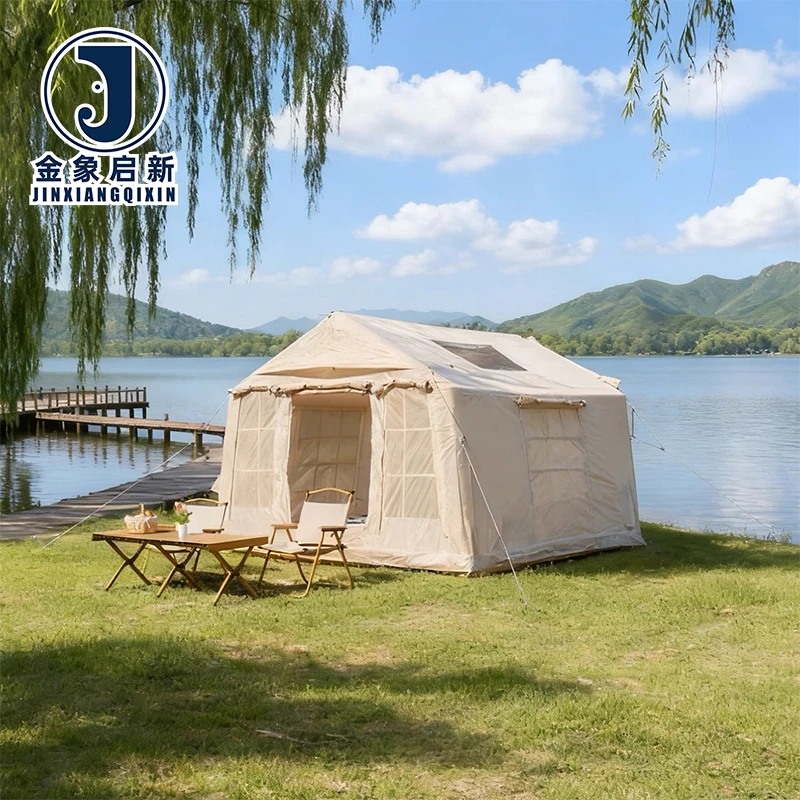
The PVC knife-coated fabric used in this inflatable structure bonds the coating directly into the base fabric weave, producing a material that resists delamination across thousands of inflation and deflation cycles. For an Inflatable Tent wholesale buyer ordering multiple units, this means the air-beam walls maintain coating adhesion even when folded tightly for transport and then re-inflated on site. Single-layer construction keeps pack volume low while the knife-coat bond handles the flex stress at fold lines.
Controlling Batch Consistency Across a Multi-Unit Order
When a distributor stocks inflatable shelters for disaster relief tenders, colour and weight variation between units in the same container creates visible mismatches once the tents are erected side by side at a staging area. Full-process QA checkpoints during coating, cutting, and welding catch drift before it becomes a field complaint. Every unit undergoes 100% pre-shipment inspection so that the Inflatable Tent wholesale order arrives with matched colour, consistent coating weight, and identical inflation behaviour across the batch. [NEED_CITE: quality inspection protocols for coated fabric batch consistency]
Reading the Spec Sheet Beyond the Headline Numbers
GSM alone does not tell you whether the inflatable beam wall will survive a season of wind loading. Tensile and tear strength depend on the base fabric denier and weave density working together with the coating weight. A lighter base fabric with a heavy coating may show acceptable GSM but tear easily along the weft when the structure flexes. Knife-coating, as opposed to lamination, penetrates the weave and locks the coating into the yarn structure, which improves peel strength and makes heat-welded seams less likely to separate under inflation pressure. The single-layer design of this inflatable structure relies on this bond integrity — if the coating delaminates, the air beam loses pressure and the shelter collapses.
The Hidden Cost of Skipping Material Verification
Buyers who accept a shipment without checking actual coating weight against the quoted specification often discover the problem only after the first storm season, when inflatable beam walls develop pinhole leaks along the weld lines. Under-weight coating leaves insufficient material for a proper heat-weld bead, and the seam becomes the weakest point in the structure. Colour inconsistency across rolls in a single Inflatable Tent wholesale order may not show until the units are inflated next to each other in daylight, at which point returning the batch is logistically expensive and contractually complicated. [NEED_CITE: common field failure modes in inflatable PVC structures]
What Production Capacity Means for Your Order
Three full production lines and 36 sets of processing equipment give this facility the throughput to handle large-volume Inflatable Tent wholesale orders without splitting production across subcontractors. A 10-person R&D team develops samples within days for custom sizing, colour matching, and pattern printing, so buyers can validate material and inflation performance before committing to a full container. Dedicated QA and QC staff inspect at every production stage rather than relying on a single final check, catching coating weight deviation and weld defects before they reach the packing area. ISO 9001, ISO 14001, ISO 45001, and CE certifications are maintained on file and included with shipment documentation, not offered as afterthoughts upon request.
Documentation & Verification
- Material specification sheet stating PVC tarpaulin coating method, base fabric construction, and treatment details per unit
- Test reports for UV resistance and flame retardant grades supplied where applicable to the order
- Pre-shipment inspection records with full-process QA data covering each production batch
- Roll and unit packing list cross-referenced to coating weight verification records
- ISO 9001, ISO 14001, ISO 45001, and CE certificates included with every dispatch
Fabrication, Handling & Storage
- Heat-weld seams at manufacturer-recommended temperature to match the PVC knife-coated fabric bond strength
- Store inflated or deflated units away from sharp ground contact to protect the single-layer PVC tarpaulin base
- Avoid prolonged compression stacking to prevent permanent crease marks on the coated surface
- Use compatible PVC adhesive for field repairs on the knife-coated fabric surface
- Allow cold-stored units to reach ambient temperature before inflation to reduce coating stiffness stress
What to Include in Your Inquiry
Provide the intended deployment climate and expected seasonal exposure so the correct UV and flame retardant treatment levels can be specified. State the required unit dimensions, quantity, and whether pattern printing or custom colour matching is needed for your Inflatable Tent wholesale order. Confirm the fire safety classification your destination market requires so the appropriate test documentation is prepared before production begins.
Frequently Asked Questions
Q: How is PVC tarpaulin GSM verified upon delivery?
A: Each unit in the shipment is matched to the pre-shipment inspection record, which documents actual coating weight measured during production. Buyers can request the batch-specific QA report that records GSM readings taken at multiple points across the fabric run, allowing independent cross-check against the quoted specification upon arrival.
Q: What flame-retardant grade is available, and does it meet my market’s fire code?
A: Flame retardant treatment is available in grades selected to match the destination market’s accepted classification. Confirm which standard your local authority requires — such as B1, M2, or NFPA 701 — at the inquiry stage so the correct grade is applied and the matching test report is included with your documentation package.
Q: How do you ensure color consistency across multiple tent units in the same order?
A: Full-process QA checkpoints monitor colour throughout the coating and finishing stages. Units within a single production batch are compared under standardised lighting before packing. Any roll or unit that drifts outside the agreed colour reference is pulled before the 100% pre-shipment inspection, preventing visible mismatch at the deployment site.
Q: What customization options exist for size, color, and printing — and what are the bulk MOQs?
A: OEM and ODM services cover size adjustments, custom colour matching, and pattern printing on the PVC tarpaulin surface. The 10-person R&D team develops samples within days for buyer approval before bulk production. Contact the sales team with your unit dimensions, colour references, and print artwork to receive a quotation with the applicable minimum order quantity for your configuration.