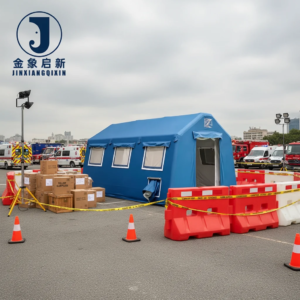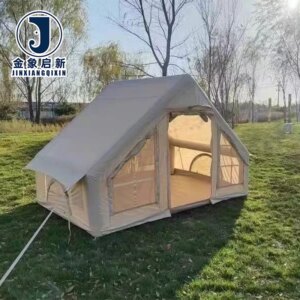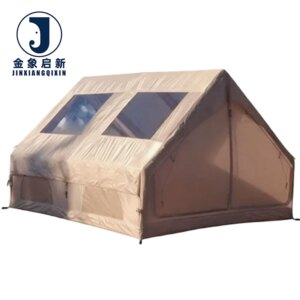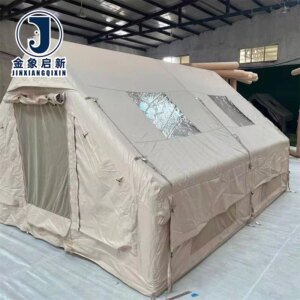

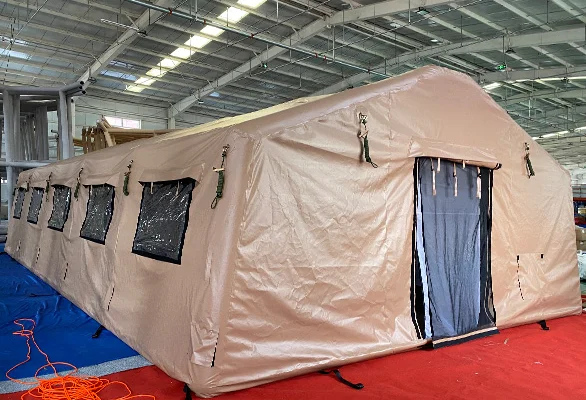
Description
Coating Weight Control — Every roll of Inflatable Fabric undergoes dedicated GSM and coating thickness verification before dispatch, supported by 3 full production lines and 100% pre-shipment inspection to keep batch-to-batch variation within tolerance.
Technical Specifications
| Parameter | Value |
|---|---|
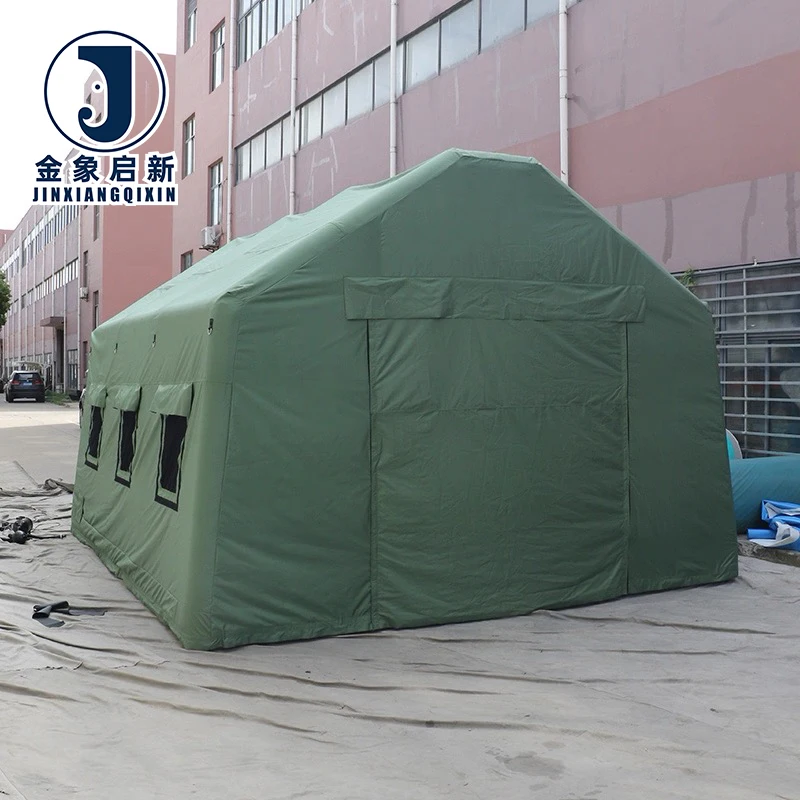
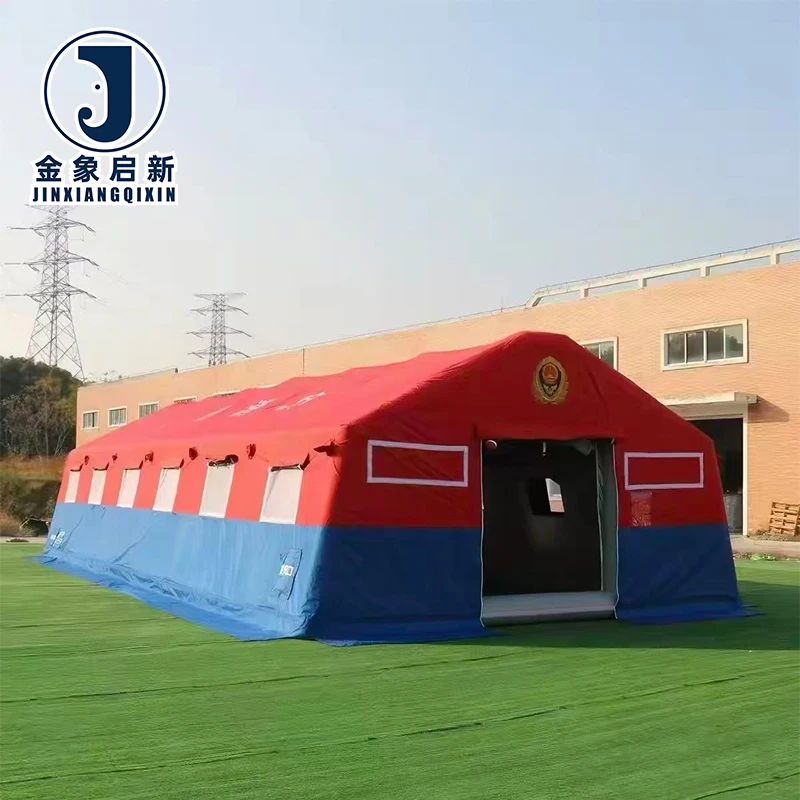
| Product Type | Inflatable Tent |
| Core Material | PVC Tarpaulin |
| Coating Material | PVC |
| Waterproof Rating | Minimum 3000mm water column |
| Flame Retardancy | Classified per EN 13501-1 (grade not stated — confirm required classification for your market) |
| UV Resistance | Tested per ASTM G154 cycle testing |
| Tear Strength | Tested per ISO 13937-2 |
| Capacity | 2-8 Person |
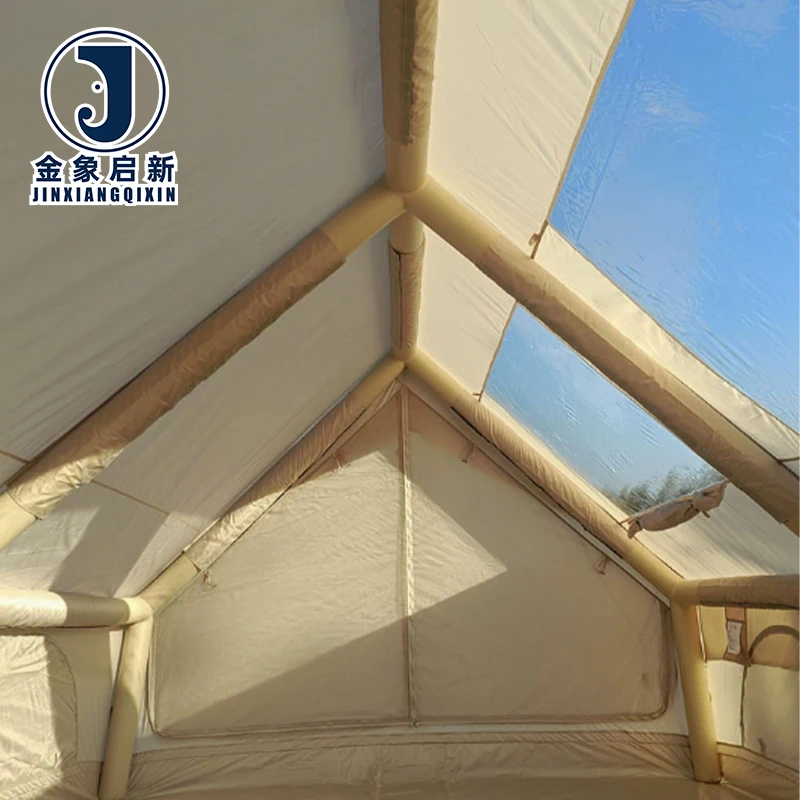
| Construction | Single layer, extended type design |
| Deployment | Quick automatic opening |
| Customization | OEM & ODM (size, material thickness, color, pattern printing, structural modifications) |
| Production Lead Time | 45-day for standard orders |
Application Suitability
| Application | Exposure & Requirement |
|---|---|
| Inflatable tent and awning manufacturing | Roll-to-roll colour and coating consistency for cut-and-sew panel production, reliable heat welding at seams |
| Membrane and inflatable structure fabrication | Consistent roll width and coating weight for uniform inflation behaviour and structural load distribution |
| Construction site temporary storage shelters | Extended outdoor UV exposure, abrasion from site debris, repeated inflation and deflation cycles |
| Emergency response and disaster relief | Rapid deployment under adverse weather, waterproof integrity, transport and storage in compressed form |
| Agricultural equipment protection covers | Permanent moisture contact, chemical exposure from fertilisers, seasonal UV load |
| Outdoor event logistics structures | Crowd safety compliance requiring documented flame retardancy, repeated assembly and teardown |
Why Inflatable Tent Fabric Batches Fail at the Weld Line
Seam failure on inflatable structures almost always originates from inconsistent coating adhesion, not from the base fabric itself.
When an inflatable tent panel inflates, the highest stress concentrates at the welded seams where two fabric panels join. If the PVC coating weight varies from roll to roll within the same order, the heat welding parameters that produced a strong bond on one panel may underperform on the next. Fabricators then discover seam delamination during inflation testing — after cutting, sewing and welding are already complete. [NEED_CITE: weld strength requirements for inflatable structures under internal pressure load]. This problem compounds when Inflatable Fabric roll shipments cross borders and the cost of returning defective material is prohibitive.
Roll Stock Supply with Batch Consistency for Tent Fabricators
Tent manufacturers cutting panels from Inflatable Fabric roll stock need every roll in a shipment to behave identically on the welding table. Colour variation between rolls becomes immediately visible once tent panels are installed side by side — a defect that cannot be corrected after fabrication. Our in-process QA monitors coating weight at multiple points across the production line, and dedicated coating weight control keeps roll-to-roll variation within the tolerance your cut-and-sew operation requires. Standard and custom widths ship with a roll packing list documenting weight and dimensions for every unit.
Volume Procurement Across Container Loads
Buying Inflatable Fabric by the container load introduces a second layer of consistency demand: the rolls in the second container must match those in the first. Colour reference standards and batch consistency records are maintained per production run so that reorders align with the original specification. Bulk pricing tiers are structured by container load to support distributors and fabricators planning multi-quarter procurement. Pre-shipment inspection documentation accompanies every dispatch, giving your receiving team a verification baseline before the container is opened. [NEED_CITE: colour matching standards for PVC coated fabric production batches].
Reading the Specification Sheet Beyond GSM
GSM alone does not tell you how an Inflatable Fabric will perform under inflation load. The base fabric denier and weave density determine how tear forces propagate once a puncture occurs — a lightweight base with heavy coating may show acceptable GSM but poor tear resistance. The PVC coating method directly affects heat welding behaviour: knife-over-roll coating produces a thicker, more uniform layer suited to high-frequency welding, while laminated coatings may require adjusted temperature profiles. The waterproof rating of minimum 3000mm water column confirms the coating integrity across the fabric surface, but the seam waterproofness depends entirely on welding compatibility between the coating formulation and your equipment. Tear strength tested per ISO 13937-2 provides a comparable data point for evaluating how the material resists tear propagation at stress points around valve openings and structural seams.
What Happens When Colour Matching Is Not Controlled Per Batch
Colour variance between rolls is not a cosmetic issue for inflatable tent fabricators — it is a production defect that triggers panel rejection. When two rolls with slightly different pigment batches are cut into panels for the same tent, the colour boundary becomes visible once the structure is inflated and viewed in natural light. The entire tent may need to be remade from matched rolls, doubling material cost and delaying shipment. This risk increases with custom colours and large-format orders spanning multiple production runs. [NEED_CITE: colour tolerance measurement methods for PVC coated textiles].
Why Procurement Verification Matters at Scale
Every roll of Inflatable Fabric ships with documentation tied to its specific batch. The material specification sheet states GSM, base fabric construction and coating type for traceability. Pre-shipment inspection records include batch-level waterproof and tear test results, so you can verify performance claims against measured data rather than quotation statements alone. Roll packing lists detail roll count, individual weight and container loading plan — essential for customs clearance and warehouse receiving. ISO 9001, ISO 14001, ISO 14001, ISO 45001 and CE certificates are available for cross-border procurement compliance without requiring separate requests.
- Material specification sheet stating GSM, base fabric and coating for every individual roll shipped
- Pre-shipment inspection record with batch-level waterproof and tear test results per production run
- Roll packing list detailing roll count, weight and container loading plan for receiving and customs
- ISO and CE certificates provided as standard documentation for international procurement compliance
- Colour reference standard and batch consistency record maintained per production run for reorder matching
Fabrication, Handling & Storage
- Heat welding temperature must match PVC coating formulation — request welding parameter guide for the specific roll batch received
- Store rolls upright on pallets to prevent permanent creasing that affects panel flatness during cutting
- Allow cold-transported rolls to reach workshop temperature before unrolling to avoid coating micro-cracking
- Clean PVC surface with neutral pH detergent only — solvent-based cleaners degrade coating adhesion at welded seams
- Plan cutting layout to maximise yield per roll width and minimise welded seam count on high-stress panels
- Repair field punctures with compatible PVC patch material heat-welded at manufacturer-recommended temperature
Before You Request a Quotation
Provide your annual roll consumption and the specific widths your cutting tables accommodate so we can match available stock grades or plan custom production runs. If your end markets require documented flame retardancy, specify the classification your local authorities recognise — EN 13501-1 testing is available, and the applicable grade should be confirmed before production begins. Let us know whether you need plain stock rolls or pattern printing and colour matching to an existing product line.
Frequently Asked Questions
Q: How is GSM verified on arrival and what tolerance applies per roll?
A: Every roll is weighed and measured during pre-shipment inspection, and the recorded GSM is documented on the material specification sheet included with your shipment. The receiving team can cross-check these records against physical samples. Tolerance ranges depend on the specific grade ordered — request the applicable tolerance band when confirming your specification.
Q: How is colour consistency controlled across multiple rolls in one order?
A: Colour reference standards are established per production run, and in-process QA checks coating colour at multiple stages before the roll is wound. Batch consistency records are maintained so that reorders can be matched to the original shipment. If your order spans multiple production runs, colour alignment is verified against the reference standard before dispatch.
Q: What custom widths and roll lengths are available for inflatable tent fabric?
A: Custom widths are produced to match your cutting table specifications, and roll lengths can be adjusted to optimise yield for your panel sizes. Standard widths are also held in stock for immediate dispatch. Minimum order quantities apply to custom width production — specify your required dimensions and annual volume when inquiring.
Q: How are rolls packed for container shipping?
A: Rolls are packed upright on pallets with protective wrapping to prevent transit damage and creasing. The roll packing list documents individual roll weight, dimensions and total container load plan. This documentation supports both warehouse receiving and customs clearance at destination.