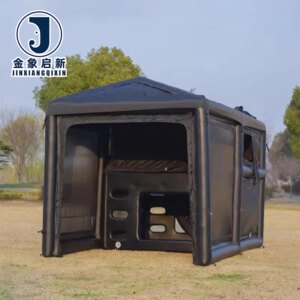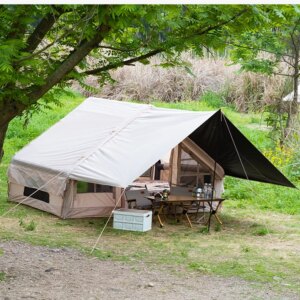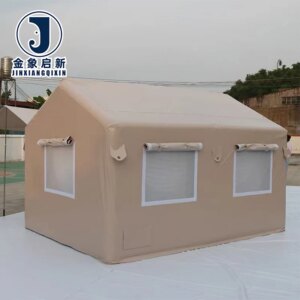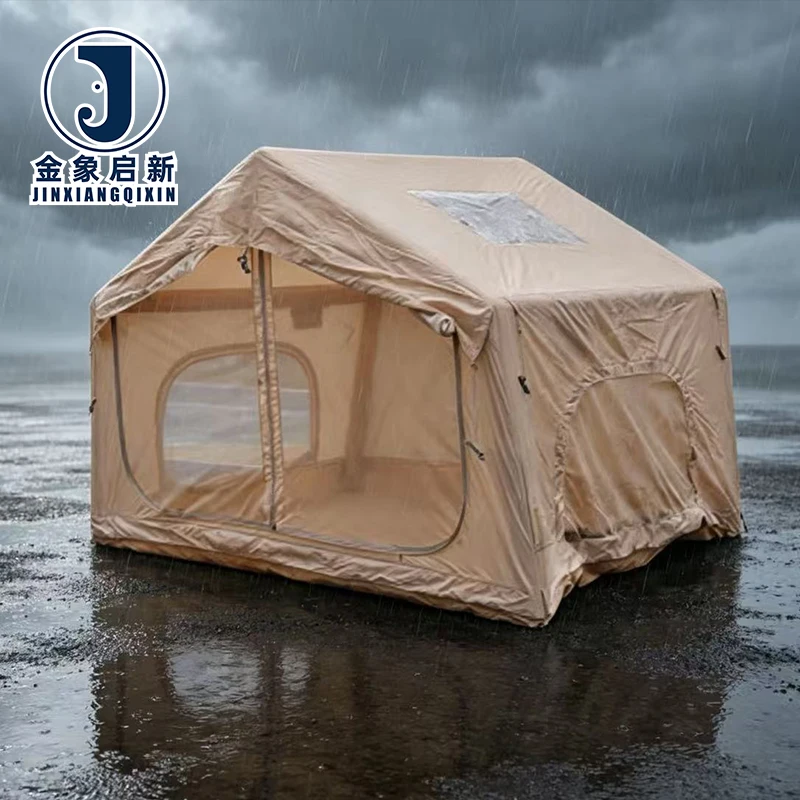

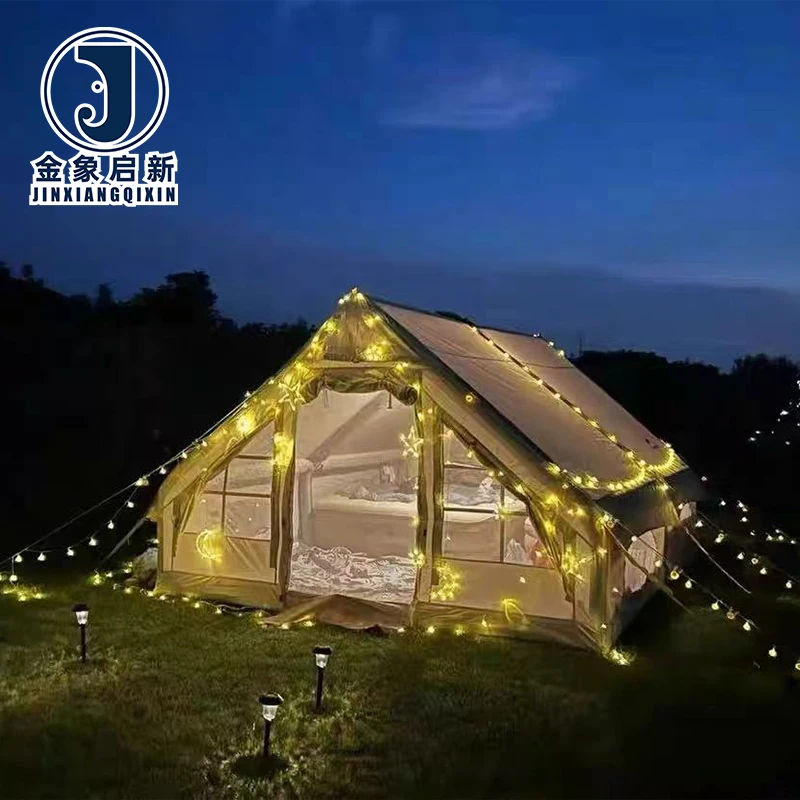
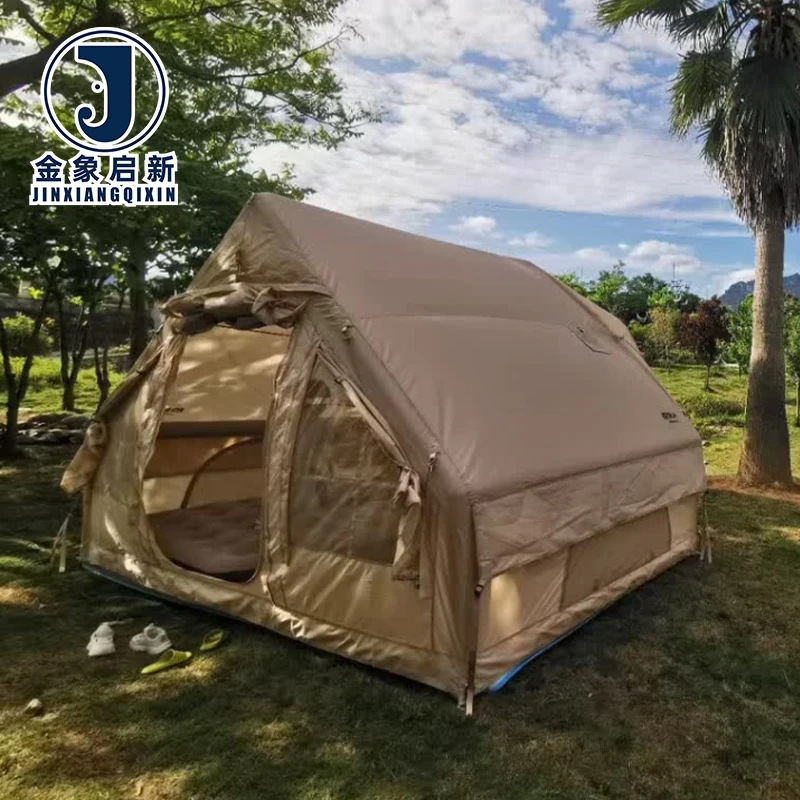
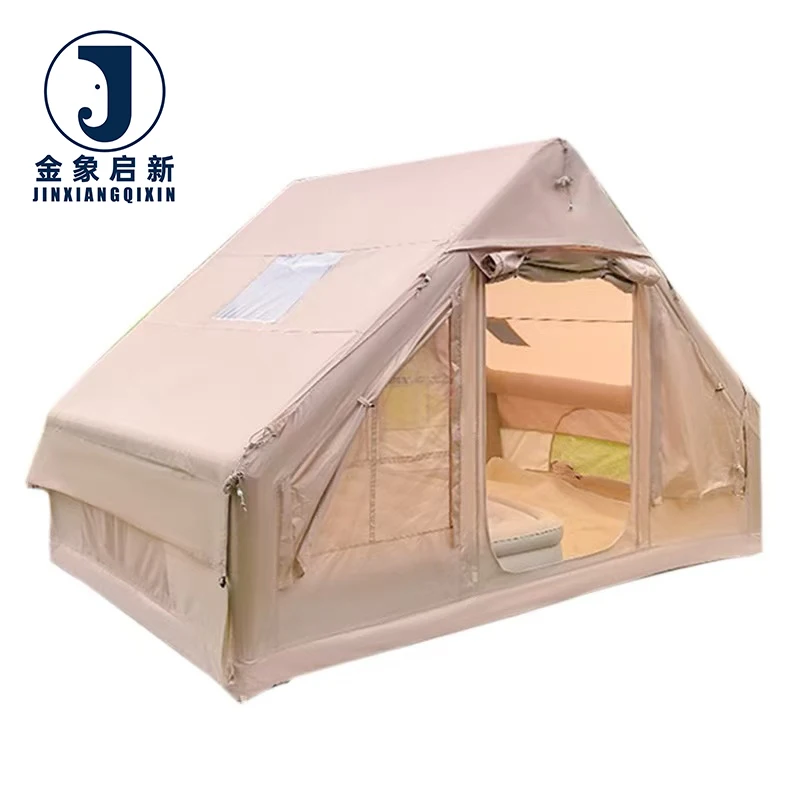

Description
Batch-Controlled Coating — Our 9,180 m² facility with three full production lines ensures roll-to-roll colour and thickness consistency for inflatable tent fabric orders, verified at every production stage before dispatch.
Technical Specifications
| Parameter | Value |
|---|---|
| Product Type | Inflatable Tent Fabric |
| Core Material | PVC tarpaulin |
| Material Thickness Options | 0.4mm–0.8mm |
| Waterproof Rating | 2000mm |
| Tear Resistance | 180N minimum |
| Flame Retardant Grade | UL94 V-2 |
| UV Treatment | Anti-UV (test basis not stated) |
| Capacity Range (Finished Units) | 5–8 person |
| Season Rating | 4-season |
| Deployment Mechanism | Quick automatic opening |
| Customization | OEM & ODM — size, colour, logo, pattern printing |
| Sample Lead Time | 5–7 days standard, 7–10 days with customization |
| Production Lead Time | 45 days standard configurations |
| Warranty | 2-year warranty on material defects |
| Certifications | ISO9001, ISO14001, ISO45001, CE |
Application Suitability
| Application | Exposure & Requirement |
|---|---|
| Commercial camping site outfitting | Continuous UV exposure, repeated inflation cycles, ground abrasion at base contact points |
| Outdoor event management | Rapid deployment demands, wind loading on membrane surfaces, public safety compliance for flame retardancy |
| Expedition support services | Extreme temperature fluctuation, high wind and precipitation, remote field repair feasibility |
| Tarpaulin distributors and importers | Roll-to-roll colour consistency for resale branding, certified documentation for downstream compliance |
| Temporary field operations | Quick setup and breakdown, waterproof integrity under sustained rainfall, transport and storage durability |
Why Colour Shifts Between Rolls Derail Tent Production Runs
Consistent PVC tarpaulin colour across every roll is achieved through batch-controlled coating and matched raw material lots, not post-production sorting.
Buyers sourcing inflatable tent fabric in volume frequently receive rolls that look identical in sample form but reveal visible shade differences once inflated and placed side by side on a campsite or event ground. This inconsistency forces production delays, sorting rework, or worst case, rejection of an entire container load at the buyer’s warehouse. For wholesale distributors building branded product lines, a colour mismatch between batches undermines brand credibility at the retail level. [NEED_CITE: roll-to-roll colour variation in PVC coated fabric production]
How Roll Stock Purchasing Differs from Finished Tent Procurement
When sourcing Inflatable Tent roll material, wholesale buyers evaluate differently than end users buying a single shelter. The critical metrics shift from individual unit performance to batch uniformity — thickness tolerance across the roll width, colour consistency from first roll to last, and coating adhesion that survives the heat-welding process used in tent fabrication. Our PVC tarpaulin is produced on three dedicated lines with 36 sets of professional equipment, allowing us to hold tighter thickness tolerances across long production runs than smaller operations can maintain.
Thickness Selection and Its Downstream Impact on Tent Durability
The 0.4mm–0.8mm thickness range in our inflatable tent fabric covers distinct market tiers. Thinner grades suit short-term event shelters where weight and pack size matter more than multi-season longevity. Heavier grades serve commercial camping operators who deploy and retrieve units across multiple seasons, where abrasion at ground contact and repeated inflation stress demand additional material reserves. Choosing the correct thickness at the specification stage prevents premature field failures that no amount of fabrication skill can compensate for. [NEED_CITE: PVC tarpaulin thickness selection for inflatable membrane structures]
Reading Beyond the Thickness Number on the Spec Sheet
Material thickness alone does not determine how an inflatable tent panel will perform under load. A 0.6mm PVC tarpaulin with a high-denier base fabric and tight weave will outperform a thicker material built on a loosely woven scrim, because tear propagation resistance depends on the yarn structure beneath the coating. The 180N minimum tear resistance specified for this fabric reflects the combined contribution of base fabric and coating adhesion, not coating thickness alone. Similarly, the 2000mm waterproof rating indicates hydrostatic resistance of the coated assembly — a property maintained only when heat-welded seams are executed at correct temperatures to avoid pinhole channels through the weld zone. Anti-UV treatment extends the functional service life of the membrane under direct sun exposure; buyers should confirm the specific UV test standard required by their destination market before placing bulk orders.
The Hidden Cost of Skipping Pre-Production Sample Verification
Procurement teams that approve inflatable tent fabric based on data sheets alone, without running sample material through their own heat-welding equipment, risk discovering adhesion failures only after production is underway. Coating formulations vary between manufacturers, and weld temperature windows that work on one supplier’s PVC tarpaulin may produce weak seams on another’s. A batch that passes visual inspection but fails at the weld line during tent assembly creates scrap waste and delivery delays that far exceed the cost of a pre-production sample run. Colour matching presents a similar risk — approving a small swatch does not guarantee that the full production batch will match when multiple rolls are fabricated into adjacent tent panels. [NEED_CITE: heat weld adhesion testing for PVC coated fabrics]
Why Fabrication Teams Specify This PVC Tarpaulin for Inflatable Tent Production
Coating weight and adhesion are controlled through direct process oversight on our three production lines, not outsourced to third-party coaters, which means the inflatable tent fabric you receive matches the specification you approved. The 10-person R&D team develops custom samples within days, allowing buyers to verify weld parameters and colour accuracy before committing to container-load volumes. Dedicated QA/QC inspection runs at every production stage — not just final audit — catching thickness drift and surface defects before they propagate through an entire batch. ISO and CE certification underpins the documentation chain that distributors need for downstream compliance in regulated markets. The 45-day standard lead time for production reflects actual line scheduling, not optimistic estimates that collapse when orders overlap.
Documentation & Verification
- Material specification sheet stating PVC tarpaulin thickness, colour reference, and waterproof rating per production batch
- Pre-shipment inspection record confirming roll-to-roll colour consistency across the complete inflatable tent fabric order
- Roll packing list detailing unit count, gross weight, and container loading plan for sea freight
- Flame retardant test documentation confirming UL94 V-2 grade for commercial and event compliance submissions
- Certificate of origin and full customs documentation prepared for international inflatable tent roll shipments
Fabrication, Handling & Storage
- Heat-weld temperature windows vary between 0.4mm and 0.8mm thickness grades — run test welds on sample before full production
- Store PVC tarpaulin rolls vertically on end caps to prevent flat-spot creasing that transfers into finished tent panels
- Anti-UV treated surfaces tolerate mild detergent cleaning; avoid solvent-based cleaners that degrade the coating layer
- Allow cold-stored rolls to reach ambient temperature before unrolling to prevent cracking at low-temperature flex points
- Cut panels with consistent grain orientation to ensure uniform inflation behaviour across all inflatable tent units
What We Need to Quote Your Inflatable Tent Fabric Order Accurately
Provide the intended application — whether you are manufacturing finished tents for resale, outfitting commercial campsites, or stocking distribution inventory — along with your required thickness grade and colour specifications. Let us know if you need flame retardant certification to UL94 V-2 or a different standard for your market, and whether you require custom width, logo printing, or pattern printing on the PVC tarpaulin. Confirm your annual volume estimate so we can align production scheduling and container loading plans accordingly.
Frequently Asked Questions
Q: How do you maintain colour consistency across multiple rolls in a single inflatable tent fabric order?
A: Each production batch uses matched raw material lots, and coating colour is verified at multiple stages on the production line rather than only at final inspection. Our QA team checks roll-to-roll shade uniformity before packing, so distributors and tent manufacturers receive consistent colour across their entire container load without needing to sort rolls upon receipt.
Q: What are the lead times and minimums for custom width or colour on inflatable tent roll stock?
A: Standard configurations ship within typical multi-week production cycles, while custom colour and width specifications require extended lead times for raw material procurement and line setup. Sample development for custom inflatable tent fabric runs within days of specification approval, allowing you to verify material before committing to bulk volume.
Q: How should I choose between 0.4mm and 0.8mm PVC tarpaulin thickness for different inflatable tent applications?
A: Thinner 0.4mm grades suit short-duration event shelters where weight reduction and compact packing matter. The heavier 0.8mm option serves commercial camping operators deploying units across multiple seasons, where repeated inflation cycles and ground abrasion demand additional material durability. We recommend testing both grades if your application falls between these use cases.
Q: How are inflatable tent rolls packed for sea freight to prevent damage during transit?
A: Rolls are packed with protective end caps and wrapped to prevent surface abrasion during container handling. The packing list details unit count, weight distribution, and container loading configuration so buyers can plan warehouse receiving and inventory staging before the inflatable tent fabric shipment arrives at destination port.