Description
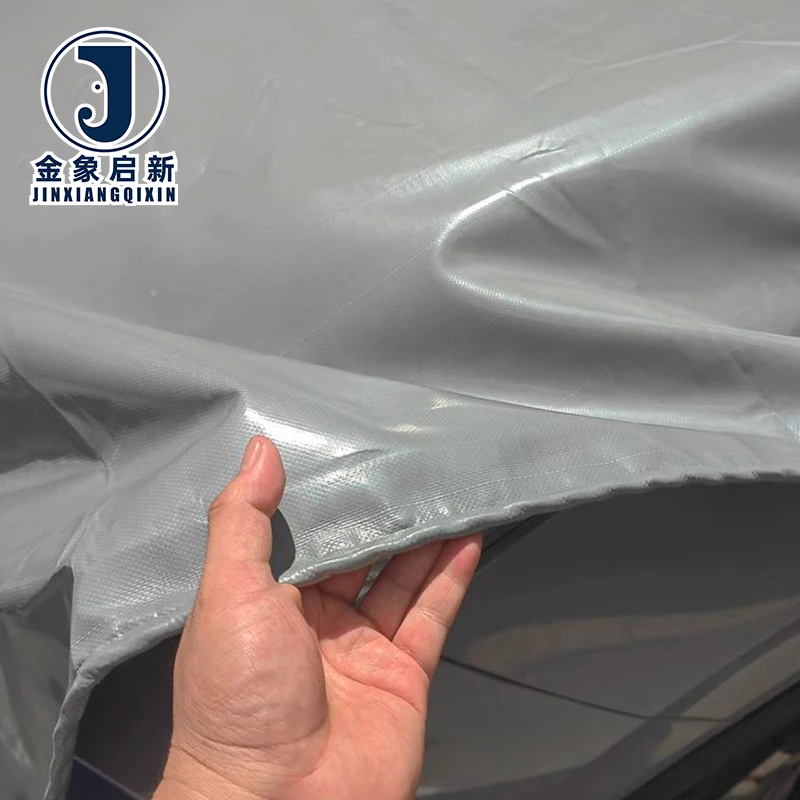
Roll-to-Roll Consistency — 3-line production control with dedicated QA at every stage ensures inflatable tent fabric rolls arrive with uniform GSM, colour and coating weight, eliminating batch variation across a single order.
Technical Specifications
| Parameter | Value |
|---|---|
| Product Type | Inflatable Tent |
| Core Material | PVC tarpaulin |
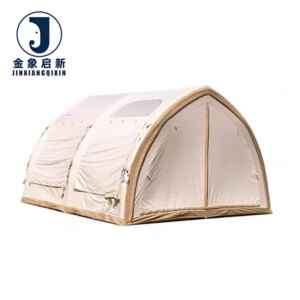
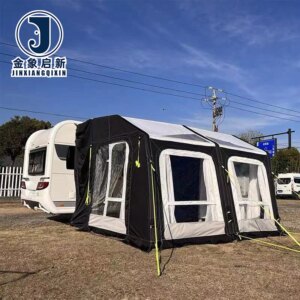
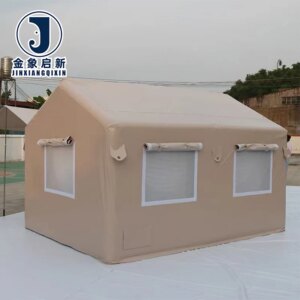
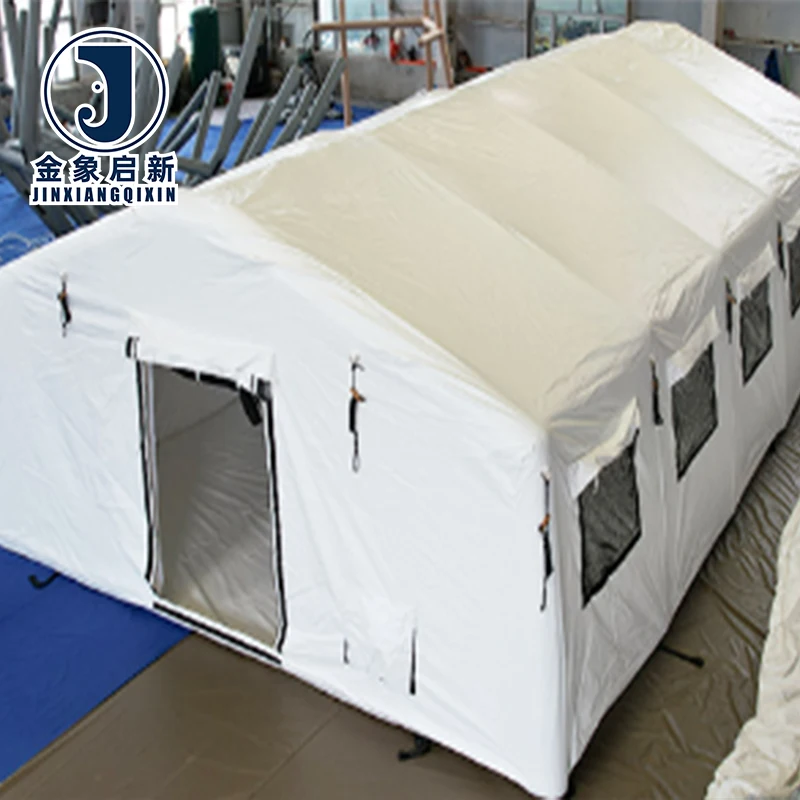
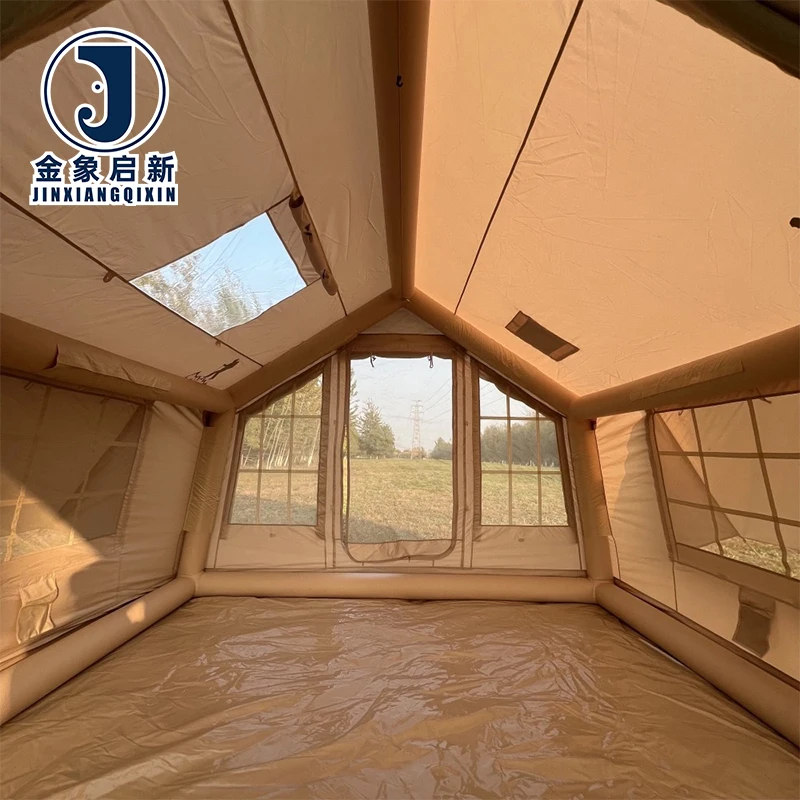
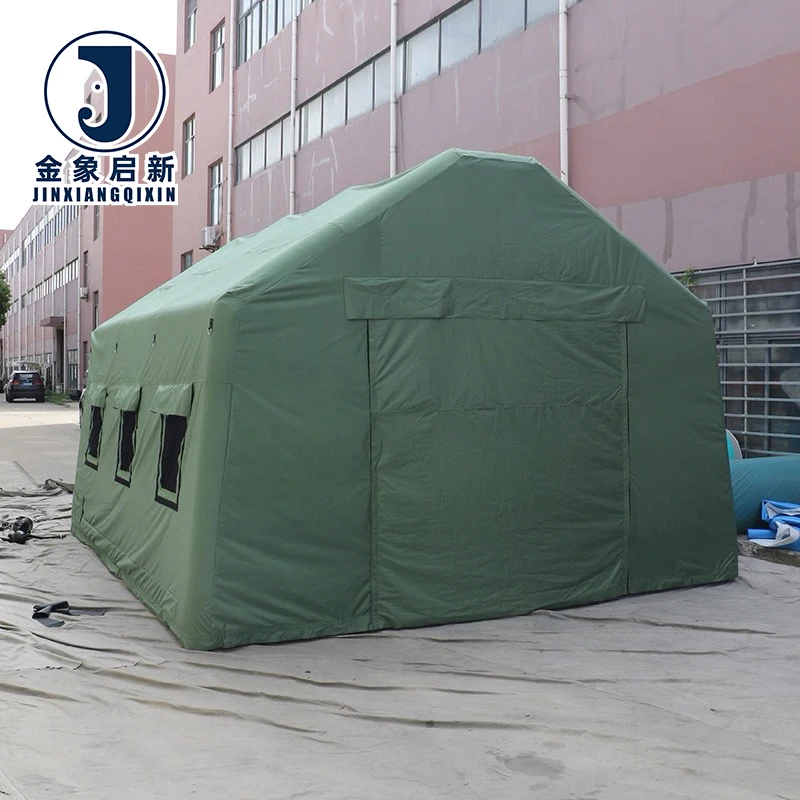
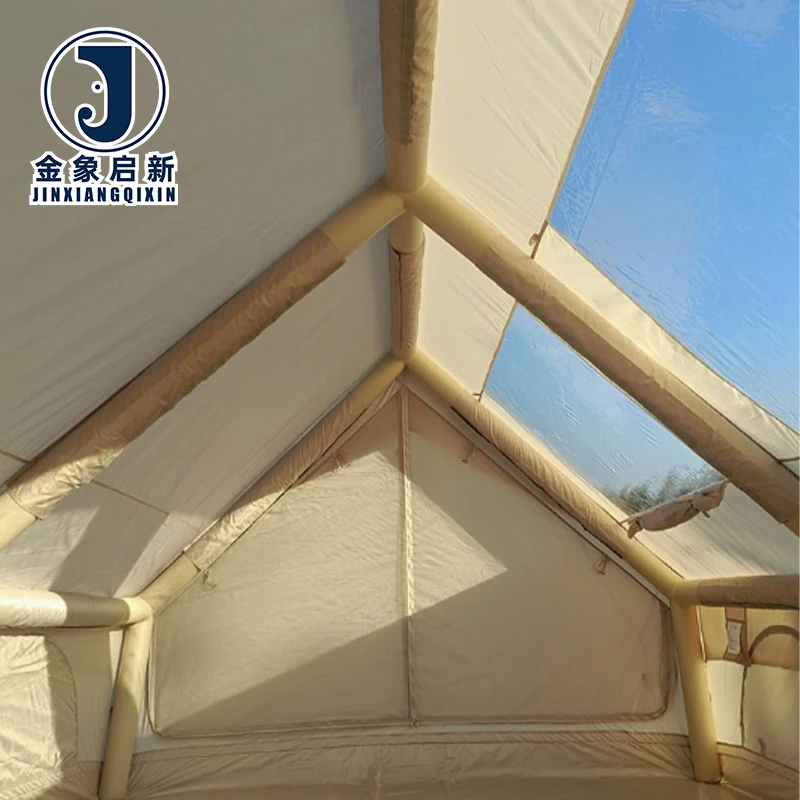
| Product Forms | Inflatable shelter with single layer construction |
| Waterproof Rating | Waterproof (grade not stated in source) |
| UV Treatment | UV-resistant (test basis not stated in source) |
| Tear Resistance | Tear-resistant (test basis not stated in source) |
| Setup Feature | Quick setup |
| Customization Service | OEM & ODM (sample customization, pattern printing) |
| Standards | ISO 9001, ISO 14001, ISO 45001, CE |
Application Suitability
| Application | Exposure & Requirement |
|---|---|
| Commercial camping ground shelters | Continuous weather exposure, repeated inflation cycles, guest safety compliance |
| Outdoor event and exhibition structures | Rapid deployment and teardown, UV exposure, crowd proximity |
| Industrial site accommodation | Harsh site conditions, equipment storage, personnel rest in variable weather |
| Inflatable tent manufacturer production runs | Roll-to-roll consistency, predictable cutting yield, print surface uniformity |
| Tarpaulin distributor stock | Bulk roll availability, documented specifications for resale compliance |
Why Batch Consistency Across Inflatable Tent Fabric Rolls Determines Your Production Yield
Colour shift between rolls in the same order forces tent manufacturers to reject entire panels or accept visible mismatch on assembled structures.
When buying inflatable tent fabric roll stock for production, the hidden cost is not the unit price per metre — it is the sorting, re-cutting and waste generated when roll three does not match roll seven. Buyers who have experienced this know the disruption it causes to cutting schedules and customer delivery dates. Inflatable tent wholesale orders are particularly vulnerable because a single tent shell requires long, continuous panels where any shade variation becomes immediately visible once inflated [NEED_CITE: visual shade tolerance standards for coated fabrics in tent applications].
Coating Weight and Fabric Density — What the Specification Sheet Must Confirm
The relationship between GSM and base fabric denier determines how the PVC inflatable tent fabric performs under inflation pressure and repeated folding. A heavier coating on a low-density base fabric may show adequate stiffness on the roll but crack at fold points after repeated setup cycles. Conversely, a lighter coating on a tightly woven base provides better flex life but may lack the puncture resistance required for ground-adjacent panels. Inflatable tent fabric wholesale buyers should request the specification sheet confirming both coating weight and base fabric construction, then correlate these to their inflation pressure and handling requirements.
Weldability and Seam Integrity for Inflatable Tent Fabrication
Single-layer PVC tarpaulin construction relies entirely on welded seams to hold inflation pressure. The coating formulation directly determines the heat-seal temperature window and the peel strength achieved at the weld line. Manufacturers producing inflatable camping tents at volume need consistent weld behaviour from roll to roll — if one roll requires a different dwell time or temperature setting, production throughput drops and rejected seam rates rise. Our inflatable tent fabric roll stock is produced on controlled coating lines where the PVC formulation remains constant within a batch, supporting stable weld parameters across your fabrication run [NEED_CITE: PVC coated fabric heat seal parameter consistency standards].
Reading the Specification Sheet — GSM, Coating and Base Fabric
Understanding how these three parameters interact prevents costly mis-specification on inflatable tent fabric orders. The GSM value alone does not indicate tear strength — it is the combination of base fabric denier, weave density and coating adhesion that determines how the material resists tearing at stress points around inflation valves and anchoring attachments. Available in UV-resistant and tear-resistant grades, the actual performance level must be confirmed against the test standards required by your target market. Similarly, waterproof performance depends on both the coating integrity and the seam construction method you apply during fabrication. Buyers specifying inflatable tent fabric roll stock should match the material specification sheet to their end-use conditions rather than selecting on GSM alone [NEED_CITE: tensile and tear test methods for coated fabrics per ISO 1421].
The Cost of Overlooking Weld Seam Behaviour in Tent Fabric Selection
Specifying inflatable tent fabric without verifying weld seam performance leads to failures that appear only after the tent is inflated and under load. At the weld line, the fabric experiences concentrated stress where the coated surface has been heat-modified. If the coating formulation varies between rolls, weld parameters that worked during prototyping may produce weak seams in production. The result is tents that lose pressure during use or fail at the seam before the fabric body shows any wear. This type of failure is particularly damaging for commercial camping operators whose reputation depends on reliable shelter performance [NEED_CITE: welded seam failure analysis in PVC coated inflatable structures].
Why Manufacturers Source Their Inflatable Tent Fabric Roll Stock Here
Three full production lines operating dedicated PVC coating processes mean inflatable tent fabric wholesale orders are fulfilled from controlled batches rather than mixed production runs. The 36 sets of professional processing equipment support custom width slitting and roll cutting without interrupting coating line continuity. A 10-person R&D team handles sample development and pattern printing requirements, producing samples within days so buyers can verify material suitability before committing to volume. The dedicated QA and QC process runs a 7-step quality inspection covering coating weight, colour reference and surface condition before any roll is packed for dispatch. ISO 9001, ISO 14001, ISO 45001 and CE certifications underpin the management system, and the 98% on-time delivery rate reflects the production planning discipline behind bulk roll orders.
Documentation & Verification
- Material specification sheet stating GSM, base fabric denier, coating material and colour reference per roll
- Pre-shipment inspection record confirming 100% inspection before inflatable tent fabric roll dispatch
- Roll packing list with batch and roll identification numbers for traceability
- ISO 9001, ISO 14001, ISO 45001 and CE certificates supporting procurement compliance
- UV and flame-retardant test reports provided where applicable to the grade ordered
Fabrication, Handling & Storage
- Set weld temperature and dwell time based on the PVC coating formulation stated on the material specification sheet
- Store inflatable tent fabric rolls upright on pallets to prevent flat-spot deformation along the roll surface
- Allow cold-stored rolls to reach ambient temperature before unrolling to avoid coating micro-cracking
- Use PVC-compatible cleaners only — solvent-based products can degrade the coated surface
- Plan cutting layouts around the roll width to minimise offcut waste on long tent panel sections
- Protect cut edges from moisture ingress before welding, as trapped moisture weakens seam adhesion
What We Need to Prepare Your Inflatable Tent Fabric Quotation
Provide the required roll width, target GSM range and any colour or pattern printing specifications for your inflatable tent production. Confirm the end-use environment — including expected UV exposure, temperature range and any fire-retardant grades your market requires — so we can recommend the appropriate material grade. Let us know your annual roll volume and whether you need sample approval before the first production batch ships.
Frequently Asked Questions
Q: How do I verify the GSM of inflatable tent fabric rolls when they arrive?
A: Each roll ships with a material specification sheet stating the GSM, base fabric and coating details. Cut a measured sample from the roll end and weigh it on a calibrated scale to confirm it matches the stated value. Any discrepancy should be reported before cutting begins so replacement rolls can be dispatched without disrupting your production schedule.
Q: How is colour consistency maintained across multiple rolls in one order?
A: All rolls within a single inflatable tent fabric wholesale order are produced from the same coating batch under controlled colour reference parameters. The QA process checks shade against the approved standard before packing. Rolls are labelled with batch identification so you can group them by production batch during cutting to ensure uniform appearance on assembled tents.
Q: What custom widths and roll lengths are available for inflatable tent fabrication?
A: Rolls are available in custom widths slit to match your cutting layout, reducing offcut waste on tent panel production. Minimum order quantities and lead times depend on the width, colour and whether pattern printing is required. Request a sample roll in your specified width to confirm it suits your fabrication equipment before placing the full order.
Q: What certifications and test reports come with each shipment?
A: Shipments include ISO 9001, ISO 14001, ISO 45001 and CE certificates, a pre-shipment inspection record, roll packing list and material specification sheet. Where UV-resistant or flame-retardant grades are specified, test reports confirming the applicable grade are included. Confirm your market requirements at the inquiry stage so the correct documentation is prepared.
Q: How are rolls protected during container shipping?
A: Inflatable tent fabric rolls are packed with protective wrapping to prevent surface abrasion and moisture ingress during transit. The roll packing list details roll count, weight and batch identification. Container loading plans consider roll dimensions and weight distribution to maximise utilisation while preventing compression damage to the coating surface.